
Anti-barking devices can absolutely help manage separation anxiety barking, but only if you’ve correctly diagnosed what’s actually driving the vocalization in the first place. That last part is where most pet parents of aging dogs go wrong, and I see the fallout in my case files constantly. A senior dog barking at the door for twenty minutes after you leave isn’t automatically an anxiety case. It could be cognitive dysfunction. It could be sensory decline. It could be pain vocalization mistaken for distress calling. The device you choose, and whether it works at all, depends entirely on getting this differential right before you spend a dime.
Separation Anxiety Barking vs. Cognitive Dysfunction Vocalization: Why the Distinction Matters
Landsberg et al. (2012) found that 28% of dogs between 11 and 12 years old display at least one sign of canine cognitive dysfunction syndrome (CDS), and that number climbs to 68% in dogs aged 15 to 16. That’s a huge chunk of the senior population, and one of the most commonly reported CDS signs is increased vocalization, particularly at night or during isolation. Owners almost universally interpret this as separation anxiety barking. Sometimes it is. Often it isn’t, or it’s a tangled combination of both.
True separation anxiety barking follows a fairly predictable arousal curve: it spikes within the first 20 to 40 minutes after departure and correlates tightly with departure cues (keys, jacket, door sounds). CDS-related vocalization looks different behaviorally. It tends to be more diffuse across the day, worse at dusk and through the night (a phenomenon often called “sundowning” in the human dementia literature, and behaviorally analogous patterns show up in dogs), and it’s frequently disconnected from any specific antecedent you can point to. A dog with disorientation-driven CDS may bark because it walked into a room and can’t remember why, or because it’s stuck facing a corner and doesn’t have the spatial processing to back out.
This matters clinically because the two conditions call for different interventions. Anxiety responds to desensitization, counterconditioning, and departure-cue decoupling. Cognitive decline responds to environmental predictability, enrichment, medical management, and sometimes pharmaceutical intervention alongside behavior modification. A citronella collar isn’t going to fix disorientation. It might just suppress the alarm signal your dog is using to communicate that it’s lost or confused, which raises a welfare concern I’ll come back to.
Why Devices Alone Fail Without a Functional Assessment
Here’s where I diverge from a lot of the “just buy this collar” advice floating around. In applied behavior analysis, we never intervene on a behavior without first running a functional assessment: what’s the antecedent (what happens right before the bark), what’s the behavior (the bark itself, its topography, duration, intensity), and what’s the consequence (does barking get the dog anything, even inadvertently, like the neighbor’s dog barking back, or you calling out “it’s okay!” through the door)?
Skip this step and you’re deploying a suppression tool on a behavior you don’t actually understand. That’s not a moral judgment, it’s a mechanical one. Suppression without addressing the underlying antecedent frequently produces one of two outcomes: extinction of the barking with no change in the internal distress state (the dog is still anxious, it’s just quieter about it, which is arguably a worse welfare outcome), or the emergence of a substitute behavior like destructive chewing or self-injurious licking, because the emotional driver never got resolved.
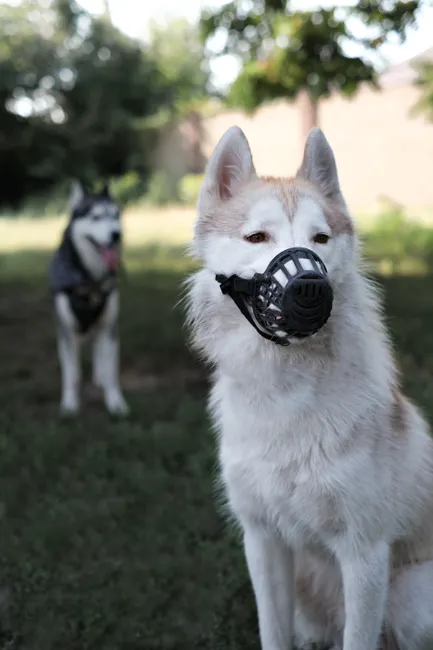
Before buying anything, I want owners to run a simple three-day antecedent log. Note the time of day, what happened in the 60 seconds before barking started, how long it lasted, and whether it happened in isolation or with the owner present. This single exercise usually reveals within days whether you’re dealing with departure-triggered anxiety, disorientation-driven CDS vocalization, or a hybrid. If you’re weighing collar types for isolation barking specifically, our detailed Citronella vs Ultrasonic Anti-Bark Collars for Senior Dogs comparison walks through the mechanism differences that matter for older, more fragile nervous systems.
Comparative Breakdown: 5 Device Categories for Senior Dog Barking
I evaluated five device categories against three criteria that matter specifically for aging dogs: welfare impact (does it add stress or reduce it), senior-dog safety (arthritis, sensory decline, cognitive impairment considerations), and evidence quality (is there actual published data, or just marketing copy).
| Device Category | Mechanism | Senior-Dog Safety | Evidence Quality | Price Tier |
|---|---|---|---|---|
| Citronella Spray Collar | Scent aversion on bark detection | Good; no shock, low arousal spike | Strong (Steiss et al., 2007) | $$ |
| Ultrasonic Deterrent | High-frequency tone on bark detection | Caution with hearing-impaired seniors | Moderate, mixed field data | $$ |
| Calming Pheromone Diffuser | Synthetic appeasing pheromone (DAP) | Excellent; zero aversive component | Moderate, some placebo-controlled trials | $$ |
| Treat-Dispensing Interactive Camera | Remote engagement and reinforcement delivery | Excellent; supports agency and enrichment | Growing, largely observational | $$$$ |
| White Noise Machine / Anxiety Wrap | Sensory masking or gentle proprioceptive pressure | Excellent; passive, no stimulus-response conditioning | Limited but low-risk | $ |
Notice that none of the top-tier choices for older dogs rely on shock. That’s not a values statement, it’s a physiological one, and it’s backed by the strongest study in this space, which I’ll get into next.
The Steiss et al. (2007) Data: Why Citronella Outperforms Shock for Aging Dogs
Steiss et al., published in the Journal of the American Veterinary Medical Association, directly compared citronella spray collars against electronic shock collars for bark reduction. The finding that matters most for senior dog care: citronella collars produced bark reduction rates statistically comparable to shock collars, but without the same physiological stress markers (elevated cortisol, avoidance behavior, and generalized fear responses) that shock conditioning tends to produce.
That’s a meaningful data point for anyone managing a dog with arthritis, declining sensory processing, or early cognitive impairment. An aging nervous system has less resilience to cope with acute stressors, and repeated cortisol spikes from aversive correction can compound existing inflammatory and cognitive burdens. If you’re choosing a bark-interruption collar for a senior dog, this study is the reason citronella and ultrasonic-based tools consistently outrank shock-based devices in my recommendations. For dogs with functional separation anxiety (confirmed through your antecedent log, not assumed), the Citronella Dog Training Collar with Remote, Spray Bark gives you both automatic bark-triggered spray and manual remote control, which lets you pair the correction with your own timing during desensitization sessions rather than relying solely on automatic detection.

- Humane and Safe: Unlike normal shock collars, our Citronella Training Collar is no shock, no irritation, it is a more hu…
- Adjustable 3 Modes and 6 Sensitivities: Our Dog Training Collar includes 3 training modes: Beep/Vibration/Citronella spr…
- Fits for All Sizes of Dogs: Upgraded riveted stitching straps hold the collar securely in place around the dog’s neck to…
For dogs where the antecedent log points more toward general isolation distress rather than a specific triggering event, an ultrasonic option can work as a gentler first line, provided the dog’s hearing hasn’t already declined. The Anti Barking Device for Dogs, Automatic Bark Box Ultrasonic Dog works as a stationary unit rather than a collar, which is worth considering for dogs with orthopedic sensitivity around the neck or dogs who’ve developed a negative association with collar-based tools from prior training attempts.
“Don’t count on a device to work miracles. Suppression tools change the output, not the internal state. If the underlying anxiety or cognitive impairment isn’t addressed, you’ve just made your dog’s distress harder to detect, not easier to live with.” — Dr. Mindy Waite
Ranking the 5 Best Anti-Barking Devices for Senior Dog Anxiety
Based on the welfare, safety, and evidence criteria above, here’s how I’d prioritize these anti-barking devices for a genuinely anxious senior dog, assuming your antecedent log has ruled out (or flagged for concurrent management) cognitive dysfunction:

- Citronella spray collar, backed by the strongest peer-reviewed safety data of any active-correction device.
- Calming pheromone diffuser, best paired alongside any active device since it addresses baseline arousal rather than just the bark output.
- Treat-dispensing interactive camera, the only category here that builds agency and positive engagement rather than relying on suppression.
- Ultrasonic deterrent, solid second-line option if hearing is intact and citronella isn’t tolerated.
- White noise machine or anxiety wrap, lowest-risk passive support, ideal as a foundation layer under any active device.
Note that “best” here doesn’t mean “most powerful correction.” It means best ratio of behavior change to welfare cost, which is the metric that should actually drive anti-barking devices selection for a dog whose body and brain are already managing age-related decline.
Monitoring While You Manage: A Practical Add-On
One thing I recommend to almost every client managing isolation-related behavior in an aging dog is a way to observe what’s actually happening when you’re not home, beyond just the bark count. A tracker or activity monitor won’t stop barking, but it gives you behavioral data: is the dog pacing, is the dog sleeping through most of the absence and only vocalizing near your typical return time (a strong anxiety indicator), or is the activity pattern erratic and disconnected from time cues (more consistent with CDS)? The Smart Pet Tracker for Collar – Dog Trackers Pet can supplement a camera setup by logging movement patterns you can review alongside your antecedent notes.

- Smart Pet Tracker for Collar -ASX
- Precise Tracking: With our state-of-the-art dog tracking collar, you’ll receive instant location updates wherever your p…
The Happiness Plan: A Structured Protocol Beyond the Device
Here’s the protocol I walk clients through. It combines the safest device tier with the behavioral work that actually resolves the underlying distress, rather than just quieting its expression.
- Step 1, Functional assessment (Days 1-3): Run the antecedent log described above. Confirm whether the pattern fits anxiety, CDS, or both. If CDS signs (disorientation, altered sleep-wake cycle, house-soiling regression) are present, involve your veterinarian before proceeding, since medical management (and in some cases medications studied for cognitive support, similar to the geroprotective compounds discussed in our LOY-002 vs Rapamycin: Anti-Aging Dog Pill Compared breakdown) may need to run alongside behavior work.
- Step 2, Departure-cue decoupling (Days 4-10): Pick up your keys and put them down repeatedly throughout the day, unrelated to actual departures. Put on your coat and sit on the couch. The goal is to strip predictive value from the cues your dog currently associates with abandonment.
- Step 3, Graduated absence exposure (Days 7-21): Practice departures of 30 seconds, then 2 minutes, then 5, only increasing duration once the dog shows no anticipatory stress signals (lip licking, pacing, fixation on the door) at the current duration.
- Step 4, Device layering (introduced Day 4 onward): Introduce the citronella collar or ultrasonic unit only after Step 2 has begun, so the dog isn’t just being interrupted mid-panic with no other coping tool available. Pair it with a pheromone diffuser running continuously in the isolation space.
- Step 5, Reassessment (Day 21): Re-run the antecedent log. Compare bark frequency, duration, and (if using camera monitoring) visible stress behaviors against baseline.
This structure matters because it treats anti-barking devices as one tool among several, not a standalone fix. A dog that’s still pacing and drooling silently after the collar suppresses vocalization hasn’t gotten better. It’s gotten quieter, and those are not the same outcome.
A Note on Canine Agency
I want to flag something that gets lost in most anti-bark device marketing: dogs bark to communicate. Suppressing the signal without giving the dog an alternative way to express distress, or without resolving the distress itself, removes a communication channel. Where possible, I prefer protocols that teach an incompatible, reinforced behavior (settling on a mat, retreating to a specific safe zone) rather than relying purely on interruption. According to the American Veterinary Medical Association, separation-related problems in dogs respond best to a combination of environmental management and gradual behavior modification, not correction alone. That guidance lines up with everything I’ve seen across two decades of case files.
If you’re in the process of raising a younger dog and want to build strong departure tolerance from puppyhood, before any of these senior-specific issues have a chance to develop, our Golden Shepherd Puppy: Complete Buyer’s Checklist & Tips guide covers early socialization groundwork that pays off decades later.
Frequently Asked Questions
Are anti-barking devices safe for senior dogs with arthritis?
Most anti-barking devices are safe for arthritic seniors, but collar-based options should fit loosely enough to avoid pressure on an aging neck and spine. Stationary ultrasonic units or camera-based systems avoid this concern entirely since they don’t require anything worn on the body.
How do I know if my senior dog’s barking is anxiety or cognitive decline?
Run a three-day antecedent log noting the time, trigger, and duration of each barking episode. Anxiety-driven barking clusters shortly after departure and links to specific cues like keys or the door. Cognitive dysfunction vocalization tends to be more random, worse at night, and disconnected from clear triggers. A veterinary exam can confirm cognitive dysfunction syndrome.
Do citronella collars actually work better than shock collars?
Steiss et al. (2007) found citronella spray collars achieved bark reduction comparable to shock collars, without producing the same physiological stress markers. For senior dogs with fragile systems, this makes citronella the safer choice among active-correction anti-barking devices.
Can I use an anti-bark device without doing any behavior training?
You can, but it typically only suppresses the audible symptom rather than resolving the underlying distress. Anti-barking devices work best layered into a broader plan involving departure-cue decoupling and graduated absence exposure, not as a standalone fix.