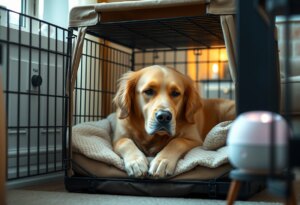
Anti-barking devices get marketed as a quick fix for nighttime noise, but if your senior dog is the one vocalizing at 2 a.m., the device is the last step, not the first. Before you buy anything, you need to know why an older dog starts barking in the dark when he never used to. The answer is usually rooted in sensory decline, cognitive change, or physical discomfort, not stubbornness. Once you understand the underlying driver, the right anti-barking devices become a supportive tool rather than a band-aid over a welfare problem.
Why Senior Dogs Bark at Night
Nighttime vocalization in an aging dog rarely comes from the same motivational system as a young dog barking at the mail carrier. In geriatric patients, we’re usually looking at one of three overlapping mechanisms: sensory decline (vision and hearing loss disrupt the dog’s ability to orient in a dark, quiet house), canine cognitive dysfunction (CCD), or pain that intensifies once the dog lies still and the distraction of daytime activity disappears. Landsberg and colleagues found that CCD affects roughly 28 percent of dogs aged 11 to 12, and that prevalence climbs to about 68 percent by age 15 to 16. That is a substantial portion of the senior dog population, and disrupted sleep-wake cycling, often called “sundowning” in human dementia literature, is one of the hallmark behavioral signs. A dog with CCD may pace, vocalize, or appear disoriented specifically after dark, when visual cues that normally anchor him are reduced.
This is fundamentally different from an alert bark at a passing car. It’s often described clinically as disorganized, repetitive vocalization without a clear external trigger, and it tends to cluster in the early morning hours when sleep architecture is most fragmented. Owners frequently interpret this as attention-seeking or defiance, but the ethology doesn’t support that read. An aging nervous system processing less visual and auditory input, combined with declining melatonin regulation, produces a dog who is anxious and disoriented rather than manipulative.
Diagnostic First Step Before You Buy Anti-Barking Devices
I want to be direct about this: reaching for anti-barking devices before ruling out medical causes is a sequencing error that costs owners time and, more importantly, costs the dog unnecessary discomfort. A 2019 study on nocturnal vocalization in senior dogs found that disrupted sleep-wake cycles, not boredom, were the primary correlate of night barking in geriatric populations. That means the barking is frequently a symptom of an underlying physiological problem, not a behavior to be trained away in isolation.
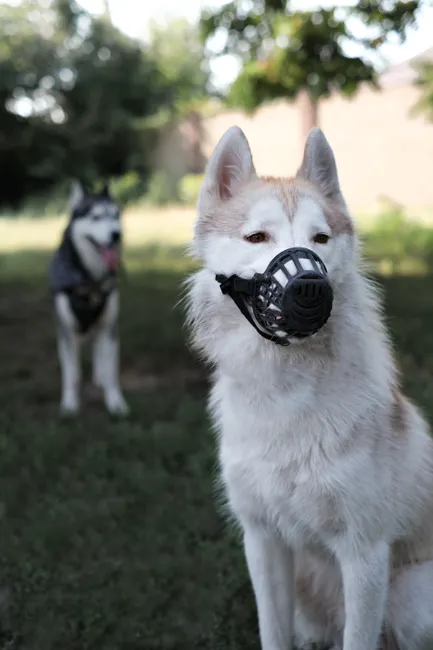
Before you shop, work through this checklist with your veterinarian:
- Pain screening. Osteoarthritis, dental disease, and GI discomfort all worsen at rest. A dog who barks only when lying down in the dark may be signaling pain, not confusion.
- Vision and hearing assessment. Progressive retinal atrophy, cataracts, and presbycusis (age-related hearing loss) change how a dog perceives his environment. A dog who can’t see or hear normally startles more easily and orients less confidently.
- Cognitive screening (CCD). Ask your vet about validated questionnaires like the CADES (Canine Dementia Scale). Disorientation, altered sleep patterns, house-soiling, and changes in social interaction are the four domains typically assessed.
- Medication review. Some drugs increase nighttime restlessness as a side effect. This is worth flagging even if the medication seems unrelated to behavior.
Only after this workup should you layer in a device. If your dog is also showing signs of general anxiety, it’s worth reading our related piece on calming solutions for anxious sneezing and stress behaviors, since the physiological stress pathways overlap considerably with nighttime vocalization.
Don’t count on a gadget to work miracles if the underlying driver is untreated pain or progressing cognitive dysfunction. The data is contradictory on how much environmental tools alone can reduce vocalization once CCD has progressed past mild stages, which is exactly why a veterinary behavioral consult should bracket any device trial.
Comparative Breakdown: 7 Anti-Barking Devices Rated for Senior Dogs
Not all anti-barking devices are built the same, and for a geriatric dog, aversiveness risk matters more than raw effectiveness. A device that suppresses barking through startle or discomfort can increase generalized fear in a population already prone to anxiety comorbidity. Here’s how the seven common categories stack up on welfare-friendliness and evidence base.
| Device Type | Mechanism | Aversiveness Risk | Best For | Price Tier |
|---|---|---|---|---|
| Ultrasonic Emitter | High-frequency sound interrupts vocalization | Low to Moderate | Sound-sensitive but not hearing-impaired dogs | $$ |
| Vibration Collar (non-shock) | Gentle vibration cue paired with training | Low | Dogs responsive to tactile cues | $$ |
| White Noise Machine | Masks external triggers, stabilizes sleep environment | None | Nearly all seniors, especially hearing-impaired | $ |
| Pheromone Diffuser | Dog-appeasing pheromone reduces baseline anxiety | None | Anxiety-driven vocalization, CCD support | $$ |
| Interactive Calming Bed | Orthopedic support plus soothing texture/warmth | None | Pain-related restlessness | $$$ |
| Timed Treat Dispenser | Predictable reinforcement schedule reduces distress calling | Low | Attention-seeking vocalization, not CCD-driven | $$ |
| Calming Wrap/Vest | Sustained gentle pressure lowers arousal | None | Generalized nighttime anxiety | $$ |
Ultrasonic anti-barking devices deserve a closer look because they’re the most commonly marketed option, and the evidence base is genuinely mixed. The Anti Barking Device for Dogs, Automatic Bark Box Ultrasonic Dog Deterrent works by emitting a high-frequency tone triggered by vocalization, which interrupts the bark cycle without physical contact. For a senior dog with intact hearing, this can be a reasonable low-aversiveness option. But here’s the caveat that matters clinically: if your dog has documented presbycusis or broader hearing decline, an ultrasonic tool is functionally useless, because the dog simply can’t perceive the interrupting stimulus. Always confirm hearing status before investing in this category of anti-barking devices.
Why Punishment-Based Tools Are Contraindicated for Senior Dogs
This is where I want to be unambiguous, because it’s the section most likely to get skipped by owners who are exhausted and just want quiet. Shock collars and citronella spray collars fall under punishment-based bark control, and the American Veterinary Society of Animal Behavior has published a position statement specifically warning against aversive training methods, citing elevated rates of fear and anxiety comorbidity, an effect that is more pronounced in geriatric populations already navigating sensory loss and cognitive decline.

Products like the Citronella Dog Training Collar with Remote, Spray Bark Control are widely available and marketed as a “gentler” alternative to shock, since citronella uses scent aversion instead of electrical stimulation. But the mechanism is still punishment: the dog experiences an unpleasant stimulus contingent on vocalizing. In a young, behaviorally stable dog with no anxiety history, this might carry lower risk. In a senior dog who is already disoriented from CCD or startled easily due to vision loss, adding an unpredictable aversive stimulus at night can escalate the very anxiety driving the vocalization in the first place. If you’re already seeing tension around normal household interactions, our article on jealousy versus anxiety in senior dog barking behavior walks through how to tell these presentations apart, and that same differential applies here. I’d only consider a spray collar as a last-resort tool under direct veterinary behaviorist supervision, and never for a dog showing signs of cognitive decline.
Practical Protocol: Antecedent Management Plus the Least Invasive Device
The most defensible clinical approach pairs environmental management (antecedent changes that reduce the likelihood of vocalization occurring at all) with the least invasive anti-barking devices available. Here’s the stepwise protocol I’d walk a client through:
- Stabilize the light cycle. Use a dim nightlight in the sleeping area. Dogs with vision decline navigate more confidently with consistent low-level ambient light rather than total darkness.
- Control temperature. Older dogs regulate body temperature less efficiently. A room that’s too cold or too warm increases restlessness independent of any behavioral issue.
- Fix the potty schedule. Add a late-evening bathroom break and, if needed, one middle-of-the-night opportunity. Nocturia from kidney or bladder changes is common in seniors and frequently mistaken for behavioral vocalization.
- Introduce white noise or a pheromone diffuser first. These carry zero aversiveness risk and address the anxiety component directly rather than suppressing the output.
- Layer in a wearable calming aid if needed. A vibration collar or calming wrap can add gentle redirection without punishment.
- Keep a simple observational log for two weeks. Track time of vocalization onset, duration, what preceded it, and what (if anything) resolved it. This log is diagnostic gold for your vet or behaviorist.
- Escalate to a veterinary behavioral consult if there’s no improvement. Two weeks without meaningful change after environmental fixes suggests a medical or cognitive driver that needs direct treatment, possibly including CCD-specific medication or supplements.
One tool that sits slightly outside the core anti-barking devices conversation, but earns a place in a broader senior dog safety kit, is a wearable tracker. If your senior dog’s nighttime restlessness includes wandering, pacing near doors, or attempts to leave the house, a Smart Pet Tracker for Collar can give you real-time location data, which matters more than people expect once CCD-related disorientation sets in. It won’t stop barking directly, but it addresses a related welfare risk that often shows up in the same patient profile.

- Smart Pet Tracker for Collar -ASX
- Precise Tracking: With our state-of-the-art dog tracking collar, you’ll receive instant location updates wherever your p…
Building a Simple Happiness Plan Around Anti-Barking Devices
I ask owners to think of this less as “stopping barking” and more as building a happiness plan for a dog whose sensory world has changed. A useful case-profile exercise: write down what your dog’s nighttime routine looked like five years ago versus now. Note what’s changed physically (mobility, vision, hearing), what’s changed in the home environment (new pets, moved furniture, different sleeping location), and what’s changed medically (new diagnoses, new medications). This comparison usually reveals the antecedent triggers faster than any device trial would.
Anti-barking devices work best as one component of that plan, not the entire plan. A dog with mild CCD paired with a stable light cycle, a pheromone diffuser, and a predictable bathroom schedule often shows measurable improvement within the two-week observation window. A dog whose vocalization stems primarily from unmanaged pain will not improve from any device, no matter how well-reviewed, until the pain is addressed. This is why the diagnostic step isn’t optional. For more background on the American Kennel Club’s general guidance on senior dog behavioral changes, the American Kennel Club maintains a useful overview of canine cognitive dysfunction and its behavioral markers.
Frequently Asked Questions About Anti-Barking Devices for Senior Dogs
Are anti-barking devices safe for senior dogs with hearing loss?
Ultrasonic and sound-based anti-barking devices lose effectiveness once a dog develops significant hearing decline, since the dog can’t perceive the interrupting tone. For dogs with confirmed hearing loss, tactile options like vibration collars or environmental tools like pheromone diffusers and white noise machines are more appropriate choices.
How long should I trial a device before assuming it doesn’t work?
Give any environmental or low-aversiveness device a two-week trial while tracking vocalization frequency, duration, and timing in a simple log. If there’s no meaningful reduction after two weeks, that’s a strong signal to schedule a veterinary behavioral consult rather than continuing to escalate device intensity on your own.
Should I use a shock or citronella collar if nothing else has worked?
I’d advise against it for most senior dogs. Punishment-based anti-barking devices carry documented risk of increasing fear and anxiety, which is already elevated in geriatric dogs dealing with sensory or cognitive decline. If environmental management and low-aversiveness tools haven’t helped, the next step is a veterinary behavioral consult, not a stronger aversive.
Can cognitive dysfunction be the reason my senior dog only barks at night?
Yes. Disrupted sleep-wake cycling is one of the core behavioral markers of canine cognitive dysfunction, and it commonly presents as vocalization, pacing, or disorientation specifically after dark. If nighttime barking is a new pattern in an older dog, ask your veterinarian about a CCD screening before relying solely on anti-barking devices.