


If you love a Golden Retriever moving into his gray years, you already know the moment I mean. He hesitates at the bottom of the stairs. He takes a beat too long to stand up from his bed. And your stomach drops a little, because you know what’s coming. Joint supplements for senior dogs won’t turn back the clock, but the right ones, chosen with real intention, can buy your boy comfortable years he deserves. I’ve watched this exact scenario play out more times than I can count at the sanctuary, and I want to walk you through it honestly.
This isn’t a sponsored puff piece dressed up as advice. It’s what I’d tell you over coffee at my kitchen table, with an old dog snoring under our feet.
Why Golden Retrievers Carry This Burden in Their Bones
Here’s the hard truth nobody likes to say out loud: Golden Retrievers didn’t choose this. We bred them into it. The Orthopedic Foundation for Animals has tracked hip scores across breeds for decades, and Goldens sit at roughly a 19.8% hip dysplasia rate, one of the higher numbers among purebred dogs. That’s not a fluke. That’s generations of breeding for a certain look and temperament without always prioritizing skeletal soundness.
Now layer on aging. A young Golden with mild hip laxity might compensate just fine for years, muscle covering for structural looseness. But cartilage thins with age. Inflammation creeps in. The muscle that once protected the joint starts to waste a little, especially if pain has quietly limited his activity. What was a manageable genetic predisposition in youth becomes a daily struggle in the senior years, and that’s exactly when joint supplements for senior dogs start pulling real weight in a care plan.

Watching a dog who used to leap into the truck bed now pause and calculate three stairs, that’s not just aging. That’s a body asking for help. Our job is to listen before it becomes a crisis.
I say this with love and a little bit of fire: if you have a Golden with known hip laxity, you owe it to him to get ahead of this. Not after he’s limping. Now.
What the Science Actually Says About Joint Ingredients
Let’s get grounded in facts, because this space is full of marketing noise. The ingredients that show up again and again in credible joint supplements for senior dogs are glucosamine, chondroitin, MSM (methylsulfonylmethane), and omega-3 fatty acids. Here’s what each one is actually doing, not just what the label promises:
- Glucosamine for dogs is a building block cartilage needs to repair and maintain itself. It doesn’t work overnight. Give it six to eight weeks before you judge results.
- Chondroitin works alongside glucosamine to help cartilage retain water and stay resilient under pressure, literally cushioning the joint.
- MSM has some evidence supporting anti-inflammatory and antioxidant effects, easing the day-to-day soreness that comes with wear and tear.
- Omega-3 fatty acids (specifically EPA and DHA from fish oil) have the strongest research behind them right now. A 2020 study published in Frontiers in Veterinary Science found omega-3 supplementation improved weight-bearing and mobility scores in dogs with osteoarthritis, which is about as close to a real-world win as this field gets.
I want to be honest with you: not every dog responds the same way. Some Goldens show visible improvement in a month. Others need the supplement paired with weight loss, physical therapy, or prescription pain management before you see a real shift. This is where senior dog mobility supplements work best, as one piece of a bigger picture, not a magic pill.
The 5 Best Joint Supplements for Aging Golden Retrievers
I’m not going to hand you a random top-five list scraped off someone else’s blog. These are picks built around real criteria that matter for an aging Golden: dosing accuracy, bioavailability, palatability (because a stubborn senior nose will reject anything that smells wrong), and whether the manufacturer follows NASC or cGMP quality standards.
| Supplement Type | Key Ingredients | Best For | Third-Party Standard | Price Tier |
|---|---|---|---|---|
| Daily Vitamin-Mineral Support | Multivitamin blend, joint co-factors | Goldens needing broad senior wellness support | cGMP | $$ |
| Glucosamine-Chondroitin Chews | Glucosamine, Chondroitin, MSM | Early-stage hip laxity, maintenance dosing | NASC | $$$ |
| Omega-3 Liquid or Softgel | EPA, DHA fish oil | Inflammation and stiffness reduction | cGMP | $$$ |
| Green-Lipped Mussel Formula | Natural glycosaminoglycans, omega-3s | Dogs with moderate to advanced joint wear | NASC | $$$$ |
| Vet-Formulated Prescription Joint Diet | EPA/DHA, glucosamine, L-carnitine | Dogs needing food and supplement combined | cGMP, Veterinary formulated | $$$$$ |
A solid starting point in this lineup is Vita-Tabs Silver for Senior Dogs, a daily vitamin-mineral supplement that covers broader senior wellness while supporting joint health as part of a bigger nutritional picture. I like recommending something like this for Goldens who need more than a single-ingredient fix, dogs whose bodies are asking for support on multiple fronts at once, not just the hips.

- Comprehensive Nutrition: Vita-Tabs provide a balanced blend of essential vitamins and minerals to support your dog’s ove…
- Immune System Support: Packed with antioxidants, these tabs help strengthen your dog’s immune system, promoting a robust…
- Healthy Coat and Skin: The inclusion of Omega-3 fatty acids contributes to a lustrous coat and healthy skin, ensuring yo…
Diet matters just as much as any pill or chew here. Nutrition built around joint support, lean protein, and controlled calories can make the difference between a supplement that works and one that’s fighting an uphill battle against extra weight on sore hips. That’s why I often bring nutrition into the same conversation as joint supplements for senior dogs, because they’re not separate issues. They’re the same issue wearing two hats.

Introducing a New Supplement Without Upsetting a Sensitive Senior System
Old bodies don’t forgive sudden change the way young ones do. If you dump a full dose of anything new into your Golden’s bowl on day one, don’t be surprised by soft stool or a dog who turns his nose up entirely.
- Start with a quarter to half the recommended dose for the first three to five days.
- Watch stool consistency, appetite, and energy closely during this window.
- Increase gradually to full dose over one to two weeks.
- Always give supplements with food, not on an empty stomach, to reduce GI upset.
- Loop your veterinarian in, especially if your dog is already on NSAIDs or other pain management medication, since some ingredients can interact.
Quality protein plays a role here too. A food like ZEAL Canada Air-Dried Chicken Recipe for Dogs can be a gentle, highly digestible base to pair alongside a new supplement routine, especially for seniors whose digestive systems have gotten a little more particular with age. Air-dried formulas tend to be easier on aging guts than heavily processed kibble, and that matters when you’re already introducing something new to a sensitive system.
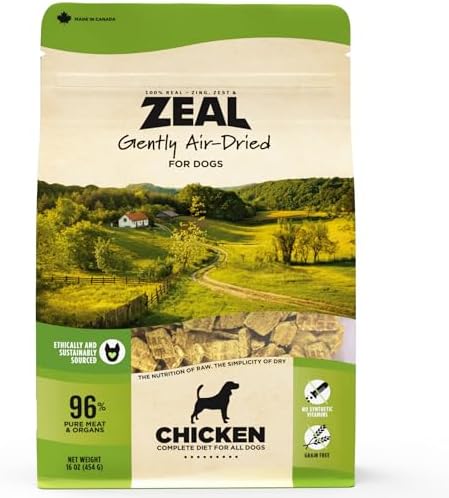
- 96% Free-Range Chicken and Organs for Optimal Health: Made with free-range chicken, liver, gizzard, and heart, providing…
- Natural and Organic Superfoods for Complete Wellness: Enriched with ethically sourced green-lipped mussels for joint sup…
- Air-Dried to Retain Nutrients Naturally: Our gentle air-drying process locks in all the nutrients without synthetic addi…
Give any new supplement six to eight weeks before deciding if it’s working. I know that’s hard when you want relief for your dog right now. But glucosamine for dogs and other cartilage-support ingredients build up gradually. Rushing to swap products every two weeks just resets the clock and tells you nothing.
Joint Support Is Bigger Than a Bottle on the Shelf
Here’s something I say often, and I’ll say it again: a supplement alone will never carry the whole load. Hip dysplasia in dogs responds best to a layered approach, and that means thinking about weight, surface, and movement just as seriously as you think about ingredients.
- Weight management is non-negotiable. Every extra pound is more pressure on an already compromised joint. Even five pounds off a stiff Golden can change how he moves through his day.
- Orthopedic bedding matters more than people expect. A worn-out mattress-style bed does nothing for pressure points. Look for memory foam built specifically for joint support.
- Controlled movement, short, frequent walks on flat, forgiving ground, keeps muscle mass on and stiffness down without overloading the joint the way one long weekend hike would.
- Nutrition formulated for aging bodies, like IAMS PROACTIVE HEALTH Mature Adult Dry Dog Food, can support lean muscle mass and manage calorie intake at the same time, which directly supports joint comfort without you having to overhaul the whole feeding routine.

- Veterinarians Recommend IAMS: This IAMS Senior Dog Food Recipe is made with real chicken as the #1 ingredient and contai…
- Mental & Visual Sharpness: This IAMS dog food for senior dogs contains DHA Gold to promote mental and visual sharpness i…
- Supports Vital Organs: IAMS Proactive Health Healthy Aging Senior Dog Food supports vital organs with essential nutrient…
If your Golden also spends time in the water, whether that’s swimming for low-impact exercise or just riding along on the boat, it’s worth checking out our guide to 5 Best Life Jackets for Senior Golden Retrievers, since buoyancy support can take real pressure off aging hips during exercise. And if anxiety is compounding his discomfort, especially on days when the joints ache more than usual, our comparison of Calming Chews vs Pheromone Diffusers for Senior Dogs digs into which calming approach might fit your situation best.
This is a sacred trust, caring for a dog who gave you his whole youth without asking for anything back. The least we owe him is a body that hurts a little less each day we can manage it. Joint supplements for senior dogs are one meaningful tool in that promise, not the whole promise itself.
A Gentle Word on Realistic Expectations
I won’t lie to you and tell you a bottle of chews will make your senior Golden bound up the stairs like he did at two years old. That’s not how aging joints work, and anyone who tells you otherwise is selling something. What good senior dog mobility supplements can do is slow the decline, ease the daily ache, and give him more good days between the hard ones.
For deeper background on the condition itself, the American Kennel Club’s overview of hip dysplasia in dogs is a solid, trustworthy resource if you want to understand the mechanics of what’s happening inside that joint.
Frequently Asked Questions
How long does it take for joint supplements to work in senior dogs?
Most joint supplements for senior dogs need six to eight weeks of consistent daily use before you’ll see a noticeable change in mobility or comfort. Glucosamine and chondroitin work by supporting cartilage over time, not by masking pain instantly, so patience matters here. If you see zero change after two months, that’s the point to talk with your vet about adjusting the approach.
Can I give my Golden Retriever glucosamine every day for the rest of his life?
Yes, glucosamine for dogs is generally considered safe for long-term daily use, and most dogs with hip dysplasia benefit from staying on it consistently rather than cycling on and off. That said, always check in with your veterinarian periodically, especially if your dog has other health conditions or is on additional medications.
What are the early signs of hip dysplasia in an aging Golden Retriever?
Early signs of hip dysplasia in dogs often include hesitation on stairs, difficulty rising from lying down, a bunny-hopping gait when running, and reluctance to jump into vehicles. As the dog ages, you may also notice muscle loss around the hindquarters and stiffness that’s worse in the morning or after rest.
Are omega-3 fatty acids as effective as prescription pain medication for joint pain?
Omega-3 fatty acids are not a replacement for prescription pain management in moderate to severe cases, but research, including a 2020 study in Frontiers in Veterinary Science, shows they can meaningfully improve weight-bearing and mobility scores in dogs with osteoarthritis. Many vets recommend using omega-3s alongside prescribed medication rather than instead of it, especially for dogs with more advanced joint degeneration.
Watching a Golden move through his senior years with a little more ease, that’s the whole reason I do this work. It’s slow, unglamorous, and worth every ounce of effort. Give him time, give him grace, and give his joints the support they’ve earned. Tell your pup I said Hi! — Dawn