
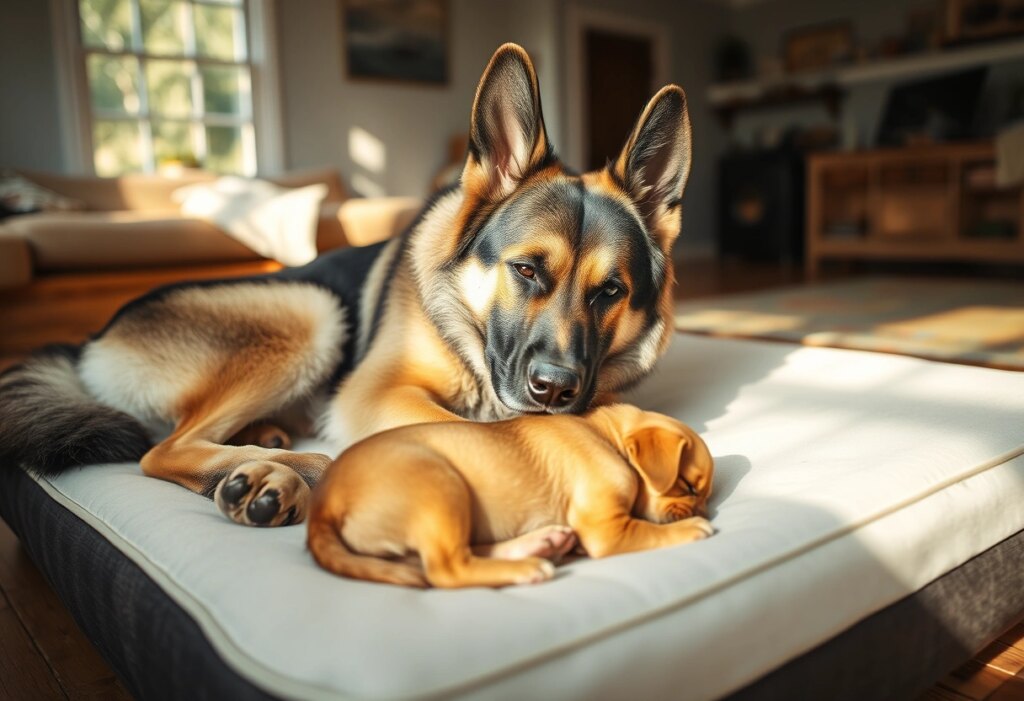

Senior dog behavior shifts the moment a new puppy bounces through the door, and if you’re watching your old dog’s face right now trying to read what’s happening in that heart of theirs, I want you to know something first: what you’re feeling is not overreacting. It’s love, paying close attention. I’ve sat on the floor of my sanctuary more times than I can count, watching an old soul decide whether to open up to a bouncing, mouthy, entirely too energetic newcomer. Some decide fast. Some take months. Both are okay.
What matters is that we read the signs correctly, and that we never mistake a senior dog’s need for space as something that has to be fixed with force or rushed with wishful thinking. This is a sacred trust, this bond between an aging dog and the humans who love them. We don’t get to just assume it’ll work itself out.
Why Bringing Home a Puppy Changes Everything for Your Old Dog
Your senior dog has a rhythm. Slow mornings. A favorite sunny spot. Joints that need warming up before a walk, and a nervous system that’s finally, *finally* settled into something like peace after years of living. Then a puppy arrives, all teeth and velocity, and that rhythm gets knocked sideways.
This is why patience matters more than speed here. I’ve watched well-meaning families expect their old dog to just “get used to it” within a week. It doesn’t work that way. Aging bodies carry aging pain, and aging minds carry decades of learned caution. Give the process weeks. Sometimes months. Senior dog behavior around a puppy is rarely instant, it’s a slow unfolding, like watching frost thaw off a window one corner at a time.
Ask yourself honestly: is my home set up right now to protect my senior dog’s peace while this newcomer learns manners? If the answer is no, that’s your starting point, not the introductions themselves.
The Real Signs Your Older Dog Is Accepting the New Puppy
Acceptance doesn’t always look like joy. Sometimes it looks like quiet tolerance, and that’s still a win. Here’s what genuine, healthy senior dog behavior toward a new puppy tends to look like:
- Loose, soft body language — a relaxed mouth, a low wagging tail, ears in a neutral position rather than pinned back.
- Voluntary proximity — your senior dog *chooses* to lie near the puppy instead of being cornered into it.
- Shared resting spaces — napping in the same room, even if not touching, is a massive show of trust.
- Gentle tolerance of puppy antics — a soft growl-and-walk-away instead of a hard snap when the puppy oversteps.
- Play invitations — a play bow or a brief chase, even a short one, tells you your old dog’s spirit is meeting this moment with something like joy.
These moments are small. They’re easy to miss if you’re not watching closely. But they’re everything. They tell you your senior dog isn’t just enduring this new chapter, they’re actually opening a door to it, on their own terms.
An old dog who chooses to rest near a puppy, uninvited and unforced, is telling you something profound: they still trust their world enough to let someone new into it. Don’t take that lightly.
Warning Signs That Go Beyond Normal Grumpiness
Some grumbling is normal. Your senior dog is allowed to have boundaries, and honestly, I’d worry more about a senior dog who never sets any. But there’s a line between healthy boundary-setting and chronic distress, and we have to be honest with ourselves about which one we’re seeing.
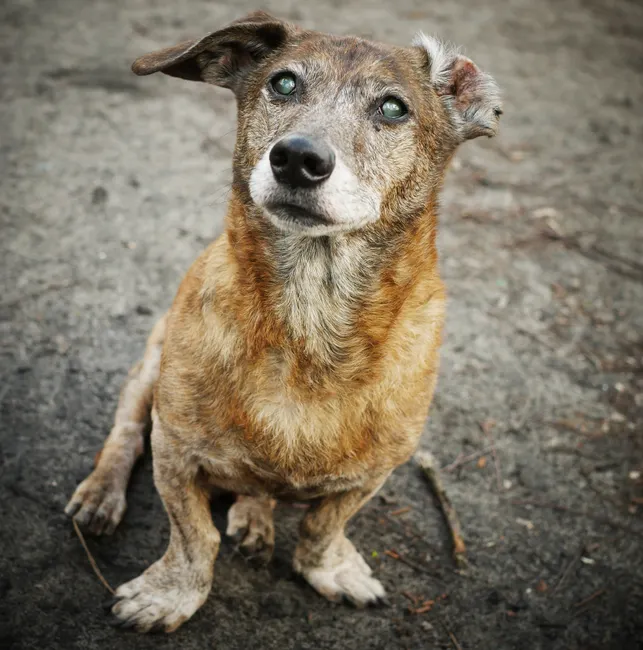
The ASPCA notes that persistent growling, active avoidance, hiding, or a drop in appetite are signals of chronic stress, not just a bad mood. If your old dog is skipping meals, disappearing to another room for hours, or showing stiff, frozen body language every time the puppy enters the space, that’s not “adjusting.” That’s suffering quietly, and senior dogs are heartbreakingly good at suffering quietly. They’ve often learned, over years, that nobody’s coming if they complain too loudly.
Watch for these red flags specifically:
- Growling or snapping that doesn’t ease with distance or time
- Refusing food or water when the puppy is present
- Hiding in closets, under furniture, or in crates for extended periods
- Stiff, frozen posture (this is different from calm stillness)
- Increased whining, pacing, or restlessness at night
If you’re seeing two or more of these consistently over a week or longer, it’s time to slow everything down and take a much closer look at what’s actually going on beneath the surface.
What the Research Tells Us About Age-Mismatched Dog Pairs
A 2021 study published in Applied Animal Behaviour Science found that conflict in multi-dog households is one of the leading reasons owners seek out behavior consultations, and age-mismatched pairs (like a senior dog and a young puppy) show up in that data again and again. This isn’t rare. This is common enough that behaviorists build entire practices around it.
Here’s the piece that gets missed constantly, and it makes me want to shake people gently by the shoulders: the American Veterinary Society of Animal Behavior (AVSAB) has noted that senior dogs living with untreated pain are significantly more likely to show defensive aggression toward younger, boisterous dogs. Read that again. Before you label your old dog “mean” or “jealous,” you owe it to them to rule out pain first.
Honestly, who thinks a fourteen-year-old dog with arthritis in both hips should just tolerate a puppy barreling into their side twelve times a day?? That’s not a behavior problem. That’s a pain problem wearing a behavior costume. A proper vet exam, bloodwork, and a joint assessment need to happen before any training plan makes sense.
This is also where the right setup in your home makes a real difference. A supportive, elevated Pecute Elevated Dog Bed with Cooling Blanket gives your senior dog a designated safe zone that’s theirs alone, off the floor where a puppy can’t easily invade it, and it takes pressure off aging joints too. I’ve seen sanctuary dogs visibly exhale the first time they realize a puppy can’t reach their resting spot.

- 【Dual-Engine Cooling System For Overheating Prevention】Is your heavy-coated dog panting and miserable during summer days…
- 【 Chew-Proof Heavy-Duty Frame For Active Large Dogs】Tired of constantly replacing shredded, expensive foam beds? Enginee…
- 【Orthopedic Joint Support & Pain Relief】Watch your senior dog stand up with ease and energy. Sleeping on cold, hard floo…
Comparing Support Tools for a Smoother Senior Dog and Puppy Introduction
Setting up your home right from the start makes a measurable difference in how quickly a senior dog settles into dog accepting new puppy dynamics. Here’s a quick look at a few tools worth considering, with relative pricing so you can plan your budget without me quoting numbers that’ll be outdated by next week.

| Product | Best For | Key Feature | Price Tier |
|---|---|---|---|
| Pecute Elevated Dog Bed with Cooling Blanket | Giving senior dogs a private, joint-friendly retreat | Chew-proof frame, cooling blanket, elevated off the floor | $$$ |
| Dog Pee Pad Holder with Artificial Grass | Puppy potty training without disrupting senior dog’s routine | Realistic grass surface, contained tray design | $$ |
| Sandy Claws and the Forever Home eBook | Helping kids and families understand rescue dog transitions | Storytelling approach to adoption and bonding | $ |
A designated potty area for the puppy matters more than people realize. A Dog Pee Pad Holder with Artificial Grass keeps the puppy’s training routine contained to one predictable spot, so your senior dog isn’t dealing with a chaotic, ever-changing environment on top of everything else they’re adjusting to. Predictability is a gift you can give an old dog, and it costs you almost nothing but intention.

- Versatile Indoor/Outdoor Potty Solution: Designed for busy pet owners, this versatile station provides a consistent and …
- Superior Splash Guard & Floor Protection: Large tray features high, 17.72-inch walls on three sides to effectively conta…
- Premium Washable Grass Pad & Easy Cleanup: Includes a high-density, realistic artificial grass turf mat that is soft on …
When to Call a Certified Behaviorist Versus Waiting It Out
I get asked this constantly: “How do I know if this is normal adjustment or something I need help with?” Here’s my honest answer, built from years of sanctuary life.
Wait it out, with continued supervision, if:
- Your senior dog’s grumbling decreases week over week
- They’re still eating, sleeping, and engaging normally outside puppy interactions
- Growls are brief warnings, not sustained aggression
- You see even small moments of voluntary proximity building over time
Call a certified behaviorist immediately if:
- There’s been an actual bite, even a minor one that broke skin
- Your senior dog’s appetite or sleep has been disrupted for more than a few days
- Avoidance behavior is getting worse, not better, after two or three weeks
- You feel afraid to leave them alone together, even briefly
Trust that feeling in your gut. It’s usually right. Reactive behavior between dogs sharing a home has real parallels to other frustration-based responses, and if you want to understand the broader landscape of managing reactive behaviors in aging dogs, our piece on anti-bark tools for senior dogs who bark when you come home covers tools that can help ease overstimulation in a multi-dog household too.
Sanctuary-Tested Steps for Slow, Dignified Introductions
Here’s what I do with every new intake, every single time, no exceptions:
- Separate spaces first. Let them smell and hear each other through a door or gate before any face-to-face meeting.
- Short, supervised meetings only. Five minutes. Then separate. Build up slowly over days, not hours.
- Always give the senior dog an exit route. Never corner them into an interaction they can’t leave.
- Feed separately. Food guarding between an old dog and a puppy is one of the fastest ways to create real conflict.
- Protect nap time fiercely. Senior dogs need uninterrupted rest to regulate their nervous systems. Guard it like it’s sacred, because it is.
And if training tools become part of managing overstimulation between the two dogs, it’s worth understanding the difference between correction methods too. Our comparison of citronella collars versus ultrasonic tools for senior dogs breaks down which options are gentler on aging nervous systems.
Dignity in aging isn’t just about physical comfort. It’s about respecting the pace at which an old heart is willing to open again. Give your senior dog that respect, and watch how much easier the rest of this transition becomes.
How long does it typically take for a senior dog to accept a new puppy?
It varies widely, but most healthy senior dog behavior transitions show real progress within four to eight weeks. Some dogs bond faster, others take several months, especially if there’s underlying pain or a history of limited socialization. The key is steady, gradual improvement rather than a fixed timeline.
Is growling always a bad sign when introducing a puppy to an older dog?
No. A brief warning growl followed by walking away is normal communication, not aggression. It’s your senior dog setting a boundary, which is healthy. Sustained growling, snapping, or growling that escalates over time is what warrants closer attention and possibly professional guidance.
Should I get my senior dog checked by a vet before introducing a puppy?
Yes, absolutely. Untreated pain is one of the most overlooked causes of defensive behavior in older dogs. A vet exam rules out arthritis, dental pain, or other chronic conditions that could make your senior dog understandably less tolerant of a bouncy, boisterous new puppy.
What does a certified dog behaviorist actually do in this situation?
A certified behaviorist observes both dogs’ body language, assesses triggers, and builds a customized, gradual introduction plan. They also help rule out medical causes for aggression and can guide you through structured desensitization if your senior dog’s stress isn’t improving on its own.
Watching an old dog decide, on their own time, to let a puppy into their world is one of the quiet miracles of this work. Give them the space to get there honestly, and trust what their body is telling you along the way. Tell your pup I said Hi! — Dawn