
If your senior dog howling the second you shut the front door has become your new morning soundtrack, I want you to know something first: this isn’t your dog being “bad.” Something has shifted in your old friend’s body or mind, and that shift deserves your patience, not your punishment. I’ve spent enough years at the sanctuary listening to grizzled old souls cry out for reasons that weren’t always obvious that I’ve learned to stop and ask “what’s changed?” before I ever ask “how do I make this stop?”
Key Takeaways:
- Sudden barking or howling in an aging dog is often a signal, not just a behavior problem.
- Pain, hearing loss, and vision loss frequently get mistaken for anxiety or stubbornness.
- Canine cognitive dysfunction becomes far more common as dogs pass age 11, and it changes how they experience being alone.
- Environmental adjustments, gradual desensitization, and vet-guided support can work together to bring real relief.
- You don’t have to choose between “tough it out” and medication. There’s a whole middle ground of gentle tools.
Why Senior Dog Howling Often Starts Out of Nowhere
Here’s what I’ve watched happen over and over with the old ones who’ve come through our gates: a dog who was rock solid alone for years suddenly can’t handle it anymore. You leave for work, and within minutes there’s senior dog howling loud enough for the neighbors to text you about it. It feels sudden. It rarely actually is.
Aging brains change, plain and simple. Canine cognitive dysfunction, sometimes called dog dementia, reshapes how a senior dog processes time, memory, and comfort. According to a UC Davis study, cognitive dysfunction affects an estimated 28 percent of dogs between 11 and 12 years old, and that number climbs to 68 percent in dogs aged 15 to 16. Read that again. That’s not a small quirk affecting a handful of unlucky pups. That’s the majority of the oldest dogs among us.
When a dog’s brain is struggling to hold onto routine and recognize familiar spaces, being left alone stops feeling like “mom will be back at 5:30” and starts feeling like abandonment, every single time. That’s dog separation anxiety layered on top of a brain that’s already working overtime just to keep track of where it is. If you’re seeing this pattern in a younger dog too, our piece on Dog Separation Anxiety Training That Actually Works breaks down foundational techniques that still apply, just gentler and slower for a senior body and mind.
Rule Out Pain and Sensory Decline Before You Assume It’s Behavioral
I say this to every new sanctuary volunteer: before you label it a behavior problem, rule out a body problem. Old dogs hurt in ways they can’t tell us about with words. Barking and howling are sometimes the only language they have left for pain.
Osteoarthritis affects up to 80 percent of dogs over age 8, according to a 2020 study published in Frontiers in Veterinary Science. Think about that. Your dog might be crying out not because you left, but because getting comfortable on a hard floor for eight hours is genuinely painful, and there’s no one there to help them shift position or offer relief.
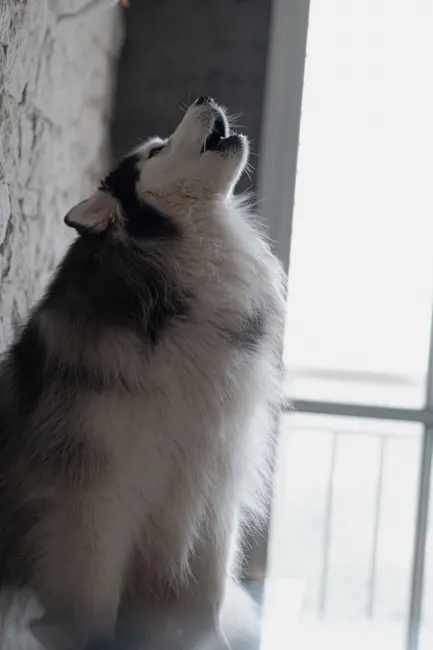
Hearing loss and vision loss compound this. A senior dog who can’t hear you rustling in the kitchen or see you clearly across the room loses the subtle reassurance that used to keep them calm. Suddenly the house feels emptier and scarier than it used to, even with familiar smells all around. Ask yourself:
- Has my dog started bumping into furniture or hesitating on stairs?
- Do they startle more easily, or fail to respond to their name from another room?
- Are they slower to rise, stiffer after resting, or reluctant to jump onto furniture they used to manage fine?
If you answered yes to any of those, please get your vet involved before assuming this is purely anxiety. Pain management alone resolves a shocking amount of “behavioral” senior dog barking.
An old dog crying out home alone isn’t giving you a hard time. They’re having a hard time. That distinction changes everything about how we respond.
Practical Environmental Fixes for the Workday
Once pain and sensory decline have been addressed or ruled out, we can talk about the home environment itself. Small, thoughtful changes here genuinely matter.
- White noise or a calm talk radio station softens the sudden silence that can feel jarring to a dog with declining hearing, and it masks outside triggers like delivery trucks or neighbor dogs.
- Pheromone diffusers mimic the calming chemical signals a mother dog produces, and many pet parents notice a real difference within a couple of weeks of consistent use.
- Safe, familiar confinement in one comfortable room, rather than the whole house, helps a disoriented senior brain feel like it has fewer unfamiliar corners to worry about.
- Visual barriers over windows facing the street cut down on triggers like passing cars, mail carriers, or other dogs that can set off a howling spiral.
For dogs whose anxiety runs deeper than environment alone can fix, a wearable option like the Dog Calming Collar, Pheromone Collar for Dogs can work alongside these environmental changes to provide continuous calming support throughout the day. It’s a budget-friendly addition that many pet parents layer in alongside diffusers for a fuller effect.

- 【Advanced Herbal Bead Slow-Release Technology】Unlike ordinary calming collars that lose effectiveness quickly under sunl…
- 【Up to 180 Days Long-Lasting Calming Support】Each calming bead provides up to 60 days of effectiveness, and every box in…
- 【Helps Reduce Anxiety, Barking & Stress Behaviors】Designed to help dogs stay calm during stressful situations including …
A weighted or textured comfort item in their resting space can also do more than you’d expect. Something like the PERFEMET Emotional Support Blanket gives an anxious old dog something to burrow into that holds warmth and scent, which mimics the pressure and closeness of being curled up next to a person. It’s also waterproof, which matters for senior dogs managing incontinence alongside anxiety, a combination I see constantly in our oldest sanctuary residents.

- High-Visibility Calming Blanket: Designed in a color dogs can clearly see, this emotional support blanket, provides a co…
- WaterProof and Leakproof Blanket: Adopts high-density waterproof membrane in the middle layer that effectively blocks wa…
- Suit for Multi-Scene: This waterproof pet blanket effectively protect sofas, couches, beds and home furniture from pet h…
Real-World Sanctuary Strategies for Gradual Desensitization and Enrichment
At the sanctuary, we don’t just leave and hope for the best. We build up to it, slowly, the way you’d rebuild trust with anyone who’s scared. This is where senior dog howling actually starts to soften over time, not overnight, but steadily.
Start with short absences. Step outside for two minutes. Come back before the crying escalates. Stretch that time gradually over days and weeks, always returning before panic sets in rather than after. This teaches an aging brain, even a foggy one, that departures end in reunions.
Enrichment before you leave matters more than most people realize. A frozen food puzzle, a snuffle mat, or a long-lasting chew given right as you walk out the door gives your dog something absorbing to focus on during those first critical minutes when anxiety spikes hardest. Keep the goodbye itself low-key. No big emotional send-offs. Calm in, calm out.
If your dog’s distress seems tied more to being alone specifically, rather than general anxiety, our comparison guide on Calming Chews vs Anxiety Vests: Which Wins Faster? can help you figure out which category of tool fits your specific dog’s triggers before you invest in either one.

When to Loop In Your Vet: Medication, Supplements, and Cognitive Support
There is no medal for handling this alone. If environmental changes and desensitization aren’t enough, and they often aren’t for a dog dealing with true cognitive decline, your vet has real tools that can help.
Prescription anti-anxiety medications exist specifically for situational and generalized anxiety in aging dogs, and they’re not a last resort or a sign of failure. They’re a legitimate part of a full happiness plan, often used short-term to break an anxiety cycle while other training and environmental strategies take hold.
Cognitive support diets formulated with antioxidants and medium-chain triglycerides have shown real promise in supporting brain function in dogs experiencing cognitive dysfunction. Ask your vet whether one might fit your dog’s specific health picture.
On the supplement side, natural calming chews containing melatonin and valerian root are worth a conversation with your vet, especially for milder cases or as a complement to other strategies. Rocco & Roxie Calming Chews combine both of those ingredients in a formula many pet parents use to ease nighttime restlessness and daytime dog separation anxiety alike.

- Unparalleled Support: Our delicious duck-flavored soft chews keep your dog cool, calm, and relaxed. Every bite promotes …
- Better Ingredients,Better Results: Our formula includes Ashwagandha and GABA, which work to block stress signals in the …
- Veterinarian Recommended: Our Calming health supplement is a vet-recommended, daily formula to keep your dog calm and re…
For a broader roundup of options worth exploring with your vet, check out 7 Best Calming Aids for Senior Dogs Who Bark at Night, which covers additional products for dogs whose distress shows up more after dark than during the workday.
Comparing Calming Solutions for Senior Dog Howling
| Product | Best For | Key Feature | Price Tier |
|---|---|---|---|
| PERFEMET Emotional Support Blanket | Anxious dogs needing physical comfort | Waterproof, weighted-feel comfort item | $$ |
| Dog Calming Collar (Pheromone) | All-day continuous calming support | Wearable pheromone release, 24/7 coverage | $$ |
| Rocco & Roxie Calming Chews | Situational anxiety and restlessness | Melatonin and valerian root formula | $$ |
A Gentle Word on Grace
I’ll be honest with you. There were seasons at the sanctuary where I felt like I was failing an old dog because the howling didn’t stop right away. It took me a long time to accept that slow progress is still progress, and that some dogs need three months of small steps before anything visibly changes. Give yourself that same grace. You’re not failing your dog by needing time to figure this out.
According to the ASPCA, separation-related distress in dogs of any age responds best to a combination of gradual training and environmental support rather than any single fix. That holds especially true for our seniors, whose bodies and brains need more patience layered into every step.
Frequently Asked Questions
Why did my senior dog suddenly start howling when I leave for work?
Sudden onset senior dog howling is often tied to cognitive changes, pain from arthritis, or declining vision and hearing rather than a training issue. These physical and neurological shifts change how a dog experiences being alone, so a vet visit is the right first step before assuming it’s purely behavioral.
Is senior dog barking all day a sign of cognitive dysfunction?
It can be one sign among several. Canine cognitive dysfunction often includes disorientation, disrupted sleep cycles, and increased vocalization, especially when a dog is left alone. If barking comes with pacing, staring at walls, or nighttime restlessness, mention cognitive dysfunction specifically to your vet.
Can calming chews or pheromone collars really help with dog separation anxiety?
Many pet parents see meaningful improvement using calming chews and pheromone collars as part of a broader plan that includes environmental changes and gradual desensitization. They tend to work best as support tools alongside training rather than as a standalone fix.
Should I get my senior dog a companion to stop the howling?
Not necessarily, and not right away. A new companion can sometimes help, but it can also overwhelm a senior dog who is already struggling with pain or cognitive changes. Address the underlying cause of the senior dog howling first, then consider companionship as a separate, carefully introduced decision.
Whatever you decide to try first, know that showing up for your old dog’s fear, again and again, is its own form of love. This is a sacred trust, caring for a soul who has given you years of loyalty and now needs your patience in return. You’ve got this.
Tell your pup I said Hi! — Dawn