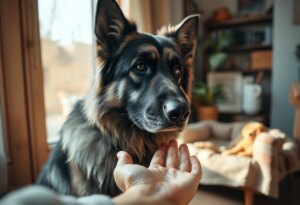


An anti-anxiety product for senior dog struggles is only worth your money if it treats the actual fear underneath the crying, not just the noise of it. If your old dog is falling apart every time you leave a room, that’s not “clingy” behavior. That’s a nervous system that’s lost its sense of safety, and it deserves real attention before it deserves a product off a shelf.
I’ve sat on the floor of Woody’s Place more nights than I can count, holding a trembling senior who couldn’t tell me what hurt or what scared them. So I want to talk to you honestly about what actually helps, and what’s just marketing dressed up in a calming voice.
Why Senior Dogs Develop Separation Anxiety Later in Life
Here’s something a lot of pet parents don’t expect: a dog who was independent and easygoing their whole life can suddenly become anxious and clingy in their senior years. It’s not a personality change. It’s biology catching up with them.
As dogs age, their sensory world starts closing in. Vision dims. Hearing fades. The house they’ve lived in for a decade starts to feel less predictable because they can’t track you through it the way they used to. When you leave a room, they’re not being dramatic. They genuinely may not know where you went or when you’re coming back.
A 2020 study published in the Journal of Veterinary Behavior found that up to 32% of dogs over age 8 show measurable signs of anxiety-related behavior changes. That’s nearly one in three senior dogs. This isn’t rare. It’s common, and it’s real.
Loss of routine confidence plays a huge role too. Older dogs lean hard on predictability. When their bodies stop cooperating the way they used to, the whole world starts to feel less stable, and that uncertainty often shows up as panic when you’re out of sight.
Old dogs don’t cry because they’re weak. They cry because something in their world stopped making sense, and the one steady thing they have left is you.
Rule Out Medical Causes Before You Call It “Just Anxiety”
I need you to hear this clearly: anxiety is real, but it’s often a symptom, not the root cause. Before you reach for any calming product, your vet needs to rule out what’s actually driving the fear.
Pain is a massive, under-diagnosed trigger. Arthritis, dental disease, and internal discomfort can make a dog feel unsafe in ways they can’t express except through clinginess and distress.
Cognitive dysfunction syndrome (CDS), sometimes called dog dementia, affects an estimated 14 to 35% of senior dogs according to UC Davis veterinary research. Dogs with CDS often forget where their humans went, get disoriented in familiar spaces, and panic when routines shift even slightly.
Vision and hearing loss compound all of it. A dog who can’t see or hear you leave the room loses the sensory thread that used to reassure them you were still close by.

- Ask your vet for a full senior wellness panel, including bloodwork and a pain assessment
- Request a CDS screening if you’re noticing disorientation, pacing, or nighttime restlessness
- Get a vision and hearing check, especially if the anxiety appeared suddenly
If your dog is also barking or getting reactive when distressed, it’s worth reading about what a vet behaviorist can do for a dog barking and biting out of fear. Sometimes what looks like aggression is just panic with nowhere to go.
What to Actually Look For in a Calming Product
Once medical causes are addressed, a calming product can genuinely help ease the edges of anxiety. But not all of them are created honestly, and this is where I get a little protective on your behalf.
A legitimate anti-anxiety product for senior dog anxiety should list its active ingredients clearly, at researched dosages, with some backing behind them. Look for:
- L-theanine, an amino acid shown to support calm alertness without sedation
- Alpha-casozepine, a milk protein derivative studied for its calming effect on stressed dogs
- Melatonin, used carefully and at appropriate doses to support relaxation and sleep cycles
These aren’t magic. But they’re studied, and they’re a world apart from vague “natural calming blend” labels that tell you nothing about what’s actually inside the bottle.
Comfort also comes from the environment, not just the supplement. A senior dog who feels physically supported tends to settle faster. This is where something like the Bedsure ComfyFleece Memory Foam Orthopedic Dog Bed earns its place. A joint-supportive, cocoon-style bed gives an anxious senior a physical sense of containment, which can genuinely lower stress in dogs who pace or won’t settle when left alone.

- Orthopedic Memory Foam Support: Experience a perfect combination of two of our signature fabrics. High-density memory fo…
- Enhanced Function & Comfort:Our orthopedic dog sofa is thoughtfully designed with a three-sided bolster providing unmatc…
- Supremely Soft Textures Embodied in Versatile Minimalism:Our spacious and cozy dog bed, crafted with supremely soft faux…
Comparing Calming Support Options for Senior Dogs
Here’s a straightforward look at how different comfort-based tools stack up. None of these replace a vet-guided plan, but each plays a real role in reducing distress.
| Product Type | Best For | Key Feature | Price Tier |
|---|---|---|---|
| Bedsure ComfyFleece Orthopedic Bed | Dogs who pace or can’t settle alone | Memory foam support, cocoon-style containment | $$ |
| MIXJOY Washable Large Dog Bed | Dogs with incontinence or frequent accidents from stress | Fully washable cover, joint cushioning | $$ |
| MidWest QuietTime Dog Bed | Crate-based or travel anxiety | Fits standard crates, easy-clean fabric | $ |
| L-theanine calming chews | Mild, situational anxiety | Non-sedating amino acid support | $$ |
| Vet-prescribed anxiolytic medication | Moderate to severe separation distress | Clinically dosed, vet-monitored | $$$ |
Dogs recovering from accidents or bladder control issues tied to stress do especially well on something washable. The MIXJOY Washable Large Dog Bed has become a staple in a lot of senior-dog households for exactly that reason. It’s forgiving when accidents happen, and forgiving is the whole game with an aging body.

- 𝐒𝐧𝐮𝐠𝐠𝐥𝐞-𝐑𝐞𝐚𝐝𝐲 𝐂𝐨𝐦𝐟𝐨𝐫𝐭: The calming donut design of the MIXJOY large dog bed provides a secure, cozy space with ultra-sof…
- 𝐒𝐨𝐨𝐭𝐡𝐢𝐧𝐠 & 𝐒𝐮𝐩𝐩𝐨𝐫𝐭𝐢𝐯𝐞: The raised rim of this calming dog bed cradles your pet’s head and neck, while the 2:1 blend of c…
- 𝐀𝐯𝐚𝐢𝐥𝐚𝐛𝐥𝐞 𝐢𝐧 𝐓𝐡𝐫𝐞𝐞 𝐒𝐢𝐳𝐞𝐬: Small (23″×23″×8″) for cats and puppies under 20 lbs; Medium (30″×30″×8″) for dogs up to 40 lb…
Red Flags and Marketing Traps to Watch For
This is the part where I get a little fired up, because I’ve seen too many worried pet parents get taken advantage of at their most vulnerable moment.
Proprietary blends that hide exact dosages are a red flag. If a label says “calming herbal complex” without listing milligrams per ingredient, you have no way of knowing if it’s therapeutic or just a sprinkle for the marketing copy.
Watch for products with no third-party testing or certificate of analysis. Anything you’re giving a senior body with declining kidney and liver function should be verifiable, not just trusted on faith.
And please, be skeptical of anything claiming to “cure” separation anxiety in senior dogs. There is no cure for a nervous system reacting to real loss of sensory clarity or cognitive decline. There’s only management, comfort, and patience. Anyone selling a cure is selling you a story, not a solution.

Honestly, who thinks like that?? Preying on someone’s love for their aging dog to move a bottle of unverified supplements. It makes my blood boil a little, if I’m being honest with you.
Building a Full Comfort Plan Beyond the Product
A calming supplement or bed is one piece of a much bigger picture. The dogs at the sanctuary who do best with anxiety aren’t the ones with the fanciest product. They’re the ones with the most consistent world around them.
Routine matters more than almost anything else. Feed, walk, and settle your senior dog at the same times every day. Predictability is its own form of medicine for an anxious old mind.
Some tools worth layering in:
- Pressure wraps, which mimic the feeling of swaddling and can genuinely lower a stressed dog’s heart rate
- Pheromone diffusers, which release calming synthetic dog-appeasing pheromones into the air, similar in concept to what we cover in our guide on choosing an anti-anxiety diffuser for senior dogs
- A calming bed setup near your usual spot, so your dog can rest close to you rather than isolated in another room
For nighttime anxiety specifically, a supportive setup like an anti-anxiety bed designed to stop nighttime barking can make a real difference for dogs who spiral once the house goes quiet.
If your dog’s crying is severe, frequent, or paired with destructive behavior, that’s the moment to loop your vet in about prescription anti-anxiety medication. There is no shame in that. Sometimes a nervous system needs pharmaceutical support to even begin responding to behavioral tools, and that’s not a failure on your part. That’s love, doing what’s necessary.
For crate-based dogs, or those who travel between rooms with you throughout the day, a familiar resting spot in more than one location helps. The MidWest Homes for Pets QuietTime Dog Bed fits neatly into most standard crates, giving anxious seniors a consistent, familiar texture and scent no matter which room they end up in.

- FITS YOUR 48″ DOG CRATE: Measures approximately 47.84 x 29.53 x 3.15 inches – designed to fit most standard 48-inch dog …
- VERSATILE DESIGN: Elastic corner straps secure the bed to your 48” crate pan, preventing bunching or shifting. Works as …
- ENGINEERED FOR EXCELLENCE: Soft synthetic fleece top delivers cozy, all-season comfort with quality stitching that resis…
A Sacred Trust, Not a Small Thing
Caring for a senior dog through anxiety is a sacred trust. They spent their whole lives trusting you to come back. The least we owe them in return is patience, honesty about what actually helps, and the willingness to look past a pretty label for something real.
According to the ASPCA, separation-related distress in dogs of any age responds best to a combination of environmental management, gradual desensitization, and professional guidance rather than any single fix. That holds especially true for senior dogs, whose anxiety is layered with physical and cognitive change.
Choosing the right anti-anxiety product for senior dog anxiety isn’t about finding a miracle. It’s about finding something honest that supports the dog in front of you, the one who’s scared and doesn’t have the words to tell you why.
Frequently Asked Questions
What is the best anti-anxiety product for a senior dog that cries when left alone?
There’s no single best anti-anxiety product for senior dog anxiety because it depends on the root cause. A supportive orthopedic bed paired with a vet-approved calming supplement containing L-theanine or alpha-casozepine tends to help dogs whose anxiety stems from sensory decline or mild stress, while dogs with cognitive dysfunction or severe distress often need veterinary-guided medication alongside environmental support.
Is my senior dog anxious or is it dementia?
The two often overlap, which is why a vet evaluation matters so much. Dogs with cognitive dysfunction syndrome tend to show disorientation, staring blankly, forgetting familiar routines, and nighttime restlessness, while pure anxiety usually centers more specifically around being separated from their person. Many senior dogs experience both at once.
Can calming supplements be given alongside prescription anxiety medication?
Sometimes, but always check with your veterinarian first. Certain natural compounds can interact with prescription anxiolytics or sedatives, and a senior dog’s liver and kidney function need to be factored into any combination of supplements and medication.
How long does it take for a calming product to work on an anxious senior dog?
Most natural calming supplements take one to two weeks of consistent use to show a noticeable effect, while environmental tools like orthopedic beds or pressure wraps can offer some comfort immediately. Patience matters here. A senior dog’s nervous system needs time and consistency to learn that safety again, not just a product.
If your old dog is crying every time you leave the room, please know this: it’s not annoying, it’s not manipulation, and it’s not something to just push through. It’s a real ache, and it deserves your attention, your vet’s input, and a little grace on the hard days. You’re doing better than you think.
Tell your pup I said Hi! — Dawn