
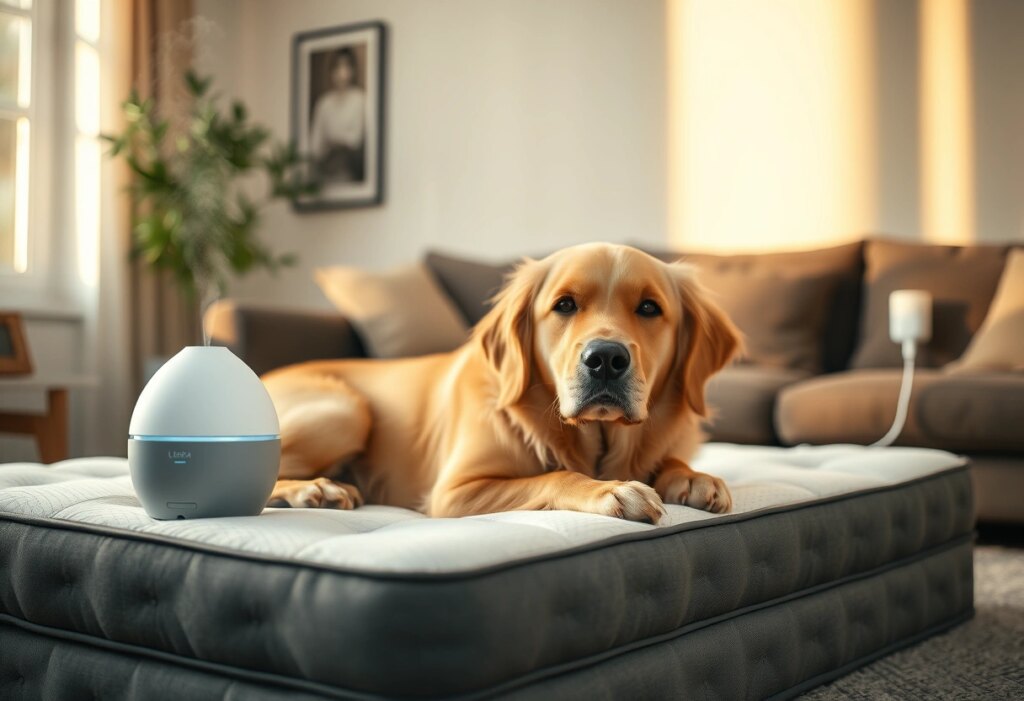

An anti-anxiety diffuser can meaningfully reduce reactive barking in an older dog, but only if you select one with the right release mechanism, coverage area, and formulation for a senior nervous system that no longer processes sound the way it used to. I want to walk you through the actual selection criteria, because most owners buy based on packaging claims rather than the physiology of what’s happening in their dog’s aging auditory and stress-response systems.
Why Senior Dogs Suddenly Start Barking at Everything
If your twelve-year-old dog has started barking at the dishwasher, the mail truck, or a door two rooms away, you’re not imagining a personality change. You’re likely observing presbycusis, the age-related hearing loss that affects high-frequency perception first. Counterintuitively, hearing loss doesn’t produce calm, quiet dogs. It often produces the opposite. When a dog can no longer localize where a sound is coming from, or only catches part of a sound’s frequency range, the brain treats the incomplete auditory information as a threat signal rather than a filtered, familiar one. A 2019 study published in the Journal of Veterinary Behavior found that roughly 32% of dogs over age ten showed new-onset noise sensitivity that hadn’t been present earlier in life. That’s not a small subset. That’s roughly a third of the aging dog population developing a functional startle disorder tied directly to sensory decline.
This matters for how you choose a diffuser, because you’re not managing a behavioral quirk. You’re managing a physiological shift in how the dog’s nervous system interprets ambiguous auditory input. An anti-anxiety diffuser works on the limbic system side of that equation, it doesn’t restore hearing acuity, but it can lower the baseline arousal that turns an ambiguous sound into a full vocalization event.
How Pheromone and Essential Oil Diffusers Actually Work
Dog-appeasing pheromone (DAP) analogs are synthesized versions of the fatty acid compounds secreted from the sebaceous glands of nursing mother dogs. Puppies use this chemical signal to stay calm and oriented near the dam. The theory behind diffuser use in adult and senior dogs is that the same olfactory pathway, once triggered, downregulates sympathetic nervous system activity, essentially nudging the dog out of fight-or-flight mode. A 2018 study in Veterinary Record found a 30% reduction in fear-based vocalization among kenneled dogs exposed to DAP diffusers compared to controls. That’s a real, measurable effect, not a marketing claim.

Essential oil-based diffusers, typically lavender or chamomile, work through a different mechanism entirely, more general aromatherapy-driven relaxation rather than a species-specific chemical signal. The data on essential oils in dogs is thinner and less consistent than the DAP research, which is worth knowing before you assume all “calming diffuser” products are interchangeable. If your dog’s noise reactivity has a strong startle-and-bark pattern rather than generalized restlessness, a pheromone-based product has a stronger evidence base behind it than a lavender-only formula.
Selection Criteria That Actually Matter
Here’s where most buying guides get vague. You need to evaluate four specific variables, not just brand reputation.
- Release rate: continuous vs. plug-in cycling. Continuous diffusers maintain a steady low-level concentration in the air, which matters for dogs with chronic, all-day reactivity. Cycling diffusers that pulse every few minutes are cheaper but create gaps in coverage that can coincide with a triggering noise.
- Coverage area in square feet. A diffuser rated for a 200-square-foot room won’t do much in an open-concept living space. Match the rated coverage to the actual room where your dog rests most.
- Formulation type. Synthetic pheromone analogs (DAP) have the stronger peer-reviewed backing for fear-based vocalization specifically. Lavender or chamomile blends may help with generalized restlessness but shouldn’t be your first choice if barking is the primary complaint.
- Battery backup or cordless function. This one gets overlooked constantly. Senior dogs with arthritis or vestibular issues often have a preferred resting spot that isn’t near an outlet. A plug-in-only diffuser is useless if your dog won’t relocate to be near it.
A multi-function kit like the NAKESY Dog Calming Pheromones Diffuser 6 in 1 Kit is worth a look for owners who want flexibility across multiple rooms, since it bundles a plug-in unit with a pheromone-based formulation rather than a straight essential oil blend. It sits in the mid-tier price range, which makes sense given the multi-piece kit format.

- 6 IN 1 DIFFUSER KIT – VETERINARY RECOMMENDED: The dog calming diffuser kit includes 2 diffuser head and 4 x 48ml refills…
- COVERS 700 SQUARE FEET: The dog calming pheromone diffuser effectively covers areas up to 700 square feet, providing con…
- EFFECTIVE CALMING WITHIN TWO WEEKS: The dog pheromones calming diffuser’s unique pheromone technology helps calm 90% of …
Comparing Formulation Types Side by Side
Before you commit to a product, it helps to see the tradeoffs laid out directly. This table breaks down the main categories of calming diffuser for dogs products by mechanism, evidence strength, and practical fit for senior dogs specifically.
| Diffuser Type | Primary Mechanism | Evidence Strength | Best Fit For | Price Tier |
|---|---|---|---|---|
| Synthetic Pheromone (DAP) | Mimics maternal appeasing pheromone, downregulates sympathetic arousal | Strong (peer-reviewed, kenneled dog trials) | Fear-based vocalization, startle barking | $$ |
| Lavender/Chamomile Essential Oil | General aromatherapy relaxation response | Limited, inconsistent across studies | Generalized restlessness, mild fidgeting | $$ |
| Multi-Function Pheromone Kit | Combines pheromone diffusion with room-by-room coverage units | Moderate to strong (pheromone-based) | Multi-room homes, dogs with unpredictable resting spots | $$$ |
| Battery-Backup Cordless Unit | Portable pheromone or oil release independent of outlet proximity | Depends on formulation used inside unit | Senior dogs with limited mobility or arthritis | $$$ |
Don’t Count on a Diffuser to Work Miracles
I want to be direct about the limits of this tool, because the data is contradictory when you look across the full body of research. Not every diffuser study shows the same effect size, and some trials on essential oil blends in particular have failed to reach statistical significance outside controlled kennel environments. A diffuser is antecedent management. It changes the sensory environment before a triggering noise occurs, but it does not teach your dog a new behavioral response to noise itself. If you’re using a diffuser as your only intervention for a dog that barks all day at passing cars, you’re likely to see a partial reduction at best, not a resolution.

The dogs that show the most durable improvement are never the ones on a diffuser alone. They’re the ones on a diffuser paired with a structured desensitization protocol, where the pheromone lowers baseline arousal enough that the dog can actually learn from repeated, controlled exposure to the trigger sound.
This is consistent with how sensory processing changes with age. An older dog’s threshold for what counts as “dangerous input” has shifted lower, and no diffuser resets that threshold on its own. You need both the chemical intervention and a behavioral one. If your dog’s reactivity is concentrated specifically after dark, our piece on how to stop senior dog barking at night with vet-backed techniques pairs well with diffuser use, since nighttime barking often has a distinct sleep-cycle and vision-related component that daytime reactivity doesn’t share.
Supporting the Sleep and Rest Environment Around the Diffuser
Noise anxiety in aging dogs rarely exists in isolation from disrupted rest. Cognitive decline and fragmented sleep cycles are well documented in senior dogs, and a dog who isn’t sleeping deeply is also a dog with a lower threshold for startle response the next time a noise occurs. While there isn’t a dog-specific circadian audio product on the market yet, human sleep environment tools illustrate the same underlying principle behaviorists rely on: consistent, low-arousal sensory input at rest correlates with better next-day regulation. The Hatch Restore 3 Science-Backed Sleep Audio and Circadian Light is built for human circadian regulation, but it’s a useful reference point for owners thinking about how consistent evening light and sound cues can settle a household’s overall arousal level, which indirectly benefits a noise-reactive senior dog resting nearby. This is a premium investment more suited to owners who want a broader environmental overhaul rather than a dog-specific fix.

- 𝗖𝗿𝗲𝗮𝘁𝗲 𝗵𝗲𝗮𝗹𝘁𝗵𝘆 𝘀𝗹𝗲𝗲𝗽 𝗵𝗮𝗯𝗶𝘁𝘀: 𝖱𝖾𝗌𝗍𝗈𝗋𝖾 𝟥 𝗂𝗌 𝖽𝖾𝗌𝗂𝗀𝗇𝖾𝖽 𝗍𝗈 𝗁𝖾𝗅𝗉 𝗒𝗈𝗎 𝖻𝗎𝗂𝗅𝖽 𝖺 𝖻𝖾𝖽𝗍𝗂𝗆𝖾 𝗋𝗈𝗎𝗍𝗂𝗇𝖾 𝗍𝗁𝖺𝗍 𝗊𝗎𝗂𝖾𝗍𝗌 𝗒𝗈𝗎𝗋 𝗆𝗂𝗇𝖽 𝗌𝗈 𝗒𝗈𝗎 𝖼𝖺𝗇 …
- 𝗛𝗮𝘁𝗰𝗵+ 𝗦𝘂𝗯𝘀𝗰𝗿𝗶𝗽𝘁𝗶𝗼𝗻: 𝖯𝗎𝗋𝖼𝗁𝖺𝗌𝖾 𝗂𝗇𝖼𝗅𝗎𝖽𝖾𝗌 𝟥𝟢-𝖽𝖺𝗒 𝖿𝗋𝖾𝖾 𝗍𝗋𝗂𝖺𝗅 𝗈𝖿 𝖧𝖺𝗍𝖼𝗁+ 𝗉𝗋𝖾𝗆𝗂𝗎𝗆 𝖼𝗈𝗇𝗍𝖾𝗇𝗍 𝖺𝗇𝖽 𝖿𝖾𝖺𝗍𝗎𝗋𝖾𝗌, 𝖿𝗈𝗋 𝗇𝖾𝗐 𝗌𝗎𝖻𝗌𝖼𝗋𝗂𝖻𝖾𝗋𝗌 𝗈𝗇𝗅…
- 𝗨𝗻𝘄𝗶𝗻𝗱 𝗻𝗶𝗴𝗵𝘁𝗹𝘆: 𝖱𝖾𝗌𝗍𝗈𝗋𝖾 𝗁𝖾𝗅𝗉𝗌 𝗒𝗈𝗎 𝖼𝗋𝖾𝖺𝗍𝖾 𝖺 𝖻𝖾𝖽𝗍𝗂𝗆𝖾 𝗋𝗈𝗎𝗍𝗂𝗇𝖾 𝗌𝗈 𝗒𝗈𝗎 𝖼𝖺𝗇 𝖿𝖺𝗅𝗅 𝖺𝗌𝗅𝖾𝖾𝗉 𝖾𝖺𝗌𝗂𝖾𝗋 𝖺𝗇𝖽 𝖿𝖺𝗌𝗍𝖾𝗋. 𝖯𝗋𝖾𝗉𝖺𝗋𝖾 𝗒𝗈𝗎𝗋 𝗆𝗂𝗇𝖽 𝖿…
A Note on Skin and Coat Comfort During Anxiety Episodes
One detail that gets overlooked in noise-reactivity cases is self-soothing behavior. Anxious senior dogs frequently lick, chew, or over-groom themselves during and after a barking episode, which can leave the coat dry or irritated, particularly in dogs with thinning senior coats. A gentle hydrating option like the Laouta Daily Hydration Body Oil in Greek Sage can be useful as part of a broader calming touch routine, applied during a post-bark decompression period when you’re using slow stroking or TTouch-style contact to bring arousal back down. This isn’t a treatment for the anxiety itself, but supporting skin comfort removes one more variable that can keep a dog in a heightened, itchy, agitated state. It’s a budget-friendly addition to a grooming routine rather than a core intervention.

- This Deep Hydrating Body Oil from Laouta is formulated specially for maximum moisturization. This deep-hydrating body oi…
- Say goodbye to greasy lotions! This oil goes on smooth and dries quickly, leaving your skin silky and glowing without le…
- This oil-based moisturizer contains a blend of ingredients for strong, beautiful hydration. Helichrysum flower oil helps…
Implementation Protocol: Placement, Timing, and Tracking
Buying the right dog pheromone diffuser is only step one. How you deploy it determines whether you’ll actually see behavior change.
- Placement: Position the diffuser within 6 to 10 feet of your dog’s primary resting area, not near a doorway or high-traffic zone where airflow disperses the compound before it reaches your dog.
- Acclimation window: Give the diffuser 24 to 48 hours of continuous operation before evaluating any behavioral change. Pheromone analogs need time to build ambient concentration in the room; judging effectiveness after a few hours will give you a false negative.
- Baseline tracking: Before you even plug it in, spend two or three days logging bark frequency, trigger type, and duration on a simple chart. This becomes your Happiness Plan baseline.
- Post-diffuser logging: Continue the same tracking sheet for at least two weeks after introducing the diffuser. Look for frequency reduction, not necessarily complete elimination. A drop from fifteen barking episodes a day to six is a meaningful clinical improvement even though it doesn’t feel like a fix.
- Pair with desensitization: Once baseline arousal is lower, begin controlled, low-volume exposure to the specific trigger sounds, pairing each exposure with food reinforcement. This is where the actual learning happens.
For dogs whose barking spans most of the day rather than clustering around specific triggers, it’s also worth reading our guide on calming solutions for senior dogs barking all day, since chronic daytime vocalization sometimes points toward a cognitive or pain-related driver that a diffuser alone won’t resolve.
What the Research Says About Long-Term Use
One legitimate owner question is whether a dog can become habituated to a pheromone diffuser over time, effectively rendering it ineffective. Current data doesn’t show strong evidence of tolerance building the way it might with some pharmaceutical interventions, though most controlled trials only track outcomes across a few weeks rather than months. According to the ASPCA’s guidance on common dog behavior issues, environmental management tools like pheromone diffusers work best as one layer within a multi-pronged behavior plan rather than a standalone solution, which lines up with what I see in clinical practice. If you notice diminishing returns after a few months, it’s reasonable to cycle the diffuser off for a week or two and reassess, though this isn’t something the current literature has rigorously tested in home settings.
Frequently Asked Questions
Can an anti-anxiety diffuser stop noise-triggered barking completely?
Not on its own. An anti-anxiety diffuser lowers baseline arousal and can meaningfully reduce the frequency and intensity of barking episodes, but it functions as antecedent management. Full resolution typically requires pairing the diffuser with a desensitization protocol that teaches the dog a new response to the trigger sound.
How long does it take for a calming diffuser for dogs to start working?
Most pheromone-based diffusers need 24 to 48 hours of continuous operation to build enough ambient concentration in a room to influence behavior. Judging effectiveness within the first few hours often produces a misleading result, so track bark frequency over a full week before drawing conclusions.
Is a synthetic pheromone diffuser better than an essential oil diffuser for senior dogs?
For fear-based vocalization specifically, synthetic dog-appeasing pheromone formulas have stronger peer-reviewed support, including a 2018 Veterinary Record study showing a 30% reduction in fear-based barking. Essential oil blends like lavender may help with general restlessness, but the supporting data is less consistent.
Why does my senior dog bark more at noises now than when it was younger?
Age-related hearing loss, known as presbycusis, can distort sound localization and frequency perception, causing the brain to interpret incomplete auditory input as a potential threat. Research published in the Journal of Veterinary Behavior found that about 32% of dogs over age ten developed new noise sensitivity that wasn’t present earlier in life.