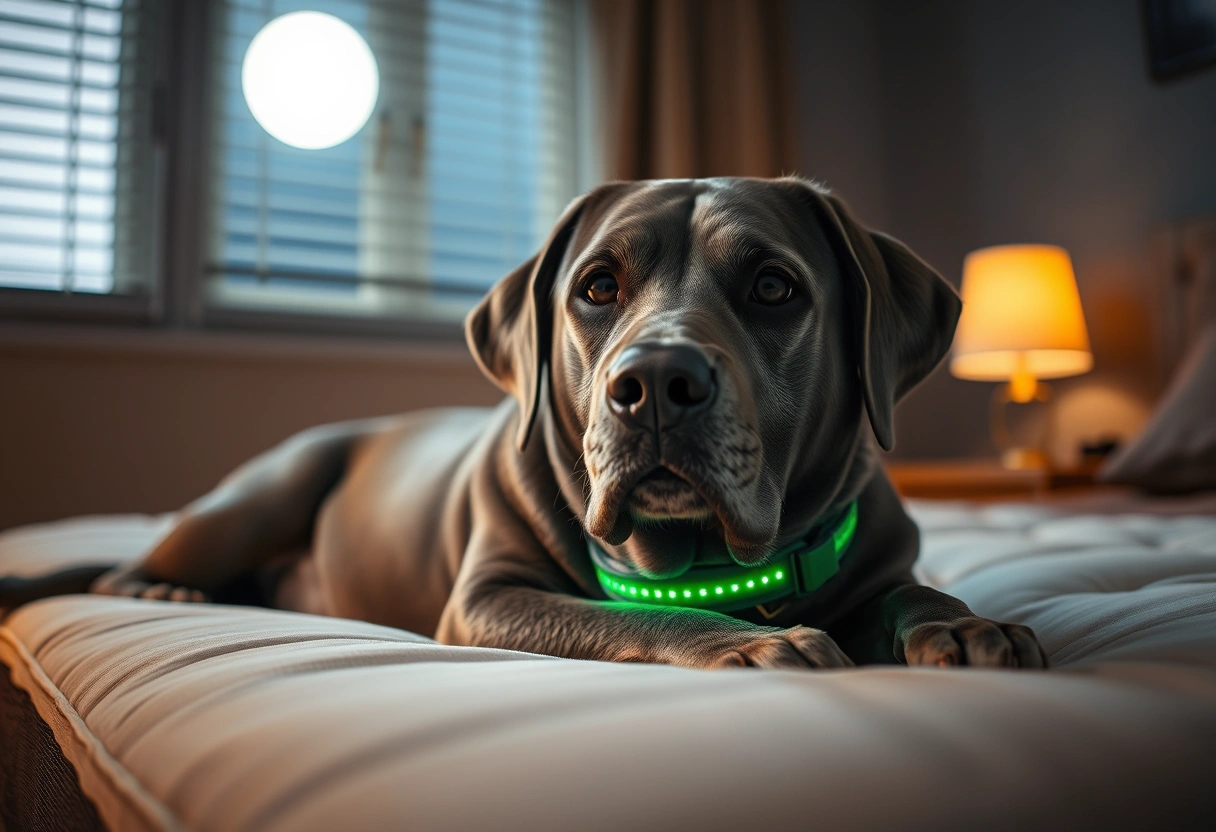
An anti-bark device is not a plug-and-play fix for a senior dog vocalizing at 2 a.m., and treating it like one is the single most common mistake I see in behavior consults. Nighttime barking in an aging dog is a symptom before it’s a nuisance, and the device you choose has to respect that distinction or you risk suppressing a distress signal without ever addressing what caused it.
Define the Behavior First: Why Nighttime Barking Isn’t “Just Noise”
When an 11-year-old Labrador starts pacing and barking at midnight, owners tend to frame it as a training problem. Behaviorally, that’s an incomplete read. Neilson, Hart, Cliff, and Ruehl’s 1999 study on canine cognitive dysfunction found that roughly 28 percent of dogs aged 11 to 12 showed at least one sign of cognitive decline, and that number climbed to nearly 68 percent in dogs aged 15 to 16. Disrupted sleep-wake cycling, sometimes called “sundowning” in the veterinary literature, is one of the hallmark signs. So is vocalization that seems to come from nowhere. An anti-bark device can interrupt the behavior in the moment, but it does nothing to touch the underlying neurological changes driving it. If your dog’s nighttime barking started recently and coincides with disorientation, house-soiling, or staring at walls, you’re looking at a case profile that needs veterinary workup before you’re looking at a bark control device.
Rule Out Medical and Sensory Triggers Before You Shop
I ask every client the same three questions before we talk about tools: has your dog’s hearing changed, has your vision changed, and has your mobility changed. Senior dogs lose sensory input gradually, and a dog with declining vision or hearing is more prone to waking disoriented and vocalizing out of anxiety rather than boredom or attention-seeking. Orthopedic pain is another major contributor. A dog who can’t get comfortable because of hip or elbow arthritis will bark, whine, or pace repeatedly through the night, and no dog barking deterrent on the market will resolve that discomfort. Correcting a pain-driven distress vocalization with an aversive stimulus doesn’t just fail to help; it actively suppresses a welfare signal the dog is trying to send you. Before purchasing any device, schedule a veterinary exam that screens for arthritis, cognitive dysfunction, and sensory decline. The ASPCA’s senior pet care guidelines are a solid starting reference for what that exam should cover.
The data is contradictory on how much correction-based tools actually change underlying arousal versus simply suppressing the observable behavior. If you can’t identify why your dog is barking, you’re guessing at a solution rather than treating a cause.
Compare Correction Modalities Objectively
Once medical causes are ruled out or being managed concurrently, it’s reasonable to look at a nighttime barking solution as one layer of support. Not all correction modalities are equal, and the research here matters more than marketing copy. Wells (2001), published in Applied Animal Behaviour Science, compared citronella spray collars against static (shock) collars for reducing barking and found citronella performed comparably in effectiveness without producing the same stress indicators, such as elevated cortisol or avoidance behavior, associated with the static units. That’s a meaningful data point for senior dogs specifically, because aging animals often have less physiological reserve to cope with acute stress responses. Ultrasonic devices, which emit a high-frequency tone inaudible to humans, avoid physical correction entirely but rely on the dog’s hearing being intact, which circles back to the sensory screening step. Vibration collars are the gentlest tactile option and tend to be the best-tolerated modality for dogs with any degree of anxiety sensitivity.
| Device Type | Correction Method | Best For | Senior Dog Suitability | Price Tier |
|---|---|---|---|---|
| Citronella Spray Collar | Scent burst | Dogs sensitive to sound/touch | High (per Wells, 2001 data) | $$ |
| Ultrasonic Device | High-frequency tone | Dogs with intact hearing | Moderate (screen hearing first) | $ |
| Vibration Collar | Tactile buzz | Anxious or hearing-impaired dogs | High | $$ |
| Static Collar | Mild electrical stimulation | Not recommended for fragile seniors | Low | $$$ |
| Smart Monitoring Collar | Alerts owner, no correction | Owners wanting data over correction | High | $$$$ |
Match the Anti-Bark Device to Your Dog’s Physiology
Fit and sensitivity settings matter as much as modality. A collar-based anti-bark device sitting on an arthritic neck needs to be lightweight, and the sensitivity threshold needs calibration so it isn’t triggering on a coughing fit or a neighbor’s door slam. False triggers are the number one complaint I hear from owners, and they erode trust in the tool fast, which usually means the device ends up in a drawer within two weeks. If you’re already using a collar-based monitoring tool for a senior dog’s general safety and location tracking, something like the Smart Pet Tracker for Collar can double as a way to log nighttime movement patterns and correlate them with barking episodes, which gives you actual data instead of guesswork when you talk to your vet.

- Smart Pet Tracker for Collar -ASX
- Precise Tracking: With our state-of-the-art dog tracking collar, you’ll receive instant location updates wherever your p…
What About Barking During Travel or Vet Visits?
Nighttime barking isn’t the only context where senior dogs vocalize out of stress, and it’s worth addressing adjacent situations since the same dog struggling at night often struggles during car rides or unfamiliar handling. If your dog barks or shows anxious body language during transport, a stabilized, properly secured setup like the FidoRido Dog Car Seat reduces the physical instability that often drives stress vocalization in older dogs with balance or vision impairment.

- The best for pet safety: The FidoRido Pet Car Seat gives your pet a safe and cozy place to ride in the car, lowering the…
- Innovative Design: Our Car Seat has a special design that keeps your pet elevated so they can enjoy the view without dis…
- Easy Installation: Pet owners may quickly and easily set it up because it is designed for easy installation. The movable…

- Breathable & Lightweight Material: This printed dog muzzle combines soft, breathable mesh with lightweight yet durable c…
- Upgraded Escape-Proof Neck Design: This puppy muzzle features our upgraded escape-proof elastic neck collar, which comfo…
- Adjustable Snout & Head Strap: This dog mussel enables a securely customized fit for your pup through dual-point snout a…

Pair the Bark Control Device with a Happiness Plan, Not Just Correction
I never recommend a bark control device as a standalone intervention. It should sit inside a broader Happiness Plan built around antecedent management, meaning you’re changing the conditions that lead to barking before it starts, rather than only reacting once it happens. For a senior dog, that plan typically includes:
- A consistent wind-down routine starting 30 to 45 minutes before bed, with low-arousal activities like gentle sniffing walks or slow-feeder enrichment
- A night-light in the sleeping area for dogs with vision loss, since sudden darkness disorientation is a common sundowning trigger
- An orthopedic bed positioned in a low-traffic, temperature-stable area to minimize discomfort-driven waking
- A predictable bathroom schedule late in the evening, since a full bladder is an underrated cause of nighttime vocalization in aging dogs
This approach also gives the dog agency. Rather than only experiencing a correction after barking starts, the dog learns that calm behavior reliably leads to comfort and predictability, which is a far more sustainable behavior change than suppression alone. If daytime barking or general anxiety is also part of the picture, it’s worth reviewing our breakdown of anti-barking devices for senior dog anxiety for options geared toward daytime triggers specifically, and pairing a device with calming chews for dogs that bark all day alone can help address the anxiety component pharmacologically alongside any tool-based correction.
Choosing the Right Nighttime Barking Solution for Your Dog’s Case Profile
Every senior dog’s case profile is different, so the “best” anti-bark device depends heavily on what’s driving the behavior. A dog with confirmed cognitive dysfunction and vision loss will likely do better with environmental management (night-lights, consistent routine) plus a gentle vibration collar as a backup cue, rather than an ultrasonic device the dog may not fully hear. A dog with no cognitive signs but a clear pattern of barking at outside noises might respond well to a citronella collar, given Wells’ data on effectiveness without added stress markers. And a dog whose barking coincides with new mobility limitations needs a veterinary pain management plan first, with any bark control device layered in only after discomfort is addressed. Matching the tool to the dog, rather than buying the most popular device on a bestseller list, is what actually moves the needle on a dog barking deterrent working long-term instead of getting abandoned after a week.
Frequently Asked Questions
Is it safe to use an anti-bark device on a senior dog with arthritis?
It can be, provided the device is lightweight and the collar fit doesn’t add pressure to the neck or shoulders. Vibration and citronella-based options are generally better tolerated than static collars for arthritic dogs, since they avoid additional physical stress on an already compromised body. Always check with your veterinarian before introducing a new collar-based device if your dog has significant joint disease.
Can a bark control device help if my dog has canine cognitive dysfunction?
A device may interrupt the vocalization in the moment, but it will not resolve the underlying cognitive changes causing it. Dogs with confirmed cognitive dysfunction typically need a combination of veterinary-prescribed medication, environmental management like night-lights and routine, and only secondarily a bark control device as a supporting tool.
What’s the most humane type of anti-bark device for older dogs?
Based on published behavioral research, citronella spray collars and vibration collars tend to produce fewer stress indicators than static (shock) collars while achieving comparable reductions in barking frequency. These modalities are generally the preferred starting point for senior dogs, who often have less physiological resilience to acute stress.
How do I know if my dog’s nighttime barking is medical or behavioral?
Sudden-onset barking, especially paired with disorientation, pacing, house-soiling, or changes in the sleep-wake cycle, points toward a medical or cognitive cause and warrants a veterinary exam before trying a nighttime barking solution. Gradual, context-specific barking, such as reacting to outside noises, is more likely to respond to a bark control device paired with environmental management.