
Calm dog breeds get recommended constantly to owners chasing a quieter, hair-free household, but the biology behind that recommendation is more nuanced than most adoption guides let on. Coat type, arousal threshold, and allergen output are three separate variables that owners routinely collapse into one word: hypoallergenic. They aren’t the same thing, and treating them as interchangeable sets owners up for disappointment around month three, right when the novelty wears off and the actual maintenance routine sets in. This piece breaks down what “low-shedding” means at the follicle level, why the allergy claims deserve skepticism, and which six breeds tend to score well on both temperament and coat-management metrics, particularly for households where a senior owner’s physical capacity has to factor into the equation.
What “Low-Shedding” Actually Means at the Follicle Level
Dogs shed according to the hair growth cycle their follicles are wired for, and there are two dominant patterns worth understanding before you pick a breed based on a groomer’s brochure. Most dogs, including double-coated breeds like Labrador Retrievers and Golden Retrievers, cycle through anagen (growth), catagen (transition), and telogen (resting) phases on a seasonal schedule. That seasonal synchronization is what produces the dramatic spring and fall “blowouts” owners associate with shedding season. Poodles, Bichon Frises, and several terrier types operate differently. Their hair follicles grow continuously and asynchronously, meaning each follicle is on its own independent clock. The practical result is less visible shedding because hair is lost in small amounts continuously rather than in seasonal waves, but it also means the coat requires regular trimming since it doesn’t naturally reach a terminal length and shed out.
This distinction matters more than most first-time owners realize. Calm dog breeds with continuous-growth coats trade seasonal shedding for a permanent grooming commitment. There’s no free lunch in coat biology. Veterinary dermatology literature consistently frames this as a growth-cycle difference, not a superiority of one coat type over another, and I’d encourage owners to think of it the same way: a maintenance tradeoff, not a magic fix.
The Hypoallergenic Myth: What the Allergen Data Actually Shows
Here’s where I have to correct a persistent misconception, because the data is contradictory to what the pet industry has marketed for two decades. A widely cited 2019 study analyzing Can f 1 allergen levels (the primary dog allergen protein found in dander, saliva, and hair) found no statistically significant difference in allergen concentration between breeds marketed as hypoallergenic and standard shedding breeds. Allergen levels varied enormously between individual dogs within the same breed, but breed category itself was not a reliable predictor. This aligns with broader immunology findings published through outlets like the Journal of Allergy and Clinical Immunology, which point to allergen shedding being driven by individual variation, coat hygiene, and environmental factors rather than breed classification alone.
What does this mean practically? Low-shedding dogs deposit less visible hair around the home, which does reduce the amount of allergen-carrying material accumulating on furniture and floors. That’s a real, measurable benefit. But calling a breed “hypoallergenic” implies a guarantee that doesn’t hold up under lab scrutiny. Allergy-prone owners should treat any breed claim skeptically and, where possible, spend supervised time with an individual dog before committing, since individual allergen output varies so widely. Don’t count on breed labels to work miracles your immune system disagrees with.

Reduced shedding lowers the volume of allergen-carrying hair in the environment, which is a genuine quality-of-life improvement for allergy-sensitive households. It is not the same as allergen elimination, and owners who conflate the two often end up frustrated when symptoms persist despite an expensive, carefully chosen dog.
Six Calm Dog Breeds With Favorable Coat and Temperament Profiles
I selected these six candidates by cross-referencing AKC breed temperament descriptions with C-BARQ (Canine Behavioral Assessment and Research Questionnaire) data trends on arousal, trainability, and stranger-directed excitability. Calm dog breeds worth considering for a quiet household tend to score low on excitability subscales and moderate-to-high on trainability, which correlates with easier household management overall, not just less barking.
- Poodle (Standard or Miniature): Continuously growing single coat, high trainability scores, low-to-moderate excitability once past adolescence. Requires professional grooming every four to six weeks.
- Bichon Frise: Curly, continuously growing coat with minimal shedding. C-BARQ data trends show moderate stranger-directed sociability but generally low aggression scores, making them adaptable to quieter households.
- Basenji: Short single coat, genuinely low shedding by seasonal cycle standards, and notably quiet vocally since the breed rarely barks in the traditional sense. Independent temperament, so trainability requires patience.
- Shih Tzu: Long continuously growing coat, low arousal threshold in most individuals, and a long history as a companion breed bred specifically for calm indoor temperament.
- Whippet: Short single coat with low shedding output relative to double-coated breeds of similar size. Surprisingly low indoor energy once exercise needs are met; many behave like a calm dog breed despite sprinting ability outdoors.
- Portuguese Water Dog: Continuously growing, dense curly coat. Higher trainability scores in AKC working-group data, though this breed needs more mental engagement than the others on this list.
None of these are zero-maintenance. Continuous-growth coats demand recurring grooming appointments, and even the “quietest” temperaments still need structured socialization during the developmental window to maintain that low-arousal baseline into adulthood.
Grooming Frequency and Coat-Type Maintenance Protocol
Coat maintenance splits into two functional categories: single-coated continuous-growth breeds and double-coated seasonal shedders. Owners consistently underestimate the time commitment of the first category while overestimating the second.
| Breed | Coat Type | Grooming Frequency | Shedding Level | Trainability (AKC/C-BARQ Trend) | Price Tier (Grooming Supplies) |
|---|---|---|---|---|---|
| Poodle | Single, continuous growth | Every 4-6 weeks (professional) | Very low | High | $$$ |
| Bichon Frise | Single, curly, continuous growth | Every 4-6 weeks | Very low | Moderate-High | $$$ |
| Basenji | Single, short | Weekly brushing only | Low (seasonal, minor) | Moderate | $ |
| Shih Tzu | Single, long, continuous growth | Every 3-4 weeks | Very low | Moderate | $$$$ |
| Whippet | Single, short | Weekly wipe-down/brushing | Low | Moderate-High | $ |
| Portuguese Water Dog | Single, curly, dense | Every 4-6 weeks | Very low | High | $$$$ |
For allergy-prone households, antecedent management matters as much as breed selection. Practical steps include HEPA filtration in main living areas, designating dog-free zones (especially bedrooms), washing bedding weekly, and keeping the coat clean between grooming appointments through regular brushing that removes loose hair and dander before it becomes airborne. This isn’t about the dog’s behavior; it’s environmental control, the same principle we apply when managing any stimulus that affects a shared living space.

Senior-Specific Considerations for Owners and Aging Dogs
Matching a calm dog breed to an aging owner’s physical capacity requires an honest inventory, not optimism. Grooming a continuously growing coat isn’t optional maintenance, it’s a recurring commitment that has to fit within an owner’s mobility, budget, and energy level over the dog’s full lifespan, not just year one. A Poodle or Portuguese Water Dog that skips professional grooming for a few months develops matting that becomes painful and, in some cases, requires sedated shaving to correct. That’s a welfare issue, not just a cosmetic one.
If you’re weighing bed setups for a lower-energy senior companion, our comparison of a calming bed vs orthopedic bed for senior dogs is a useful next read, since coat type and joint support needs often intersect once a dog reaches its geriatric years. Quiet downtime activities matter here too. Many owners managing a calm household find that having something low-stimulation to do alongside their dog during recovery or rest periods supports the relationship. A Bark to Bliss: Relaxing All Dog Breeds Adult Coloring Books set is a reasonable, budget-friendly way to build in that shared quiet time without adding noise or activity to the home.
There is an issue displaying Amazon products. Please contact the administrator to check that.Happiness Plan: A Fit-Assessment Checklist Before Adoption
Before committing to any of these six breeds, run through this short evaluation. It’s the same functional framework I use when assessing whether a household setup will support long-term behavioral stability in a new dog.
- Grooming budget audit: Can you realistically commit to recurring professional grooming costs for the dog’s full lifespan, including senior years when transport to a groomer may become harder?
- Physical capacity check: Daily brushing sessions for continuously growing coats take real time and some hand strength. Confirm this is sustainable, not just doable occasionally.
- Allergy trial run: If allergy sensitivity is a factor, arrange supervised exposure to an individual adult dog of the breed before adoption, given how much allergen output varies dog to dog.
- Arousal threshold observation: Spend time with the specific dog, not just breed descriptions, watching how it responds to household noise, guests, and daily routine changes.
- Long-term energy match: Confirm the breed’s exercise needs align with what you can provide consistently, not just in the first enthusiastic weeks.
Households that also share space with a golden retriever or are considering one alongside a lower-shedding companion might find our breakdown of male vs female Golden Retriever personality differences useful for temperament planning across multiple dogs. For readers weighing a small-space living situation as part of the same decision, our guide to medium-sized family dogs for small spaces covers space-to-temperament fit in more depth.
Hydration monitoring becomes especially relevant for aging dogs of any breed, since reduced water intake is a common early indicator of kidney changes in seniors. A consistent water source, like the PETLIBRO Dog Water Fountain, 2.1 Gal/270oz, can help encourage steady intake in dogs who become pickier about stagnant bowl water as they age, which is common across all six of the breeds discussed here.
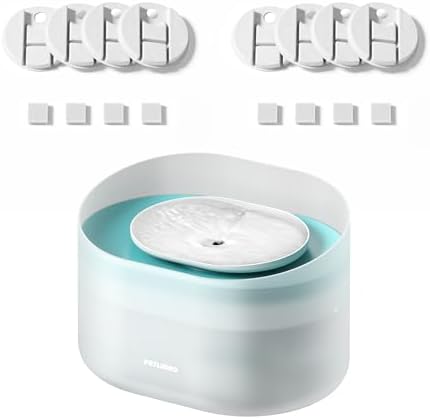
- Whirlpool Water Flow – The PETLIBRO Capsule dog water fountain features an innovative whirlpool flow that continuously f…
- Compatible Dog Fountain – The replacement filters are ONLY compatible with PETLIBRO Capsule Dog Water Fountain PLWF008.
- Splash-less Design – This water dispenser for dogs has a 2.4” high anti-splash shield and a 2.2” wide buffer zone to p…
Putting the Data to Work: Choosing Among Calm Dog Breeds With Clear Expectations
The six breeds profiled here represent genuinely favorable combinations of low shedding output and low behavioral excitability, based on the coat biology and behavioral datasets discussed above, but no breed selection replaces individual assessment. Calm dog breeds still produce calm individual dogs only when paired with consistent socialization, positive reinforcement training, and an environment that supports their sensory needs. The allergen data should recalibrate expectations rather than eliminate hope: reduced hair volume genuinely helps allergy-sensitive homes even without a full hypoallergenic guarantee. For further general reference on canine coat biology and shedding cycles, the American Kennel Club maintains an accessible overview grounded in veterinary consensus.
Owners who want a visual reminder of what breed diversity and temperament variation actually look like across dog populations sometimes appreciate having art around the home that reflects that appreciation. The What Are Dogs Thinking?: A Collection of Dog Breed Portraits book pairs well with the kind of quiet, low-stimulation household these calm dog breeds are best suited for.

Frequently Asked Questions
Are hypoallergenic dog breeds actually allergen-free?
No. Research analyzing Can f 1 allergen levels found no significant difference between breeds marketed as hypoallergenic and standard breeds. Low-shedding dogs distribute less hair around the home, which reduces allergen exposure somewhat, but individual variation matters more than breed classification, and no dog breed is truly allergen-free.
Which calm dog breeds require the least grooming effort?
Basenjis and Whippets require the least ongoing grooming among calm dog breeds discussed here, since both have short single coats that need only weekly brushing rather than professional trims. Continuously growing coats like those on Poodles and Bichon Frises look tidy but require recurring grooming appointments every four to six weeks.
Do calm dog breeds still need daily exercise?
Yes. A calm temperament reduces excitability and reactivity, but it does not eliminate the need for physical and mental stimulation. Even lower-energy breeds like the Shih Tzu benefit from consistent daily walks and enrichment, and skipping exercise can actually increase restlessness and attention-seeking behavior over time.
Is it easier to manage a low-shedding senior dog’s coat as it ages?
Not automatically. Senior dogs with continuously growing coats often need more frequent, gentler grooming since aging skin becomes more sensitive and matting can develop faster around joints affected by arthritis. Owners should plan for potentially shorter, more manageable grooming appointments rather than assuming the routine stays static through the dog’s later years.