
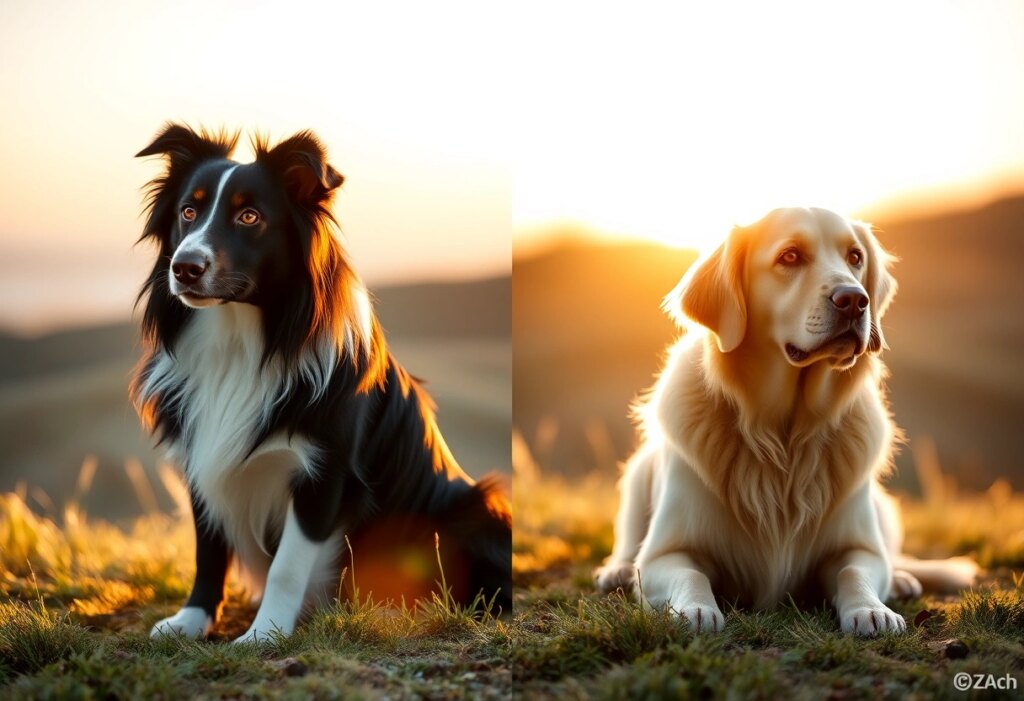

Coltriever coat color is one of those questions that seems simple until you’re standing in front of two beautiful pups, one black and white, one golden, and you realize you have no idea which one actually fits your life. I get asked about this constantly, and honestly, it’s a good question to ask *before* you bring a dog home, not after. This mix, born from a Collie and a Golden Retriever, throws some genuinely striking variation in coat, and that variation matters more than most people expect once you’re the one doing the brushing, the bathing, and eventually, the senior care.
I’ve spent years around aging dogs of every coat type imaginable at the sanctuary, and I can tell you this: coat color never once told me what kind of soul was underneath it. But it did tell me a lot about the grooming routine I was in for, and it told me things about sun sensitivity and skin health that became especially important as those dogs got older. So let’s talk about what’s really going on with a Collie Retriever mix and its coat, and how to pick the one that fits your household, your climate, and your long haul.
Meet the Coltriever: Where This Coat Confusion Comes From
A Coltriever is a cross between a Border Collie (or sometimes a Rough Collie) and a Golden Retriever. Both parent breeds carry strong, well-documented genetics for coat, and when you combine them, you get puppies that can look dramatically different even within the same litter. Some come out looking like a Golden Retriever that got dipped in ink. Others come out almost entirely golden, with maybe a white chest patch as the only clue there’s Collie in there at all.
This is exactly why the Coltriever coat color conversation comes up so often in breeder forums and rescue groups. People fall in love with a photo online, then show up to meet a litter and find puppies that look like they belong to two different breeds entirely. That’s not a mistake or a mislabel. That’s just genetics doing what genetics does.
The Genetics Behind Black and White vs. Golden Coats
Coat color in mixed breed dogs comes down to a layered system of dominant and recessive alleles, and Coltrievers are a great real-world example of this in action. The Border Collie side often carries genes for black, white, and tan patterning, including the classic black and white pattern with that signature white collar and chest blaze. The Golden Retriever side carries the genes responsible for that warm, golden-cream coloring, which is actually a diluted form of red pigment spread evenly across the coat.

When these lines combine, the resulting coat depends on which alleles each parent passes down and how they interact. Genetic researchers, including the team at the UC Davis Veterinary Genetics Laboratory, have mapped out how these coat color genes work across breeds, and their findings help explain why two puppies from the same parents can look almost nothing alike. A black and white Coltriever typically results when the Collie’s piebald and black pigment genes come through more dominantly. A golden Coltriever shows up when the Golden Retriever’s cream-to-gold pigment genes take the lead instead.
Neither outcome is more “purebred” or more “correct.” It’s simply which genetic cards got dealt. And that unpredictability is part of what makes designer mixes like this one so interesting, and also why you shouldn’t pick a breeder based on a promise of a specific coat color. Anyone guaranteeing an exact look in every litter either doesn’t understand the genetics or isn’t being straight with you. If you’re evaluating a breeder’s honesty in general, it’s worth looking at how they handle health disclosures too. This guide on health tests to demand from a Golden Retriever breeder applies just as much when a Golden Retriever is one half of the mix you’re considering.
Grooming, Shedding, and Sun Sensitivity: The Real Day-to-Day Differences
Here’s where coat color actually starts to matter in your daily life, not because of what it says about the dog’s personality, but because of what it means for your vacuum cleaner and your dog’s skin.
Both coat types are double-coated, which means you’re dealing with a soft undercoat and a coarser outer layer, similar to what the American Kennel Club describes in its guidance on double-coated breeds. Neither the black and white nor the golden variety should ever be shaved down for summer, no matter how hot it gets. That undercoat actually insulates against heat and protects skin from sunburn.
- Black and white Coltrievers tend to show shed hair more visibly on light-colored furniture and dark clothing alike, since the coat has strong contrast. Black fur can also absorb more heat in direct sun, so these dogs may need more shade breaks in the summer months.
- Golden Coltrievers often mask dirt and staining a bit better in casual glances, but lighter, pink-toned skin underneath the coat (especially around the nose and ears) can be more prone to sunburn and sun-related skin changes over time.
- Both types shed heavily during seasonal coat blows, typically spring and fall, and both need brushing at least two to three times a week to prevent matting.
During colder months, both coat types benefit from a little extra help, especially senior dogs or ones with thinner coats after a health issue. I always recommend something like the Esobo Fleece Dog Apparel Winter Warm Dog Coat for older Coltrievers who’ve lost some of their natural insulation with age. It’s a small thing, but it makes a real difference on those bitter walks.

- 【WARM MATERIAL】The dog’s trendy coat is made of thick fleece material, which is soft and comfortable, and has strong war…
- 【UNIQUE DESIGN】This warm dog coat reinforces the edges, which greatly increases the durability of this apparel while eff…
- 【EASY WEAR AND OFF】This pullover fleece dog outfit is elastic enough and has a one-piece design, whether it is a big dog…
Coat Color Comparison at a Glance
| Feature | Black and White Coltriever | Golden Coltriever |
|---|---|---|
| Dominant Genetic Influence | Collie piebald/black pigment genes | Golden Retriever cream/red dilution genes |
| Shedding Visibility | High contrast, easy to spot on furniture | Blends more, still sheds heavily |
| Sun Sensitivity | Dark fur absorbs more heat | Lighter skin more prone to sunburn |
| Graying Visibility With Age | Very noticeable gray around muzzle | Subtle, gradual, harder to spot early |
| Grooming Frequency | 2-3x weekly brushing | 2-3x weekly brushing |
| Typical Grooming Supply Cost | $$ | $$ |
Does Coat Color Affect Temperament or Health? Here’s the Honest Answer
No. Full stop. Veterinary behaviorists have addressed this myth for decades, and it keeps coming back anyway. There is no scientific link between coat color and personality in dogs. A black and white Coltriever is not inherently more independent because it “looks more Collie,” and a golden Coltriever is not automatically friendlier because it “looks more Golden.” Temperament comes from genetics passed down through individual lines, early socialization, and how the dog is raised, not pigment.
I’ve cared for black dogs who were gentle as lambs and golden dogs who tested every boundary in the sanctuary. If coat color determined temperament, my job would’ve been a lot easier. It never worked that way. Every dog is an individual, and treating them otherwise does them a disservice.
The health myths are just as persistent, and honestly, some of them make me want to ask, “who thinks like that??” I’ve heard people claim golden-coated dogs are “weaker” or that black and white dogs are “hardier.” That’s not backed by anything real. What actually predicts health outcomes in a Coltriever is the health of the parent lines, particularly hip and joint soundness from the Golden Retriever side and eye and herding-line genetic screening from the Collie side. If you’re weighing overall cost and long-term investment in a mix like this, this breakdown of Coltriever puppy cost from breeder versus adoption is worth reading before you commit either way.

Choosing Based on Lifestyle, Climate, and the Long Road Ahead
This is the part that matters most to me, because I think about these dogs at every stage of life, not just puppyhood. Coat color should factor into your decision based on where you live and how you live, not just what photographs better on Instagram.
If you’re in a hot, sun-heavy climate, a golden Coltriever‘s lighter coat reflects heat a bit better, though that pink skin underneath still needs sun protection during peak hours. If you’re somewhere with harsh winters, the black and white Coltriever‘s darker pigment can handle cold exposure marginally better, though neither dog should be left out in extreme weather regardless of coat.
Here’s something people rarely think about until they’re living it: coat color changes how you notice aging. A golden dog’s gray hairs blend in slowly and quietly, which means you might miss the early signs of a graying muzzle, cloudy eyes, or thinning fur until it’s fairly advanced. A black and white dog shows silver and gray dramatically, often starting around the face by seven or eight years old, which actually gives you an earlier visual cue to start paying closer attention to joint support, vision changes, and overall comfort.
As your Coltriever ages, regardless of coat, watch for the same core signs: stiffness getting up from rest, hesitation on stairs, changes in coat texture or thinning, and increased skin sensitivity where pigment is lighter. A supportive, pressure-relieving bed like the Sanctuary Dog Bed Orthopedic Cooling Memory Foam becomes a genuine quality-of-life upgrade once those joints start talking back, no matter what color coat is resting on top of it.

- EXCLUSIVE 2-COVER BUNDLE (ZERO DOWNTIME): This Amazon-exclusive set includes the complete Sanctuary Bed plus a bonus rep…
- MODULAR & CUSTOMIZABLE DESIGN: The innovative Quick-Change sleeping surface allows you to refresh your bed’s style insta…
- ORTHOPEDIC FOAM TOPPED WITH A COOLING MEMORY FOAM LAYER: Engineered for superior support, our Orthopedic Foam core has a…
And on those slower senior evenings, when your Coltriever just wants something gentle to chew while resting those aging joints, a softer option like ValueBull USA Beef Rawhide Chips gives them something satisfying without demanding the same jaw effort a tougher chew requires. It’s a small comfort, but small comforts add up when you’re caring for a dog in their golden years.

- Long Lasting Rawhide Dog Chews – Full Grain, using both the upper and outer layer of the hide, provides a stronger chew …
- 100% Natural Rawhide Chips – All natural dog chews are made of beef hide with all natural beef flavoring
- Beef Flavored Rawhide Dog Retriever Rolls – Our thick cut beef hides (lasts much longer than traditional rawhide) will o…
So Which Coat Should You Actually Choose?
If you’ve read this far hoping I’d hand you a clean answer, I understand, but the truth is there isn’t one right choice here. The right Coltriever coat color is the one that matches your climate, your tolerance for visible shedding, and how closely you want early aging cues to show up on your dog’s face.
What I can tell you with full confidence, after years of loving dogs through every stage of their lives, is that coat color will never define who your dog becomes. Whether you bring home a black and white Coltriever or a golden Coltriever, you’re getting a loyal, intelligent, deeply devoted companion bred from two breeds known for their heart. That part doesn’t change based on pigment. It never has.
Is one Coltriever coat color healthier than the other?
No. Health in a Coltriever comes from the genetic soundness of the parent lines and proper care, not from coat color. Golden and black and white Coltrievers face the same general health considerations, including hip and joint health inherited from the Golden Retriever side.
Do black and white Coltrievers shed more than golden ones?
Both coat colors shed at similar rates since they share the same double-coat structure. The difference is visibility. Black and white fur tends to show up more obviously on furniture and clothing, while golden fur blends in more easily despite shedding just as much.
Can you predict Coltriever coat color before the puppies are born?
Not with certainty. Coat color depends on which dominant and recessive alleles each parent passes down, so even puppies from the same litter can show noticeably different coats. A responsible breeder will be upfront that Coltriever coat color cannot be guaranteed in advance.
Does coat color affect how a Coltriever ages?
Coat color does not affect the aging process itself, but it does affect how visible aging signs are. Black and white Coltrievers show gray hair more dramatically around the muzzle, while golden Coltrievers gray more subtly, which can make early aging cues easier to miss.
I hope this helped you feel a little more settled in your decision, whichever coat you end up falling for. Coat color is just the wrapping paper. What’s inside is the same loyal, loving dog either way. Tell your pup I said Hi! — Dawn