
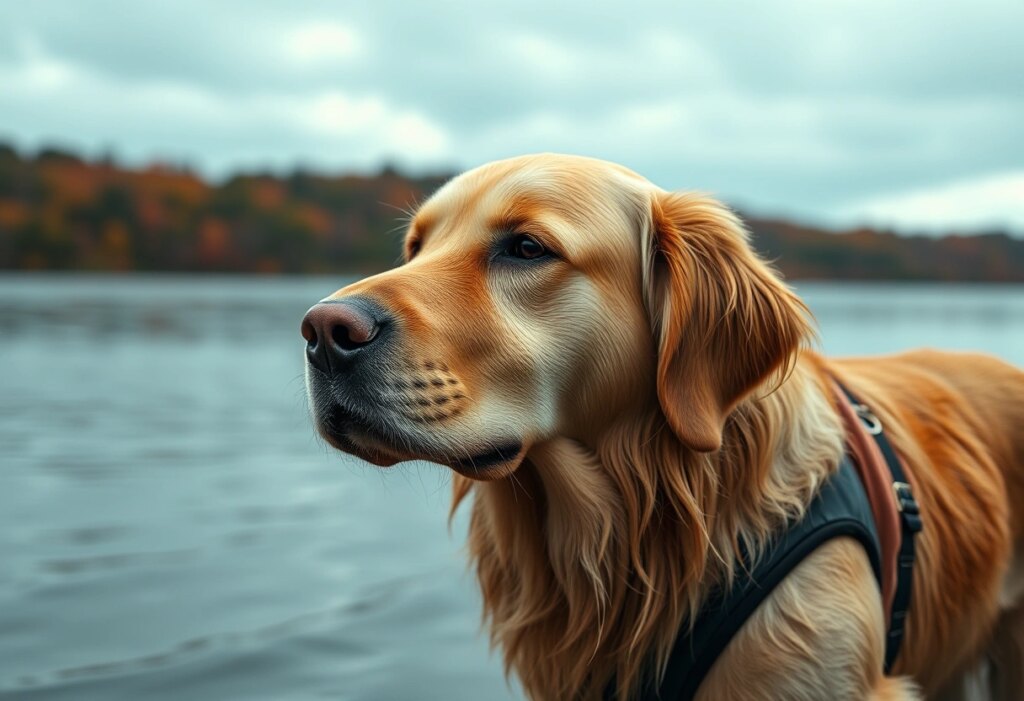

Senior dog cold water tolerance is not a matter of enthusiasm or breed reputation. It is a matter of measurable physiology, and for an aging Golden Retriever who still bounds toward the lake the way she did at age three, that gap between instinct and capacity can be dangerous. As a behaviorist, I get a version of this question every autumn: “She still loves the water, so why is she shaking afterward?” The answer usually lives in the water temperature, not the dog’s mood.
Why Older Dogs Lose Their Grip on Body Heat
Thermoregulation in dogs depends on a functional trio: subcutaneous fat for insulation, muscle mass for shivering thermogenesis, and efficient peripheral vasoconstriction to shunt blood away from the skin. Aging disrupts all three. A 2018 review in the Journal of Veterinary Internal Medicine documented that geriatric dogs experience progressive loss of lean muscle mass (sarcopenia) alongside redistribution of fat stores, which together blunt the shivering response and reduce the insulating layer that once buffered a young dog against cold water immersion. This is not a cosmetic aging change. It is a functional deficit that directly affects how quickly a dog’s core temperature drops once submerged.
What this means practically: a 4-year-old Golden and an 11-year-old Golden are not operating on the same thermal budget, even if they look similarly fit from the outside. The older dog’s margin for error is smaller, and it shrinks further with each passing year. Owners frequently misread this as stubbornness or “just getting old” when it’s actually measurable metabolic decline.
The Water Temperature Threshold That Matters
Veterinary consensus generally sets the caution line at 60°F (15.5°C). Below that, cold-water immersion accelerates joint stiffness in arthritic dogs and can trigger hypothermia considerably faster than in a younger, better-insulated animal. This threshold isn’t arbitrary. Water conducts heat away from the body roughly 25 times faster than air at the same temperature, so a senior dog swimming in 55°F water is losing core heat at a rate that outpaces her body’s ability to generate it internally.
I recommend owners treat 60°F as a hard line for senior dog cold water exposure, not a suggestion. Between 60 and 65°F, supervised, brief sessions may be acceptable for a healthy senior with no joint disease. Below 60°F, the risk-benefit calculation shifts firmly against recreational swimming for any dog over roughly eight years old, regardless of enthusiasm level.

Cold tolerance is not a personality trait. It’s a physiological ledger, and in senior dogs, the ledger runs a deficit. The dog’s willingness to jump in tells you almost nothing about her ability to regulate what happens once she’s in.
Breed-Specific Vulnerabilities in Aging Goldens
Golden Retrievers carry a water-dog reputation that can lull owners into complacency. But aging Goldens frequently carry concurrent conditions that compound cold-water risk. Hip dysplasia affects an estimated 20 percent of the breed according to Orthopedic Foundation for Animals data, and cold exposure measurably increases joint stiffness and pain signaling in dysplastic joints. Hypothyroidism, also disproportionately common in middle-aged and senior Goldens, independently impairs the body’s basal metabolic rate and cold tolerance, since thyroid hormone directly regulates thermogenesis.
When these two conditions overlap in a single dog, which happens more often than owners expect, aging golden retriever swimming sessions that were routine at age five can become genuinely risky at age ten. I advise a baseline veterinary check that screens thyroid function and hip status before assuming a senior Golden can resume her old swimming habits each season.
If your Golden already struggles with joint discomfort on land, it’s worth pairing any water activity with proper orthopedic support at home. A supportive setup like one of the best orthopedic dog beds for senior Golden Retrievers helps offset the cumulative joint strain that cold water can otherwise aggravate.
Reading the Warning Signs Before Hypothermia Sets In
Dogs don’t announce hypothermia. They show it through behavior, and owners who know what to watch for catch the problem early. The observable sequence typically runs:
- Excessive shivering that continues or worsens more than five minutes after exiting the water
- Reluctance to enter, including hesitation at the water’s edge in a dog who previously entered without pause
- Whale-eye or freezing behaviors, where the dog shows visible sclera and stiffens rather than moving toward the water on cue
- Post-swim lethargy that exceeds the normal, brief tiredness of exercise
- Gait changes, including a stiffer or shorter stride within the hour following the swim
Any one of these signs in isolation might mean nothing. Two or more together, especially in a dog with known joint disease, warrant ending the session immediately and moving to a warming protocol. I encourage owners to treat these signs the same way they’d treat a dog communicating “I’m done,” because functionally, that’s exactly what’s happening. Respecting that signal builds trust and gives the dog agency over an experience that could otherwise become aversive or physically harmful.

An Evidence-Based Cold-Weather Gear Protocol
Gear doesn’t eliminate cold-water risk, but a structured protocol meaningfully reduces it. Here’s the framework I recommend for senior Goldens who still enjoy supervised water time in cooler months:
- Neoprene wetsuit before entry. A well-fitted wetsuit maintains a thin layer of water against the skin that the dog’s body heat warms, functionally replacing the lost insulation that aging removes. The Bark Brite New All Terrain All Weather Neoprene Dog vest is a practical option for this purpose, built specifically to hold core temperature during cold-weather water activity.
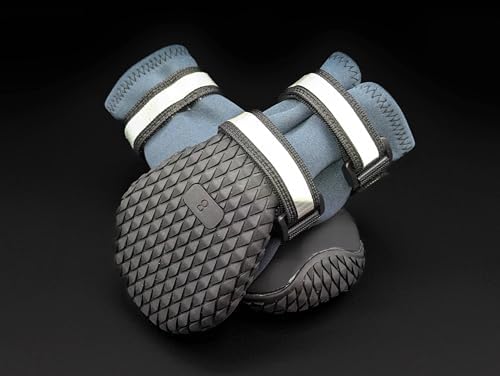
- Bark Brite’s First Ever Hard Soled Dog Shoe. Durable Rugged Sole made of 100% Tough Rubber for Every Adventure. High Qua…
- Dog Shoes are Equipped with 2 Reflective Elastic Straps for High Visibility and a Secure Fit. Wide Opening in Neoprene S…
- Dog Boots that Provide Protection from All Weather Conditions. Will Keep your Pup’s Paws Clean, Dry, and Safe with Prote…
- Time-boxed exposure. Structure swim time in 5 to 10 minute increments with a full assessment between each. This isn’t arbitrary caution, it mirrors how quickly core temperature can drop in a poorly insulated senior body relative to a young, muscular one.
- Quick-dry towel routine immediately on exit. Wet fur against cold air accelerates heat loss through evaporation. Toweling down within sixty seconds of exit meaningfully slows this process.
- A dedicated warming station. Have a dry, insulated space (a blanket-lined crate or bed away from drafts) ready before the swim starts, not after you notice shivering.
- A dry, insulated outer layer for the walk home. Once out of the wetsuit and toweled off, a piece like the OUOBOB Dog Puffer Jacket with Hood, Waterproof gives added protection during transport back to a warm environment, particularly important on windy or damp days.

- LIGHTWEIGHT WARMTH FOR WINTER ADVENTURES: Filled with high-loft polyester insulation instead of real down, this dog wint…
- FULL COVERAGE AGAINST COLD WEATHER: Designed with an integrated hood, extended chest protection, and a longer belly pane…
- EASY ON & OFF WITH TOP-DOWN ZIPPER DESIGN: The front zipper fastens from the neck down, making this dog puffer coat easi…
For owners who prefer to keep a stocked cold-weather kit on hand year-round rather than shopping reactively each season, building out a dedicated supply cart makes the process simpler when the forecast shifts unexpectedly. You can Add to cart essentials ahead of the season so gear is ready before your dog needs it.

- 【8 Size & 3 Colors Optial】: Designed with 8 sizes. Great for all types of dogs. This size is based on the inner diameter…
- 【Unique & Newest Design】: 45 degee bends fit the dog’s paw design, owns comfortable wearable experience. Upgraded waterp…
- 【Dual Adjustable & Easy to Wear】: These large dog shoes expands with a wide split seam opening and two adjustable sturdy…
Comparing Cold-Weather Gear Options for Senior Goldens
Each of these products serves a distinct role in the protocol above. None replaces veterinary judgment about whether senior dog cold water exposure is appropriate for your individual dog on a given day, but each meaningfully reduces heat loss when swimming is approved.
| Product | Best For | Key Feature | Price Tier |
|---|---|---|---|
| Bark Brite Neoprene Dog Vest | In-water insulation during swimming | Neoprene construction traps body heat against skin | $$ |
| OUOBOB Waterproof Puffer Jacket | Post-swim warmth and dry-weather protection | Hooded, waterproof outer shell with insulated lining | $$ |
| Cold-Weather Essentials Bundle | Building a stocked seasonal cold-weather kit | Convenient one-step gear stocking | $ |
Key Takeaways
- Senior dogs lose insulating fat and shivering efficiency with age, raising cold-water risk independent of fitness level
- 60°F is the generally accepted threshold below which senior dog cold water exposure becomes unsafe
- Aging Goldens with hip dysplasia or hypothyroidism face compounded risk and need veterinary screening before resuming cold-weather swims
- Shivering, hesitation, whale-eye, lethargy, and gait changes are early warning signs, not stubbornness
- A structured gear protocol (wetsuit, timed sessions, immediate drying, warming station, insulated outer layer) meaningfully reduces hypothermia in senior dogs
Putting the Protocol Into Practice
None of this means retiring your Golden’s water access entirely. It means shifting from “she still loves it” as the deciding factor to an objective assessment of water temperature, joint status, and observable behavior during and after each session. For dogs who need to stay active but for whom cold water swimming is no longer appropriate, structured leash walking with supportive gear becomes the better substitute. If your dog does continue supervised water time under approved conditions, always pair it with proper flotation support, and the guidance in our 5 best life jackets for senior Golden Retrievers is a useful companion resource for that decision.
According to the American Kennel Club, hypothermia risk in dogs increases sharply with prolonged wet-cold exposure regardless of breed, which reinforces why senior dog cold water decisions should rest on measurable conditions rather than assumptions about breed hardiness. Cold weather dog gear is a management tool, not a permission slip to ignore the underlying physiology. The dogs who stay safest through the colder months are the ones whose owners treat every swim as a small experiment worth observing closely, not a routine to run on autopilot.
Frequently Asked Questions About Senior Dog Cold Water Safety
What water temperature is too cold for a senior Golden Retriever to swim in?
Veterinary consensus generally advises against swimming when water falls below 60°F (15.5°C) for senior or arthritic dogs. Below this threshold, senior dog cold water immersion accelerates joint stiffness and increases hypothermia risk considerably faster than in younger dogs.
Why do senior dogs get cold faster than younger dogs?
Aging reduces subcutaneous fat and muscle mass, both of which are essential for insulation and shivering thermogenesis. A 2018 review in the Journal of Veterinary Internal Medicine documented this metabolic decline as a primary driver of reduced cold tolerance in geriatric dogs.
Are Golden Retrievers naturally resistant to cold water because of their breed?
Not once they reach senior status. While Goldens have a water-dog heritage, aging individuals frequently develop hip dysplasia or hypothyroidism, both of which impair cold tolerance regardless of the breed’s general reputation for swimming.
What are the earliest warning signs that a senior dog is too cold in the water?
Excessive shivering, reluctance to enter the water, whale-eye or freezing behaviors, post-swim lethargy, and gait changes are the earliest observable signs of cold stress. Any combination of these signals should prompt ending the swim session immediately.