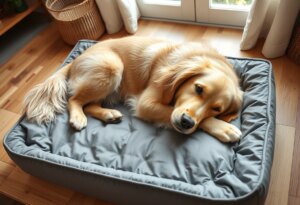


Goldador puppies for sale are popping up on classifieds, breeder websites, and social media marketplaces at a pace that outstrips the number of people who actually understand what they’re buying. A Goldador is a deliberate cross between two of the most popular breeds in the country, and that popularity is exactly why the market is flooded with sellers who know how to price a puppy but not how to raise one responsibly. Before any money changes hands, you need a working knowledge of the cross’s genetics, the health testing that should exist on paper, and the behavioral signals that separate a well-started puppy from one carrying developmental risk. This is not a sentimental decision. It’s a data-gathering one, and the data is available if you know where to look.
What Is a Goldador? Origins of This Golden Retriever Mix
A Goldador is a first-generation or multi-generation cross between a Golden Retriever and a Labrador Retriever. Both parent breeds have sat in the American Kennel Club’s top 10 most popular breeds for years running, which tells you something important right away: this isn’t a rare designer dog with murky ancestry. It’s a combination of two extremely well-documented, extensively studied retriever lines, and that documentation is a resource you should actually use when vetting a litter.
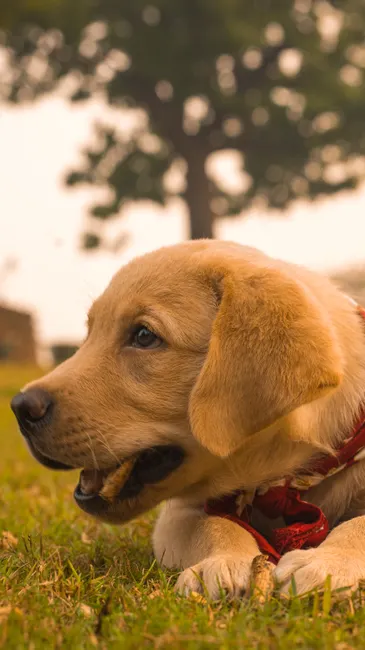
Behaviorally, both parent breeds were developed for cooperative work with humans, retrieving downed game, tolerating handling, and showing low reactivity to novel stimuli in the field. That heritage shows up in Goldador puppies as a general profile: high sociability toward people, moderate-to-high energy, strong food and toy motivation, and a retrieving instinct that appears early, sometimes before ten weeks of age. Coat type, body structure, and shedding pattern vary depending on which parent contributes more strongly, since this is a cross, not a standardized breed with fixed genetics. Some Goldador puppies favor the longer, feathered coat of the Golden Retriever parent; others come out with the shorter, denser double coat typical of a Labrador. Neither is more “correct.” If you want a broader sense of how this cross compares to other golden retriever mixes suited to busy working households, it helps to look at temperament data across several crosses rather than assuming uniformity within just one.
Health Screening Checklist for Goldador Puppies
This is the section where most buyers get lazy, and it’s also where the financial and emotional cost of a bad decision compounds over a decade. Hip dysplasia affects an estimated 19.7% of Labrador Retrievers according to the Orthopedic Foundation for Animals database, and Golden Retrievers carry a comparable orthopedic risk profile. That statistic alone should tell you that health testing isn’t optional paperwork, it’s a direct predictor of whether your dog will be mobile and comfortable at age eight versus struggling with early-onset arthritis.
Before you commit to any Goldador puppies, request documentation, not verbal reassurance, for the following:
- OFA hip and elbow certification for both the sire and dam, showing at minimum a “fair” or better rating.
- CERF or CAER eye clearance confirming the parents are free of hereditary eye disease common to both retriever lines, including progressive retinal atrophy.
- Cardiac clearance, since both parent breeds carry a documented incidence of congenital heart conditions.
- A written health guarantee from the breeder that references specific conditions, not vague language about “healthy stock.”
Ask to see the actual OFA certificate numbers and cross-reference them on the OFA public database yourself. A breeder who hesitates or gets defensive when asked for this is giving you information, just not the kind they intend to. Genuine Goldador breeders treat this request as routine, because they’ve already done the work and have nothing to hide.
| Comfort/Transition Aid | Type | Best For | Price Tier |
|---|---|---|---|
| GUND Designer Pups Cocco Labrador Puppy Plush | Novel object / soft toy | Temperament evaluation exercises, novelty exposure | $$ |
| Auswella 18-Inch Plush Beagle Dog | Comfort object | Crate settling, first-night separation support | $$ |
| POUND PUPPIES Classic Stuffed Animal Plush | Scent-transfer comfort item | Go-home transition kit, litter-scent continuity | $ |
Temperament Evaluation: A Behavioral Protocol for Assessing Goldador Puppies
Temperament testing gets treated as folklore more often than science, so let’s be precise about what’s actually measurable at eight to ten weeks. What you’re assessing is not a fixed personality, it’s the puppy’s current stress physiology and its baseline level of neophilia, meaning its tendency to approach versus avoid novel stimuli. Both traits are informative, but neither is destiny.
A structured, low-stakes way to gather this data is a novel object introduction test. Bring an item the litter has never encountered into the evaluation space and place it roughly three feet away without prompting the puppy to interact. A soft, unfamiliar object like the GUND Designer Pups Collection, Cocco Labrador Puppy Plush works well for this because it’s novel in shape and texture without being startling in size or sound. Watch the latency before approach, the body posture on approach (loose and wiggling versus stiff and low), and how quickly the puppy recovers if it startles.

- CHOCOLATE LAB PLUSH: Cocco is a cute, cuddly chocolate lab puppy ready to find his furever home Breed enthusiasts and ow…
- SOFT & HUGGABLE: This plush toy is made from soft, huggable materials and features surface-washable construction for eas…
- THE PERFECT GIFT: Our plush dolls, teddy bears and stuffed animals make perfect birthday gifts, baby shower gifts, stock…
A puppy’s early stress response is not a fixed trait, it’s a snapshot of an ongoing developmental process. What you observe at eight weeks tells you about current coping strategies, not a permanent verdict on temperament.
Build a simple “Happiness Plan” checklist to score each puppy in the litter across a few short observational exercises:
- Recovery time after a sudden but mild noise (a dropped clipboard, not a slammed door). Under five seconds is typical; prolonged freezing or hiding warrants a follow-up evaluation later.
- Willingness to leave littermates and explore a novel space independently for sixty seconds.
- Response to gentle full-body handling, including paws, ears, and mouth, without excessive struggling or shutting down.
- Food or toy motivation measured by latency to engage with a low-value treat offered from an open palm.
Most Goldador puppies, given their genetic background, show a fairly consistent curve here: moderate caution followed by rapid recovery and confident re-engagement. A puppy that shows prolonged shutdown across multiple exercises isn’t necessarily a bad choice, but it does mean you’re signing up for a more deliberate socialization protocol later, not a plug-and-play family dog.

Breeder Red Flags vs. Responsible Goldador Breeders (Rescue Options Too)
The gap between a responsible operation and a high-volume mill isn’t always obvious from a website. It shows up in the details.
- Health testing paperwork: Responsible Goldador breeders provide it unprompted. Mills provide excuses.
- Litter frequency: A dam bred back-to-back every cycle, with no recovery period, is a documented welfare concern flagged repeatedly by the ASPCA in its guidance on high-volume breeding operations.
- Socialization records: Responsible breeders can describe, specifically, what novel surfaces, sounds, and handling exercises the litter has already experienced. Vague answers mean it probably hasn’t happened.
- Willingness to let you meet the dam: Refusal to show you the mother, in person, on the property, is one of the most reliable single indicators of a mill-style operation.
- Return policy and lifetime support: A breeder who never wants to hear from you again after the sale is not invested in the dog’s long-term outcome.
Responsible breeders also tend to send puppies home with a comfort object carrying the litter’s scent profile, something as simple as a blanket or a small plush like the POUND PUPPIES Basic Fun Classic Stuffed Animal Plush, specifically to ease the sensory disruption of leaving littermates. This isn’t a marketing gesture, it’s a low-cost intervention with real behavioral value during the first few nights.
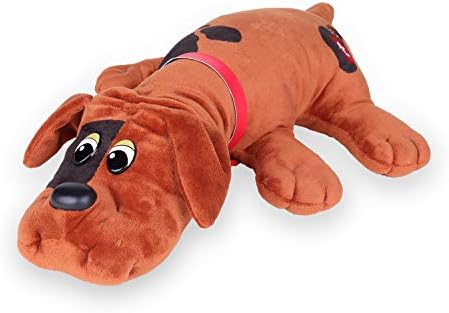
- Authentic reproductions of the original pound puppies from the 1980’S.
- Adopt and name your very own pound puppy.
- Super soft plush pound puppies are the perfect size and shape to hug and cuddle.
If your timeline or living situation genuinely isn’t suited to the higher energy and longer socialization runway that lab mix puppies require, it’s worth considering the other end of the age spectrum. Our senior Golden Retriever rescue adoption guide outlines a lower-energy, often lower-cost alternative for households that want the retriever temperament without the ground-floor developmental work a puppy demands.
Your First Two Weeks: A Transition Plan for New Goldador Puppies
What happens in the first fourteen days shapes coping patterns that can persist for years, so this isn’t a period to wing it. The behavioral goal is antecedent management: structuring the environment so the puppy rarely has to practice distress, rather than waiting to manage distress after it happens.
- Establish a predictable sleep and feeding schedule on day one. Predictability lowers baseline cortisol more reliably than any single training exercise.
- Introduce the crate or sleep space gradually, pairing it with high-value food rather than forcing confinement during active distress.
- Use a consistent comfort object. Something like an Auswella 18-Inch Plush Beagle Dog placed in the sleep area can function as a conditioned cue for calm, provided it’s introduced during already-relaxed moments rather than mid-meltdown.

- 18 inch soft plush Beagle. Expertly designed with authentic beagle markings, floppy ears, sweet expressive eyes, and lif…
- Perfect as a cuddle companion, nursery decoration, bedroom décor accent, collectible plush, or comforting emotional supp…
- Lifelike Beagle with a Cute Curved Tail and Tri Colored. Prodominently Black and White on His Body. Modeled after our be…
$29.96 - Practice short, deliberate separations starting at thirty seconds and extending gradually, reinforcing calm behavior rather than only intervening after whining starts.
- Build canine agency early by teaching a simple “go to mat” or “settle” cue with a clear reinforcement history, so the puppy has a way to communicate a choice for calm rather than only reacting to what’s done to it.

Don’t count on time alone to resolve early separation distress in Goldador puppies. It’s a trainable pattern, not something dogs simply grow out of, and the households that see the fastest gains are the ones that treat these first two weeks as a structured protocol rather than an improvisation.
How much do Goldador puppies typically cost from a responsible breeder?
Pricing varies widely by region and by the extent of health testing performed, but Goldador puppies from breeders who provide full OFA hip, elbow, and eye clearances generally fall into a mid-range to premium price bracket compared to unscreened litters. A lower asking price without corresponding health documentation is a warning sign, not a bargain.
Are Goldador puppies good with children and other pets?
Given the temperament profile of both parent breeds, Goldador puppies generally show high sociability toward children and other animals. That said, individual variation exists, which is exactly why a structured temperament evaluation before purchase matters more than relying on breed reputation alone.
What health testing should Goldador breeders provide before I buy?
At minimum, request OFA hip and elbow certification and CERF or CAER eye clearance for both parents, along with cardiac clearance. Reputable Goldador breeders will have this documentation ready and will encourage you to verify certificate numbers independently on the OFA database.
How long does it take for a new puppy to adjust to home life?
Most Goldador puppies show meaningful settling within the first two weeks when owners use structured antecedent management, such as predictable schedules, gradual crate introduction, and short reinforced separations. Full behavioral maturity, however, continues developing well past the first year.