
Puppy gates are the single most effective, low-cost tool for preventing the chronic stress response that many senior dogs develop when a new puppy enters the household without any physical structure to buffer the encounter. As a behaviorist, I get some version of this question weekly: “Why can’t I just let them work it out?” The honest answer, grounded in what we know about canine sensory aging and stress physiology, is that “working it out” often means your older dog is absorbing weeks of unmanaged cortisol spikes while you assume things are fine because nobody got bitten. That’s a low bar. Let’s talk about what the research actually supports, then get into the five gates I recommend to clients managing this exact transition.
The Behavioral Case for Physical Barriers
Senior dogs are not just “slower” versions of their younger selves. Their sensory processing bandwidth narrows measurably with age, meaning they take in and interpret novel stimuli, like a bouncing, unpredictable puppy, more slowly and with less cognitive flexibility. Tami and Gallagher (2013, Journal of Veterinary Behavior) documented this directly: dogs over roughly seven years old showed measurably slower habituation rates to novel stimuli compared to dogs under three. In plain terms, your senior dog needs more repeated, low-intensity exposures to reach the same comfort level a younger dog would hit in a single session. When a puppy is allowed unrestricted access before that habituation curve has flattened, you’re not giving your older dog a chance to adapt. You’re flooding a nervous system that’s already working with reduced margin.
This is where baby gates for dogs stop being a convenience item and start functioning as an actual behavioral intervention. A gate doesn’t just block a doorway. It converts an uncontrolled social encounter into a series of short, observable, low-stakes exposures, which is the exact mechanism behind systematic desensitization protocols we use for fear and reactivity cases generally. If you’re at the very start of this process, I’d also point you to introducing a puppy to a dominant older dog safely, which covers the sequencing that pairs well with the gate-based approach outlined here.
What the Data Says About Gated Introductions
The ASPCA’s behavioral guidelines on multi-dog introductions are worth reading in full, but the operative finding for our purposes is this: visual-access-without-contact barriers maintained during the first one to two weeks of cohabitation measurably reduce resource-guarding incidents. Why? Because the older dog gets to habituate to the puppy’s presence, scent, and movement patterns without the simultaneous pressure of physical contact or proximity to valued resources like food bowls, beds, or a favorite human’s lap. Puppy gates give you that separation without isolating either dog acoustically or visually, which matters because total isolation just delays the stress response rather than resolving it. I want to be clear that this isn’t a “forever” barrier. The gate is a transitional tool. Most of my clients move through the visual-access phase in ten to fourteen days if they’re running the sessions consistently, then start supervised, gate-free time in short blocks.
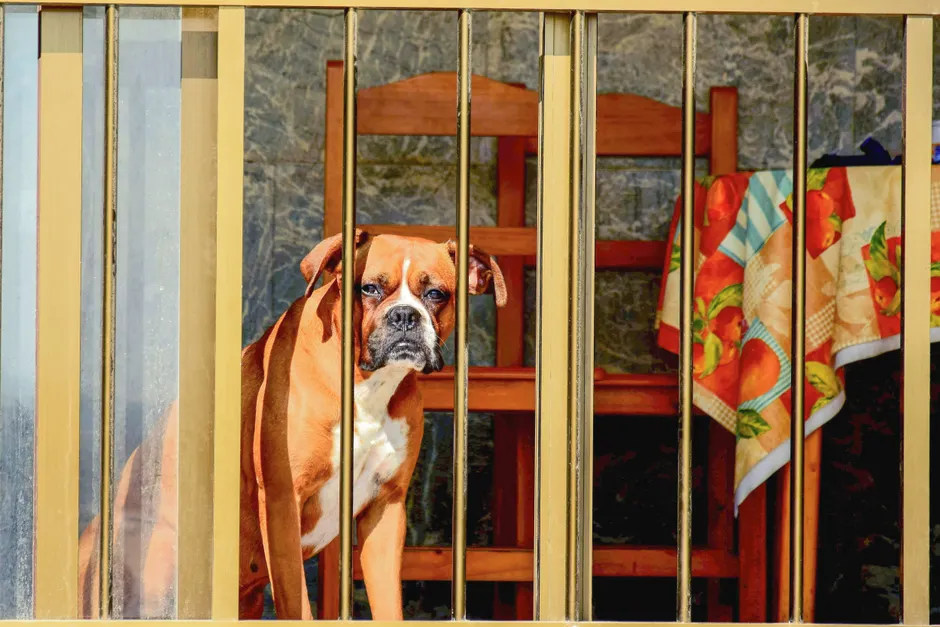
Don’t count on your senior dog “just adjusting” without a structured plan. The behavioral data on habituation rates in older dogs doesn’t support a passive wait-and-see approach, and treating the introduction period as a formal, gated process is what actually protects both animals’ welfare.
Comparative Breakdown of the 5 Best Puppy Gates
When I evaluate puppy gates for clients with a senior dog in the house, I’m not looking at the same criteria a general pet owner would use. Arthritic hips change what counts as an acceptable step-over height. Vestibular decline (that wobbly, unsteady gait some older dogs develop) means a gate that shifts or tips under light contact is a genuine hazard, not just an annoyance. And if your senior dog has any degree of vision loss, a solid slatted gate reads very differently than an open mesh panel. Here’s how the top options break down.
| Gate | Best For | Visibility Type | Base Stability | One-Handed Operation | Price Tier |
|---|---|---|---|---|---|
| Paulmele Full Metal Freestanding Dog Gate | Vestibular decline, heavy leaners | Open metal bar (high visibility) | Excellent, wide freestanding footprint | Yes, single-hand door latch | $$$ |
| LZRS Wooden Free Standing Dog Gate | Vision-impaired senior dogs | Slatted wood (reduced visual clutter) | Good, wide panel base | Moderate, two-hand fold | $$$$ |
| Urnporium Freestanding Folding Dog Gate | Budget multi-room setups | Mixed mesh/panel | Moderate, lighter frame | Yes, quick-fold panels | $$ |
The Paulmele Full Metal Freestanding Dog Gate is my default recommendation when the senior dog in the house has any degree of hind-limb weakness or a history of leaning on furniture for balance. The full metal construction and wide stance mean it doesn’t shift when a dog bumps into it, which matters more than people expect. A gate that wobbles under contact can actually startle a senior dog and create a negative association with the very tool meant to reduce stress.
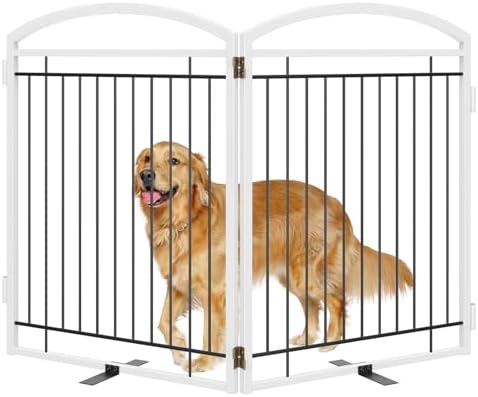
For dogs showing early cataracts or general age-related vision decline, the LZRS Wooden Free Standing Dog Gate is worth the premium investment. Open mesh or wire gates present a dense, fragmented visual field that can actually increase disorientation in a dog whose vision processing is already compromised. A slatted wood panel gives cleaner sightlines and softer contrast, which several of my clients with visually impaired seniors have found reduces pacing and whining at the barrier.

- Durable Solid Wood Construction: Crafted from high-quality natural hardwood for a long-lasting and stylish design that s…
- Freestanding & Foldable: The free standing dog gate requires no installation.—simply set it up in any space and fold it …
- Convenient Height & Coverage: At 24 inches tall, it’s easy to step over while effectively containing pets, fully extends…
If budget is the deciding factor and you need to gate off multiple rooms while the introduction protocol runs its course, the Urnporium Pet Dog Gate Freestanding is a solid, affordable option. It’s lighter than the metal or wood options, so it’s not my first pick for a dog with significant balance issues, but for households where the senior dog is cognitively and physically stable and you just need a functional visual barrier, it does the job without overspending.

- This is a freestanding wooden pet dog gate with 2-way hinges. Our dog gates for the house can be used in several configu…
- STRONG, DURABLE & STYLISH PET GATE – Crafted from premium Acacia wood, this accordion-style wooden pet gate is built for…
- Versatile Freestanding Wooden Pet Gate blends seamlessly with living room décor while securely blocking doorways in kitc…
Practical Observational Exercise: Reading Your Senior Dog’s Stress Signals
Once your gate is installed, the work isn’t done. You need a structured way to evaluate whether your senior dog is actually habituating or just going quiet in a way that looks like calm but isn’t. Run this exercise daily during the first two weeks:
- Set a timer for three minutes. Position the puppy on the other side of the gate with a low-value chew toy, not food, to avoid triggering resource guarding during the observation itself.
- Watch your senior dog’s mouth and ears. Repeated lip licking outside of eating, ears pinned flat, or a closed, tense mouth are early stress markers. These typically precede avoidance behavior by several seconds.
- Note body orientation. A senior dog that angles their body away from the gate, or repeatedly leaves the room and returns, is telling you the exposure duration is too long. Shorten the next session.
- Check for stiffening or freezing. A dog that goes completely still, rather than relaxed and loose, is not “being good.” Stillness under threat is a stress response, not compliance.
- Log the session. A simple notes app entry (date, duration, observed signals) lets you track whether stress signals are decreasing session over session. If they’re flat or increasing after a week, that’s your signal to slow down, not push through.
Only after you see consistent, relaxed body language (loose muscles, voluntary approach to the gate, normal breathing) across three or more consecutive sessions should you consider brief, supervised, off-leash interaction. This is also the point where many of my clients revisit what to know first about having a puppy with an older dog, since the gated phase and the supervised phase require different management skills entirely.
Common Owner Misconceptions About Puppy Gates and Senior Dogs
The most persistent myth I encounter is that older dogs will simply adjust to a new puppy given enough time, no structure required. The data is contradictory on this point, and that’s worth sitting with rather than glossing over. Some senior dogs do show gradual, spontaneous tolerance. Others develop chronic low-grade stress responses, including decreased appetite, increased sleep during the day paired with restlessness at night, or new-onset irritability toward the puppy or even toward familiar humans. The variability itself is the argument for using puppy gates as a default precaution rather than an optional step you only reach for if things go visibly wrong. Waiting for visible conflict means you’ve already missed the early stress signals that a gated, observational approach would have caught.

A second misconception is that a gate is a temporary inconvenience you tolerate until the “real” introduction happens. I’d push back on that framing. The gate itself is the behavior-modification tool. Antecedent management, meaning you control the environment before a behavior has a chance to occur, is one of the most effective and least invasive interventions available in applied animal behavior work. You’re not delaying the introduction by using a pet safety gate. You’re conducting it, deliberately, in a form your senior dog’s nervous system can actually process.
Third, owners sometimes assume any barrier will do, and grab whatever pressure-mounted gate is cheapest. For a healthy young dog, that might be fine. For a senior dog with joint pain or balance issues, an indoor dog gate that isn’t freestanding and stable can become a hazard itself if the dog leans on it or it gets knocked during a moment of excitement. Matching the gate to your dog’s specific physical profile, not just your budget, is part of the welfare calculus here.
Putting It Together
Choosing the right dog gate for puppies is a small decision with outsized behavioral consequences. Senior dogs process novelty differently than young dogs do, and pretending otherwise sets both animals up for a rockier transition than necessary. A well-chosen gate, paired with structured daily observation, gives your older dog the graduated exposure their aging sensory system actually needs, and gives you objective data instead of guesswork about when it’s safe to move forward. That’s a better use of two weeks than hoping it all works out on its own.
Frequently Asked Questions
How long should I use puppy gates before letting my senior dog and puppy interact off-leash?
Most dogs need one to two weeks of consistent, short gated sessions before showing the relaxed body language that indicates readiness for supervised off-leash time. This varies by individual dog, so rely on observed stress signals rather than a fixed calendar date.
What height gate is safe for a senior dog with arthritis?
Avoid gates that encourage your senior dog to step over them, since arthritic joints struggle with that motion. A freestanding gate with a separate walk-through door, rather than a low hurdle-style barrier, removes the need for your dog to step over anything at all.
Can puppy gates actually reduce resource guarding between dogs?
Yes. ASPCA behavioral guidelines note that visual-access-without-contact barriers during early cohabitation reduce resource-guarding incidents by allowing dogs to habituate to each other’s presence without competing over food, toys, or resting spots.
Is mesh or solid material better for a senior dog with vision loss?
Solid or slatted panels generally work better than open mesh for dogs with vision decline, since mesh creates a fragmented visual field that can increase disorientation. A cleaner sightline through wider slats tends to be easier for an aging dog to process.