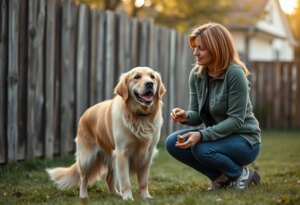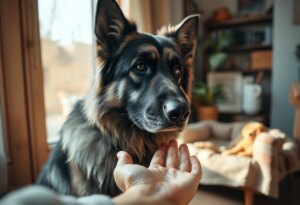

The golden pitbull mix combines two of the most behaviorally distinct canine lineages in North America, and that combination produces a temperament profile that owners frequently misjudge in both directions. Some assume the dog will inherit only the Golden Retriever’s easygoing sociability. Others assume outdated breed-legislation myths about the Pitbull side and brace for aggression that, statistically, is unlikely to appear. Neither assumption holds up under behavioral scrutiny. What actually emerges is a dog with high human-focus, above-average physical drive, and a trainability ceiling that rewards owners who understand canine learning theory rather than punish it.
I want to walk through this systematically, the way I’d assess any mixed-breed behavioral profile in a consult: genetic origins first, then observable trait clusters, then the myths that need dismantling with data, then a practical evaluation protocol you can run in your own home before you commit.
Breed Origins & Genetic Behavioral Traits
Behavioral genetics in dogs doesn’t work like a coin flip between two parent profiles. Temperament traits are polygenic, meaning multiple genes interact to produce sociability, arousal threshold, and bite inhibition, and a first-generation cross doesn’t average the parents so much as it recombines their trait clusters unpredictably. That said, we do know the general behavioral tendencies each lineage contributes, and those tendencies give us a working prediction model for the golden pitbull mix. Golden Retrievers were selectively bred for cooperative retrieving work, which selected heavily for low reactivity, high handler-focus, and reduced resource guarding around mouth-held items (a trait called “soft mouth” in field lines). Pitbull-type dogs, meaning American Pit Bull Terriers and closely related bully breeds, were historically bred for a trait called “gameness,” which is persistence and willingness to continue a task despite discomfort. Gameness gets misread as aggression toward people, but the selection pressure was almost entirely dog-directed and task-directed, not human-directed. In fact, well-bred Pitbull-type dogs score notably high on measures of human sociability, a point that surprises owners who’ve absorbed media narratives rather than temperament data.
So the genetic starting material for a golden pitbull mix is actually two lineages that both selected for human affiliation, just through different functional pathways. What you’re more likely to see inherited unpredictably is physical drive, mouth-and-body play style, and arousal recovery time, not baseline hostility.
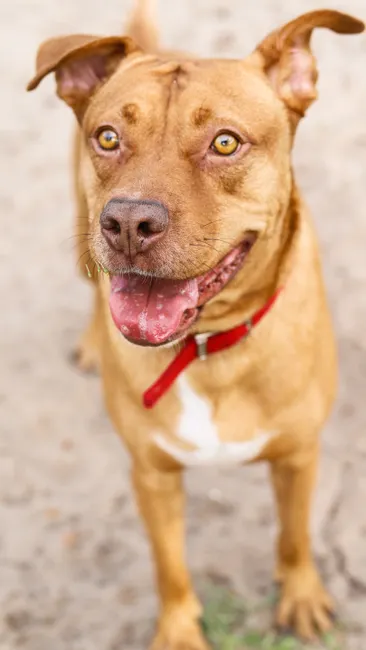
Temperament Profile of the Golden Pitbull Mix
In practice, when I evaluate a golden pitbull mix or consult on one remotely through video intake, I’m looking at four trait clusters: energy output, prey drive, trainability, and social threshold with novel people and dogs. Energy is almost always elevated compared to a purebred Golden Retriever alone. Pitbull-type dogs typically require 60 to 90 minutes of structured physical output daily to stay under threshold, and the cross frequently inherits this. Owners coming from a low-drive breed background consistently underestimate this number, then misattribute the resulting destructive or hyper-aroused behavior to “bad temperament” when it’s actually unmet behavioral need.
Prey drive sits in the moderate range for most individuals, higher than a typical Golden Retriever, lower than a working-line herding breed. Trainability is where this cross tends to shine. Golden Retrievers rank consistently in the top tier of Coren’s trainability index, and Pitbull-type dogs, despite their reputation, show strong performance in operant learning tasks, particularly when food or toy reinforcement is used consistently. The American Kennel Club’s 2023 registration data places the Golden Retriever among the top five most registered breeds in the country, a popularity metric that correlates with decades of selection for family-compatible behavior, low owner-directed aggression, and tolerance of handling. That genetic contribution matters for the cross’s overall behavioral floor, even when the Pitbull-type parent contributes more of the physical phenotype.
Social threshold, meaning how quickly a dog becomes reactive to novel stimuli, tends to land in the resilient range for this cross when socialization windows are used correctly, which I’ll cover in the evaluation protocol below.
Common Owner Misconceptions
This is where I have to be direct, because misinformation here has real welfare consequences, including breed-specific legislation that removes otherwise adoptable dogs from qualified homes. The most persistent myth is that Pitbull-type dogs, and by extension a pitbull retriever mix, carry an inherently higher likelihood of unprovoked aggression toward humans. The data doesn’t support this. The American Temperament Test Society evaluates dogs across a standardized battery of stability, aggression, and shyness measures. Pit Bull-type dogs pass this test at a rate of roughly 85 percent, a figure statistically comparable to or better than several breeds with wholesome public reputations, including Beagles and Collies. That’s not a cherry-picked statistic. It’s a consistent finding across ATTS’s published breed data, and it directly contradicts the assumption that gameness translates into human aggression.

A second misconception is that mixed breeds are inherently less predictable or “unstable” compared to purebreds. The reality is closer to the opposite in some respects. Outbreeding can reduce the concentration of certain inherited compulsive behaviors and structural health issues tied to narrow gene pools, though it does introduce phenotypic variability, meaning you can’t always predict exact adult size or coat from a litter of mixed puppies. Predictability of physical traits and predictability of temperament are separate questions, and owners often conflate them. A third misconception, more relevant to breeders than owners directly, is assuming any breeder producing this cross is operating responsibly simply because the litter exists. If you’re sourcing a golden pitbull mix puppy rather than adopting through a shelter, it’s worth reviewing 5 Signs of a Reputable Golden Pitbull Mix Breeder before you commit, since early-life handling and maternal stress exposure measurably affect adult temperament outcomes.
The data is contradictory when it comes to breed-based aggression predictions, and that contradiction should make us humble, not dismissive. Standardized temperament testing consistently shows Pitbull-type dogs performing at or above the passing rate of many “family-friendly” breeds, yet public perception hasn’t caught up to the research. Owners who make decisions based on media narrative rather than measured data are working from the wrong dataset entirely.
Practical Household Evaluation Protocol
Before bringing home any golden pitbull mix, I recommend running what I call a Happiness Plan evaluation, a structured checklist that assesses fit between the dog’s likely behavioral needs and your household’s actual capacity, not your aspirational capacity. Step 1: Energy Match Audit. Track your realistic daily availability for structured exercise over one week, in writing. If you consistently have less than 45 minutes available, this cross will likely develop displacement behaviors: destructive chewing, excessive barking, or restlessness. This is a behavioral prediction, not a moral judgment about your schedule. Step 2: Socialization Window Assessment. If acquiring a puppy, the critical socialization period runs roughly from 3 to 14 weeks. Confirm the breeder or rescue has exposed the litter to varied surfaces, sounds, and gentle human handling during this window. Missed socialization windows are far more predictive of adult reactivity than breed identity. Step 3: Resource Guarding Observation Exercise. With an existing dog you’re evaluating for adoption, conduct a low-stakes food bowl approach test: place a low-value treat in the bowl, approach from a distance while narrating your approach in a calm voice, and observe body language (freezing, stiffening, or a hard stare are early warning signs, not necessarily disqualifying but worth professional follow-up). Step 4: Household Composition Fit. Match the dog’s play style against your household. High-drive individuals with strong mouth-play tendencies may overwhelm very young children or frail senior family members through sheer physical enthusiasm, not intent to harm. Step 5: Multi-Pet Introduction Protocol. If introducing to existing pets, use parallel-walking introductions on neutral territory before any indoor interaction, and never force face-to-face greetings in the first encounter.
Training & Management Recommendations
Positive reinforcement is not a philosophical preference here, it’s the evidence-based standard supported by learning theory. Punishment-based training on a high-drive, high-gameness cross like the golden pitbull mix tends to suppress observable warning signals without addressing underlying arousal, which increases the risk of what looks like an “unpredictable” bite later. Teaching the dog clear, reinforced communication signals, essentially giving the dog agency to indicate discomfort through a sanctioned behavior like moving away or offering a trained “check-in,” produces far more reliable long-term safety than suppressing signals altogether. For households with children, antecedent arrangement matters more than in-the-moment correction. Set up baby gates, designated dog-only zones, and structured greeting routines before problems occur rather than managing them reactively. For multi-dog homes, feed in separate spaces initially and reintroduce shared feeding only after weeks of confirmed calm behavior. Cold-weather management deserves a practical note too, since this cross often carries the Pitbull parent’s short, low-insulation coat. In regions with real winter, a properly fitted layer such as the Esobo Fleece Dog Apparel Winter Warm Dog Coat reduces shivering-related stress behaviors during outdoor exercise sessions, which matters given how much daily physical output this cross requires.

- 【WARM MATERIAL】The dog’s trendy coat is made of thick fleece material, which is soft and comfortable, and has strong war…
- 【UNIQUE DESIGN】This warm dog coat reinforces the edges, which greatly increases the durability of this apparel while eff…
- 【EASY WEAR AND OFF】This pullover fleece dog outfit is elastic enough and has a one-piece design, whether it is a big dog…
For shorter-coated individuals or smaller-framed offspring within a litter, a lighter thermal layer like the ROZKITCH Dog Turtleneck Sweater Thermal Fleece Shirt works well for brief outdoor training sessions without restricting the shoulder mobility needed for structured exercise and recall drills.

- Warm Material: The dog soft coat is made of polyester fabrics; soft and warm; resistant to falling off or fluffing; offe…
- Warm High Collar: This dog coat features a warm turtleneck collar; can be rolled up for extra coverage or rolled down fo…
- Easy Wear and Off: Made with elastic material; the coat is easy to slip on and off without worrying about sticking to yo…
If your household already includes an aging dog and you’re weighing whether adding a high-energy golden pitbull mix puppy is fair to the senior resident, it’s worth reviewing joint and mobility considerations covered in Golden Retriever Senior Age: Best Joint Supplements at 7+, since a boisterous younger dog can accelerate strain on an older dog’s joints during play if introductions aren’t managed with structured rest breaks.
Golden Pitbull Mix Temperament Comparison Table
| Trait / Product | Golden Retriever Baseline | Pitbull-Type Baseline | Golden Pitbull Mix (Typical) | Price Tier |
|---|---|---|---|---|
| Daily Exercise Need | Moderate (30-45 min) | High (60-90 min) | High (45-90 min) | N/A |
| Trainability | Very High | High | High to Very High | N/A |
| Human Sociability | Very High | High | High to Very High | N/A |
| Coat Insulation (winter needs) | High (double coat) | Low (single coat) | Variable, often low | N/A |
| Esobo Fleece Winter Coat | Recommended for short-coated individuals needing outdoor insulation | $$ | ||
| ROZKITCH Turtleneck Sweater | Lightweight layer for smaller-framed dogs or brief training sessions | $ | ||
Frequently Asked Questions
Is a golden pitbull mix good with children?
Generally yes, provided the household manages energy output and supervises early interactions. Both parent lineages score high on human sociability measures, but the cross’s physical strength and play enthusiasm mean unsupervised play with very young children isn’t advisable regardless of temperament, simply due to accidental knockdowns during excited play.
Does the goldenpit temperament include higher aggression risk?
Standardized temperament testing does not support that assumption. The American Temperament Test Society reports roughly an 85 percent passing rate for Pit Bull-type dogs, comparable to many classic family breeds. The goldenpit temperament tends to reflect high human focus inherited from both parent lineages rather than elevated aggression.
How much exercise does a golden pitbull mix need daily?
Most individuals need 45 to 90 minutes of structured physical activity daily. Falling consistently below this threshold tends to produce displacement behaviors like destructive chewing or restlessness, which owners often misread as a temperament flaw rather than an unmet behavioral need.
Is a mixed breed dog like this less predictable than a purebred?
Physical traits like adult size and coat type are less predictable in a mixed breed dog than in a purebred litter. Temperament predictability depends more on early socialization and breeder or rescue practices than on breed mixing itself, so a golden pitbull mix raised with proper early exposure can be just as behaviorally stable as a purebred counterpart.