
A golden retriever mix inherits behavioral tendencies from both parent lines, and those tendencies do not simply split down the middle the way a Punnett square diagram might suggest. Temperament is polygenic, meaning dozens of genes across multiple chromosomes contribute to traits like impulse control, arousal threshold, and sociability, so an F1 cross between a golden retriever and a husky or a golden retriever and a pitbull-type dog can land anywhere on a wide behavioral spectrum. Families comparing these two crosses often want a simple answer about which one is “safer,” but that framing skips past the actual science. The honest answer requires looking at breed-typical drives, actual bite-risk data, household management, and the individual dog sitting in front of you, not the label on its adoption paperwork.
Behavioral Genetics 101: Why Traits Don’t Just Average Between Parent Breeds
Every golden retriever mix is the product of two behavioral blueprints colliding, and the outcome is closer to a genetic lottery than a blend. The husky side of a golden retriever mix contributes a working-line sled dog’s stamina, a strong prey drive shaped by centuries of Arctic hunting cooperation, and a vocal repertoire (howling, “talking,” chirping) that comes from a breed never selectively pressured toward quiet obedience. Huskies were bred for endurance and independent decision-making on the trail, which is a very different cognitive job than the golden retriever’s history as a biddable, human-focused gundog.
The pitbull-type side of a golden retriever mix brings something behaviorally distinct: a strong affiliative bond toward humans and, contrary to popular assumption, no scientifically documented predisposition toward unprovoked aggression. What pitbull-type breeds do carry, on average, is a higher bite force capacity relative to body size and a genetic history of dog-directed arousal in some lines, which is a different variable than human-directed aggression. When you cross either of these parent breeds with a golden retriever, you are not averaging “friendly” with “driven.” You are recombining independent gene clusters that control arousal regulation, bite inhibition, sound sensitivity, and social motivation. Two puppies from the same litter can express wildly different combinations. This is precisely why behaviorists resist predicting a specific golden retriever mix’s temperament from breed identity alone; the individual dog’s observed behavior always outranks the pedigree.
The Data on Bite Risk: What the ATTS Numbers Actually Show
Popular media narratives frame pitbull-type dogs as inherently dangerous, but the American Temperament Test Society’s standardized evaluations do not support that claim. In ATTS breed statistics, pitbull-type breeds have posted a passing rate around 87.4%, which is comparable to, and in some testing years higher than, the golden retriever’s passing rate of roughly 85.6%. The ATTS test evaluates stability, shyness, aggression, and friendliness under a series of controlled stimuli (strangers, auditory startle, visual startle, tactile sensitivity), and it is one of the few standardized behavioral datasets available across breeds.
What this means practically for a golden retriever mix is that neither parent breed shows an inherent temperament deficit when tested under controlled conditions. The data is contradictory to what breed-specific legislation advocates often claim, and any golden retriever mix owner citing “the pitbull side” as an automatic risk factor is working from folklore rather than behavioral science. That said, ATTS passing rates describe population averages, not individual guarantees. A single dog’s genetics, prenatal stress exposure, and early socialization window still determine its actual behavioral output far more precisely than its breed composition does.
“Breed identity predicts coat color and body structure with high reliability. It predicts behavior with far less reliability than owners assume, because temperament is the product of hundreds of interacting genes plus every environmental input the dog has received since before birth.” — a working principle in applied animal behavior science
Household Management Variables Outweigh Breed Identity
The joint CDC and American Veterinary Medical Association fatality study from 2000 remains one of the most cited datasets in bite-risk research, and its core finding is frequently misquoted. The study’s authors explicitly cautioned against using breed as a predictive variable, noting that neuter status, chained or unsupervised confinement, and inadequate socialization during the critical period (roughly three to fourteen weeks of age) accounted for a larger share of fatal bite incidents than breed identity did. You can review the CDC’s own summary of dog bite risk factors through the CDC’s official dog bite prevention resource, which reflects this same conclusion.
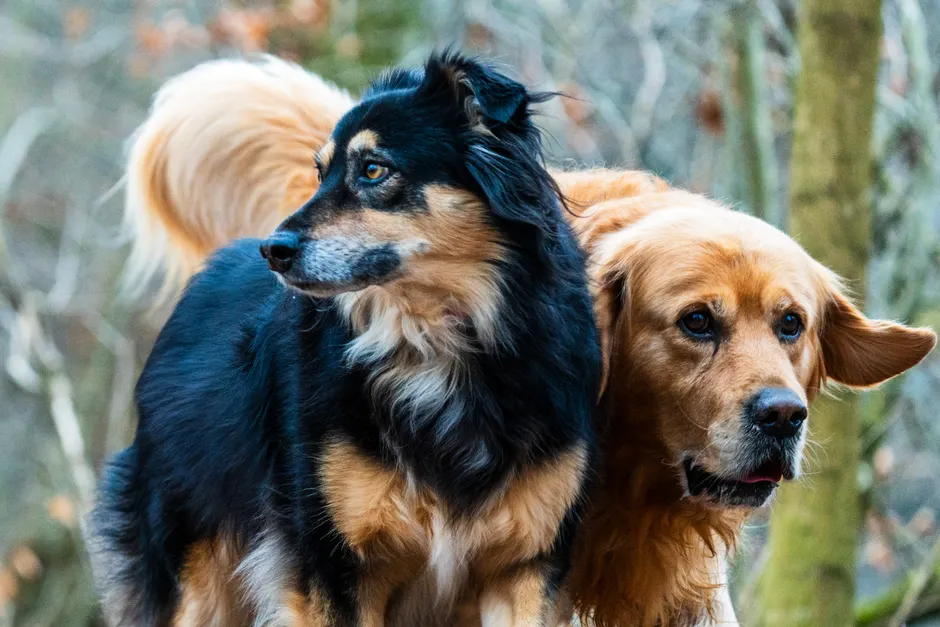
For a family evaluating a golden retriever mix, this translates into a management checklist that matters more than parent-breed anxiety:
- Neuter or spay status: Intact male dogs are statistically overrepresented in bite incidents across all breeds.
- Supervision quality: Unsupervised interactions between dogs and young children are a common thread in bite reports, regardless of breed.
- Socialization window compliance: Puppies exposed to varied people, surfaces, sounds, and handling before fourteen weeks show measurably lower fear-based reactivity as adults.
- Consistent household rules: Dogs given clear, predictable boundaries show lower baseline arousal than dogs in inconsistent environments.
Families who are earlier in their search process, evaluating breeders or considering a specific cross before the puppy even arrives, may find it useful to review resources like Goberian Puppies for Sale: Find a Reputable Breeder, since breeder screening practices around temperament testing and socialization protocols directly affect the behavioral outcome you’ll be managing later.
Comparative Energy and Enrichment Needs
Beyond bite risk, the practical day-to-day fit of a golden retriever mix in a household hinges heavily on stimulation needs, and this is where the husky cross and pitbull cross genuinely diverge. The husky-influenced golden retriever mix carries a sled dog’s stamina and a documented escape and roaming instinct; huskies were bred to run for miles as a job, and that drive does not disappear because the dog is half retriever. Under-stimulated husky-cross dogs commonly develop destructive chewing, fence-testing, and vocal complaint behaviors that owners misread as “bad temperament” when the actual root cause is unmet motor pattern needs.
The pitbull-influenced golden retriever mix typically shows a different profile: strong human-directed social motivation paired with a need for structured, positive social contact rather than pure aerobic output. These dogs often do well with shorter, higher-intensity engagement (tug, structured play, training sessions) layered with consistent social access to their family, rather than the multi-mile daily runs a husky cross may require.
| Attribute | Golden Retriever x Husky Mix | Golden Retriever x Pitbull Mix |
|---|---|---|
| Daily Exercise Need | 60 to 90 minutes, high-intensity | 45 to 60 minutes, moderate to high intensity |
| Escape/Roaming Risk | High (secure fencing essential) | Low to moderate |
| Vocalization Tendency | High (howling, talking) | Low to moderate |
| Human-Directed Affiliation | Moderate | High |
| Enrichment Priority | Sensory/scent work, running, sled-style pulling games | Structured play, training-based bonding, social contact |
| Novice Owner Suitability | Moderate (needs experienced handling of drive) | Moderate to high (benefits from structured leadership) |
Because joint health becomes a shared concern for both crosses as they age into their senior years (both parent breeds carry elevated hip dysplasia risk), families managing an aging golden retriever mix should also look ahead to nutritional support. Our guide to the Best Dog Food for Arthritis: 5 Vet-Backed Picks covers formulations that support joint comfort as these energetic crosses move into their less mobile years.

Owners who want a lighthearted way to mark their attachment to the breed while managing these very real training demands sometimes enjoy small identity touches, like a My Heart Belongs to Golden Retriever Dogs Pets Sticker, a small nod to the breed that anchors either cross’s friendlier instincts.
- Full Color Design, Premium, Weather Protected.
- Water-Carwash-Weather Proof Upto 9 Years Life Time.
- %100 Satisfaction GUARANTEED.
A Family Suitability Checklist: Assessing the Individual Dog
Rather than relying on breed labels, a behaviorally literate assessment protocol lets a family evaluate the actual dog under consideration. This is the same functional approach used in shelter behavior evaluations, adapted for home use.
- Resource guarding test: Offer a low-value chew, then a higher-value one, while calmly approaching at a comfortable distance. Watch for freezing, hard staring, or covering the item with the body. Mild avoidance is normal; stiffening or growling warrants a professional consult before placement in a home with children.
- Startle recovery time: Drop a soft object out of the dog’s direct line of sight from a few feet away. A well-regulated dog startles, orients, and returns to baseline behavior within a few seconds. Recovery times stretching past ten to fifteen seconds, or displacement behaviors like prolonged pacing, suggest a lower arousal threshold that needs management before unsupervised child contact.
- Supervised child-interaction trial: Structure a short, calm session where a child offers a treat by hand and then engages in quiet petting, with an adult positioned to intervene. Watch the dog’s body language, not just outcome; a loose body, soft eyes, and voluntary approach are the goals. Stiffness, lip licking, or repeated retreat attempts are communication signals, not disobedience.
- Choice and consent checks: Give the dog a clear exit option during all interactions (an open doorway, adequate space) and observe whether it uses that option. A dog that consistently chooses to stay engaged is telling you something valuable about its comfort level, and teaching dogs this kind of agency (rather than restraining them through handling) produces more reliable long-term behavioral data than a single forced encounter.
This protocol matters more for a golden retriever mix than for a purebred dog precisely because the F1 or F2 generation carries wider behavioral variance. Don’t count on the golden retriever half to reliably soften the other parent’s traits; run the actual observational trial instead of trusting the pedigree math.
For families who enjoy the emotional storytelling side of dog ownership alongside the practical behavioral work, light reading like Special Delivery (A Valentine’s Short Story) offers a relaxing break between training sessions.

Gear and Enrichment Comparison for Either Golden Retriever Mix
Whichever cross a family chooses, structured enrichment gear reduces the behavioral fallout of unmet drive. Below is a practical comparison of common tools, priced using relative tiers rather than fixed dollar amounts since actual pricing fluctuates.
| Product Type | Best For | Key Spec | Price Tier |
|---|---|---|---|
| Secure yard tether system | Husky-cross roaming risk | Rated for 100+ lb dynamic pull | $$$ |
| Snuffle mat / scent enrichment | Husky-cross mental stimulation | Machine washable, multi-texture | $$ |
| Structured tug/training rope | Pitbull-cross social bonding | Reinforced double-braid cotton | $ |
| Orthopedic joint supplement | Both crosses, senior years | Glucosamine/chondroitin blend | $$$ |
| GPS escape-tracking collar attachment | Husky-cross recovery | Real-time location, waterproof rating | $$$$ |
A golden retriever mix from either lineage benefits from this kind of proactive gear planning well before a behavioral issue emerges, since antecedent management (controlling the environment before a problem behavior occurs) is consistently more effective than after-the-fact correction.
Considering Adoption Instead of a Breeder Cross
Many families searching for a golden retriever mix overlook rescue populations, where mixed-breed adults are frequently already behaviorally assessed by shelter staff, removing much of the genetic guesswork described above. Older rescue dogs in particular tend to have a more stable, observable temperament simply because more of their developmental windows have already closed and expressed. If you’re open to skipping the puppy unpredictability altogether, our guide on Senior Golden Retriever Rescue: 2026 Adoption Guide walks through what to expect from adult and senior rescue evaluations, which often include exactly the kind of resource guarding and startle-recovery testing described in the checklist above.
For families who like to document this whole journey, a fun paired read is The Skyline (2 book series), a good option for downtime between training sessions and vet visits.
There is an issue displaying Amazon products. Please contact the administrator to check that.Key Takeaways
- A golden retriever mix does not inherit an “averaged” temperament; polygenic traits recombine unpredictably between the two parent lines.
- ATTS data shows pitbull-type breeds passing standardized temperament testing at rates comparable to golden retrievers, contradicting the assumption of inherent aggression.
- Neuter status, supervision, and socialization windows outweigh breed identity as predictors of bite risk, per CDC/AVMA research.
- Husky-cross dogs need higher aerobic output and secure containment; pitbull-cross dogs need structured social engagement.
- Individual behavioral testing (resource guarding, startle recovery, supervised child interaction) is more reliable than breed labels for family placement decisions.
Frequently Asked Questions
Is a golden retriever mix with husky or pitbull more likely to bite?
Neither parent breed shows a statistically inherent bite predisposition when evaluated through standardized temperament testing like the ATTS. A golden retriever mix’s actual bite risk correlates more strongly with neuter status, supervision quality, and early socialization than with which parent breed contributed to the cross.
Which golden retriever mix breed is better with young children?
There is no universal answer, since temperament varies by individual dog rather than by parent breed alone. A golden retriever mix with either husky or pitbull ancestry can be suitable for families with children provided the specific dog passes a supervised child-interaction trial and shows healthy startle recovery and no resource guarding behavior.
How much exercise does a golden retriever mix need each day?
A golden retriever mix with husky ancestry typically needs 60 to 90 minutes of high-intensity daily activity due to inherited sled-dog stamina, while a golden retriever mix with pitbull ancestry generally does well with 45 to 60 minutes of moderate to high-intensity engagement paired with structured social contact.
Do golden retriever mixes have more health problems than purebred dogs?
A golden retriever mix can inherit joint and hip conditions common to both parent breeds, particularly hip dysplasia, which becomes more relevant as the dog ages into its senior years. Responsible breeders screen for these conditions, and adoptive families should plan for joint-support nutrition and monitoring regardless of which cross they choose.