


The best dog food for arthritis does two things at once: it dampens the low-grade inflammatory processes driving joint deterioration, and it keeps body weight lean enough that those joints aren’t fighting a losing battle against gravity. Most owners default to grabbing a joint supplement off the shelf and calling it a plan. That’s an incomplete strategy, and the research backs up why.
The Inflammation-Arthritis Connection Most Owners Miss
Osteoarthritis in dogs isn’t just mechanical wear on cartilage. It’s a chronic inflammatory condition, and the joint capsule itself becomes an active site of low-grade inflammation that perpetuates pain signaling long after the initial cartilage damage occurred. A 2018 study published in the Journal of Veterinary Internal Medicine found that dogs supplemented with omega-3 fatty acids (specifically EPA and DHA from fish oil) showed measurable reductions in clinical signs of arthritis, including improved weight-bearing and owner-observed lameness scores, within a 90-day window. That’s not a marginal effect. That’s a functional change in how a dog moves through its day.
What this means practically: a dog food for arthritis that relies solely on glucosamine without adequate omega-3 inclusion is only addressing part of the biological picture. The inflammatory cascade needs to be interrupted at the fatty acid level, not just supported structurally at the cartilage level. If you’re evaluating a senior dog food for joint pain, check the guaranteed analysis for EPA/DHA content specifically, not just “fish oil” listed vaguely in the ingredient panel.
Weight Management Is the Highest-Leverage Intervention You’re Overlooking
Here’s a finding that should reframe how every owner thinks about senior dog nutrition. The landmark lifespan study conducted by Kealy and colleagues at Purdue University followed Labrador Retrievers across their entire lives, with one group fed ad libitum and a paired littermate group fed 25% fewer calories. The calorie-restricted dogs experienced a two-year delay in the onset of visible arthritis symptoms compared to their heavier littermates. Two years. That’s not a rounding error in a research paper, that’s an owner-controllable variable with more predictive power over joint health than almost any supplement on the market.
The behavioral reality is that most owners underestimate their dog’s body condition score by a full point or two. A dog that “looks fine” to its owner is frequently carrying 10 to 15% more body weight than ideal, and every extra pound translates to disproportionate load on already-compromised joints. Before adding a single supplement, get an objective body condition assessment from your veterinarian. Caloric restriction, done gradually and monitored, is arguably the single most effective and least expensive arthritis intervention available, and it requires no product purchase at all.

Don’t count on a joint supplement alone to work miracles. The data on oral glucosamine-chondroitin efficacy in dogs is genuinely contradictory, and no ingredient substitutes for appropriate body weight and an anti-inflammatory nutritional foundation.
Functional Ingredients Worth Prioritizing (and the Contradictory Evidence)
Three ingredient categories dominate the arthritis-support conversation. Each has a different evidence profile, and owners deserve a rational look at what’s actually been demonstrated versus what’s marketing language.
- EPA/DHA (marine-source omega-3s): Strongest evidence base of the three. Multiple controlled trials, including the 2018 JVIM study referenced above, show measurable functional improvement.
- Glucosamine-chondroitin: This is where the data gets genuinely mixed. Some trials show modest improvement in comfort and mobility scores, others show no statistically significant difference from placebo. Dosing consistency and bioavailability appear to be major confounding variables across studies, which makes it hard to draw a firm conclusion either way.
- Green-lipped mussel: Contains a naturally occurring blend of omega-3s and glycosaminoglycans. Preliminary trials are promising, but sample sizes remain small and more replication is needed before treating it as a proven standalone intervention.
The honest takeaway: don’t select a food based on supplement branding alone. Look at the full nutritional profile, including protein quality for lean muscle maintenance (muscle supports joints mechanically), calorie density for weight control, and confirmed omega-3 levels. If you want a deeper ingredient-level breakdown of what a quality aging formula should contain, this IAMS Healthy Aging ingredient analysis walks through label-reading in more detail.
5 Top Dog Food for Arthritis Options, Matched to Severity and Budget
Below is a comparative breakdown across therapeutic and over-the-counter tiers. Severity level matters here: a dog with mild, early-stage stiffness has different nutritional leverage points than a dog with diagnosed, radiographically confirmed osteoarthritis.
| Product / Formula Type | Best For Severity | Key Joint-Support Ingredients | Price Tier |
|---|---|---|---|
| Veterinary Therapeutic Joint Formula (Rx-only) | Moderate to severe, vet-diagnosed | High-dose EPA/DHA, green-lipped mussel, controlled calories | $$$$$ |
| Premium OTC Joint & Mobility Formula | Mild to moderate | Glucosamine-chondroitin, omega-3 blend, L-carnitine | $$$$ |
| Air-Dried Whole Protein Diet | Mild stiffness, weight-sensitive dogs | Lean animal protein, minimal processing, naturally lower glycemic load | $$$ |
| Weight Management + Joint Support Kibble | Overweight dogs with early arthritis signs | Reduced calorie density, L-carnitine, moderate omega-3 | $$ |
| Standard Senior Formula with Added Fish Oil | Preventive / very early stiffness | Basic omega-3 fortification, senior-appropriate protein levels | $ |
For dogs whose arthritis is complicated by picky eating or where you need a high-value protein base to layer supplements onto, an air-dried option like the ZEAL Canada Air-Dried Chicken Recipe for Dogs offers a minimally processed protein source that many owners find easier to combine with prescribed joint supplements or fish oil additions, without introducing excess filler calories that work against weight management goals.
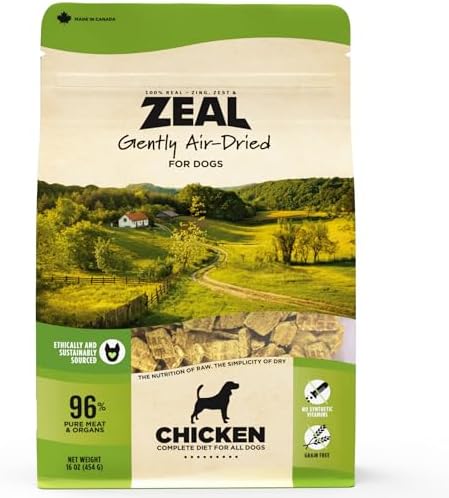
- 96% Free-Range Chicken and Organs for Optimal Health: Made with free-range chicken, liver, gizzard, and heart, providing…
- Natural and Organic Superfoods for Complete Wellness: Enriched with ethically sourced green-lipped mussels for joint sup…
- Air-Dried to Retain Nutrients Naturally: Our gentle air-drying process locks in all the nutrients without synthetic addi…
This kind of comparative approach matters because a dog food for arthritis that works well for a 15-pound terrier with mild stiffness is rarely the right fit for a 70-pound Labrador with confirmed hip osteoarthritis. Match the tier to the diagnosis, not to the marketing claims on the bag.
Supporting the Environment While the Diet Does Its Work
Nutritional intervention doesn’t operate in isolation. A dog managing arthritic pain also needs an environment that minimizes unnecessary joint strain during the trial period. Cold, damp sleeping surfaces measurably worsen stiffness in arthritic dogs, and dogs that spend meaningful time outdoors need protected, insulated shelter that keeps joints warm and dry. An option like this Outdoor Waterproof Dog Shelter w/Porch can reduce the cold-and-damp exposure that tends to spike inflammatory pain flares, complementing the anti-inflammatory work the diet is doing internally.

- Cozy Up In Privacy – For dogs who value their privacy, Pelzin dog bed house can offer a secure place to “get away from i…
- Versatile Dog House – Industrial waterproof fabric that withstands outdoor elements while providing a naturally cooling …
- Support Joint – With 3 inch orthopedic egg-crate foam provides cradling comfort and helps to relieve issues like joint p…
Owners also frequently overlook their own footing stability during leash walks with an arthritic dog, particularly on uneven terrain where a sudden pull or slip forces the owner to jerk the leash, which in turn can cause the dog to plant weight abruptly on a compromised joint. Something as simple as Lock Laces Elastic No Tie Shoelaces keeps an owner’s footwear secure and reduces the chance of a trip-and-jerk incident during slow, deliberate arthritis-friendly walks, where controlled pacing matters more than speed.

- Canvas
- Made in the USA or Imported
- No-tie Lacing System: Turn any pair of lace-up tennis shoes into slip on sneakers. Lock Laces are the original, no tie s…
A Practical 6 to 8 Week Feeding Transition Protocol
Switching a dog to a new anti-inflammatory dog diet without a structured transition risks gastrointestinal upset, which can confound your ability to assess whether the food itself is working. Follow this sequence:

- Days 1-7: Mix 25% new food with 75% current food. Monitor stool quality daily.
- Days 8-14: Shift to a 50/50 ratio. Begin a written mobility log (details below).
- Days 15-21: Move to 75% new food, 25% old. Note any changes in stool or appetite before full transition.
- Day 22 onward: Full transition to the new arthritis diet for dogs. Continue mobility logging weekly.
- Week 6-8 checkpoint: Compare your baseline mobility log to current observations. This is the point at which most controlled trials, including the JVIM omega-3 study, saw measurable improvement.
Your mobility log should track four objective, observable data points rather than subjective “seems happier” impressions:
- Gait quality: Is there visible head-bobbing or weight-shifting away from a limb during walking?
- Willingness to jump: Does the dog hesitate or refuse before jumping onto furniture or into the car, compared to baseline?
- Post-rest stiffness: How many seconds after standing up from a nap does normal gait resume?
- Stair navigation: Any pausing, one-step-at-a-time behavior, or reluctance on stairs?
According to the American Veterinary Medical Association, objective mobility tracking of this kind is one of the most reliable ways for owners to communicate meaningful change to their veterinarian, since clinical appointments only capture a brief snapshot of behavior.
Choosing the Right Dog Food for Arthritis for Your Individual Dog
There’s no single universally correct dog food for arthritis. The right choice depends on diagnosed severity, current body condition score, budget realities, and whether your veterinarian has recommended a prescription-only therapeutic formula. What remains consistent across every case is the underlying biological priority: reduce systemic inflammation, manage body weight aggressively, and treat supplements as an adjunct rather than a primary treatment. A dog that loses excess weight and receives adequate omega-3 fatty acids will typically show more functional improvement than a dog kept at the same weight while simply adding a joint supplement on top of an otherwise unchanged diet.
Work with your veterinarian to reassess body condition score and mobility markers at each transition checkpoint. The goal of any dog food for arthritis protocol is measurable functional improvement, not just a label claim.
How long does it take to see results from a dog food for arthritis?
Most controlled studies, including the 2018 JVIM omega-3 trial, measured clinical improvement within 90 days. A practical owner-level trial period of 6 to 8 weeks is usually enough to detect early changes in gait, stiffness after rest, and willingness to jump, provided you’re tracking objective observations rather than relying on general impressions.
Is glucosamine actually proven to help dogs with arthritis?
The data is genuinely contradictory. Some trials show modest comfort and mobility improvements, while others find no statistically significant difference from a placebo. Dosing inconsistency across studies is a likely confounding factor. Glucosamine-chondroitin shouldn’t be relied on as a standalone solution, but it can be a reasonable adjunct alongside omega-3 fatty acids and weight management.
Can weight loss alone improve arthritis symptoms without a special diet?
Yes, and the evidence for this is arguably stronger than for most joint supplements. The Purdue lifespan study found a two-year delay in arthritis onset in calorie-restricted dogs compared to littermates fed without restriction. Weight management alone, even without additional supplementation, produces a measurable reduction in joint load and associated pain.
What’s the difference between a joint supplement dog food and a prescription arthritis diet?
Over-the-counter joint supplement dog food typically includes moderate levels of glucosamine, chondroitin, or omega-3s as a general wellness addition. Prescription therapeutic diets are formulated with clinically validated, higher-dose omega-3 fatty acid concentrations and are typically recommended for dogs with a confirmed osteoarthritis diagnosis under veterinary supervision.