


High-fiber dog food can be the difference between a senior Golden Retriever who bloats and strains after every meal and one who moves through his golden years with a calm, settled gut. I’ve watched this play out more times than I can count here at the sanctuary. An old dog comes in with a coat that’s dull, a belly that gurgles all night, stool that’s never quite right, and within a few weeks of the correct fiber balance, something shifts. He’s more comfortable. He’s more himself. That’s the whole point.
Golden Retrievers are prone to sensitive stomachs as they age, and honestly, it makes sense when you think about what their bodies have been through. Years of joint inflammation, medication for arthritis or allergies, slower gut motility, maybe a pancreas that doesn’t work like it used to. All of that adds up. Their digestive system is tired, just like the rest of them. Fiber isn’t a trendy add-on here. It’s a functional tool that supports gut motility, feeds the good bacteria in the colon, and helps regulate stool quality so your old boy isn’t straining on walks or leaving surprises on the kitchen floor at 2 a.m.
Let’s talk about what’s actually happening in an aging Golden’s gut, what the research says about fiber for dogs, and how to choose a high-fiber dog food that actually helps instead of making things worse.
Why Aging Golden Retrievers Develop Sensitive Digestion
Every senior dog I’ve cared for at the sanctuary has taught me something, and one lesson keeps repeating: the gut ages right alongside the joints and the brain. Golden Retrievers in particular seem to carry a genetic predisposition toward gastrointestinal sensitivity, food allergies, and even certain cancers that start in or near the digestive tract. Add in the natural slowdown of intestinal motility that comes with age, and you’ve got a recipe for chronic tummy trouble.
As dogs get older, the muscles lining the intestines contract less efficiently. Food moves through more slowly. This can cause constipation in some dogs and, paradoxically, loose stool in others because the gut microbiome gets thrown off balance. Add arthritis medications, which are common in senior Goldens, and you’ve got another layer of GI stress since many NSAIDs are hard on the stomach lining.
Fiber matters here because it works two ways at once. Soluble fiber slows digestion just enough to firm up loose stool, while also feeding beneficial gut bacteria that keep the colon healthy. Insoluble fiber adds bulk, which stimulates those tired intestinal muscles to keep things moving. A well-balanced high-fiber dog food gives an aging gut both types of support instead of overwhelming it with one extreme.
Watching a senior dog finally have a normal, comfortable bowel movement after weeks of straining and discomfort is one of the quiet victories nobody talks about in dog care, but it changes their whole day. That’s not a small thing. That’s dignity.
The Science Behind Fiber and Senior Dog Digestion
I’m not a vet, and I always tell people to loop their own vet into any diet change. But I’ve spent enough years reading nutrition research and working alongside veterinary nutritionists to know the numbers matter. The World Small Animal Veterinary Association (WSAVA) nutrition consensus and AAFCO guidelines both point toward a moderate amount of fermentable fiber for dogs dealing with gastrointestinal sensitivity, generally in the range of 2 to 4 grams per 100 kilocalories.
That range matters because too little fiber won’t do anything for gut motility or stool quality, but too much fiber can bind up nutrient absorption and actually cause loose stool or gas in a senior dog whose system is already fragile. This is why I get nervous when I see pet parents dumping plain wheat bran or excessive psyllium into a bowl without guidance. More isn’t better. Balanced is better.
If you’re also noticing your senior Golden’s appetite has changed alongside digestive issues, it’s worth reading Older Dog Suddenly Hungry? Vet-Recommended Diets Compared for context on how hunger shifts and GI sensitivity often show up together in aging dogs.
What a 2021 Study Found About Fiber Blends and Stool Consistency
A 2021 study published in the Journal of Animal Science looked specifically at dogs with chronic gastrointestinal sensitivity and tested how they responded to diets containing psyllium and beet pulp fiber blends. The results were honestly pretty encouraging. Seventy-eight percent of the dogs in the study showed measurable improvement in stool consistency after being switched to the fiber-blended diet.
That number tells me fiber source matters just as much as fiber quantity. Psyllium is a soluble fiber that forms a gel-like substance in the gut, which helps regulate both diarrhea and constipation. Beet pulp is a moderately fermentable fiber that feeds beneficial bacteria without overwhelming the colon. Together, they create a gentler, more balanced effect than a single fiber source alone.
For pet parents managing a Golden with chronic loose stool or irregular bowel movements, this is the kind of ingredient pairing worth looking for on a label, not just a vague “high fiber” claim on the front of the bag.
What to Look for on the Label
I read labels obsessively now, partly because I’ve been burned by pretty packaging hiding mediocre ingredients. Here’s what I actually look for when choosing a high-fiber dog food for a senior Golden with a sensitive stomach:

- Named fiber sources like beet pulp, pumpkin, psyllium husk, or chicory root, rather than vague terms like “plant fiber”
- Limited fillers such as excessive corn, soy, or wheat gluten that can aggravate sensitive digestion
- Digestibility markers, meaning the food lists a named animal protein source first and avoids heavy use of by-product meal
- Moderate fat content, since high-fat diets can trigger pancreatitis in older dogs, especially Goldens who are already predisposed
- Consistent fiber percentage between 3 and 5 percent crude fiber on the guaranteed analysis panel, which tends to fall within that helpful therapeutic range
One food that fits several of these markers is Wellness CORE Adult Dry Dog Food, Grain Free Kibble. It leans on named protein sources and includes fiber-supportive ingredients without relying on heavy fillers, which makes it a reasonable option to discuss with your vet if your senior Golden needs a grain-free base with digestive support built in.

- GRAIN-FREE ADULT DRY DOG FOOD: Premium protein from responsibly sourced lamb is expertly balanced with nutrient rich sup…
- LEANER BODY MASS AND MUSCLE TONE: Based on the nutritional philosophy that dogs thrive on a natural diet mainly comprise…
- SUPPORTS HEALTHY COAT & HEART: Guaranteed levels of omega fatty acids from ingredients such as flaxseed and salmon oil s…
If your Golden also happens to be dealing with weight management or reduced appetite alongside GI sensitivity, it’s a good time to have a broader conversation with your vet about whether a therapeutic diet makes sense. We’ve covered that comparison in depth in Prescription Diet vs OTC Food for Senior Dog Hunger, which walks through when an over-the-counter high-fiber dog food is enough and when a prescription formula becomes necessary.
Comparing High-Fiber Options for Sensitive Senior Stomachs
Here’s a side-by-side look at three options that show up often in conversations about sensitive stomach dog food for aging Goldens. None of these are a substitute for a vet consult, but they’re a solid starting point for research.
| Product | Primary Fiber Sources | Protein Base | Best For | Price Tier |
|---|---|---|---|---|
| Wellness CORE Adult Dry Dog Food, Grain Free Kibble | Flaxseed, chicory root, pumpkin | Deboned turkey and chicken | Goldens needing grain-free digestive support | $$$ |
| ZEAL Canada Air-Dried Chicken Recipe for Dogs | Green tripe, pumpkin fiber | Air-dried chicken | Highly sensitive stomachs needing minimal processing | $$$$ |
| Lucy Pet Formulas for Life Salmon, Pumpkin, & Quinoa Dry Dog Food | Pumpkin, quinoa, beet pulp | Salmon | Goldens with poultry sensitivities | $$ |
Sanctuary-Tested Tips for Transitioning to a High-Fiber Diet
I’ve made every mistake in the book transitioning old dogs onto new food, and the biggest one is rushing it. A senior Golden’s gut needs time to adjust to a new high-fiber dog food, even a good one. Here’s what’s worked consistently for us:
- Go slow. Mix 25 percent new food with 75 percent old food for the first three to four days, then adjust the ratio gradually over two full weeks.
- Watch stool, not just appetite. A dog can eat eagerly and still have a gut that’s struggling. Track consistency daily during the transition.
- Feed smaller, more frequent meals. Two or three smaller meals a day ease the digestive load compared to one large meal.
- Add moisture. A splash of warm water or plain bone broth on dry kibble helps fiber do its job without causing constipation.
- Keep a symptom journal. Note gas, stool quality, energy, and appetite. Bring it to your next vet visit.
One food we’ve had good luck with during slow transitions is ZEAL Canada Air-Dried Chicken Recipe for Dogs. The minimal processing seems easier on dogs whose guts are already inflamed or irritated, and the texture blends well with existing kibble during a gradual switch.
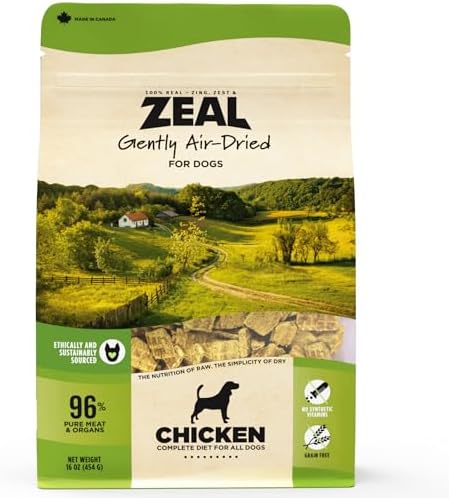
- 96% Free-Range Chicken and Organs for Optimal Health: Made with free-range chicken, liver, gizzard, and heart, providing…
- Natural and Organic Superfoods for Complete Wellness: Enriched with ethically sourced green-lipped mussels for joint sup…
- Air-Dried to Retain Nutrients Naturally: Our gentle air-drying process locks in all the nutrients without synthetic addi…
For Goldens who don’t do well with poultry-based proteins, a salmon-based formula like Lucy Pet Formulas for Life Salmon, Pumpkin, & Quinoa Dry Dog Food gives you fiber support from pumpkin and quinoa without the protein source that’s often the actual trigger behind chronic loose stool.

- CAREFULLY FORMULATED: for Gut health, digestive health and sensitive stomachs. These are key to natural immunity. Grain-…
- SKIN & COAT: Wild Caught deboned Alaskan Salmon rich in Omega 3 fatty acids for healthy skin and coat.Caloric content: 3…
- ALL BREEDS & LIFE STAGES: Every kibble is designed to contain all the essential nutrients required for puppies, adult do…
When Fiber Alone Isn’t Enough
Sometimes fiber for dogs is only part of the puzzle. If you’ve adjusted diet and you’re still seeing chronic diarrhea, blood in stool, significant weight loss, or a Golden who seems uncomfortable after every meal, that’s a vet visit, not a wait-and-see situation. Chronic GI issues in senior Goldens can mask underlying conditions like exocrine pancreatic insufficiency, inflammatory bowel disease, or even early-stage tumors, since Golden Retrievers carry elevated cancer risk as they age. If you want a fuller picture of what aging brings for this breed specifically, our piece on Senior Golden Retriever Disadvantages: Real Costs to Expect covers the honest realities pet parents should plan for.
According to the American Kennel Club, fiber plays a foundational role in canine digestive health across all life stages, but its importance becomes more pronounced as dogs age and gut function naturally slows. That’s not just anecdotal sanctuary wisdom. That’s backed by people who study this for a living.
Frequently Asked Questions
How much fiber should a senior Golden Retriever get daily?
Most veterinary nutritionists recommend a moderate fermentable fiber range of about 2 to 4 grams per 100 kilocalories for senior dogs with digestive sensitivity, which typically translates to 3 to 5 percent crude fiber on a dog food’s guaranteed analysis panel. A high-fiber dog food within that range tends to support gut motility without overwhelming the digestive tract. Always confirm the right amount with your vet based on your dog’s specific health history.
Can too much fiber hurt a senior dog’s digestion?
Yes. Excessive fiber can bind up nutrient absorption and actually cause gas, bloating, or loose stool in a senior dog, which is the opposite of what you’re trying to achieve. This is why a balanced high-fiber dog food with named fiber sources in a moderate range works better than adding large amounts of raw bran or fiber supplements without veterinary guidance.
How long does it take to see improvement after switching to a high-fiber dog food?
Most dogs show noticeable changes in stool consistency within two to three weeks of a gradual transition to a high-fiber dog food, based on both clinical research and sanctuary experience. Rushing the switch or skipping the transition period often causes temporary digestive upset that can be mistaken for the food not working.
Is pumpkin a good fiber source for senior Golden Retrievers?
Plain, unsweetened pumpkin is a gentle and well-tolerated fiber source for most senior dogs, including Golden Retrievers with sensitive stomachs. It provides both soluble fiber for stool regulation and moisture, which supports overall gut comfort. Many high-fiber dog food formulas include pumpkin specifically because it’s easy on aging digestive systems.
Watching an old dog find comfort again after weeks of GI struggle is one of the quiet, sacred parts of this work. It’s not flashy. Nobody’s clapping. But that dog sleeping soundly through the night instead of pacing with a sore belly? That’s everything. Trust your gut on this one, and trust theirs too. They’ll tell you what’s working if you’re paying attention.
Tell your pup I said Hi! — Dawn