
A dog arthritis diet is not just a nice-to-have accessory to medication. It is a primary lever you can pull to reduce pain load on compromised joints, and getting it wrong actively accelerates the degenerative process. I want to walk through this the way I’d walk through a case consult: what the joint pain does to feeding behavior first, then what to strip out of the bowl, then what to build back in.
Why Joint Pain Changes How a Dog Eats and Moves
Chronic pain is a physiological stressor, not just a mechanical inconvenience. When a dog’s hips or elbows hurt with every rise from a lying position, the animal’s whole activity budget contracts. Dogs with osteoarthritis reduce spontaneous movement, which lowers daily caloric expenditure even as many owners keep portioning food the same way they did when the dog was more active. That mismatch is the seed of a vicious cycle: less movement, more stored fat, more mechanical load on already-inflamed joints, more pain, even less movement. A dog arthritis diet has to account for this shift in energy balance directly, because feeding a stiff twelve-year-old dog like a spry six-year-old is one of the most common and preventable errors I see in behavior and wellness consults.
There’s also a sensory-processing piece worth understanding. Pain sensitizes the nervous system over time, a phenomenon called central sensitization, and dogs experiencing it often become more behaviorally reactive to handling, touch near sore joints, and even routine changes. This matters for feeding logistics too. A dog that has to crouch or overextend its neck to reach a low bowl is adding unnecessary joint flexion multiple times a day. Elevated feeding setups, like the addggo Elevated Ceramic Slow Feeder Dog Bowls, reduce that repetitive strain on the neck and shoulders while also slowing intake, which helps with weight management in dogs who wolf their food and then beg for more.

- addggo’s elevated ceramic dog slow feeder dog bowl convenient for dogs to eat and Preventing bad habits,avoiding dog’s n…
- 1.6Cup Capacity pefect for Small&Medium size dog:This raised slow feeder dog bowls small breed 6.3” Dia x 4.92” H”H perf…
- Premium material made it durable easy to clean Dishwaher-safe and Oven-safe Microwave-safe: The food grade ceramic dog s…
What Not to Feed a Dog With Arthritis
Here is where I get specific, because vague advice like “feed healthy food” doesn’t change behavior or outcomes. A functional dog arthritis diet requires actively removing several categories of ingredients that either promote systemic inflammation or contribute to excess body weight, which is itself a mechanical and inflammatory aggressor on joint tissue.
- High omega-6 vegetable oils: Corn oil, soybean oil, and sunflower oil are common in lower-tier commercial diets. Omega-6 fatty acids are not inherently bad, dogs need some, but the typical American commercial diet already skews heavily omega-6 dominant. Excess omega-6 relative to omega-3 promotes production of pro-inflammatory eicosanoids, which is the opposite of what an arthritic joint needs.
- Excess sodium: Table scraps, processed jerky treats, and cheap kibble fillers often carry sodium loads far beyond what a sedentary senior dog needs. High sodium intake is linked to fluid retention, which can subtly increase joint swelling and discomfort, and it places unnecessary strain on cardiovascular and renal systems that are frequently already under age-related stress.
- High-glycemic fillers: Corn syrup, white rice used as a primary filler, and other rapidly digested starches spike blood glucose and insulin. Chronically elevated insulin promotes fat storage and is associated with a pro-inflammatory metabolic state. This is not a minor nutritional footnote, it is a direct contributor to the weight gain that mechanically overloads arthritic joints.
- Fatty table scraps: Bacon grease, fried skin, and other high-saturated-fat scraps do double duty as inflammation drivers and calorie bombs. A single greasy handout can represent a meaningful percentage of a senior dog’s daily caloric allowance.
Marshall et al. (2010), published in Veterinary Record, found that obese dogs showed significantly faster osteoarthritis progression compared to lean dogs, and that weight loss alone produced measurable improvements in lameness scores. Body condition score is not a cosmetic detail. It is a modifiable variable directly tied to joint pain trajectory.
If you’re also seeing behavioral changes alongside the physical stiffness, like increased nighttime restlessness or vocalizing, it’s worth reading about the early signs of cognitive decline in aging dogs, since pain and cognitive dysfunction frequently co-occur and can be mistaken for one another.

Building a Joint-Friendly Diet Framework
Once the inflammatory and caloric liabilities are removed, the next step is constructing a joint-friendly dog food plan around three pillars: lean protein, targeted omega-3 supplementation, and calorie control tied to an objective body condition score.
Lean protein matters because arthritic dogs are prone to sarcopenia, the age-related loss of lean muscle mass, and muscle is what actually stabilizes an unstable joint. A diet too low in quality protein accelerates muscle wasting, which removes the natural shock absorption around the joint and increases reliance on the joint capsule and ligaments alone. Air-dried and minimally processed proteins tend to retain more of their amino acid profile through processing. A formula like the ZEAL Canada Air-Dried Chicken Recipe for Dogs is worth considering as a protein-forward option, particularly for dogs who need calorie density managed carefully alongside muscle maintenance goals.
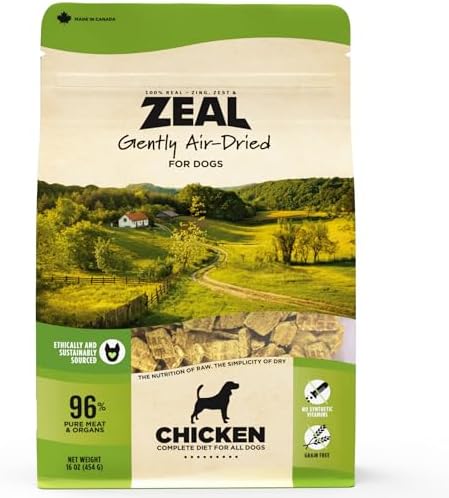
- 96% Free-Range Chicken and Organs for Optimal Health: Made with free-range chicken, liver, gizzard, and heart, providing…
- Natural and Organic Superfoods for Complete Wellness: Enriched with ethically sourced green-lipped mussels for joint sup…
- Air-Dried to Retain Nutrients Naturally: Our gentle air-drying process locks in all the nutrients without synthetic addi…
Omega-3 fatty acids, specifically EPA and DHA from marine sources, are the best-supported dietary intervention for canine osteoarthritis in the current literature. The 2020 AAHA pain management guidelines recommend dosing fish oil based on body weight, with EPA/DHA combined typically targeted in the range clinicians calculate per kilogram, rather than a flat scoop regardless of dog size. This is a case where more is not automatically better. Excess fat intake from over-supplementing fish oil can itself contribute to weight gain or gastrointestinal upset, so dosing precision matters more than enthusiasm.
Calorie control should be tied to a body condition score of 4 to 5 out of 9, which is the range where ribs are easily palpable under a thin fat layer and a waist is visible from above. This isn’t a guess. It’s a hands-on assessment you or your veterinarian can perform monthly. If you’re also managing the diet transition from an adult formula, our breakdown of Blue Buffalo Senior versus Adult formula differences covers how caloric density and joint-support ingredients typically shift between life stage formulas.
Joint Supplements: What the Evidence Actually Shows
This is where I have to be honest about data that doesn’t fit a tidy narrative. Glucosamine and chondroitin are the most commonly recommended joint supplements for dogs, and they are also the most inconsistently supported by controlled research. A 2022 systematic review in Osteoarthritis and Cartilage Open found mixed efficacy across trials, with some showing modest improvement in pain scores and others showing no statistically significant difference from placebo. The data is contradictory, and I think owners deserve to know that rather than being sold certainty that doesn’t exist in the literature.

Green-lipped mussel extract and marine-derived omega-3s have more consistent supporting evidence for anti-inflammatory effect, likely because their mechanism (modulating eicosanoid production) is more directly tied to the inflammatory pathways driving joint pain, rather than relying on cartilage-building claims that are harder to substantiate in a fully formed adult skeleton. If you’re weighing supplement-based management against pharmaceutical or injectable options, our comparison of Synovetin OA versus NSAIDs for dog arthritis treatment lays out where diet and supplements fit relative to those clinical interventions.
For smaller or toy breeds carrying hip or joint vulnerability, a joint-support chew formulated for their size profile, such as Healthy Breeds West Highland White Terrier Z-Flex Minis Hip Support, can be a reasonable adjunct to dietary changes, though I’d frame it as a supporting player rather than a solo intervention. Don’t count on any single supplement to work miracles independent of weight management and dietary inflammation control.
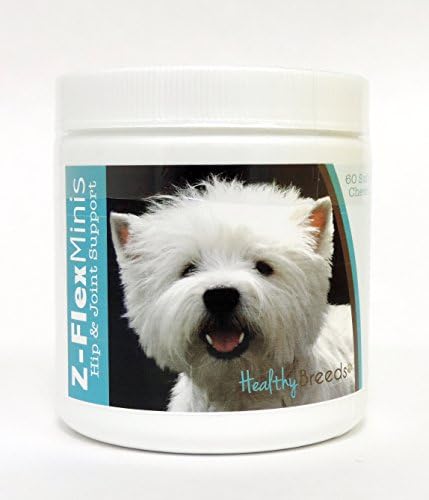
- Z Flex Minis is our small dog formula and Z Flex Max is our large dog formula
- Perfect tasty blend of Glucosamine, Chondroitin, Perna Canaliculus, and Omega-3 Fatty Acids. Dogs love the taste. They t…
- Supports the joints of working, older and active dogs. Helps to upkeep joint mobility, flexibility and healthy bone stru…
Comparing Joint-Friendly Diet and Feeding Products
| Product | Best For | Key Feature | Price Tier |
|---|---|---|---|
| ZEAL Canada Air-Dried Chicken Recipe | Lean muscle maintenance in a dog arthritis diet | Minimally processed, high protein retention | $$$$ |
| addggo Elevated Ceramic Slow Feeder Bowls | Reducing neck/shoulder strain during feeding | Elevated design, anti-choking slow-feed pattern | $$ |
| Healthy Breeds Z-Flex Minis Hip Support | Small breed joint support supplementation | Sized chew format for toy/small breeds | $ |
A Practical Weekly Protocol for Tracking Dietary Impact
Subjective impressions (“he seems better”) are notoriously unreliable in chronic pain conditions, partly because owners want to see improvement and partly because pain fluctuates day to day independent of treatment. I recommend a structured weekly tracking exercise instead, the same approach I’d use in a formal behavior modification case.
- Weigh weekly, same scale, same time of day. A one to two pound shift in a mid-size dog is clinically meaningful, not noise.
- Score body condition monthly. Use a standardized 9-point chart (your vet can provide one) rather than eyeballing it.
- Log appetite behavior daily. Note hesitation, bowl approach latency, and whether food is finished within a normal window.
- Track mobility markers weekly. Time how long it takes the dog to rise from a lying position, or count stairs climbed without pausing.
- Photograph gait weekly from the same angle, ideally the same time of day, to catch gradual changes you might miss in daily observation.
Any dog arthritis diet change should be evaluated against this baseline over four to six weeks minimum before drawing conclusions, since inflammatory dietary shifts don’t produce overnight results. For general reference on canine osteoarthritis pathology and management, the American Veterinary Medical Association provides science-based background that complements the protocol above.
Frequently Asked Questions
What foods make dog arthritis worse?
Foods high in omega-6 vegetable oils, excess sodium, high-glycemic fillers like corn syrup, and fatty table scraps all promote systemic inflammation or contribute to weight gain, both of which worsen joint pain. A dog arthritis diet should minimize these categories consistently, not just occasionally.
Can diet alone manage a dog’s arthritis without medication?
Diet is a meaningful contributor but rarely sufficient alone for moderate to severe cases. A joint-friendly dog food plan reduces inflammatory load and manages weight, but many dogs still need veterinary-guided pain management alongside dietary changes for full comfort.
Do glucosamine and chondroitin supplements actually work for dogs?
The research is mixed. Some controlled trials show modest pain score improvement, while others show no significant difference from placebo. Omega-3 fatty acids and green-lipped mussel extract currently have more consistent supporting evidence for anti-inflammatory benefit.
How much weight loss actually helps an arthritic dog?
Published research, including Marshall et al. (2010), found that even modest weight loss in overweight dogs produced measurable improvements in lameness scores. Reaching a body condition score of 4 to 5 out of 9 is a reasonable evidence-based target for most dogs on a dog arthritis diet.