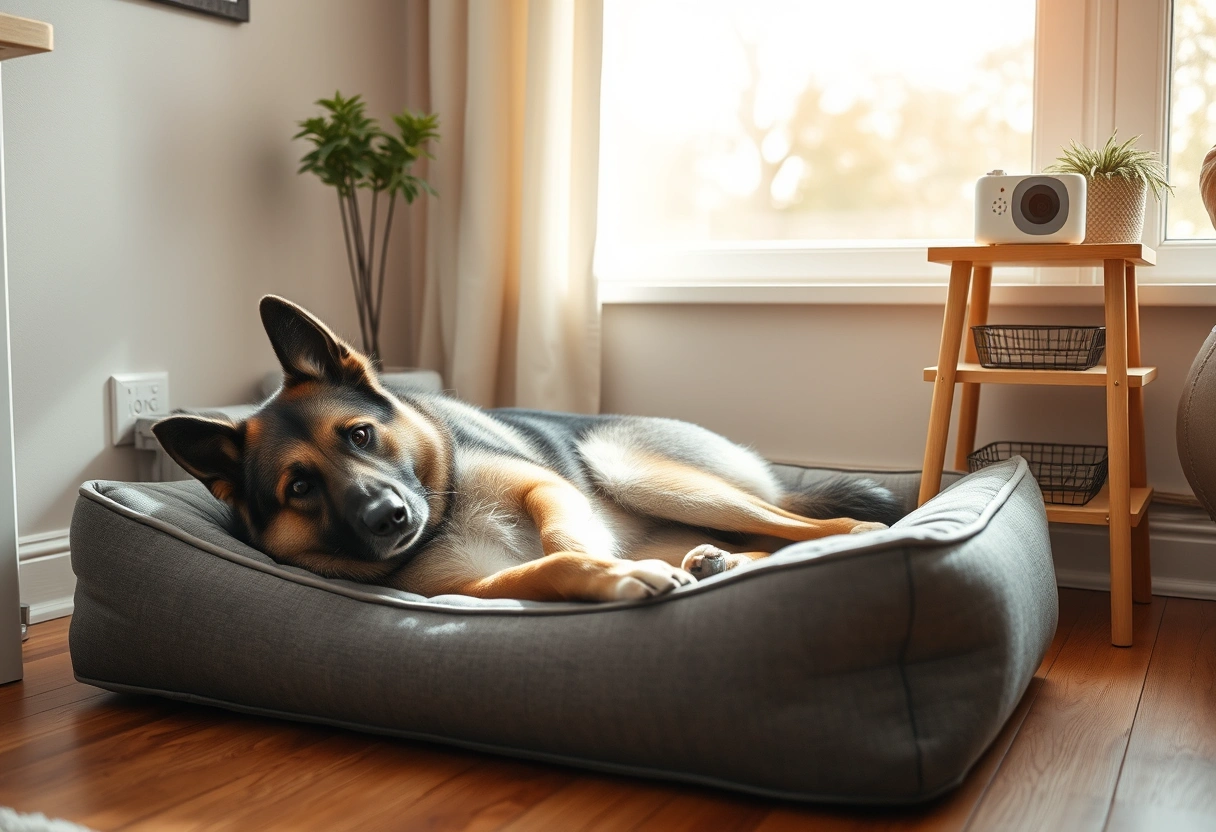
A good pet camera for separation anxiety won’t fix a broken heart, but it will tell you the truth about what’s happening in your living room while you’re gone. And with senior dogs, the truth is usually more complicated than plain old missing-you barking. Let’s get into what actually matters when you’re shopping for one, because most of the marketing copy out there was written for puppies, not for the graying old souls we love.
Why Senior Dogs Develop Separation Anxiety Differently
I’ve sat on the floor of the sanctuary at 2 a.m. with dogs who weren’t anxious about being alone. They were anxious about not being able to *find* me in a room that used to feel familiar and suddenly didn’t. That’s the piece a lot of pet parents miss. In an old dog, what looks like separation anxiety is often layered with sensory decline. Vision fades. Hearing goes quiet. The world gets smaller and scarier, and we become the anchor that makes it make sense again.
The ASPCA notes that separation anxiety affects an estimated 20 to 40 percent of dogs seen in behavior practices, and in my experience, senior dogs are disproportionately represented in that number, even though the research skews toward younger dogs. Why? Because an aging body changes the emotional math. A dog who could once self-soothe by pacing to a window now can’t get up off the orthopedic bed easily. A dog who used to hear you pull into the driveway now only knows you’re home when the door opens and startles her.
This is a sacred trust we’re keeping, this business of noticing when “acting up” is actually “struggling.” Honestly, who thinks an old dog barking for hours is just being dramatic or naughty? That kind of dismissiveness breaks something in me every time I hear it. A senior dog camera gives you a way to actually see the struggle instead of guessing at it from a place of guilt.
Is your dog barking because she’s lonely, or because she’s disoriented? That question matters more than most people realize, and you can’t answer it without eyes on the room.
Key Features to Prioritize in a Dog Anxiety Camera
Not every dog anxiety camera is built with an old dog’s needs in mind. Here’s what I actually look for, having tested more gadgets on more anxious old dogs than I can count:
- Two-way audio. Being able to speak to your dog in real time, in your own voice, at a volume she can actually hear, is not a gimmick. For a dog with hearing loss, you may need a camera with clear, non-tinny speaker output rather than something quiet and muffled.
- Night vision. Senior dogs often nap through the day and get restless at dusk, which brings us to sundowning (more on that below). A camera with real infrared night vision, not just a grainy low-light mode, lets you see behavior clearly after the sun goes down.
- Bark and sound alerts. You want a camera that pings your phone the moment barking starts, with enough smart filtering that it’s not sending you fifty false alarms from a passing garbage truck.
- Pan-tilt-zoom tracking. This one is underrated for senior dogs specifically. An old dog with wobbly back legs might drift out of frame, and a fixed camera will lose her behind furniture right when you need to see if she’s fallen or just settling in.
If your dog’s barking issue extends beyond just being left alone, our guide on tools to stop dog barking when left alone pairs well with camera monitoring, since footage helps you figure out which tool is actually working and which one is just background noise to your dog.

Comparing Camera Priorities for Senior Dogs
Here’s a simple breakdown of feature priority for anyone shopping specifically with an aging dog’s needs in mind. I built this from what I actually rely on with the seniors in my own care, not from a spec sheet.
| Feature | Why It Matters for Senior Dogs | Priority Level | Price Tier |
|---|---|---|---|
| Two-Way Audio | Lets you soothe a hearing-impaired dog with a clear, familiar voice | Essential | $$ |
| Infrared Night Vision | Reveals sundowning behavior after dark, not just daytime pacing | Essential | $$ |
| Bark/Sound Alerts | Real-time notification so you can intervene before panic escalates | High | $$$ |
| Pan-Tilt-Zoom | Keeps a slow-moving or wobbly dog in frame across the whole room | High | $$$$ |
| Wide-Angle Lens (No PTZ) | Budget option, but risks blind spots near beds and stairs | Moderate | $ |
| Cloud Storage Subscription | Useful for building a footage log to share with your vet | Optional | $$-$$$ |
Notice that price tier and priority level don’t always move together. Some of the best bark monitoring camera setups I’ve used skip the fancy zoom entirely and just nail the audio and night vision basics, which honestly covers most of what a senior dog household needs.
Reading Footage: Separation Anxiety vs. Sundowning (CCD)
This is where a camera earns its keep as a genuine diagnostic tool, not just a peace-of-mind gadget. True separation anxiety tends to show a clear, fast pattern: barking or pacing that starts within minutes of you leaving, often accompanied by destructive behavior near doors or windows, and it typically settles once the dog exhausts herself or gives up.
Canine Cognitive Dysfunction, on the other hand, moves differently. The American Veterinary Medical Association notes that CCD affects up to 28 percent of dogs aged 11 to 12, and one of its hallmark signs is “sundowning,” restlessness, disorientation, and vocalizing that intensifies in the late afternoon and evening regardless of whether you’re actually home. If your dog is barking and pacing at 5 p.m. even when you’re sitting right there in the next room, that’s not separation anxiety. That’s her internal clock and brain chemistry shifting.
Watch for *when* the barking starts, not just *that* it starts. A dog who panics the second the door closes is telling a different story than a dog who grows restless as the light changes outside, no matter who’s home.
Owners dealing specifically with vocalizing after dark should also read our piece on proven fixes for senior dog barking at night, since nighttime and dusk barking often trace back to cognitive changes rather than pure loneliness.
Placement and Safety Considerations for Mobility-Limited Dogs
Here’s something the tech reviews never mention: where you mount the camera matters almost as much as which camera you buy. For a dog with arthritis, hip dysplasia, or degenerative myelopathy, you want full visibility of stairs, rugs that slide, and the space directly around the orthopedic bed. Falls happen fast and quiet. A blind spot near a stair landing is not a small oversight, it’s a real risk.

I always recommend mounting at a height and angle that captures the *floor-level* world, not just a bird’s-eye view of the room. Old dogs live low. Their whole experience happens near the ground, near the bed, near the water bowl. Point your camera accordingly.
Speaking of comfort near the camera’s view, a familiar object nearby, something soft and dog-safe that smells like you, can genuinely help. Something like Meg the Bunny Plush Dog Toy placed near the bed gives an anxious senior something to nuzzle into on camera, and you’ll actually see on your footage whether she settles with it or ignores it entirely. That data is useful, not just sentimental.

- Built-In Squeakers & Wiggle Ears – Each foot contains a squeaker, and pressing Meg’s tummy makes her floppy ears bounce …
- Made for Fetch & Light Play – Her soft plush body makes Meg easy to toss, carry, cuddle, and chase during gentle games o…
- The Perfect Size – At approximately 8 inches tall, Meg is the perfect size for dogs while also making a fun addition to …
On the tech side, if you’re relying on your phone as your main monitoring hub throughout the day, a dependable device with strong battery life and a bright screen actually matters more than people think. Checking grainy alert footage on a sluggish phone is frustrating at 3 p.m. when you’re worried. A capable device like the XIAOMI Poco F8 PRO 5G can make quick-glance monitoring throughout your workday a lot less of a headache.
What the Data Means for Your Care Plan
Footage without action is just anxiety-inducing content for you to doom-scroll on your lunch break. The real value of a pet camera for separation anxiety is what you do with what you see.
Call your vet if you notice:
- Disorientation, circling, or staring at walls that happens regardless of whether you’re home
- Barking that intensifies specifically in the late afternoon or evening (classic sundowning)
- Signs of pain when your dog tries to get up or reposition on the bed
- Any fall, stumble, or moment where she seems lost in a familiar room
Try a comfort or enrichment fix first if you notice:
- Barking that starts right when you leave and fades within 20 to 30 minutes
- Settling that improves with a worn t-shirt, a familiar toy, or background sound
- Restlessness tied to a specific trigger, like the mail carrier or a neighbor’s dog
A household running on a self-cleaning setup, like the PETKIT Purobot Max 3 for a multi-pet home, frees up a little more of your bandwidth to actually review camera footage instead of managing litter box chores between meetings. Every bit of mental space you save goes back toward your dog.

- 🌿【Multiple Odor Control System】 Say goodbye to litter box stench. Our advanced system includes: 1) Instant scooping, 2) …
- 🐾【Wider Opening & Lower Threshold for Arthritic Cats】 We enlarged the entrance to 10.5 inches and lowered the threshold….
- 🛡️【Safest Always-Open Design & Anti-Pinch】 Unlike closed-barrel or swinging-door robots, our opening is permanently open…
A pet camera for separation anxiety is a tool, not a diagnosis. It hands you information, and what you do with that information, calling your vet, adjusting your routine, adding comfort items, is where the real care happens. I’ve watched footage change a family’s entire understanding of their old dog’s “bad behavior” into a clear, compassionate picture of decline that just needed the right support.
Every time I mount a camera in a new corner of the sanctuary, I ask myself the same question: what is this dog trying to tell me that she can’t say out loud? A senior dog camera is one more way of listening.
Frequently Asked Questions
Do I need a special pet camera for senior dogs, or will any pet camera work?
A standard camera can work, but a pet camera for separation anxiety aimed at senior dogs really needs strong two-way audio and true night vision, since aging dogs rely more heavily on hearing your voice and often become more active or anxious after dark. Skimping on those two features means you’ll miss the details that matter most.
How can I tell if my old dog’s barking is separation anxiety or cognitive decline?
Timing is the biggest clue. Separation anxiety barking usually starts right when you leave and fades over time. Cognitive dysfunction related barking, often called sundowning, tends to spike in the late afternoon or evening even when you’re home. A dog anxiety camera with timestamped alerts makes this pattern easy to track and worth bringing to your vet.
Where should I place a bark monitoring camera for a dog with mobility problems?
Mount your bark monitoring camera so it captures the floor level, especially near stairs, orthopedic beds, and any rugs that could slide. Mobility-limited senior dogs live close to the ground, and a camera angled only for a wide room view can miss falls or struggles happening right at floor level.
Is separation anxiety common in senior dogs?
Yes, and it’s often underdiagnosed. The ASPCA estimates separation anxiety affects 20 to 40 percent of dogs seen in behavior practices, and sensory decline plus cognitive changes make senior dogs especially vulnerable. A senior dog camera helps you catch the early signs before the anxiety becomes a daily crisis.
Watching an old dog’s world get quieter and smaller is one of the hardest parts of loving them through their final years. But you don’t have to guess your way through it. Point a camera at the corner of the room where she rests, watch with an open heart, and let the footage guide you toward the vet, the comfort item, or simply the extra five minutes you didn’t know she needed. That’s the whole job, really. Showing up for the parts we can’t always see.
Tell your pup I said Hi! — Dawn