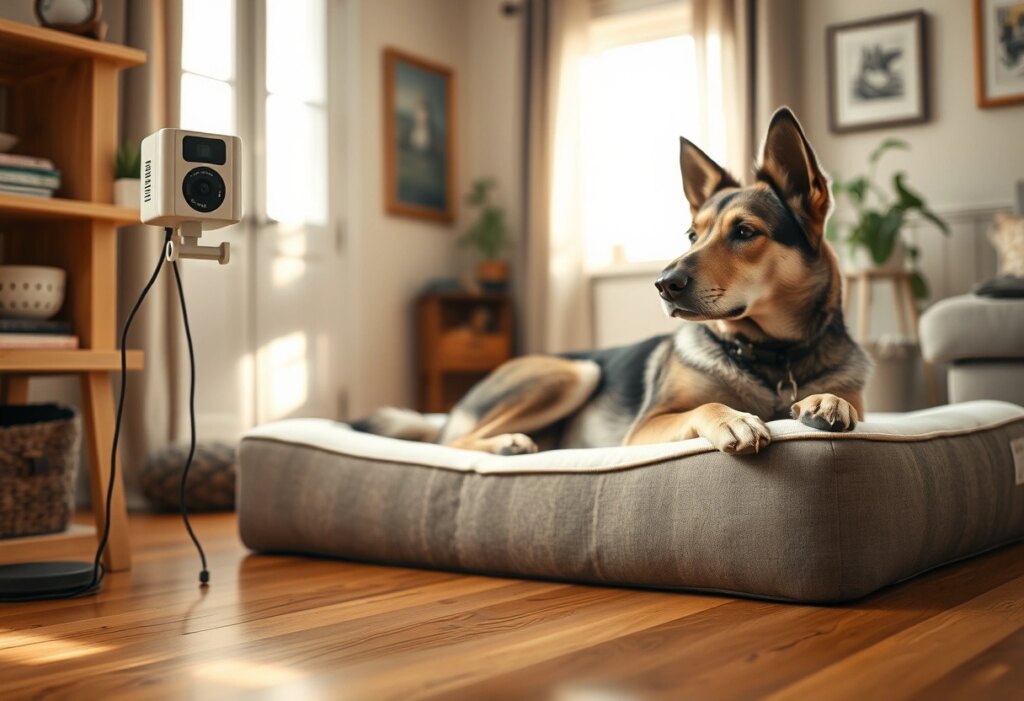

Pet cameras for senior dogs aren’t just some gadget you buy because it’s trendy. When your old dog starts barking the whole time you’re gone, or pacing circles into the carpet, a camera becomes your window into a world you can’t see any other way. I’ve spent years at the sanctuary watching aging dogs go through changes that are subtle until they’re not, and I can tell you this much: the barking is never “just barking.” It’s information. Our job is to actually listen to it.
This isn’t a gear roundup for the sake of gear. It’s about giving you eyes on your senior dog so you can catch pain, confusion, or fear before it spirals. Let’s get into what’s actually happening with your old dog, and what to look for so you’re not wasting money on features that don’t matter for a graying muzzle and cloudy eyes.
Why Senior Dogs Develop Separation Anxiety and Daily Barking
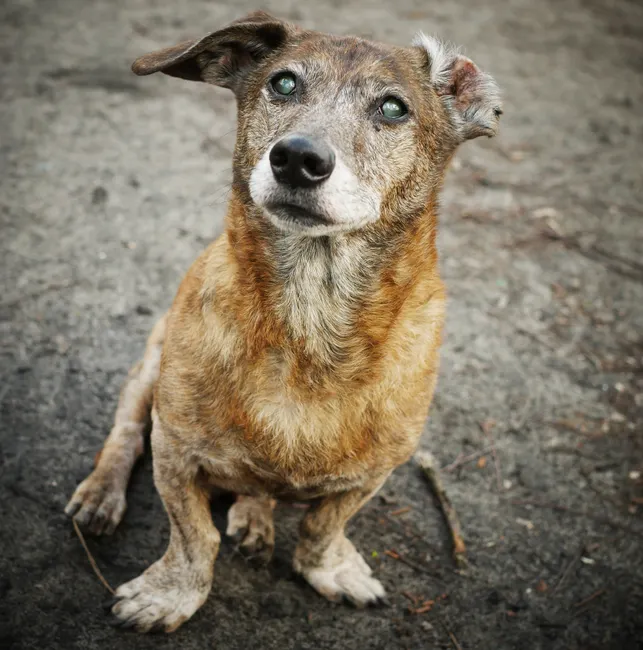
Here’s the truth nobody tells you when you bring home a puppy who’s now gray around the eyes and slower on the stairs: aging brains change. Just like people, dogs can develop a form of dementia called canine cognitive dysfunction, or CCD. And it’s a lot more common than most pet parents realize.
A study out of UC Davis found that canine cognitive dysfunction affects up to 28% of dogs aged 11 to 12, and that number jumps to a staggering 68% in dogs aged 15 to 16. Read that again. That’s not a small handful of unlucky dogs. That’s the majority of dogs who make it into their late teens.
What does that mean for the barking you’re hearing on your pet cameras for crate barking control while away? It could be confusion. It could be your dog waking from a nap and forgetting where he is for a few terrifying seconds. It could be pain flaring up in an arthritic hip that only bothers him when he’s been lying still too long. Old dogs don’t bark for no reason. There’s always a reason, even if it takes some digging to find it.
Old dogs aren’t broken. They’re just further down the road than the rest of us, carrying more history in their bones. When one of them starts crying out while you’re gone, that’s not bad behavior. That’s a dog asking for help the only way he knows how.
I’ve watched this play out over and over at the sanctuary. A dog who was rock solid alone for years suddenly can’t handle being by himself. People assume it’s a training regression. Nine times out of ten, it’s actually early cognitive decline or an underlying medical issue announcing itself through behavior. This is exactly why senior dog separation anxiety needs a different lens than the anxiety we see in younger dogs. It’s rarely simple.
What to Look For in a Dog Monitoring Camera for Aging Dogs
Not every camera on the market was built with an old dog in mind. Most are designed for puppies who chew furniture or younger dogs who bark at the mail carrier. Senior dogs have different needs, and your dog monitoring camera should reflect that.
Here’s what actually matters when you’re choosing a dog camera with two-way audio and other features for a geriatric dog:
- Two-way audio. Your voice can be the single most calming thing in your dog’s world. A camera that lets you speak to him mid-episode, especially one with a familiar tone he recognizes, can interrupt a panic spiral before it builds.
- Real night vision. Many senior dogs develop vision loss from cataracts or age-related changes. If your dog can’t see well in low light, you need a camera that can, so you’re not missing nighttime pacing or restlessness.
- Wide field of view. Old dogs with mobility issues don’t always stay in one spot. They shuffle to the water bowl, circle their bed, or pace a hallway. A narrow lens misses all of that.
- Bark and motion alerts. You want a notification the second the barking starts, not a recap three hours later when you finally check the app.
- Treat dispensing (used sparingly). This can help redirect anxious behavior, but it’s not a substitute for addressing the root cause. Use it as a tool, not a Band-Aid.
Some of these cameras were originally built for other purposes entirely, and honestly, that doesn’t disqualify them. A rear-view backup camera with true night vision, for example, has the kind of low-light clarity that translates surprisingly well to watching an old dog in a dim living room after dark. The Yoidesu Reverse Backup Camera has an IP67 weatherproof rating and infrared night vision that gives you a genuinely clear picture even when the lights are off, which matters a lot if your dog’s worst pacing happens after sundown.

- 170° WIDE ANGLE: Backup camera flush mount of 170° wide view angle lens is great for you to check the invisible blind sp…
- IP67 : Rear view camera support IP67 IP rate. Car Rear View Camera is designed with fully sealed glue filling craft, so …
- EASY INSTALLATION: Reverse camera have 2 installation options, you can install car backup camera’s brackets as needed. T…
Is it a purpose-built pet camera? No. But if you’re on a tight budget and need something rugged enough to mount near a crate or doorway, its weatherproofing and night vision punch above their weight class. Just know you’re trading polished pet-specific app features for durability and a lower price point.
Top Pet Camera Picks Compared for Senior Dog Monitoring
When you’re comparing pet cameras for senior dogs, the specs that matter most are night vision quality, audio reliability, and how wide the camera can actually see. I put together this comparison so you can weigh your options honestly, without getting distracted by flashy marketing that has nothing to do with what an old dog actually needs.
| Camera / Device | Best For | Night Vision | Two-Way Audio | Price Tier |
|---|---|---|---|---|
| Yoidesu Reverse Backup Camera | Budget-friendly, weatherproof monitoring | Infrared, strong low-light clarity | No (visual only) | $ |
| Standard Wi-Fi Pet Cam (generic mid-tier) | Everyday indoor monitoring with alerts | Basic infrared | Yes | $$ |
| Treat-Dispensing Smart Camera | Redirecting anxious barking behavior | Moderate infrared | Yes | $$$ |
| Premium Pan-Tilt-Zoom Pet Camera | Wide-roaming senior dogs, multi-room homes | High-definition color night vision | Yes, high fidelity | $$$$ |
| Professional Multi-Camera Home System | Full-property monitoring, multiple pets | Advanced HD with zoom | Yes, multi-device sync | $$$$$ |
Every one of these pet cameras for senior dogs has its place. If you’re just testing the waters to see whether a camera even helps, start budget-friendly. If you already know your dog struggles daily and you need dependable alerts and crystal-clear audio, a mid-tier or premium investment pays for itself in peace of mind. This same logic applies if you’re weighing a treat dispensing camera to stop dog barking, since those tend to sit in the mid to premium range because of the added mechanical hardware.

How to Use Camera Footage to Build a Happiness Plan
Here’s where I want you to shift your thinking. A camera isn’t just for catching bad behavior. It’s a data-gathering tool for something I call a Happiness Plan, and it’s one of the most useful things we do at the sanctuary for every aging dog in our care. Watch the footage with a notebook nearby (or a notes app, I won’t judge). Ask yourself:
- Is the barking happening at a specific time of day, like dusk, when sundowning behavior tends to spike?
- Is your dog pacing in circles, or walking the same path over and over? The ASPCA notes that pacing and increased vocalization are common signs of canine cognitive dysfunction, not just boredom.
- Does the barking start right when you leave, or does it build gradually over an hour?
- Is your dog struggling to get up, favoring a leg, or hesitating before lying down?
These patterns matter. They tell you whether you’re dealing with straightforward loneliness, physical discomfort, or the early stirrings of cognitive decline. A Happiness Plan isn’t a rigid document. It’s a living, breathing log of what makes your specific dog feel safe, and what triggers his distress. Over time, patterns emerge that your vet will actually want to see. And honestly, some of this work benefits from a little patience and a slower pace yourself. I’ve spent plenty of quiet evenings reviewing footage with something calm going in the background, even something as simple as a White Mountain 1000 Piece Jigsaw Puzzle spread across the table while I take notes between glances at the clips. There’s something grounding about doing slow, tactile work while you study your dog’s world.

- Movies pulls you back to late nights favorite scenes and shared quotes recreating the feeling of movie marathons theater…
- 1,000 Pc Large: This puzzle features larger, simple to pick up pieces that are also easier to see, creating a fun activi…
- Artist: Illustrated by J. Scott Nicol whose detailed hand drawn style brings iconic movie moments characters and props t…
It sounds small, but building a habit of unhurried observation changes how you see your dog’s daily rhythms. You start noticing things you’d have missed if you were rushing through footage on your phone between meetings.
Real Sanctuary-Honest Talk: When a Camera Reveals a Bigger Issue
This is the part people don’t want to hear, but I’m going to say it anyway.
A camera can show you the problem. It cannot fix the problem. If you’re watching your senior dog bark for hours, pace without rest, or cry out in a way that sounds different from his normal voice, that is not a gadget problem. That is a body or a brain telling you something is wrong. I’ve had people tell me, “the camera helped, he barks less now that I talk to him through it.” Good. That’s real progress. But I’ve also had people use a camera to confirm distress and then just… keep going to work like nothing changed. Honestly, who thinks like that?? *This is a sacred trust.* Your dog didn’t choose to age. He didn’t choose the arthritis creeping into his hips or the fog settling into his mind. You brought him into your life, and that means his golden years are your responsibility, not an inconvenience to manage around your schedule.
If your dog monitoring camera shows repeated distress, please call your vet. Pain from arthritis, dental disease, or even bladder discomfort can look exactly like anxiety-driven barking on camera. Cognitive dysfunction has real treatment options too, including dietary changes, supplements, and sometimes medication that can genuinely improve quality of life. None of that starts until someone actually looks at the footage and takes it seriously. Some households also manage multiple pets under one roof, and honestly, keeping a cleaner, calmer environment can lower everyone’s stress level, senior dog included. Odor and mess from other pets can quietly add stress to a home that’s already carrying a lot. Something like the PETKIT Purobot Max 3 Odor Control Self Cleaning Litter Box can take one more chore off your plate so you have more bandwidth left for the dog who needs you most.

- 🌿【Multiple Odor Control System】 Say goodbye to litter box stench. Our advanced system includes: 1) Instant scooping, 2) …
- 🐾【Wider Opening & Lower Threshold for Arthritic Cats】 We enlarged the entrance to 10.5 inches and lowered the threshold….
- 🛡️【Safest Always-Open Design & Anti-Pinch】 Unlike closed-barrel or swinging-door robots, our opening is permanently open…
Pet cameras for senior dogs work best when you treat them as a starting point, not an ending point. Use the footage. Take it to your vet. Build a plan around what you actually see, not what you assume is happening while you’re away.
Key Takeaways
- Barking in senior dogs is often tied to cognitive decline, pain, or genuine fear, not stubbornness.
- Canine cognitive dysfunction affects a huge share of aging dogs, especially past age 11.
- The best dog monitoring camera for your situation depends on your dog’s specific vision, mobility, and anxiety patterns.
- Footage should feed into a real Happiness Plan you share with your veterinarian.
- A camera reveals problems. Only you and your vet can solve them.
Frequently Asked Questions
Do pet cameras actually help with senior dog separation anxiety?
They can help you understand the anxiety, and a dog camera with two-way audio may offer real-time comfort through your voice. But cameras work best alongside a broader plan that may include vet care, routine changes, or anxiety-reducing tools, not as a standalone fix.
What features matter most in pet cameras for senior dogs with vision loss?
Strong infrared or color night vision matters most, since many senior dogs develop cataracts or reduced night vision themselves. A wide field of view also helps you track a dog who paces or shuffles between rooms.
How do I know if barking on camera means dementia versus normal anxiety?
Look for patterns like pacing, disorientation, barking at specific times of day, or vocalizing that sounds different from your dog’s normal bark. Canine cognitive dysfunction tends to show repetitive, confused behaviors, while typical anxiety usually spikes right after you leave and may settle over time.
Should I buy a treat-dispensing camera or a basic monitoring camera first?
Start with a basic dog monitoring camera to understand your dog’s actual behavior patterns before investing in a treat dispenser. Once you know the triggers and timing, a treat-dispensing model can be a helpful mid-tier upgrade for redirecting anxious moments.
Watching an old dog age is one of the hardest, most tender things you’ll ever do. Pet cameras for senior dogs won’t erase that ache, but they can hand you a little more understanding, and understanding is where good care always starts. Go easy on yourself and go easy on your old dog. You’re both doing the best you can with the time you have. Tell your pup I said Hi! — Dawn