
Senior dog arthritis supplements only work if you understand what you’re actually treating, and most owners are treating a behavior problem that started as a biology problem. A dog with degenerating cartilage doesn’t limp around announcing it. She adapts, quietly, in ways that look a lot like normal aging until you know what to watch for. This piece breaks down the five natural compounds with the best mechanistic and clinical support, tells you honestly where the evidence gets shaky, and gives you a structured way to measure whether anything you’re doing is actually helping.
Why Your Dog Is Hiding Her Pain (And It’s Not Stoicism)
Dogs don’t limp for the same reason a healthy human doesn’t advertise a headache to a predator. Overt lameness signals vulnerability, and in an evolutionary context, vulnerability gets you culled from the group or targeted by a rival. That pain-masking behavior is baked into canine ethology, and it’s a huge reason arthritis goes underdiagnosed in aging dogs. Research published in the Journal of Small Animal Practice found that roughly 20% of dogs over age 8 show radiographic evidence of osteoarthritis, yet a much smaller fraction of those dogs are flagged by their owners as having clinical signs. The joint damage is there on imaging. The behavioral signal owners are watching for (a dramatic limp) mostly isn’t.
What you get instead is a slow drift: slightly longer to stand after a nap, a little more hesitation before jumping into the car, a preference for the downstairs couch instead of the upstairs bedroom. None of these read as “pain” to most owners. They read as “getting older,” which is technically true but incomplete. Age is the risk factor, not the mechanism. The mechanism is cartilage erosion, synovial inflammation, and nociceptor sensitization, and senior dog arthritis supplements are aimed squarely at that inflammatory and structural cascade, not at the vague concept of getting old.
The Five Compounds: What They Actually Do at the Cellular Level
Not all senior dog arthritis supplements work through the same pathway, and lumping them together as “joint support” obscures more than it explains. Here’s the mechanism-based rundown.
- Glucosamine and chondroitin. Glucosamine is a building block for glycosaminoglycans, which form part of the cartilage matrix. Chondroitin sulfate is thought to inhibit degradative enzymes that break cartilage down. Together they’re a substrate-replacement strategy: give the joint raw material and hope synthesis outpaces degradation.
- Omega-3 fatty acids (EPA/DHA). These compete with arachidonic acid in cell membranes, shifting eicosanoid production toward less inflammatory prostaglandins and leukotrienes. This is one of the better-supported mechanisms in veterinary literature, with measurable reductions in lameness scores in several controlled trials.
- Green-lipped mussel. A natural source of omega-3s plus a unique glycosaminoglycan profile. It’s essentially a whole-food delivery system that overlaps mechanistically with both of the above, which is part of why it shows up in a lot of multi-ingredient joint formulas.
- Turmeric/curcumin. Curcumin inhibits NF-kB, a transcription factor that drives production of inflammatory cytokines like TNF-alpha and IL-6. The catch is bioavailability. Curcumin is poorly absorbed on its own, so formulations without piperine or a lipid carrier are mostly passing through undigested.
- MSM (methylsulfonylmethane). A sulfur donor that may support connective tissue synthesis and has some documented anti-inflammatory and antioxidant activity, though canine-specific data is thinner than for the other four.
A daily multivitamin base matters here too, since senior dogs often have reduced nutrient absorption alongside joint changes. Vita-Tabs Silver for Senior Dogs is built specifically for aging dogs and covers general nutritional gaps that can otherwise undermine how well the joint-specific compounds above actually get used by the body.

- Comprehensive Nutrition: Vita-Tabs provide a balanced blend of essential vitamins and minerals to support your dog’s ove…
- Immune System Support: Packed with antioxidants, these tabs help strengthen your dog’s immune system, promoting a robust…
- Healthy Coat and Skin: The inclusion of Omega-3 fatty acids contributes to a lustrous coat and healthy skin, ensuring yo…
Comparing the Five Options Side by Side
The table below lays out the practical differences between these natural joint supplements, including how each is typically dosed and what its price tier looks like relative to the others. None of these figures replace a conversation with your veterinarian about dosing for your dog’s specific weight and health status.

| Supplement | Primary Mechanism | Typical Onset | Best For | Price Tier |
|---|---|---|---|---|
| Glucosamine/Chondroitin | Cartilage matrix substrate + enzyme inhibition | 4-8 weeks | Early to moderate joint wear | $$ |
| Omega-3 (EPA/DHA) | Anti-inflammatory eicosanoid shift | 3-6 weeks | Systemic inflammation, coat/skin overlap benefits | $$ |
| Green-Lipped Mussel | Combined omega-3 and glycosaminoglycan source | 4-8 weeks | Dogs needing multi-pathway support | $$$ |
| Turmeric/Curcumin | NF-kB inhibition, cytokine reduction | 2-6 weeks | Inflammatory flare-ups | $$ |
| MSM | Sulfur donor, connective tissue support | 4-6 weeks | Adjunct to other compounds | $ |
The Contradictory Data Problem: Don’t Count on Supplements to Work Miracles
Here’s where I have to be the objective voice in the room. A 2020 systematic review published in Veterinary Record examined oral glucosamine studies in dogs and found inconsistent efficacy across trials. Some studies showed measurable improvement in lameness and weight-bearing metrics. Others showed no statistically significant difference from placebo. The data is contradictory, and any product claiming a guaranteed fix is overselling what the current research actually supports.
The absence of a universal clinical response doesn’t mean these compounds are worthless. It means individual variation in absorption, disease severity, and baseline inflammation determines who responds and who doesn’t, which is exactly why a personal tracking protocol matters more than a product label.
This is the piece most marketing conveniently leaves out. Senior dog arthritis supplements are a management tool within a broader protocol, not a standalone cure. Dogs with advanced degenerative joint disease will likely need veterinary-prescribed pain management alongside any natural approach, and owners who expect a supplement alone to restore a 12-year-old dog’s youthful gait are setting themselves up for disappointment and, worse, may delay seeking actual veterinary pain control while they wait for the supplement to “kick in.”
Building a Two-Week Mobility Journal Before You Change Anything
Before starting or switching any senior dog arthritis supplements, I want you to establish a behavioral baseline. Otherwise you’re relying on memory and impression, which are both notoriously unreliable when change happens gradually. Here’s the protocol I use with clients:
- Stiffness latency after rest. Time how many seconds it takes your dog to stand and walk normally after 30+ minutes of lying down. Log this once in the morning, once in the evening, daily.
- Gait asymmetry observation. Watch your dog walk on a flat, non-slip surface. Note any head-bobbing, weight-shifting, or reluctance to bear weight evenly across all four limbs.
- Willingness to engage with elevation changes. Record whether your dog voluntarily takes stairs, jumps onto furniture, or hesitates and looks for an alternative route.
- Activity-seeking behavior. Note spontaneous play initiation, tail carriage during walks, and general enthusiasm for outings that used to be automatic.
Run this for two weeks before introducing anything new, then continue logging for at least four to six weeks after starting a supplement, since most of these compounds need that long to reach measurable tissue-level effects. Comparing week one against week six, using your own written data instead of vague recollection, is the only honest way to know if something is working.

Antecedent Management: Supplements Don’t Work in a Vacuum
Even the most effective natural joint supplements are undermined if the dog’s environment keeps forcing inflamed joints into repetitive stress. This is where antecedent management (adjusting the environment before the behavior happens, rather than reacting after) becomes essential. Slippery hardwood or tile floors force compensatory guarding, meaning a dog with any hip or knee discomfort will alter her posture and gait to avoid slipping, and that compensatory pattern itself becomes a source of secondary strain on other joints.
Practical modifications include non-slip runners along frequently traveled paths, ramp access to furniture and vehicles instead of jumping, and raised food and water bowls to reduce neck and shoulder strain during eating. Nutrition also plays a supporting role here. A diet built around ZEAL Canada Air-Dried Chicken Recipe for Dogs provides a protein-dense, minimally processed base that supports lean muscle mass, and stronger surrounding musculature takes some of the mechanical load off compromised joints.
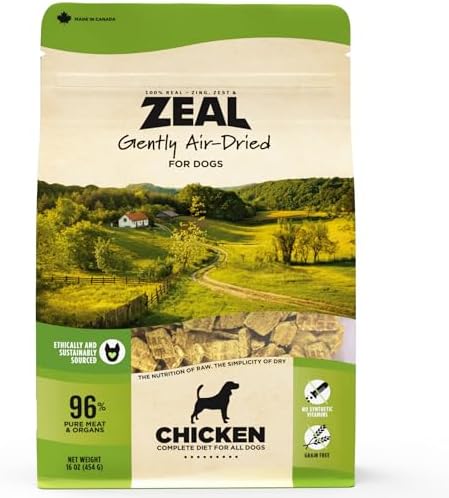
- 96% Free-Range Chicken and Organs for Optimal Health: Made with free-range chicken, liver, gizzard, and heart, providing…
- Natural and Organic Superfoods for Complete Wellness: Enriched with ethically sourced green-lipped mussels for joint sup…
- Air-Dried to Retain Nutrients Naturally: Our gentle air-drying process locks in all the nutrients without synthetic addi…
Positive reinforcement also has a functional role in pain-free movement. Rather than physically pushing or luring a reluctant dog up a ramp, reward small voluntary steps toward it, letting the dog choose engagement on her own terms. This preserves canine agency, meaning the dog learns to communicate comfort or discomfort through approach and avoidance rather than being forced through movements that may aggravate a flare-up. A slow-release chew, like a Holiday collagen braid for dogs, can double as a low-impact enrichment reward during these training sessions, giving the dog something satisfying to work on while lying in a supported, low-strain position rather than standing or jumping for a treat.
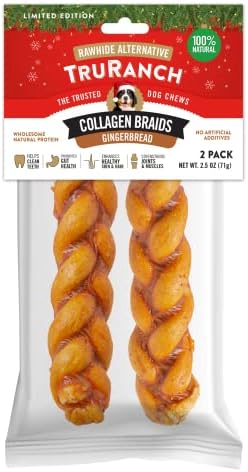
- Limited Edition Rawhide Alternative Gingerbread Braids
- Superior Quality Ingredients: Made with real beef as the primary ingredient. These treats are completely free from dairy…
- Allergy-Friendly Treat: Our TruRanch 6″ Collagen Rolls cater to dogs with allergies or sensitivities. The formula is fre…
If you’re already tracking monthly costs for an aging dog’s care, it’s worth reviewing how supplement and vet expenses stack up against other ownership costs; our breakdown of monthly Golden Retriever expenses covers this in detail. And if your senior dog’s discomfort is showing up as behavioral change rather than physical limping, particularly restlessness after dark, it’s worth reading our analysis of sudden night barking in senior dogs, since pain and cognitive changes frequently overlap in older dogs.
According to the American Kennel Club, osteoarthritis affects a substantial portion of the senior dog population and often goes undertreated because owners misread early signs as normal aging rather than a treatable medical condition. That’s consistent with everything covered above: the biology is quietly progressing well before the behavior becomes obvious.
Realistic Expectations Going Into 2026
Senior dog arthritis supplements remain one of the more accessible, lower-risk interventions available to owners managing early-to-moderate joint degeneration, but they work best as one piece of a layered protocol rather than a solo intervention. Combine a structured mechanism (glucosamine, omega-3s, green-lipped mussel, curcumin, or MSM) with objective behavioral tracking, environmental modification, and veterinary oversight, and you give your dog the best realistic shot at sustained comfort. Skip the tracking and the environmental piece, and you’re left hoping a capsule undoes years of mechanical wear on its own, which the current research simply doesn’t support.
How long do natural senior dog arthritis supplements take to show results?
Most compounds, including glucosamine, chondroitin, and green-lipped mussel, require four to eight weeks of consistent daily dosing before measurable changes in mobility appear, since they work by influencing cartilage matrix synthesis and inflammatory pathways over time rather than providing immediate pain relief. Omega-3 fatty acids and curcumin sometimes show effects slightly sooner, within two to six weeks, due to their more direct anti-inflammatory action.
Can I give my dog multiple senior dog arthritis supplements at once?
Many commercial joint formulas already combine several of these compounds, such as glucosamine with MSM or green-lipped mussel with omega-3s, since they act through complementary pathways. That said, always check with your veterinarian before stacking multiple standalone products, particularly if your dog is also on prescription anti-inflammatory medication, to avoid unnecessary redundancy or interaction risk.
Is turmeric safe for dogs with arthritis, and does it actually work?
Turmeric’s active compound, curcumin, has documented anti-inflammatory activity through inhibition of the NF-kB pathway, but it’s poorly absorbed on its own. Look for formulations paired with piperine or a lipid-based delivery system, and introduce it gradually since high doses can occasionally cause mild gastrointestinal upset in sensitive dogs.
Why doesn’t my senior dog show obvious limping if she has arthritis?
Dogs have an evolved tendency to mask overt signs of pain, since visible weakness historically increased vulnerability to predators or rivals within a group. This means many dogs with radiographically confirmed osteoarthritis show subtle behavioral shifts, like slower rising after rest or hesitation at stairs, rather than an obvious limp, which is why a structured mobility journal is more reliable than casual observation.