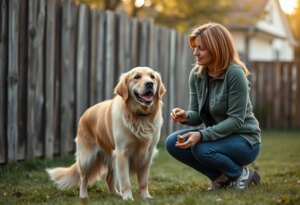
Senior dog barking at every dog that walks past the window is not a dominance problem, and it is rarely a hearing problem either, at least not entirely. In my clinical work, this pattern almost always traces back to one of two arousal pathways: frustration at an unmet social approach motivation, or fear rooted in declining sensory acuity and increased pain sensitivity. An older dog who could once track a passing dog’s approach through peripheral vision and confidently assess it now gets a blurrier, less predictable sensory picture. Unpredictability is a known driver of defensive arousal in mammals. So the dog barks first and assesses later, because the cost of being caught off guard now feels higher than it did at age four.
Owners often ask me whether a calming aid or a training tool will “fix” this. The honest answer is that they solve different problems, and conflating them wastes both money and time. Calming aids modulate the dog’s baseline arousal state. Training tools change what the dog actually does when a trigger appears. One lowers the temperature in the room. The other teaches the dog a new way to respond to heat. You typically need both, sequenced correctly, and this article breaks down exactly how.
The Behavioral Root: Frustration, Fear, and the Senior Sensory Shift
Reactive barking at passing dogs in an aging dog usually stems from one of two functional categories, and distinguishing them matters because the intervention differs.
- Frustration-based barking: The dog wants to approach or investigate but is barred by a window, fence, or leash. Arousal builds because the behavioral sequence (see, approach, greet) is interrupted mid-loop. This is common in dogs with a long history of being social with other dogs.
- Fear-based barking: The dog perceives the passing dog as an unpredictable threat and barks to increase distance. In senior dogs, this often emerges new, even in dogs who were never reactive as adults, because declining vision and hearing reduce the animal’s ability to accurately assess intent at a distance.
A third variable senior-specific factor deserves attention: pain sensitization. Dogs carrying chronic osteoarthritis or spinal discomfort show a measurably lower threshold for defensive reactivity, likely because a body already managing a pain load has less physiological reserve to tolerate additional stress input. If your dog’s barking onset correlates with reduced mobility, a veterinary pain assessment should happen before behavior modification, not after. A supportive orthopedic bed for senior dogs with mobility issues won’t resolve barking on its own, but reducing a dog’s baseline physical discomfort measurably lowers reactive arousal across the board. This is antecedent management applied to the body, not just the environment.
What Calming Aids for Dogs Actually Do (and Don’t Do)
Calming aids for dogs work by shifting the animal’s baseline physiological arousal, not by teaching new associations. Dog-appeasing pheromone diffusers, compression wraps, and nutraceuticals like L-theanine all target the autonomic nervous system rather than the learned behavior chain.

The evidence base here is real but narrower than marketing suggests. A 2018 study published in the Journal of Veterinary Behavior measured salivary cortisol in dogs exposed to dog-appeasing pheromone and found a measurable reduction, but only in a subset of dogs already classified as anxious at baseline. Dogs with low baseline anxiety showed no significant change. This tells us something clinically useful: calming aids appear to work by capping the ceiling of arousal in dogs who are already primed toward anxiety, not by producing a uniform calming effect across all dogs regardless of temperament.
Compression wraps operate on a similar principle, likely through deep pressure input affecting sensory processing, though the research base for wraps specifically is thinner and more mixed than the pheromone literature. Nutraceuticals like L-theanine show some support for reducing situational stress responses in dogs, but dosing consistency across commercial products varies widely, and none of these products teach the dog an alternative behavioral response to a passing dog. They lower the floor of reactivity. They do not touch the ceiling of what the dog has learned to do when aroused.
This is the core misconception I address constantly in consults: a calming aid is not a training substitute. It is a bridge that makes training sessions more achievable by keeping the dog under threshold long enough to learn.
Training Tools and the Case for Desensitization/Counterconditioning
Training tools grounded in antecedent management and operant conditioning aim at a different target entirely: the learned response itself. A 2020 review in Applied Animal Behaviour Science compared outcomes across reactive dog protocols and found that desensitization and counterconditioning (DS/CC) protocols produced significantly longer-lasting reductions in reactive barking compared to management-only approaches. The mechanism is straightforward from a learning theory standpoint: DS/CC changes the dog’s emotional association with the trigger itself, rather than simply suppressing the output behavior or dampening general arousal. Don’t count on a diffuser or a wrap to produce that kind of durable rewiring. It won’t, because that isn’t the mechanism it targets. What DS/CC requires in exchange is owner consistency, correct threshold management, and patience, which is precisely why so many owners default to calming aids first. They’re easier. They are not, however, a substitute for behavior change when the goal is a lasting reduction rather than temporary suppression.
The data is contradictory on how much any single tool accomplishes in isolation. What the research consistently supports is combination protocols: calming aids to lower baseline arousal, paired with structured counterconditioning to change the learned response. Neither alone produces the durable outcome owners are hoping for.
Calming Aids vs Training Tools: A Structured Comparison
The table below scores calming aids against training tools across the four variables that matter most in a senior dog behavior plan: how fast you see an effect, how long that effect lasts, cost tier, and how much active owner involvement is required.

| Intervention Type | Speed of Effect | Durability of Results | Price Tier | Owner Involvement Required |
|---|---|---|---|---|
| Pheromone Diffusers | Moderate (days to weeks) | Low without pairing to training | $$ | Minimal (passive) |
| Compression Wraps | Fast (minutes, situational) | Low, situational only | $$ | Minimal (passive) |
| Calming Chews / Nutraceuticals | Moderate (30-60 min per dose) | Low, resets each dose | $$ | Low (daily dosing) |
| Desensitization/Counterconditioning | Slow (weeks to months) | High, long-term rewiring | $ (mostly time cost) | High (active daily sessions) |
| Threshold/Antecedent Management | Immediate | Moderate, requires maintenance | $ to $$$ | Moderate to high |
Notice the tradeoff pattern: everything fast is shallow, and everything durable is slow. This is not a flaw in the tools, it’s simply how learning and physiology work. A dog’s nervous system doesn’t rewire on the same timeline that a nutraceutical clears the bloodstream.
Supportive Aids: Where They Genuinely Help
Calming aids earn their place as a supportive bridge, not a standalone fix, and this is where product selection matters. For dogs whose barking correlates with generalized situational anxiety rather than pure frustration, a lickable calming treat can lower arousal enough to make a training session possible where it otherwise wouldn’t be. The Cat Calming Lickable Treats for Anxiety Relief use a licking mechanism that itself has a self-soothing behavioral function in many companion animals, independent of the active ingredients, since repetitive licking activates parasympathetic pathways associated with rest-and-digest states.

- CREATURE COMFORTS: Even the coolest cat can experience stress. That’s why our Cat Squeezables Calming Support is specifi…
- THE INSIDE STORY: We’ve got other calming lickables licked, because ours are made with clean ingredients that help sooth…
- FILLER-FREE: Unlike other pet purees that contain by-products and fillers like cellulose, corn, soy, wheat and palm oil,…

- FIGHT BAD BREATH: Mint present in these Himalayan Yak Chews helps freshen your dog’s breath, making close cuddles more p…
- AID DIGESTION: Mint is known for its soothing properties, which can help support your dog’s digestive health.
- NATURAL INGREDIENTS: These Mint-flavored Yak cheese chews are hand-crafted in the Himalayas using only natural ingredien…
The Happiness Plan: A Combined Protocol for Senior Dog Barking
Below is the structured protocol I use with clients managing reactive barking at passing dogs. It combines antecedent management, counterconditioning, and calming aids as a supportive bridge, in that priority order.
- Establish threshold distance. Walk your dog past a decoy dog (or observe from the window at varying distances) and note the exact point where barking begins. This is your dog’s current threshold. All early training happens beyond this distance, never inside it.
- Manage the antecedent first. Block visual access to the trigger zone temporarily, using window film, a baby gate, or repositioning furniture. This isn’t giving up. It’s preventing daily rehearsal of the barking response while you build a new one.
- Introduce marker-based counterconditioning. At a distance beyond threshold, mark the appearance of a passing dog with a clear verbal marker (“yes”) followed immediately by a high-value treat. Repeat until your dog reliably looks to you at the sight of a dog, rather than fixating and escalating.
- Shrink the distance gradually. Over multiple sessions, decrease distance in small increments only after your dog shows consistent calm engagement at the current distance. Rushing this step is the single most common reason DS/CC protocols fail in practice.
- Layer in calming aids as a bridge, not a crutch. If your dog’s baseline anxiety is high enough that even distant triggers produce arousal, a pheromone diffuser or calming treat administered before known high-traffic windows (like mail delivery time) can lower the starting arousal level enough for the counterconditioning steps to actually register.
- Support physical comfort concurrently. Address any underlying joint pain with your veterinarian, and reduce competing stressors like poor sleep. If nighttime restlessness is compounding daytime reactivity, our comparison on melatonin vs CBD for senior dog nighttime barking covers evidence-based options for that specific issue.
- Track progress with data, not impressions. Log barking incidents per day, along with trigger distance and duration. Owners consistently underestimate improvement without a log, because memory biases toward the worst incidents.
A dog whose reactive barking is compounded by poor sleep quality often benefits from environmental changes at night as well. If your senior dog also startles or barks overnight, examining crate setup and nighttime environment can reduce the cumulative stress load that shows up as daytime reactivity. Our guide on the nighttime crate setup for senior dogs walks through the specific features that matter for geriatric comfort and security.
Supporting the Body While You Retrain the Behavior
Physical comfort and behavioral training are not separate tracks, they run in parallel, and neglecting one undermines the other. A senior dog managing chronic joint pain has a chronically primed stress response, which lowers the threshold at which any trigger, including a passing dog, produces reactive barking. Supportive orthopedic gear reduces this baseline load. The FurHaven Orthopedic Dog Bed for Large Dogs provides pressure-relieving support that can reduce the discomfort-driven component of reactive arousal, particularly for dogs who spend significant time resting near windows where triggers are visible.

- Give Your Pet Deep, Restful Sleep: Our cooling gel sofa bed is engineered to deliver true comfort and joint relief for l…
- A Perfect Fit For Every Sleep Style: Don’t settle for a rigid, one-size-fits-all bed. Our sofa-style design is made for …
- Wash It, Dry It, Done: A dirty pet bed can fill your home with odors and allergens. Our XL washable dog bed makes cleanu…
Key Takeaways
- Senior dog barking at passing dogs is typically frustration-based or fear-based, often intensified by declining sensory acuity or increased pain sensitivity, not dominance.
- Calming aids for dogs lower baseline arousal but don’t teach an alternative behavioral response on their own.
- Dog training tools built on desensitization and counterconditioning produce more durable reductions in reactive barking, according to the 2020 Applied Animal Behaviour Science review.
- The most effective reactive barking treatment combines both: management and calming aids to keep the dog under threshold, paired with structured counterconditioning for lasting change.
- Pain assessment should be part of any senior dog barking evaluation, since discomfort measurably lowers reactivity thresholds.
Frequently Asked Questions
Can calming aids alone stop senior dog barking at passing dogs?
Not on their own in most cases. Calming aids for dogs reduce baseline arousal, which can make barking less intense or less frequent, but they don’t change the underlying learned response. Dogs typically need calming aids paired with desensitization and counterconditioning training for a lasting reduction in reactive barking.
Why did my senior dog suddenly start barking at dogs it never reacted to before?
New-onset senior dog barking is commonly linked to declining vision or hearing, which makes distant triggers harder to accurately assess, plus increased pain sensitivity from conditions like osteoarthritis. A veterinary exam to rule out sensory decline or pain is the recommended first step before starting a behavior modification plan.
How long does desensitization and counterconditioning take to reduce reactive barking?
Most structured desensitization and counterconditioning protocols show measurable progress within several weeks, with more durable results typically building over one to three months of consistent practice. Progress speed depends on how consistently the dog is kept under threshold and how gradually distance is reduced.
Are training tools better than calming aids for senior dog barking?
Training tools grounded in counterconditioning produce longer-lasting results than calming aids used alone, according to behavioral research, but the two aren’t competing options. Calming aids work well as a supportive bridge that lowers arousal enough for training sessions to succeed, especially in senior dogs with high baseline anxiety.