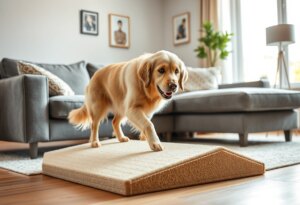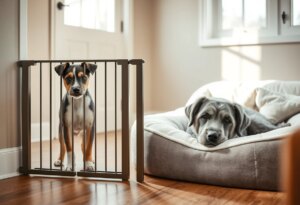
Orthopedic beds for senior dogs are not a comfort upgrade. They are a functional intervention, and the distinction matters more than most product marketing lets on. When I evaluate a geriatric dog’s home setup during a behavioral consult, the sleeping surface is one of the first things I assess, right alongside stairs, flooring, and food bowl height. A dog who cannot rest without repositioning every few minutes is a dog who is not getting restorative sleep, and sleep deprivation in aging canines has downstream effects on pain tolerance, irritability, and even cognitive decline. This piece breaks down the biomechanics behind why standard beds fail arthritic dogs, how to score your own dog’s mobility before you buy anything, and where ramps fit into a broader management plan.
Why Aging Joints Need Pressure-Relieving Surfaces
Osteoarthritis in dogs is not a rare, unlucky diagnosis reserved for the occasional unfortunate case. According to data referenced by the American Veterinary Medical Association, roughly 80 percent of dogs over age eight show radiographic evidence of osteoarthritis, whether or not the owner has noticed any outward limping. That statistic alone should reframe how we think about a dog bed. A standard polyfill cushion compresses under body weight and loses its shape within minutes, which means a dog with reduced cartilage cushioning is essentially lying on a firm floor with a thin layer of fabric between bone and ground. Pressure concentrates at the hips, elbows, and shoulders, the exact joints already inflamed by osteoarthritis.
There is also a sleep architecture piece here that gets overlooked. Dogs cycle through REM sleep multiple times per rest period, and REM requires enough muscular relaxation that the dog is momentarily vulnerable and immobile. Arthritic dogs on unsupportive surfaces frequently interrupt their own rest cycles, shifting weight or waking fully because a joint has gone numb or started aching. Over weeks and months, this fragmented sleep pattern contributes to increased pain sensitivity, a phenomenon well documented in human chronic pain literature and increasingly recognized in veterinary pain management. Orthopedic beds for senior dogs address this directly by distributing weight evenly across a denser support layer, which reduces the pressure spikes that trigger those wake-ups.
Memory Foam Density: What Actually Matters
Not all “orthopedic” labels are created equal, and this is where I’d encourage some healthy skepticism toward marketing copy. The variable that matters most is foam density, measured in pounds per cubic foot. Veterinary orthopedic specialists generally recommend a minimum of 3 lb density for a bed to provide genuine pressure relief for a dog with joint disease. Below that threshold, foam behaves more like a soft cushion than a supportive surface, meaning it will compress fully under a resting dog’s weight and bottom out, offering little more than a standard polyfill bed dressed up in different marketing language.
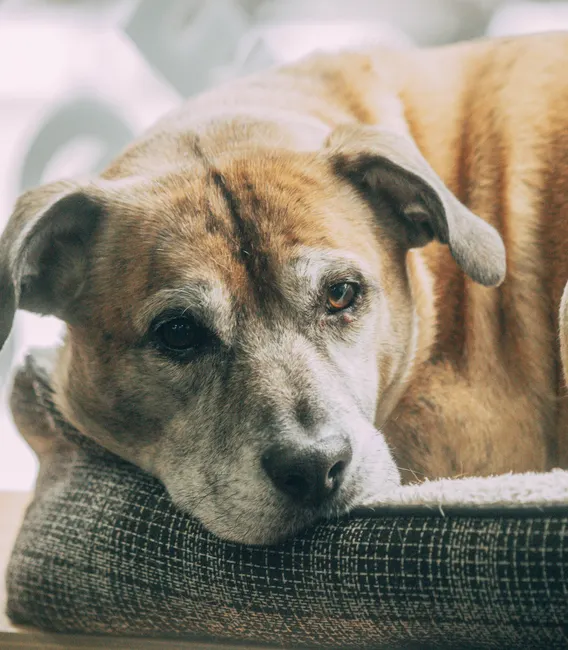
Standard polyfill beds redistribute stuffing rather than compress under sustained load, so they lose loft quickly and develop permanent body-shaped depressions. Memory foam, by contrast, is viscoelastic. It responds to heat and pressure by conforming to the body, then slowly returns to shape once weight is removed. For a dog with hip dysplasia or elbow arthritis, that conforming quality reduces the localized pressure that would otherwise concentrate at bony prominences. The Veehoo Orthopedic Memory Foam Dog Bed for Senior dogs is built around this higher-density foam layer, and it’s a reasonable mid-tier option for owners who want genuine orthopedic support without moving into premium pricing territory.

- 7″ Orthopedic Relief for Aching Joints: Give your senior companion or large breed the pain-free rest they deserve. Our t…
- Sprawled-Out Freedom for Large Breeds & Seniors: Our generously sized large dog bed 52″L x 36″W x 7″Th offers ample spac…
- Luxurious Plush Fur for Deep Healing Sleep: Imagine your cherished dog sinking into cloud-like comfort. The ultra-soft f…
Here’s a side-by-side comparison of the three beds referenced in this article, organized by the specifications that actually predict whether a bed will help an arthritic dog rather than just look supportive in a product photo.
| Product | Foam Type | Best For | Cover | Price Tier |
|---|---|---|---|---|
| Veehoo Orthopedic Memory Foam Dog Bed | High-density memory foam | Dogs with diagnosed hip or elbow arthritis | Removable, washable | $$$ |
| Orthopedic Dog Bed for Medium Large Sized Dog | Egg-crate style memory foam | Medium to large breeds needing joint contouring | Removable, water-resistant liner | $$ |
| Bedsure ComfyFleece Memory Foam Orthopedic Dog Bed | Solid memory foam base with fleece topper | Dogs who prioritize warmth and softness alongside support | Machine washable fleece cover | $$ |
A 5-Step Functional Assessment Protocol Before You Buy
Before spending money on mobility support gear, I want owners to run a short observational exercise. This takes about ten minutes and gives you a baseline you can reference again in a few months to track whether your dog’s mobility is stable, improving, or declining.
- Watch the sit-to-stand transition. Time how long it takes your dog to fully stand from a sitting position. Hesitation, trembling, or a “bunny hop” push with the rear legs indicates hip or lower back involvement.
- Score the rising posture from lying down. Does your dog rock forward onto the front legs first and drag the rear end up, or do all four legs engage together? A front-loaded rise pattern usually points to hind-end weakness.
- Observe overnight repositioning frequency. Over one evening, count how many times your dog shifts position, gets up, or resettles. More than four or five repositions in a single rest period suggests the current surface is not providing adequate pressure relief.
- Check for weight-shifting while standing still. A dog who repeatedly shifts weight off one hip or leg while standing is signaling discomfort in that limb.
- Test surface preference. Offer your dog a choice between the current bed and a hard floor for a nap. Dogs consistently choosing the floor over their bed are telling you, quite clearly, that the bed is not doing its job.
Score each item as normal, mild difficulty, or marked difficulty. Any combination of two or more “marked difficulty” scores warrants a conversation with your veterinarian and a serious look at both bedding and mobility aids. If your household includes a younger, more boisterous dog, joint protection also means managing environmental risk. This is where a resource like protecting an arthritic senior dog’s joints from a new puppy becomes directly relevant, since accidental collisions during play are a common cause of acute flare-ups on top of chronic disease.
The data is contradictory when it comes to surgical intervention alone resolving mobility decline in senior dogs. Don’t count on surgery to work miracles without pairing it with environmental modification. Joint replacement or ligament repair addresses the mechanical failure, but the dog still needs a home environment that does not undo the surgical benefit through repeated micro-trauma on hard floors, steep stairs, or unsupportive bedding.
Ramp Incline Science: Why Angle Matters More Than Height
Owners frequently ask why a ramp is preferable to simply lifting their dog onto furniture or the car. Lifting introduces its own risks, particularly for owners managing their own back issues, but the more important variable for the dog is joint torque during self-directed movement. Research on canine gait biomechanics indicates that inclines steeper than about 18 degrees significantly increase torque on the hip, stifle, and hock joints during ascent. A ramp that looks reasonably gentle to the human eye can still exceed that threshold if it’s too short relative to the height it needs to cover.

The practical rule is length, not just presence of a ramp. A ramp reaching a standard sofa or tailgate height typically needs to be at least four feet long to stay under 18 degrees. Shorter “compact” ramps marketed for space-saving convenience often fail this test, and a dog with hip dysplasia climbing a steep, short ramp may experience nearly the same joint stress as taking stairs. Grip texture matters too. A slick ramp surface causes dogs to overcompensate with muscular effort to prevent slipping, which adds a stabilization demand on top of the incline itself. If nighttime restlessness is layering on top of mobility issues, it’s worth reviewing how sleep aids and behavioral tools compare, covered in more depth in our piece on melatonin vs CBD for senior dog nighttime barking.
Comparing Bed Placement and Support Beyond the Ramp
A ramp solves the vertical transition problem, but the resting surface at both ends of that transition still needs to meet the same orthopedic standard. I often see owners invest in a quality ramp while leaving the dog’s actual bed unaddressed, which is treating half the problem. The Orthopedic Dog Bed for Medium Large Sized Dog uses an egg-crate foam design that increases surface contouring, which can be a good fit for dogs who tend to sleep curled rather than fully stretched out, since the contoured surface flexes with body position changes overnight.

- 【Head & Neck Friendly Design】 Unique C-shape design with raised sides to support head and neck, leaving an open front fo…
- 【Egg-Crate Foam + Corduroy】 25D egg-crate foam large dog bed conforms to your dog’s body curves, evenly distributing wei…
- 【4‑Layer Waterproof & Stain Protection】Corduroy cover + TPU waterproof liner of cover (along with cover) + removable wat…
For dogs who run cold, particularly thin-coated breeds or those with reduced muscle mass from age-related atrophy, a fleece-topped option adds a thermal comfort layer without sacrificing the underlying support structure. The Bedsure ComfyFleece Memory Foam Orthopedic Dog Bed pairs a solid foam base with a soft fleece surface, which tends to work well in draftier rooms or for dogs who seek out blankets on their own.
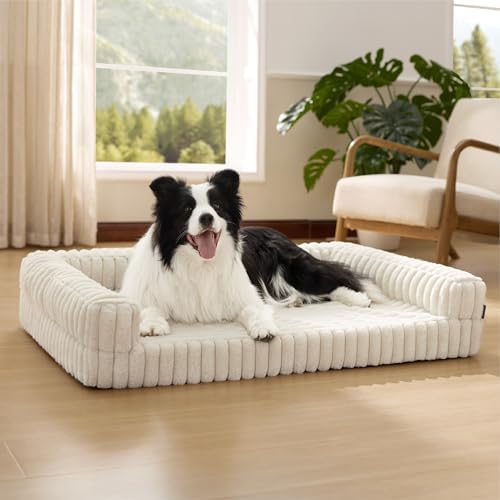
- Orthopedic Memory Foam Support: Experience a perfect combination of two of our signature fabrics. High-density memory fo…
- Enhanced Function & Comfort:Our orthopedic dog sofa is thoughtfully designed with a three-sided bolster providing unmatc…
- Supremely Soft Textures Embodied in Versatile Minimalism:Our spacious and cozy dog bed, crafted with supremely soft faux…
Case Profile: A Sample Happiness Plan for a Jumping-Related Injury Risk
To make this concrete, consider a composite case profile drawn from patterns I see regularly in consults: a 10-year-old Labrador mix, moderate hip dysplasia confirmed by X-ray, history of jumping onto the bed and couch unassisted, and a recent flare-up after a hard landing off the sofa. The Happiness Plan for this dog combines three intervention categories, each targeting a different part of the behavior chain.
- Environmental setup: Place a properly sized orthopedic bed directly on the floor in the dog’s preferred resting location, not tucked in a corner the dog rarely uses. Add a ramp at the single piece of furniture the dog most consistently tries to access.
- Antecedent management: Block impulsive jumping by using a low exercise pen or furniture-height barrier at other jump points in the home, removing the opportunity for the behavior to occur before training catches up.
- Positive reinforcement ramp training: Lure the dog onto the ramp with high-value treats placed progressively further up the incline, rewarding each successful step. Most dogs learn to use a ramp voluntarily within one to two weeks of short, low-pressure sessions, and this approach respects the dog’s agency rather than forcing the transition.
The goal across all three elements is reducing re-injury risk while giving the dog a genuine say in how it moves through its environment. Dogs who are physically guided or forced onto ramps repeatedly tend to develop avoidance associations with the ramp itself, which defeats the purpose. Reward-based shaping, even though it takes longer to establish, produces a dog who chooses the ramp because it has learned the ramp predicts something good, not because it has no other option.
Reassessing this case profile after four weeks typically shows measurable change: fewer overnight repositioning events, a faster and less hesitant sit-to-stand transition, and voluntary ramp use without luring. Orthopedic beds for senior dogs paired with structured ramp training are not a cure for osteoarthritis, but they meaningfully change the daily physical load on an already compromised joint, and that reduction in cumulative stress is where real quality-of-life improvement comes from. Owners often ask about supplementation as a complementary strategy, and our breakdown of the 5 best joint supplements for senior dogs with mobility issues covers how nutraceutical support fits alongside these environmental changes.
Frequently Asked Questions
How do I know if my dog actually needs orthopedic beds for senior dogs versus a regular bed?
Run the five-step assessment protocol described above, focusing especially on overnight repositioning frequency and the sit-to-stand transition. If your dog shifts position more than four or five times per rest period, or shows a front-loaded rise pattern from lying down, a standard bed is likely no longer meeting their support needs, and orthopedic beds for senior dogs designed with higher-density foam are worth prioritizing.
What foam density should I look for when shopping for a senior dog bed?
Veterinary orthopedic specialists generally recommend a minimum of 3 lb density memory foam for genuine pressure relief. Beds below this threshold compress fully under the dog’s weight and lose their supportive properties within weeks, functioning more like a standard cushion than true mobility support gear.
Are senior dog ramps better than dog stairs for arthritic dogs?
For most arthritic dogs, yes. Ramps distribute weight across a continuous incline rather than requiring repeated joint flexion at each stair step. The key is choosing a ramp long enough to keep the incline under roughly 18 degrees, since steeper angles increase joint torque regardless of whether the dog is using a ramp or stairs.
How long does it take to train a senior dog to use a ramp?
Most dogs learn to use a ramp voluntarily within one to two weeks using short, reward-based training sessions. Luring with high-value treats in small incremental steps, rather than physically placing the dog on the ramp, tends to produce more reliable long-term use and avoids creating an avoidance association with the equipment.