
Senior dog training looks a lot different than it did when your pup was young, and if your old dog has started barking at things that never used to bother them, the 3 Bark Rule might just save your sanity (and your neighbors’ patience too). This isn’t about silencing your dog. It’s about listening to what the barking is actually telling you, then responding with structure instead of frustration. I’ve sat with enough confused, barking seniors on the sanctuary floor at 2 a.m. to know that most of them aren’t being “bad.” They’re scared, disoriented, or in pain, and they don’t have another way to tell us.
So let’s talk about what’s really going on, and how a little patience (and the right tools) can turn things around.
Why Senior Dogs Bark Differently Than Young Dogs
A young dog barks because the doorbell rang or a squirrel dared to exist. A senior dog’s barking often comes from a completely different place, and honestly, it took me years of hands-on caregiving to fully understand that. Aging brains change. Hearing fades. The world gets quieter and blurrier, and that’s terrifying if you don’t understand why.
UC Davis School of Veterinary Medicine estimates that canine cognitive dysfunction affects somewhere between 14 and 35 percent of dogs over age 8. That’s not a small number. That’s a huge chunk of our senior population quietly struggling with something that looks a lot like early-stage dementia in humans. Confusion. Disrupted sleep. Anxiety that spikes out of nowhere. And a lot of that anxiety comes out as barking, especially at night.
Add hearing loss into the mix, and you’ve got a dog who can’t hear you approaching, so they startle and bark. Or they can’t hear their own bark anymore, so they escalate volume without realizing it. This is not defiance. This is a nervous system doing its best with less information than it used to have.
Barking in an old dog is rarely about being difficult. It’s almost always a message, and our job is to slow down enough to translate it.
What the 3 Bark Rule Actually Is
The 3 Bark Rule is a simple, structured framework I’ve used with countless dogs who came through our doors anxious, reactive, and exhausted from their own vocal loops. It breaks down into three gentle steps: acknowledge, redirect, reward calm silence.
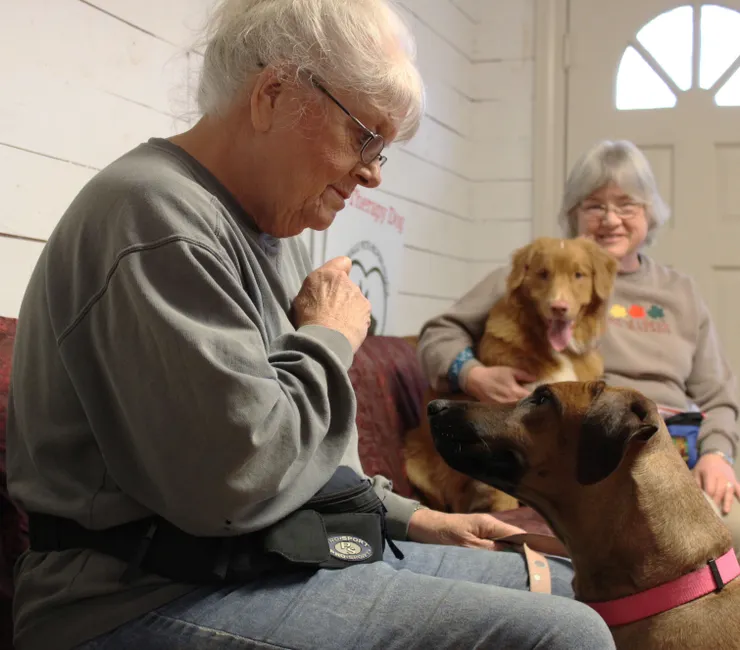
- Acknowledge: When your senior dog barks, don’t ignore it and don’t yell over it. Walk to them calmly, say a soft verbal cue like “I hear you,” and make eye contact if their vision allows it. This tells their anxious brain, “message received, you’re safe.”
- Redirect: Guide them toward a settling behavior. That might be a hand signal for “lie down” (crucial for dogs with hearing loss), a favorite chew, or simply walking with them to their bed.
- Reward calm silence: The moment they stop barking, even for three seconds, reward it. A soft word, a gentle touch, a small treat. This is where senior dog training really clicks into place, because you’re teaching the brain that quiet, not noise, is what gets attention.
This approach is central to senior dog training because it respects where your dog actually is right now, not where they used to be at age 3. Punishment-based corrections on a confused, aging brain almost always backfire. It adds fear to an already fearful moment, and fear is exactly what’s driving the barking in the first place.
The Best Dog Training Kit Options for Senior Barking in 2026
A good dog training kit for a senior dog looks different than a puppy kit. You’re not teaching new tricks so much as you’re rebuilding communication and comfort. Here’s what I recommend keeping on hand, based on what’s actually worked in our sanctuary routine.
Clicker kits are still one of the most reliable tools for reinforcing calm silence, especially paired with hand signals for dogs losing their hearing. Look for kits that include laminated hand signal cards, since consistency matters enormously when a dog can’t hear your verbal cues anymore. Calming aids, from anxiety wraps to pheromone diffusers, pair beautifully with the acknowledge-and-redirect steps of the 3 Bark Rule. If nighttime barking is part of your dog’s confusion cycle, you may also want to read about calming aids for senior dogs barking at strangers, which digs deeper into products that specifically target anxiety-driven vocalization.
Nutrition plays a quiet but real role here too. A dog who feels good in their body is calmer in their mind. Treats used during the reward phase of senior dog behavior training should be gentle on aging digestive systems. I’ve had good results with Earthborn Holistic EarthBars Minis with Turkey Protein, which are small enough for frequent reward-based training without overloading an older dog’s calorie intake.

- High-quality turkey protein plus turkey bone broth provides minerals and compounds to support gut, joint and skin health…
- Ancient grains like barley and oatmeal promote heart health.
- Packed with superfoods like pumpkin, sweet potato and butternut squash to support happy tummies.
If your dog’s barking tends to happen during accidents or incontinence-related distress (which is incredibly common in senior dogs and often triggers anxious vocalizing), managing the mess matters just as much as managing the noise. Washable Pee Pads for Incontinence and Potty Training can reduce the stress cycle for both of you, since a dog who isn’t panicking about a mess is a dog who barks less out of shame or confusion.

- Super Absorbent & Leak-Proof: Engineered with a multi-layer core, our washable pee pads for dogs instantly absorb and lo…
- Non-Slip Backing: Say goodbye to messy, shifting dog pee pads. The non-slip backing keeps the puppy pee pads firmly in p…
- Designed For Senior Dogs & Incontinence Care: Unlike disposable pads you throw away daily, these reusable pee pads are b…
Bark Control Tools Worth Comparing
Not every senior dog needs the same setup. Some need hand signal guides. Some need calming wraps. Some just need a washable pad by the door so 3 a.m. accidents don’t spiral into 3 a.m. barking fits. Here’s a side-by-side look at some solid options for 2026, including a second pad option that works well in multi-dog sanctuary-style households.
| Product | Best For | Key Feature | Price Tier |
|---|---|---|---|
| Washable Pee Pads for Incontinence & Potty Training | Nighttime accidents tied to anxious barking | Non-slip, reusable, reduces cleanup stress | $$ |
| Siedihit Washable Reusable Pet Pee Pads | Multi-dog households or heavy incontinence | Absorbent, non-slip backing, durable washable layers | $$ |
| Earthborn Holistic EarthBars Minis (Turkey) | Reward-based clicker and hand signal training | Small bite size, natural ingredients, gentle on senior digestion | $$ |
Notice none of these are flashy gadgets. That’s intentional. The most effective tools for senior dog training in 2026 aren’t gimmicks, they’re quiet, practical supports that reduce the underlying stress driving the barking in the first place. The Siedihit Washable Reusable Pet Pee Pads have been a reliable mid-tier option in our own sanctuary rotation, especially for dogs who pace and whine before an accident.

- 【Super Absorbent and Leakproof】Crafted with high-density material, this pad offers polyester knit surface for exceptiona…
- 【Non-Slip Base Design】The bottom is designed with anti-slip silica gels for a firm and stable grip on floors and carpets…
- 【Reusable and Washable Design】These pee pads can be reused many times. They are machine washable and durable, not easy t…
Why Positive Reinforcement Wins Over Punishment
The ASPCA has been clear for years that positive reinforcement produces more reliable, longer-lasting behavior change than aversive corrections, and this is doubly true for aging dogs. A senior nervous system doesn’t bounce back from fear the way a young one does. Shock collars, yelling, or spray bottles might quiet a dog in the moment, but they teach that moment to be terrifying, which often makes the anxiety underneath the barking so much worse.
Clicker-based senior dog training works because it gives a clear, consistent, low-stress signal. Click, treat, done. No confusion, no fear, just information. That’s exactly what an aging or cognitively declining brain needs more of.

Sanctuary Wisdom: Barking Is Rarely Just Barking
I’ve learned this the hard way, more times than I’d like to admit. A dog barking at 3 a.m. isn’t usually being “naughty.” They might be in pain from arthritis flaring in the cold. They might be disoriented from sundowner’s syndrome, a very real cognitive shift that happens in the evening hours. They might just be lonely, confused about where they are even in a house they’ve lived in for years.
Ask yourself before reacting:
- Has their barking pattern changed recently, or has it always been like this?
- Could pain be involved? Stiff joints, dental issues, or vision loss can all trigger distress vocalizing.
- Is this happening more at night, when confusion and cognitive decline symptoms often intensify?
- Have they been left alone longer than usual?
Honestly, who thinks an old dog barks just to be difficult?? It breaks my heart every time I hear that assumption, because nine times out of ten, there’s a real reason underneath it. This is a sacred trust we’ve been given, caring for these dogs in their final years, and that means responding to their fear with patience instead of punishment.
If you’re navigating this alongside other breed-specific quirks, like managing a mixed-heritage dog’s temperament, you might also find value in understanding lineage-driven behavior patterns, similar to what we cover in our Flat-Coated Retriever vs Black Golden Retriever mix guide, which touches on how breed traits shape anxiety and vocal tendencies well into the senior years.
A Gentle Reflection on Patience and Dignity
Senior dog behavior isn’t a problem to be fixed. It’s a conversation to be had, slowly, with a lot of grace on both ends of the leash. Every bark is your old dog trying to tell you something, even if it takes you a while to understand the translation. That’s okay. That’s part of the deal we made when we chose to love an animal through their whole life, not just the easy parts.
Give yourself permission to go slow. Give your dog permission to be scared sometimes without it meaning something is broken. The 3 Bark Rule isn’t magic, but it is a framework built on respect, and respect is really what senior dog training comes down to in the end.
Frequently Asked Questions
What is the 3 Bark Rule for senior dogs?
The 3 Bark Rule is a gentle training framework built around three steps: acknowledge the bark calmly, redirect your dog toward a settling behavior, and reward the moment they go quiet. It’s designed specifically for senior dog training, where patience and consistency matter more than correction.
Why does my senior dog bark more than they used to?
Increased barking in older dogs is often linked to hearing loss, vision changes, arthritis pain, or canine cognitive dysfunction, which affects an estimated 14 to 35 percent of dogs over age 8 according to UC Davis research. Anxiety and confusion, not defiance, are usually the real drivers.
Are bark control tools safe for senior dogs?
Many bark control tools are safe, but aversive devices like shock or citronella collars are not recommended for aging dogs. Gentle bark control tools such as clicker kits, hand signal cards, and calming wraps work far better and align with positive reinforcement methods endorsed by the ASPCA.
How long does senior dog training take to reduce barking?
It varies by dog, but most caregivers notice gradual improvement within two to four weeks of consistent practice. Senior dog training requires slower repetition than training a younger dog, since cognitive and sensory changes affect how quickly new patterns are learned.
Thank you for showing up for your old dog today, and every day it takes to get this right. They notice your patience even when they can’t say so. Tell your pup I said Hi! — Dawn