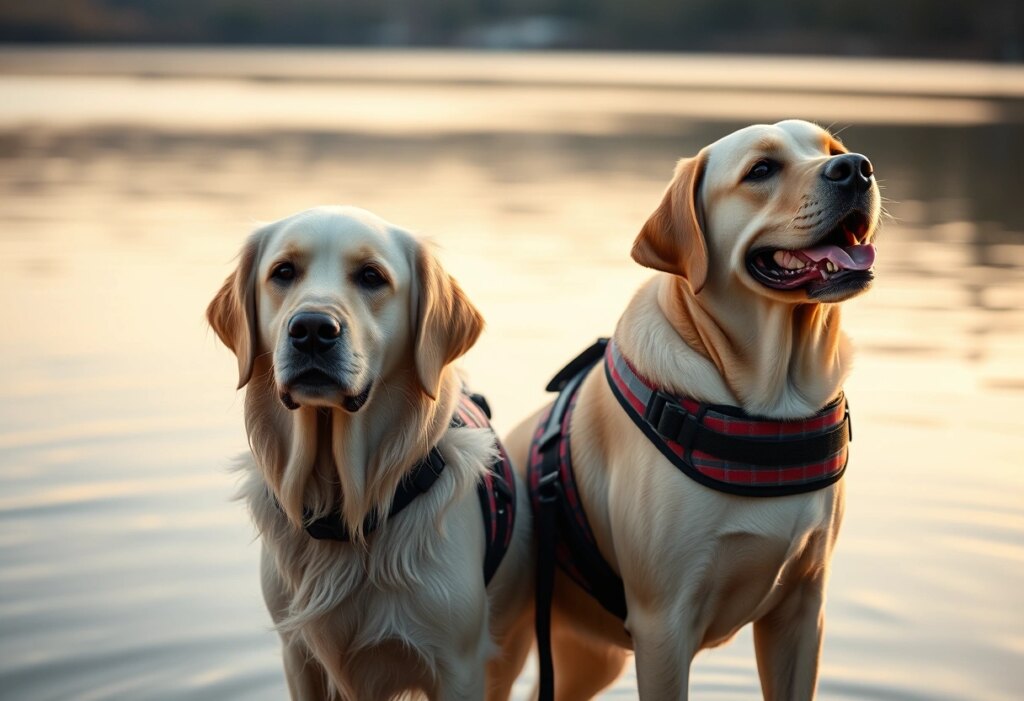

Senior dog water play is one of the kindest gifts you can give an aging body, but the breed underneath that gray muzzle matters more than people realize. I’ve watched enough old dogs wade into a pond at Woody’s Place to know that a Golden Retriever and a Labrador don’t experience water the same way, even though they get lumped together as “water dogs” all the time. One might glide through like it’s still six years old. The other might paddle stiffly, ears already looking irritated before you’ve even toweled them off. Let’s talk about what’s actually true, and what’s just breed mythology.
Water doesn’t lie about a dog’s body. It shows you exactly where the stiffness lives, where the confidence has faded, and where the joy still is.
Why Water Activity Matters for Aging Joints
Buoyancy is basically a gift to an arthritic hip. When a senior dog is submerged to the chest, water supports a huge percentage of their body weight, which means the joints doing all that grinding, aching work on land finally get a break. The American Kennel Club has written about hydrotherapy and low-impact rehab work for exactly this reason. It builds muscle without hammering cartilage that’s already worn thin.
This is why senior dog water play shows up so often in rehab plans for dogs with hip dysplasia, elbow arthritis, or general old-dog stiffness. It’s not just a fun summer activity. It’s functional medicine, honestly. And swimming for senior dogs tends to build cardiovascular endurance without the jarring impact of a jog on pavement.
But here’s the thing nobody tells you at the pet store: not every senior dog experiences that buoyancy the same way. Body composition, coat type, ear shape, old injuries. It all plays a role. Which brings us to the two breeds everyone assumes are interchangeable in the water.
Golden Retriever Senior Traits in Water
Golden Retrievers carry that gorgeous, dense double coat that looks so majestic soaking wet in a lake photo. But underneath the beauty, that coat holds water like a sponge. For a senior Golden, a heavy, saturated coat means more weight to drag around post-swim, and it takes noticeably longer to dry, especially in the undercoat near the chest and hindquarters.
Then there are the ears. Golden Retrievers are one of the breeds with the highest documented rates of otitis externa, according to VCA Hospitals, and floppy, low-set ears trap moisture beautifully, which is exactly what bacteria and yeast want. An older Golden with a compromised immune system or existing skin allergies is even more vulnerable. I’ve cared for enough senior Goldens to tell you: skipping the ear-drying step after a swim is basically an invitation for a vet visit two days later.

None of this means Goldens should avoid water. Quite the opposite, honestly. Many of them light up the moment they see a pond, tail going, that old joy still very much alive. It just means the aftercare has to be intentional, not an afterthought.
Labrador Senior Traits in Water
Labradors have a genuine physical advantage here. Those webbed feet aren’t just a cute trivia fact, they actually improve paddle efficiency and steering in the water. Combined with a denser, more athletic muscle build in most Labs, you often see better buoyancy control and a more confident, steady swim stroke well into their senior years.
But don’t let that fool you into thinking Labs are somehow immune to joint trouble. Hip dysplasia prevalence in Labradors runs as high as 12 percent according to OFA data, and that’s a significant number. A Lab with underlying hip dysplasia might look strong at first glance but tire quickly, or start favoring one side mid-swim. Watching for early fatigue is critical, because a Lab’s naturally powerful drive can mask pain longer than you’d expect. They’ll often push through discomfort out of sheer enthusiasm, which is exactly why owners need to be the ones setting limits.
If your senior Lab is showing signs of slowing down on land, it’s worth reading up on vet-backed joint supplement options for senior dogs before assuming the pool alone will fix things. Supplementation and supervised swimming work best as a team, not a substitute for each other.
Supporting Recovery After the Swim
Whichever breed you’ve got, the real work often happens after the water, not in it. A tired, damp senior dog needs somewhere warm and genuinely supportive to rest those joints, not a flat blanket on a hard floor. This is where a quality orthopedic bed earns its keep. The Veehoo Orthopedic Memory Foam Dog Bed for Senior Dogs is built with the kind of dense support that cradles achy hips after a swim session, helping muscles cool down gradually instead of stiffening up on cold tile.

- 7″ Orthopedic Relief for Aching Joints: Give your senior companion or large breed the pain-free rest they deserve. Our t…
- Sprawled-Out Freedom for Large Breeds & Seniors: Our generously sized large dog bed 52″L x 36″W x 7″Th offers ample spac…
- Luxurious Plush Fur for Deep Healing Sleep: Imagine your cherished dog sinking into cloud-like comfort. The ultra-soft f…
For larger seniors, especially big-bodied Labs or broad-chested Goldens, sizing matters just as much as material. The Bedsure ComfyFleece Memory Foam Orthopedic XL Dog Bed gives that extra sprawl room a big senior dog actually needs to fully stretch out and let their joints release tension after exertion.

- Orthopedic Memory Foam Support: Experience a perfect combination of two of our signature fabrics. High-density memory fo…
- Enhanced Function & Comfort:Our orthopedic dog sofa is thoughtfully designed with a three-sided bolster providing unmatc…
- Supremely Soft Textures Embodied in Versatile Minimalism:Our spacious and cozy dog bed, crafted with supremely soft faux…

Practical Safety Checklist for Senior Swims
Before any senior dog, Golden, Lab, or otherwise, goes near open water, there’s a short list I never skip at the sanctuary. This is a sacred trust we hold with these old bodies, and cutting corners here just isn’t an option.
- Get vet clearance first. Especially for dogs with known heart conditions, spinal issues, or advanced arthritis.
- Fit a properly sized life vest. Even strong swimmers tire fast as seniors, and a vest gives you time to react.
- Dry ears thoroughly after every swim. This matters enormously for Golden Retrievers but is smart practice for any floppy-eared senior.
- Towel-dry and warm them down immediately. A chilled, damp senior dog can stiffen up within the hour, undoing all the good the swim just did.
- Watch for early fatigue signals. Heavy panting, sinking hindquarters, or reluctance to keep paddling means it’s time to head to shore, no exceptions.
Good nutrition plays into recovery too. A senior dog rebuilding lean muscle after regular swims benefits from a diet formulated for their aging metabolism, like Hill’s Science Diet Adult 7+ Dry Dog Food, which supports joint and muscle maintenance from the inside out.

- Healthy heart, kidneys, and bladder supported by antioxidants and balanced minerals
- Lean muscles supported with high-quality protein
- Made with natural ingredients
Golden Retriever vs Labrador: Senior Water Traits Compared
| Trait | Senior Golden Retriever | Senior Labrador | Price Tier (Support Gear) |
|---|---|---|---|
| Coat & Drying Time | Dense double coat, holds water, slower to dry | Shorter, water-resistant coat, dries faster | N/A |
| Ear Infection Risk | Higher risk (floppy ears trap moisture) | Moderate risk, less severe on average | N/A |
| Buoyancy & Paddle Efficiency | Good, but heavier coat adds drag | Excellent, webbed feet aid steering | N/A |
| Common Joint Risk | Elbow and hip arthritis | Hip dysplasia (up to 12% prevalence) | N/A |
| Recommended Orthopedic Bed | Veehoo Memory Foam Orthopedic Bed | Bedsure ComfyFleece XL Orthopedic Bed | $$$ |
| Senior Diet Support | Hill’s Science Diet Adult 7+ | Hill’s Science Diet Adult 7+ | $$ |
Reading Your Own Dog Over the Breed Stereotype
Here’s what I’ve learned after years of sitting on the edge of a pond watching old dogs decide whether to go in: breed traits are a starting point, not a verdict. I’ve met eleven-year-old Labs who hated water their whole lives and Goldens with bad hips who still fling themselves in like puppies. Your dog is not a statistic. Your dog is an individual with their own history, their own pain tolerance, their own joy.
So before you decide which breed “handles water better,” ask yourself some honest questions:
- Does my dog seek out water, or do I have to coax them in every time?
- Have I noticed limping, slower rising, or reluctance to jump lately?
- Do they seem more tired after swims than they used to, even short ones?
- Is their tail up and loose, or tucked and tense near the water’s edge?
These answers matter more than any breed chart. Watch the dog in front of you, not the label on their paperwork. If you’re also noticing memory lapses or confusion alongside physical slowing, it might be worth reading about the signs of cognitive decline in aging dogs, since cognitive changes can quietly affect a dog’s confidence around water too.
Senior dog water play should always be led by what your dog is telling you in that moment, not what a breed stereotype promises. Both Golden Retrievers and Labradors can thrive with the right supports, and both can struggle if we ignore their individual signals. Low-impact exercise for dogs works best when it’s built around the actual animal, not the assumption.
Frequently Asked Questions
Is swimming safe for senior dogs with arthritis?
Yes, in most cases swimming is one of the safest forms of exercise for arthritic senior dogs because water supports body weight and reduces joint stress. Always get vet clearance first, especially if your dog has advanced hip or elbow arthritis, and keep sessions short and supervised.
Do Golden Retrievers get more ear infections from swimming than Labradors?
Golden Retrievers are documented to have a higher rate of otitis externa compared to many breeds, largely due to their floppy ear shape trapping moisture. Labradors can still develop ear infections, but the risk is generally lower. Thorough ear drying after every swim is essential for both breeds.
How long should a senior dog swim during a session?
Most senior dogs do well with five to fifteen minutes of supervised swimming, depending on their fitness level and any underlying joint conditions. Watch closely for heavy panting, sinking hindquarters, or reluctance to keep paddling, and end the session at the first sign of fatigue.
Which breed handles water better as a senior, Golden Retriever or Labrador?
Labradors often have a slight physical edge thanks to webbed feet and denser muscle, while Goldens deal with heavier coats and higher ear infection risk. That said, individual health, joint condition, and temperament matter far more than breed alone when it comes to senior dog water play.
Whatever breed is waiting by your back door with wet paws and a hopeful look, give them the benefit of the doubt and the safety net they deserve. Old bodies deserve patience, not assumptions. Tell your pup I said Hi! — Dawn