
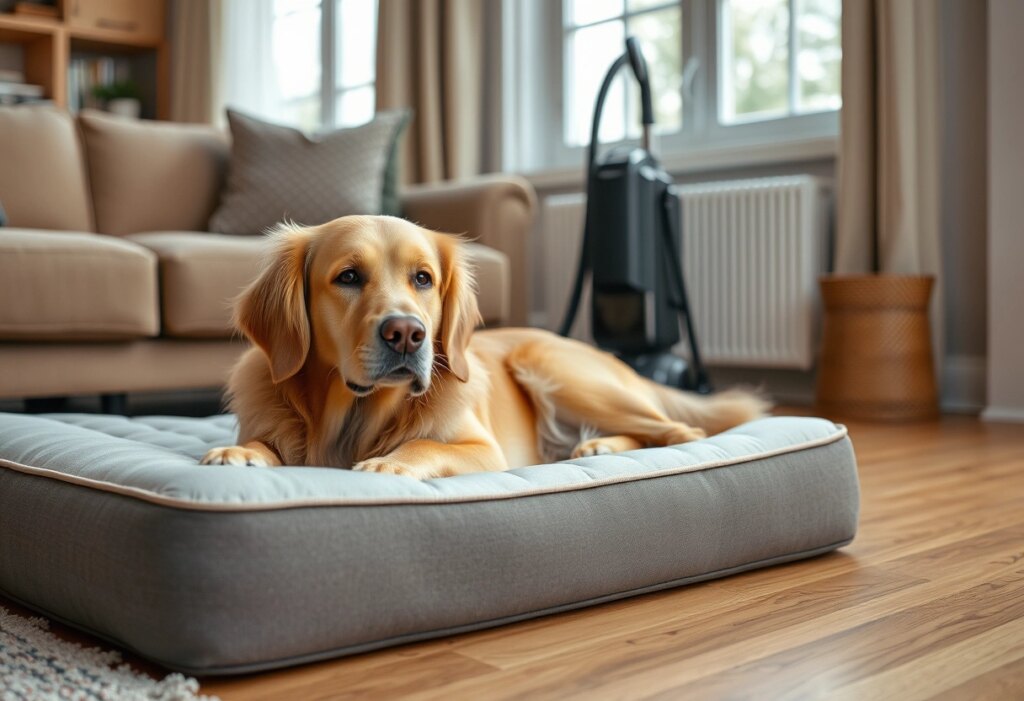

A vacuum for shedding dogs is not a simple household purchase when the dog in question is a senior with arthritis, thinning fur regulation, and possibly a noise sensitivity that has been quietly worsening for years. Most owners shop for suction power and forget that the machine also has to coexist, acoustically and functionally, with an aging nervous system that processes sound differently than it did at two years old. This article breaks down what actually matters mechanically and behaviorally when you’re choosing a vacuum for shedding dogs in a household where the shedder is a senior.
Why Senior Dogs Shed Differently
Coat biology changes with age. The anagen (growth) phase of the hair cycle shortens in older dogs, and more follicles sit in the resting or shedding phase at any given time. That alone increases hair volume in the environment. Layer on reduced self-grooming, often driven by cervical or hip arthritis that makes twisting around to lick and clean certain areas painful, and you get uneven coat maintenance: matting in some spots, excessive loose fur in others. Dander production also tends to rise with age-related skin changes, including thinner epidermis and altered sebum output. For households already managing allergies, this raises the airborne allergen load measurably. None of this is a hygiene failure on the dog’s part. It’s a predictable physiological shift, and it’s exactly why a vacuum for shedding dogs in a senior-dog home needs to do more than what worked when the dog was young. If joint pain is limiting grooming or mobility, our vet-backed guide to senior dog joint supplements covers options worth discussing with your veterinarian.
The Behavioral Cost of Vacuum Noise on Aging Dogs
Here’s where most shopping guides stop paying attention, and where I’d argue the real risk lives. Noise sensitivity in dogs isn’t static across the lifespan. Blackwell et al. (2013, Veterinary Record) surveyed a large sample of UK dog owners and found noise sensitivity present in over 45% of dogs, with the likelihood and intensity of the reaction increasing with age. This tracks with what we understand about sensory habituation: younger dogs, with more flexible stress-response thresholds, adapt to repeated benign stimuli more readily. Senior dogs show reduced habituation capacity, partly due to changes in prefrontal regulation of the amygdala’s fear response, and partly due to cumulative negative associations built over a lifetime. A vacuum a dog tolerated at age four can become a trigger at age eleven, not because the machine changed, but because the dog’s stress physiology did.
This matters practically. A dog who bolts, trembles, or hides every time the vacuum runs isn’t being dramatic. That’s a measurable, biologically grounded fear response, and repeated unmanaged exposure to it can sensitize the dog further rather than desensitize them. Cortisol spikes from chronic noise-triggered stress are not trivial in geriatric animals already managing inflammatory or cardiac conditions.
Practical Protocol: Desensitizing a Noise-Reactive Senior Dog to Vacuum Sound
If your dog already shows avoidance behavior around the vacuum, don’t just push through it hoping they’ll adjust. Use a structured counterconditioning protocol instead:

- Baseline observation. Note the specific behaviors (pacing, panting, hiding, tucked tail) and at what distance or volume they begin. This is your starting threshold, not a fixed line.
- Record and play at low volume. Play a recording of the vacuum at a volume low enough that your dog notices but doesn’t react. Pair it immediately with high-value food rewards.
- Short sessions, five minutes max. End before the dog shows any stress signals. Ending on success matters more than duration.
- Gradual volume increase. Only raise volume once the dog shows relaxed, anticipatory behavior (looking at you for the treat, not the speaker) at the current level. This can take days to weeks; there is no fixed timeline, and rushing resets progress.
- Introduce the real machine, stationary and off. Let the dog approach and sniff on their own terms. No luring toward it.
- Turn it on briefly in another room. Reward calm behavior. Gradually decrease distance and increase run time over multiple sessions.
The goal isn’t to eliminate the startle reflex entirely. It’s to shift the dog’s association from threat to neutral or positive, and to give them the agency to retreat to a safe space if needed, rather than forcing tolerance.
Key Mechanical Features to Prioritize
Once the behavioral piece is addressed, the mechanical spec sheet matters quite a bit. Three features consistently separate an adequate pet hair vacuum from one that actually solves the senior-dog shedding problem:
- HEPA filtration. True HEPA filters capture 99.97% of particles at 0.3 microns per the accepted ASTM testing standard. This matters directly for senior dogs with early-stage respiratory sensitivity or for owners managing allergies, since dander and fine debris otherwise recirculate through a standard filter and back into the air the dog breathes at floor level, closer to the source.
- Motorized brush rollers. Static suction alone struggles to lift embedded hair from carpet fibers or pull matted undercoat tufts from hard flooring. A motorized roller agitates and lifts, which is functionally necessary for double-coated senior shedders.
- Tangle-free roller design. Standard bristle rollers wrap hair around the axle within a few uses, which reduces suction efficiency and adds a maintenance task most owners underestimate. Tangle-free designs (often using rubber fins or combs) cut this friction significantly.
Grooming between vacuum sessions also reduces the total hair load hitting your floors in the first place. A tool like the Self-Cleaning Deshedding Dog Cat Brush pulls loose undercoat before it sheds naturally, which is particularly useful for senior dogs who can’t twist or reach certain areas to self-groom anymore.
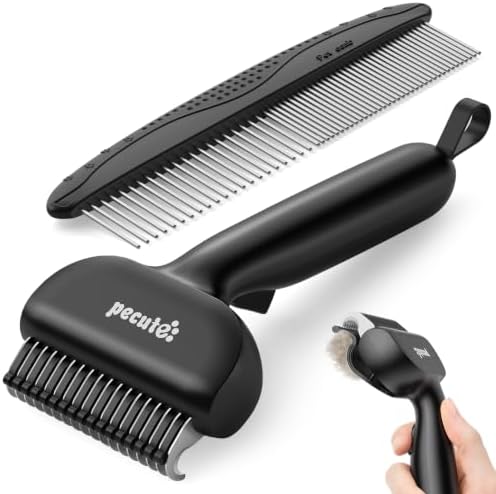
- 1-CLICK SELF-CLEANING — NO MORE MANUAL HAIR PULLING: This undercoat rake solves the grooming frustration. Just press the…
- REMOVES UP TO 95% OF LOOSE FUR — DESIGNED FOR THICK DOUBLE COATS: Engineered specifically for dense undercoats and heavy…
- GENTLE DEMATTING — ROUNDED TEETH GLIDE WITHOUT IRRITATING SKIN: Unlike sharp dematting rakes for dogs, our fine-polished…
For quick touch-ups on furniture or car seats between full grooming sessions, a rubber-sided tool like the FURemover Duo Pet Hair Rubber Brush works well without startling a dog resting nearby, since it’s silent and hand-operated. That’s worth factoring in: not every hair-management step needs to involve the vacuum itself, and reducing overall noise exposure in the home benefits a sound-sensitive senior dog broadly.

- CONTAINS: (1) dual-sided pet hair rubber brush and lint remover
- ALL-IN-ONE FUR REMOVER: Groom your pet and remove fur from clothing and upholstery with one versatile rubber brush tool.
- DUAL-SIDED LINT BRUSH: Use the thick bristle side to groom your dog or cat and trap loose fur; use the the fine bristle …
Upright vs. Canister vs. Robotic: A Comparative Breakdown
Each vacuum category makes different tradeoffs on noise, allergen capture, and practicality across a multi-room senior-dog household. The table below scores each type on the variables that matter most for this specific use case.
| Vacuum Type | Typical Noise Output | Allergen/HEPA Capture | Multi-Room Senior-Dog Suitability | Price Tier |
|---|---|---|---|---|
| Upright | Moderate to high (75-85 dB) | Strong with true HEPA models | Good, but heavier and less maneuverable around dog beds/ramps | $$ – $$$ |
| Canister | Moderate (68-78 dB) | Strong, often with sealed HEPA systems | Excellent; lightweight head maneuvers well around furniture and mobility gear | $$$ – $$$$ |
| Robotic | Low (55-67 dB) | Variable; smaller filters, frequent emptying needed | Good for daily maintenance between deep cleans, but can startle dogs unexpectedly if it activates on a schedule | $$$ – $$$$$ |
Canister models tend to score best overall for senior-dog homes specifically because the lightweight head reduces the physical effort of maneuvering around orthopedic beds, ramps, and baby gates, while still delivering strong suction. Robotic units offer the quietest daily option, but the unpredictability of a self-starting machine can itself become a trigger for a noise-sensitive dog if it isn’t introduced deliberately using the desensitization steps above.

Quieter is not automatically better. A vacuum that drops decibel output usually does so by reducing motor wattage, which directly reduces suction and rolling-brush torque. For a heavy-shedding senior dog, that tradeoff can mean a machine that’s pleasant to run but leaves embedded hair and dander behind, which defeats the purpose of buying a dedicated vacuum for shedding dogs in the first place.
The “Quieter Is Always Better” Misconception
I hear this assumption constantly from owners trying to solve two problems (noise sensitivity and heavy shedding) with one purchase, and the data is contradictory enough that it deserves a direct answer. Some low-decibel vacuums achieve their quiet operation through better motor insulation and improved airflow engineering, genuinely preserving suction while cutting sound. Others simply run a weaker motor. Reviews and independent testing rarely distinguish clearly between the two on the packaging, so the burden falls on the owner to check independent suction tests (measured in air watts or CFM) rather than relying on the decibel rating alone as a proxy for quality.
The more reliable strategy is decoupling the two variables. Address noise sensitivity through the desensitization protocol outlined above, and select the vacuum based primarily on filtration and suction performance for heavy-shedding coats, checking noise rating as a secondary filter rather than the primary decision point. This is functionally similar to how we approach high-shedding vs. low-shedding dog breeds generally: coat management and sensory comfort are related but separate problems, and solving one doesn’t automatically solve the other.
Supporting the Environment Around the Cleanup
Vacuuming frequency matters less if the dog’s resting surfaces are trapping hair and dander between cleanings. Washable bedding cuts down on the amount of loose fur redistributing itself across the room every time your dog shifts position. A set like the MOIRIG 2 Pack Washable Deluxe Plush Dog Bed allows for a rotation system: one bed in the wash while the other stays in use, which meaningfully reduces the accumulated hair load your vacuum has to handle on a given day.
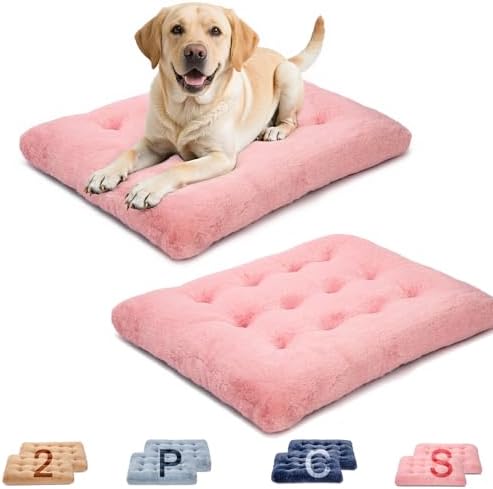
- 2 PACK – Two premium dog beds in one pack—perfect for multi-pet homes or rotating use.
- Luxurious Padding Support – Filled with 3-inch premium polypropylene fiber and fixed through multiple keyholes, it has e…
- Ultra-soft Rabbit-like Plush – Made of high – density luxurious plush material, it is extremely soft, comfortable, and r…
For dogs managing significant mobility decline alongside heavy shedding, it’s also worth reviewing what age-related costs tend to look like across the board. Our piece on senior Golden Retriever disadvantages and real costs to expect covers how coat, joint, and general care needs tend to compound in the senior years, which is useful context when budgeting for equipment like a dedicated quiet vacuum for pets alongside grooming tools and mobility gear.
Putting It Together
Choosing a vacuum for shedding dogs in a senior-dog household is really two decisions stacked together: a behavioral one about how your specific dog’s noise sensitivity has evolved with age, and a mechanical one about filtration and suction adequate to a heavier shedding load. Skipping the behavioral piece risks turning a routine chore into a recurring stress event for an animal already managing age-related physiological vulnerability. Skipping the mechanical research risks buying a quiet machine that doesn’t actually solve the hair and dander problem it was purchased for. According to the American Kennel Club’s senior dog care guidance, environmental management, including allergen and stress reduction, plays a meaningful role in quality of life for aging dogs, which lines up with everything covered here. A HEPA-equipped canister model paired with a structured desensitization plan tends to be the combination that serves both goals without asking the dog to simply tolerate discomfort in the name of convenience.
What is the best type of vacuum for shedding dogs with senior noise sensitivity?
Canister vacuums with sealed HEPA systems tend to work best. They offer strong suction and allergen capture while remaining lightweight and maneuverable around orthopedic beds and mobility gear. Pairing the machine with a gradual noise desensitization protocol addresses the sensory side of the equation, since even a quality vacuum for shedding dogs can trigger a fear response if introduced abruptly.
Does HEPA filtration actually matter for a senior dog’s health?
Yes. True HEPA filters capture 99.97% of particles at 0.3 microns, which reduces recirculated dander and fine allergens in the home. This matters more for senior dogs, since age-related skin and respiratory changes can increase sensitivity to airborne irritants that a standard filter would otherwise send right back into the room.
Is a quiet vacuum for pets always the better choice for a noise-sensitive dog?
Not necessarily. Some low-decibel models achieve quiet operation through better engineering, while others simply run weaker motors that sacrifice suction. A structured desensitization protocol addresses noise sensitivity more reliably than relying on decibel rating alone, which frees you to prioritize suction and filtration performance when choosing the actual vacuum for shedding dogs.
How often should I vacuum a home with a heavy-shedding senior dog?
Most heavy-shedding senior dog households benefit from vacuuming every two to three days, with daily quick passes in high-traffic rest areas. Regular brushing between sessions and washable bedding both reduce the total hair load, which in turn reduces how often the vacuum for shedding dogs needs to run at full intensity.