
Wire vs soft-sided crates present genuinely different risk profiles for a senior dog, and the right choice depends less on aesthetics and more on what’s actually driving your dog’s distress. If your geriatric patient is experiencing panic-level separation anxiety rather than garden-variety confinement discomfort, the structural demands of the enclosure change substantially. This isn’t a matter of preference. It’s a functional analysis question, and getting it wrong can mean broken teeth, torn nails, or a dog who injures herself trying to escape a box that was supposed to keep her safe.
Separation Anxiety Is Not the Same as Confinement Stress
I want to draw a hard clinical line here, because owners frequently conflate the two and the treatment implications diverge sharply. Generalized confinement stress looks like pacing, occasional whining, maybe some reluctance to enter the crate. It’s uncomfortable but self-limiting. True separation anxiety, by contrast, is a panic response tied specifically to the departure of an attachment figure, and it presents with a distinct behavioral signature: escalating vocalization, self-injurious escape attempts, elimination despite house-training history, and autonomic signs like excessive drooling or trembling that begin before you’ve even left the house. The antecedent isn’t the crate itself. It’s the anticipated or actual absence of the person.
This distinction matters enormously when you’re selecting a crate type. A dog with mild confinement discomfort will generally habituate to almost any secure enclosure given time and proper conditioning. A dog in a genuine panic state is a different animal altogether (behaviorally speaking), because panic recruits a fight-or-flight physiology that overrides normal inhibition. She’s not choosing to claw through mesh. Her sympathetic nervous system has taken over, and the structural integrity of whatever is containing her becomes a genuine welfare and safety variable, not just a convenience factor.
Wire vs Soft-Sided Crates: The Biomechanics Owners Don’t Consider
When owners ask me to settle the wire vs soft-sided crates debate, I usually redirect the question. It’s not which one is universally “better.” It’s which structural properties match your dog’s specific presentation. Let’s break down what each design actually offers from a behavioral and physical standpoint.
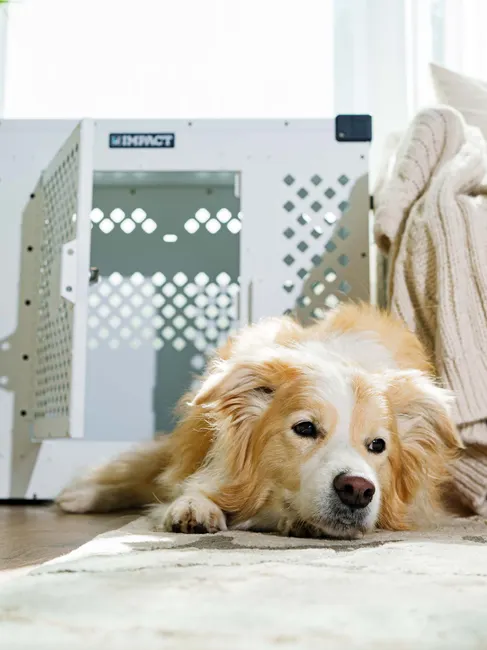
Wire crates provide near-360-degree visibility. For a lot of senior dogs, this matters more than people expect. Aging dogs frequently show increased neophobia, meaning a heightened wariness toward novel or unpredictable stimuli, and open sightlines allow continuous environmental scanning. A dog who can see the room, track movement, and confirm the absence of threat is often calmer than one who cannot. The tradeoff is containment strength. Standard wire construction, especially in economy models, offers limited resistance against a dog engaged in sustained panic-clawing or door-battering. I’ve reviewed case reports where dogs bent wire flooring or forced open poorly latched doors during an escape episode, sustaining nail avulsions and lip lacerations in the process.
Soft-sided crates flip that equation. The enclosed, den-like structure reduces visual stimulation, which can genuinely help dogs showing disorientation associated with canine cognitive dysfunction (CDS), since diminished sensory processing in aging dogs sometimes makes an information-dense environment more stressful, not less. But soft mesh and nylon panels are a poor match for panic-level escape attempts. Dogs with weakened jaw strength or arthritic paws will sometimes still generate enough repetitive force to tear seams or zippers, and unlike wire, torn mesh creates entanglement and entrapment risk rather than a clean opening. A trapped paw or jaw in torn fabric is arguably a worse outcome than a successful escape.
The data is contradictory when it comes to which crate type produces fewer injuries overall, but the consistent pattern across behavioral case reviews is this: injury risk tracks with panic intensity far more than with crate material. The crate isn’t the primary variable. The dog’s emotional state at confinement is.
What the Research Actually Shows
A 2021 study published in Applied Animal Behaviour Science examined housing and confinement type as a correlating variable in dogs already diagnosed with separation-related problems, and found that confinement conditions significantly predicted distress vocalization frequency. Dogs in more restrictive or visually limited housing showed higher rates of sustained barking and howling during owner absence compared to dogs given more open confinement or pen-style setups. That’s a meaningful data point against defaulting to soft-sided, fully enclosed crates for anxious dogs on the assumption that “cozy” automatically equals “calming.”
Separately, behavioral guidance circulated by the ASPCA has flagged that crate-related injury reports skew disproportionately toward panic-escape attempts in soft-sided models, largely because the material fails in ways that create secondary injury (entanglement, laceration from torn mesh edges) rather than simply giving way. None of this means soft-sided crates are inappropriate across the board. It means they’re a poor first choice for a dog already showing panic-level separation distress, and a more reasonable option for a dog whose issue is sensory overload or mild confinement discomfort without an escape-attempt history.
A Decision Matrix: Matching Crate Type to Clinical Presentation
Rather than giving you a single verdict, I want to walk through the actual variables I assess in a case evaluation. Three factors drive the recommendation: mobility status, cognitive status, and anxiety severity.
- Ambulatory, no CDS, mild confinement discomfort: Either wire or soft-sided crate is reasonable. Base the decision on the dog’s visual preference (den-seeking vs scanning behavior).
- Arthritic, no CDS, mild confinement discomfort: Wire crate with a supportive orthopedic pad. Easier entry and exit reduces joint strain, and rigid flooring supports better than sagging fabric.
- Ambulatory, CDS diagnosed, mild-to-moderate distress: Soft-sided or partially covered wire crate to reduce visual clutter, paired with a consistent, unchanging location to minimize disorientation.
- Arthritic or ambulatory, panic-level separation anxiety (any cognitive status): Crating is often contraindicated. A secured pen or single safe room is the safer containment strategy, discussed further below.
Notice that panic-level separation anxiety overrides every other variable. Mobility and cognitive status shape comfort and ease of use, but panic-level distress is a safety issue first. If your dog is a serious escape risk under panic conditions, a crate of either type is often the wrong tool, and the goal shifts to reducing containment intensity, not upgrading crate durability.

Selecting Hardware That Matches the Presentation
For dogs without a panic-escape history, a well-built wire option gives you visibility plus decent structural integrity. The Pawtenda Whelping Box for Dogs and Puppies isn’t a traditional crate, but its low-wall, open-top pen design is worth mentioning here because it illustrates the pen-style alternative I recommend for panic-level cases: full visibility, easy owner access for real-time reassurance, and no enclosed structure for a dog to injure herself against during a panic episode.
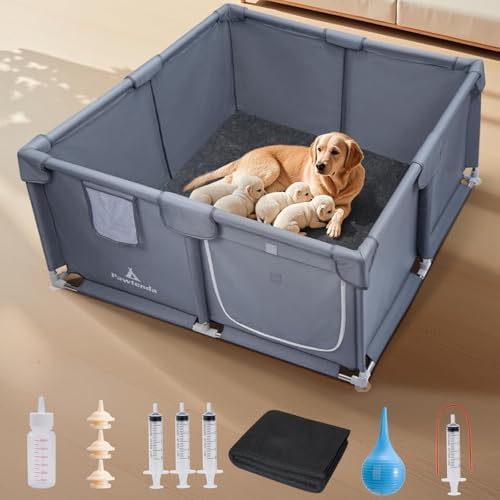
- 【Spacious and Secure Design】The Pawtenda Dog Whelping Box provides ample space with its 47 x 47 x 24 inch dimensions, ma…
- 【Premium Oxford Sides】Crafted with 150D Oxford fabric instead of fragile mesh, the side panels of this whelping box offe…
- 【Sturdy and Stable Construction】The dog playpen is equipped with a sturdy base and anti-slip suction cups, providing enh…
For traveling to the veterinary clinic or a boarding facility, a soft-sided carrier serves a different function entirely than home containment, since travel stress is time-limited and supervised. The Pecute Top Expandable Airline Approved Pet Carrier gives arthritic senior dogs an easier, lower-clearance entry point than a rigid wire crate, which matters when every joint movement counts, and it works well for short-duration, supervised transport rather than unsupervised hours-long confinement.
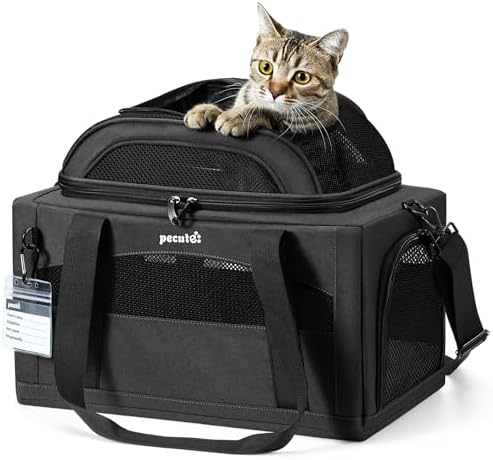
- 【Airline Approved Pet Carrier】Pecute pet carrier size:16.5″L x 11″W x (9+4.7)”H.Product weight: 3.9lbs. Pecute pet carri…
- 【Stable Large Space】Before boarding, you can open the top expansion. Easily pull up the top extension to increase the ac…
- 【 Breathable & Anti Scratch Mesh】Pecute expandable cat carrier has 4 mesh windows to increase the breathability of the c…
Temperature regulation deserves a mention too, since arthritic dogs are more sensitive to cold, which can compound restlessness and make any confinement type feel worse. For dogs who spend supervised time outdoors in a secure pen setup, something like the GUTINNEEN Large Heated Dog House Outdoor Insulated option can reduce a physical discomfort variable that otherwise gets misread as behavioral distress.
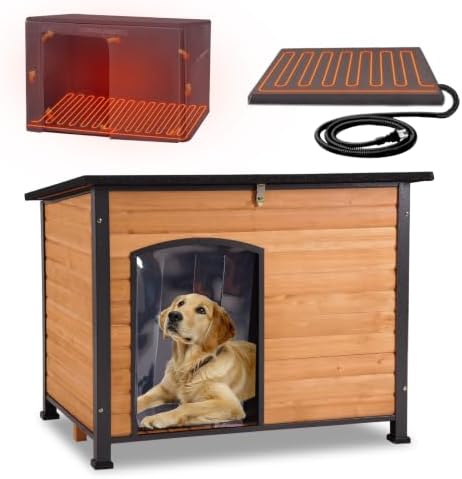
- ULTIMATE WINTER DOG SHELTER: Featuring solid wood panels, a 0.78-inch thick insulated liner, and a UL-certified heating …
- UL-TESTED SAFE HEATING PAD: UL-certified heating pad’s built-in thermostat auto-regulates heat for a consistent, comfort…
- ADVANCED INSULATION LINER: The 0.78″ thick insulated liner of the insulated dog house locks in warmth to reduce heat los…
Comparing Options at a Glance
| Product | Best Use Case | Visibility Level | Escape Resistance | Price Tier |
|---|---|---|---|---|
| Pawtenda Whelping Box (Pen-Style) | Panic-level separation anxiety, supervised confinement | High (open-top) | Low structural barrier, but no entrapment risk | $$ |
| Pecute Expandable Pet Carrier | Short-duration vet/travel transport for arthritic dogs | Moderate (mesh panels) | Moderate, not designed for prolonged panic escape | $$$ |
| GUTINNEEN Heated Outdoor House | Temperature comfort during supervised outdoor confinement | Low (enclosed structure) | High for weather, not applicable to panic escape | $$$$ |
| Standard Wire Crate (generic) | Mild confinement stress, arthritic dogs, non-panic cases | High | Moderate, depends on latch and gauge quality | $$ |
| Standard Soft-Sided Crate (generic) | Sensory reduction for CDS, non-escape-risk dogs | Low | Low against sustained panic-clawing | $$ |
Desensitization Protocol for Crate Acclimation
Whichever enclosure you choose, the crate itself should never be the first exposure to confinement. Forced confinement without prior conditioning is one of the most common owner errors I see, and it’s often what creates escape-motivated panic in the first place. Here’s the graduated protocol I recommend, regardless of whether you land on wire vs soft-sided crates for your specific dog.
- Step 1 – Neutral association: Leave the crate door open and place high-value treats or meals inside for several days. No confinement, no closing the door. The goal is pairing the space with positive outcomes only.
- Step 2 – Brief supervised closures: Close the door for 10 to 15 seconds while remaining in the room, then release calmly before any distress signs appear. Repeat multiple times daily.
- Step 3 – Extend duration incrementally: Increase closure time in small increments (30 seconds, then a minute, then several minutes) only after the dog shows relaxed body language, not fixed time intervals.
- Step 4 – Introduce brief owner absence: Once duration tolerance is established with you present, step into another room for short intervals while the dog remains calm in the crate.
- Step 5 – Monitor and adjust: Use a camera to observe unsupervised sessions. Any sign of escalating vocalization, panting, or clawing means you’ve progressed too fast. Return to the previous successful step.
If at any point in this protocol your dog shows escalating panic rather than gradual habituation, that’s diagnostic information. It tells you that crating, as a containment strategy, may be contraindicated for this particular dog, and a pen or single dog-proofed room is the more appropriate management tool going forward. This isn’t a failure on your part. It’s the behavioral data telling you to change the antecedent, not push through it.
Owners managing a senior dog’s nighttime or unattended vocalization alongside separation issues often find it useful to review calming aids for sudden excessive barking in older dogs, since vocalization patterns during confinement can offer additional diagnostic clues about panic severity. And if you’re weighing calming chews against a physical anxiety wrap as a complementary tool alongside whichever crate you choose, this comparison of calming chews versus anxiety wraps for senior dog barking walks through the evidence for each.
When Crating Should Be Abandoned Entirely
Don’t count on the “right” crate to work miracles if your dog’s anxiety is severe enough. Some senior dogs, particularly those with a long history of separation-related panic or advancing CDS, do measurably better in an open pen or a single safe room with baby gates than in any enclosed structure, wire or soft-sided. The core principle behind this shift is canine agency: a dog who can move to a window, pace a small circuit, or reposition herself has more behavioral options available than one locked into a single fixed posture inside a box. More behavioral options generally means lower physiological arousal during a stress event.
This is where I’d encourage owners to reconsider what “containment” is actually for. If the goal is safety and house-training management, a pen accomplishes both without the entrapment risks. If the goal is providing a den-like retreat the dog chooses voluntarily, that’s a different objective, and it should be optional, not mandatory. Wire vs soft-sided crates becomes a much less pressing question once you recognize that for some dogs, the correct answer is neither.
Frequently Asked Questions
Is a wire crate or soft-sided crate safer for a senior dog with separation anxiety?
Neither option is universally safer. When comparing wire vs soft-sided crates for a dog with true panic-level separation anxiety, both carry meaningful risk, and a secured pen or single safe room is often the better choice. Wire crates offer better structural containment but can cause nail or lip injuries during panic-clawing. Soft-sided crates reduce visual stimulation but are more prone to tearing, which creates entanglement risk during a panic escape attempt.
How do I know if my senior dog has true separation anxiety versus mild confinement stress?
True separation anxiety involves escalating panic tied specifically to your absence, including escape attempts, elimination despite house-training, excessive drooling, and distress that begins before you leave. Mild confinement stress looks like occasional whining or pacing that resolves as the dog habituates. If escape attempts or self-injury occur, treat it as panic-level distress rather than simple confinement discomfort.
Can cognitive dysfunction (CDS) make crate confinement worse for older dogs?
Yes. Dogs with canine cognitive dysfunction often show reduced sensory processing capacity, which means a visually busy environment, like the open sightlines of a wire crate, can sometimes increase disorientation rather than reduce it. A soft-sided or partially covered crate in a consistent location may work better for these cases, provided the dog has no history of panic-escape attempts.
When should I stop using a crate altogether for my senior dog?
If your dog shows escalating panic, repeated escape attempts, or self-injury during crate confinement despite a proper desensitization protocol, that’s a signal to stop using a crate as your containment strategy. A secured pen or a single dog-proofed room typically reduces panic-related injury risk while still managing safety and house-training needs.