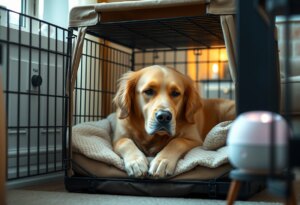
A treat dispensing camera won’t fix separation barking on its own, but used correctly, it becomes one of the most effective antecedent management tools available to owners of anxious or cognitively declining senior dogs. The mechanism matters more than the marketing: timed reinforcement of quiet behavior, delivered remotely, can reshape a dog’s emotional response to being alone. Before you buy anything, though, it helps to understand what’s actually happening in your dog’s brain when the door closes behind you.
The Ethology of Separation Barking: What’s Really Happening
Not all barking-while-alone is the same behavior, and lumping it together is one of the more common mistakes I see in consultations. Frustration-based barking usually spikes in short bursts tied to specific triggers (a mail carrier, a squirrel, a neighbor’s dog) and then resolves once the stimulus passes. True separation-related distress looks different physiologically. It’s often continuous, paired with pacing, drooling, destructive chewing near exits, and in some cases, house soiling that has nothing to do with bladder control. This is a stress response, not defiance, and treating it as a training failure rather than a physiological one tends to backfire.
Bradshaw et al. (2002, Applied Animal Behaviour Science) found that roughly 20 to 40 percent of dogs display measurable separation-related behaviors at some point in their lives, a range wide enough to reflect real methodological differences between studies, but consistent enough to tell us this isn’t a fringe issue. What’s less discussed is who falls disproportionately into that percentage: senior dogs experiencing cognitive decline. As the aging brain loses some of its capacity for emotional regulation, dogs that tolerated alone time just fine at age five can develop new anxiety patterns at age eleven. If your dog’s barking is a recent development rather than a lifelong pattern, cognitive changes deserve consideration alongside classic separation anxiety.
This is also where a anti-anxiety dog camera setup earns its keep. Video documentation lets you distinguish frustration barking from genuine distress instead of guessing based on a few chewed baseboards when you get home.
How a Treat Dispensing Camera Functions as an Antecedent Management Tool
I want to be precise about terminology here, because “distraction” is the wrong word for what a treat dispensing camera actually does, and it leads owners to misuse the device. A distraction interrupts a behavior after it starts. Antecedent management changes the conditions before a behavior occurs, and reinforcement (when timed correctly) changes the probability of that behavior happening again. A treat dispensing camera does both, but only if you use the two-way audio and motion-triggered treat toss deliberately rather than reactively.
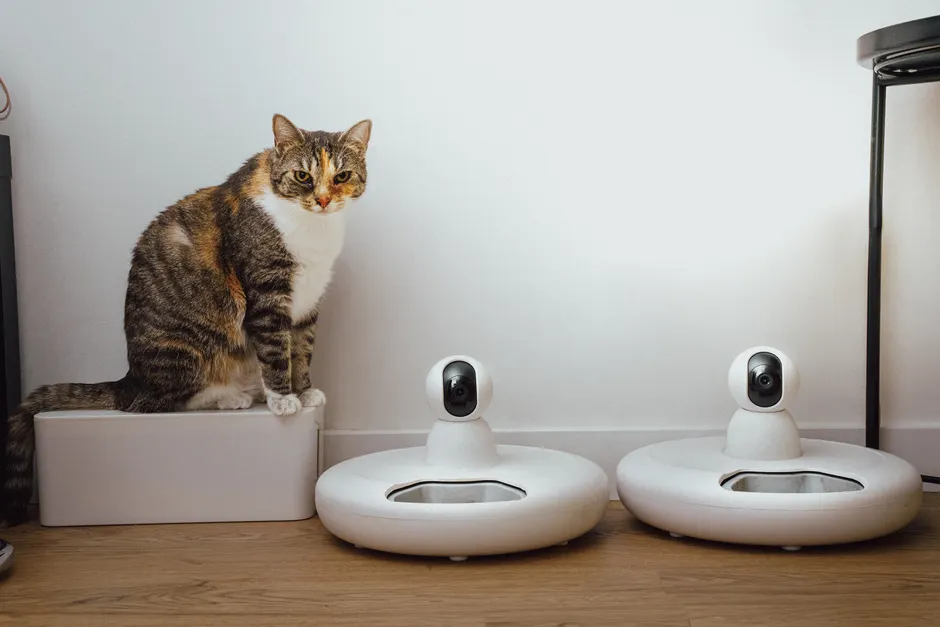
The mechanism is straightforward: a wide-angle lens with a smartphone app connection, a microphone and speaker for two-way audio, and a mechanical treat launcher, usually spring-loaded or auger-driven, that fires on command from the app. The behavioral principle underneath it is operant conditioning, specifically positive reinforcement of an incompatible behavior. Barking and calmly lying down cannot happen simultaneously. If you reinforce the lying-down state with a treat delivered at the right moment, you are increasing the future likelihood of that calm state, not just masking the bark for a few seconds.
Timing is the variable most owners get wrong. A treat tossed the instant a dog starts barking can inadvertently reinforce the bark itself, since dogs associate consequences with whatever behavior immediately preceded them, typically within a one to two second window. The treat needs to land when the dog is quiet, ideally after a few seconds of settled behavior following any vocalization, not as an interruption mid-bark. This is a subtlety that separates effective use of a treat dispensing camera from a very expensive way to teach your dog that barking gets rewarded.
Comparative Breakdown of Top 2026 Treat Dispensing Camera Models
No single treat dispensing camera solves every household’s layout, budget, or dog size, so I’ve broken down the practical variables that actually affect behavioral outcomes: treat-toss accuracy (does it land near the dog or three feet off target), app latency (a laggy feed makes precise reinforcement timing nearly impossible), night vision quality, and ongoing subscription costs. I’ll say this plainly: convenience features don’t replace behavior modification. A camera with flawless treat aim and zero training protocol behind it will not resolve separation-related distress in a senior dog with cognitive changes.
| Feature Focus | Treat-Toss Accuracy | App Latency | Night Vision | Subscription Cost Tier | Price Tier |
|---|---|---|---|---|---|
| Budget Entry Models | Moderate, occasional short-toss misses | 1-2 second delay typical | Basic infrared, grainy at distance | Free tier usually available | $ |
| Mid-Tier Standard Models | Good, consistent within a few feet | Under 1 second on strong Wi-Fi | Clear infrared with wider field | Low-cost tier for cloud storage | $$ |
| Premium Multi-Sensor Models | High accuracy, adjustable trajectory | Near real-time | Color low-light plus infrared | Mid-cost tier, multi-camera discounts | $$$ |
| High-End AI Tracking Models | Very high, auto-aims toward dog’s position | Near real-time with predictive buffering | Full-color night vision | Higher-cost tier for AI analytics | $$$$ |
For households that also struggle with crate-specific vocalization rather than whole-room barking, it’s worth cross-referencing this data against options built specifically for confined spaces. My colleagues’ research on pet cameras for crate barking control covers sensor placement considerations that a general living-room camera won’t address.
While you’re setting up the camera side of things, a few supporting accessories reduce friction during the actual training sessions. A spill-resistant water station near the camera’s field of view, for instance, lets you monitor hydration without needing to physically check in, which matters for senior dogs on certain medications that increase thirst. The Watruer Anti-Spill Silicone Drink Holder works well for this purpose in multi-dog or senior-dog households where knocked-over bowls are a recurring mess.

- ONE-SIZE-FITS-ALL DRINKS: – This silicone couch arm tray allows you to put everything (Coffee, Wine, Beer, Snacks, Remot…
- Anti-Spill Function(Updated 2th Generation): Prevent knocks, spills and stains; Keep your drink within easy reach; Ideal…
- HANDY, VERSATILE AND MULTI-USE: Watruer cup holder can fit in any size sofa arm with a width of at least 5.49inch(13.94c…
Reinforcement only works if it’s contingent on the behavior you actually want repeated. A treat dispensing camera fired randomly, or fired in response to barking itself, is not training. It’s an expensive slot machine, and dogs are remarkably good at learning slot machine odds.
Practical Protocol: A Graduated Desensitization Schedule
Here is the step-by-step framework I give clients who are integrating a treat dispensing camera into a real behavior modification plan, not just using it as a novelty gadget.

- Days 1-3, Baseline Logging: Leave the camera running during short, planned absences of five to ten minutes. Do not use the treat function yet. Log the latency between departure and first bark, total bark duration, and any pacing or destructive behavior. This gives you an honest starting point instead of a guess.
- Days 4-7, Pairing Phase: Before leaving, use the app to deliver two or three treats while your dog is calm and near the camera. This builds a positive association with the device itself, independent of your absence.
- Days 8-14, Contingent Reinforcement: During absences, watch the live feed. Deliver a treat only after at least five seconds of quiet, settled behavior, ideally after any barking has fully stopped. Never fire the dispenser mid-bark.
- Days 15-21, Graduated Duration: Extend absence length by increments of five to ten minutes only when the previous duration produces two consecutive calm sessions. If barking resurfaces, drop back to the last successful duration rather than pushing forward.
- Ongoing, Weekly Review: Track total daily bark duration on a simple chart. A downward trend over two to three weeks indicates the protocol is working. A flat or rising trend means the anxiety driver is likely medical or cognitive, not purely behavioral, and warrants a veterinary conversation.
This structured approach is also where a broader anti-barking device for senior dog anxiety comparison becomes useful, since some households need to combine the camera with a calming aid or sound-based tool rather than relying on any single device.
Case Profile: A Senior Dog With Mild Cognitive Dysfunction Syndrome
Consider a composite case typical of what shows up in geriatric behavior consultations: an 11-year-old Labrador mix, previously fine with alone time for years, now barking within two minutes of departure, pacing in circles, and occasionally appearing disoriented even in familiar rooms. This pattern is consistent with canine cognitive dysfunction syndrome, which Landsberg et al. (2012, Veterinary Clinics of North America) estimate affects roughly 14 to 35 percent of dogs over age eight, with prevalence climbing sharply in dogs past eleven.
The three-week Happiness Plan for this profile combines three elements working together, not any single fix:
- Week 1, Environmental Enrichment and Baseline: Add a snuffle mat and a food puzzle to the pre-departure routine, positioned in the treat dispensing camera’s field of view. Log baseline bark duration using the camera without treat intervention, exactly as in the general protocol above.
- Week 2, Contingent Reinforcement Plus Cognitive Support: Begin timed treat delivery for calm behavior. Simultaneously, discuss with your veterinarian whether a cognitive support supplement or prescription anti-anxiety medication is appropriate. Don’t count on the camera alone to work miracles when the underlying driver is neurological rather than purely learned.
- Week 3, Consolidation: Extend absence durations gradually while continuing supplement or medication protocols as directed. Reassess bark duration trends and disorientation episodes with your vet at the two-week mark to determine whether the plan needs adjustment.
For owners who want a genuinely interactive presence rather than just a treat dispenser, some premium units now include mobile, camera-equipped companions that patrol a room and respond to a dog’s location. The Unitree R1 Humanoid Robot falls into this experimental high-end category and, while not designed specifically for pet monitoring, illustrates where mobile home robotics and pet camera technology are converging for future senior dog care setups.

- Three models, one lightweight platform R1 Air (20 DOF, monocular camera), R1 (26 DOF, binocular camera, head+waist joint…
- Easy setup – no coding required for basic use Unbox, power on, and start. Manual teaching feature: physically pose the r…
- More DOF = more expressive movement 26‑DOF models (R1 / R1 Edu) add head and waist articulation for smoother dance and r…
On a lighter note, some families find it helpful to keep a simple visual record of their dog’s progress over the weeks, printed photos on the fridge marking calm milestones can be a surprisingly effective motivator for consistency. A compact option like the Dylanto Instant Print Camera works fine for this kind of casual documentation during training weeks, even though it wasn’t built for pet monitoring itself.
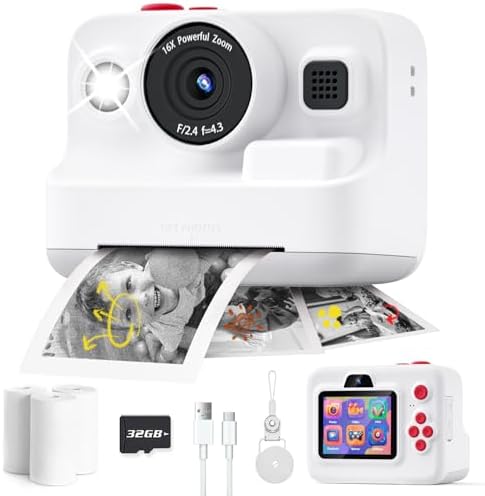
- Creative Instant Camera for Kids: Dylanto children’s digital camera with instant printing function can obtain color phot…
- Multifunctional Kids Digital Camera: Dylanto mini camera has instant printing, 2.4-inch large screen, 1080P video, 16x d…
- Safe & Reliable: Kids instant camera is printed with advanced thermal printing technology, the printing paper does not c…
Choosing the Right Treat Dispensing Camera for Your Household
When narrowing down a treat dispensing camera, weigh the behavioral variables above more heavily than aesthetic features. A senior dog with mobility limitations needs a unit mounted low enough, or with treat trajectory adjustable enough, that they don’t have to lunge or jump to reach the reward. A dog with hearing loss will get little benefit from the two-way audio feature and may respond better to visual cues or vibration-paired treat delivery instead. According to the American Veterinary Medical Association, senior pets benefit from consistent routines and environmental predictability, which reinforces why the camera protocol above emphasizes gradual, logged progress over quick fixes.
Budget also matters practically. A budget-friendly entry model with decent latency is often sufficient for frustration barking in an otherwise healthy senior dog. A dog with diagnosed cognitive dysfunction syndrome, however, may justify the premium investment in an AI-tracking model with real-time responsiveness, since the margin for reinforcement timing errors is smaller in dogs with reduced learning flexibility.
Frequently Asked Questions
Will a treat dispensing camera stop my senior dog’s barking immediately?
No, and expecting immediate results sets owners up for frustration. A treat dispensing camera works through contingent reinforcement over a graduated schedule, typically two to three weeks of consistent, correctly timed use before measurable improvement in bark duration appears. Dogs with cognitive dysfunction syndrome may need a longer timeline paired with veterinary support.
Can using a treat dispensing camera incorrectly make barking worse?
Yes. If treats are delivered while a dog is actively barking, the timing can reinforce the vocalization itself rather than calm behavior. Treats should only be dispensed after several seconds of quiet, settled behavior to avoid inadvertently training the exact response you’re trying to reduce.
How do I know if my senior dog’s barking is anxiety versus cognitive decline?
Longstanding separation anxiety usually has a consistent pattern present for years. New-onset barking after age ten, especially paired with disorientation, altered sleep cycles, or house soiling, points more toward cognitive dysfunction syndrome. Video logs from a treat dispensing camera help document these patterns for your veterinarian.
Do I still need a veterinarian if I’m using a treat dispensing camera?
Yes. A treat dispensing camera is a management and training tool, not a medical intervention. Senior dogs showing new anxiety or disorientation should be evaluated for cognitive dysfunction syndrome, pain-related distress, or sensory decline, any of which can mimic or worsen separation-related barking.