
Bark control devices promise instant quiet, but for a senior dog, that “instant” fix can come at a real cost. Before you order the first gadget with five thousand five-star reviews, you need to know what’s actually happening inside your old dog’s body and brain when she barks at 2am for no reason you can see. I’ve spent enough nights sitting on the floor of Woody’s Place with a trembling senior Shepherd to tell you: not all barking is the same, and not all bark control devices are built with an aging dog’s nervous system in mind.
This isn’t a marketing roundup. This is what I’ve watched happen, in real time, on real dogs, with real fear or real relief in their eyes.
Why Senior Dogs Bark Differently Than Younger Dogs
A young dog barks because the mail carrier is a personal enemy. An old dog barks for reasons that are quieter, sadder, and honestly, a lot more complicated.
Hearing loss is huge here. When a dog can’t hear well anymore, she often can’t hear herself well either, so barking gets louder and more frequent without her realizing it. Add in arthritis pain that flares at night, disrupted sleep cycles, and disorientation, and you’ve got a dog who is barking because she is uncomfortable, confused, or scared. Not because she’s “being bad.”
Then there’s canine cognitive dysfunction (CCD), the dog version of dementia. This one hits me hard because I’ve lived it with dogs I love. A 2013 study published in Veterinary Record found that up to 32% of dogs over age 11 show signs of CCD, and increased vocalization, especially at night, is one of the most common symptoms. That 3am barking spell? It might not be a behavior problem at all. It might be your dog waking up confused about where she is, or who you are for a few terrifying seconds.
Before you reach for any bark control devices, ask yourself: is my dog trying to tell me something is wrong, or is this a habit that needs gentle redirection? Those are two very different problems with two very different solutions.
If you’re weighing your options, this breakdown on what to look for in an anti-bark device for senior dogs is a good place to slow down and think it through before buying anything.

The Truth About Ultrasonic Bark-Stopping Devices
Ultrasonic anti-bark device tools work by emitting a high-frequency sound, inaudible to us, that startles a dog mid-bark. The theory is simple: annoying sound interrupts behavior, behavior stops, everybody’s happy. In practice, it’s not that clean, especially for a geriatric dog.
The ASPCA has cautioned that startle-based training tools can actually increase anxiety in dogs who are already fearful, noise-sensitive, or physically fragile. And senior dogs are almost always some combination of all three. A young, confident dog might shake off a startling sound in seconds. An arthritic 14-year-old with early cognitive decline might spiral into a panic response that lasts the rest of the night. I want to be honest with you here, because that’s the only way I know how to talk about this stuff: a device that works on paper isn’t automatically safe for the dog sleeping at your feet. If you’re going to try an ultrasonic bark stopper, you need to watch your dog’s body language closely, not just the barking.
One option we’ve handled carefully at the sanctuary is the Anti Barking Device for Dogs, Automatic Bark Box Ultrasonic Dog Deterrent. It’s marketed as a hands-off training tool, and for some younger, more resilient dogs it can help interrupt a barking habit. But I would never place this near a senior with hearing sensitivity issues or diagnosed anxiety without a lot of careful, gradual introduction first.
If you want a wider comparison of what’s out there before you commit to anything, this list of 5 best anti-bark devices vets actually recommend is worth a read.
What We Actually Tested on Our Senior Pack at the Sanctuary
I’m not going to pretend we ran a clinical trial here. We ran a real one, with real old dogs who can’t advocate for themselves in words, only in tremors, tucked tails, or that soft sigh of relief when something finally works.
We tested a few different bark control devices over several weeks, always one at a time, always with a lot of observation in between. Here’s the honest rundown:
- Ultrasonic device: Mixed results. One of our calmer seniors barely noticed it. Another, a Shepherd mix with some hearing loss already, seemed confused and unsettled rather than corrected.
- Shock collar with remote: We approached this one with real hesitation, and I’ll get into why below.
- White noise and consistent routine: Quietly, this had the biggest impact of anything we tried.
On the topic of e-collars, there’s a lot of noise online (pun intended) about whether they’re humane. We tested the 3/4 Mile Dog Shock Collar with Remote for Large Medium dogs briefly, on the lowest possible setting, with one of our more physically robust residents. Even at the gentlest level, I didn’t love watching for the flinch. For a senior dog with any joint pain, thinning skin, or cognitive fog, my honest opinion is this tool carries more risk than benefit. If you’re going to use one of these bark control devices at all, it belongs with a trainer’s guidance, not a solo trial-and-error approach with a fragile old dog.
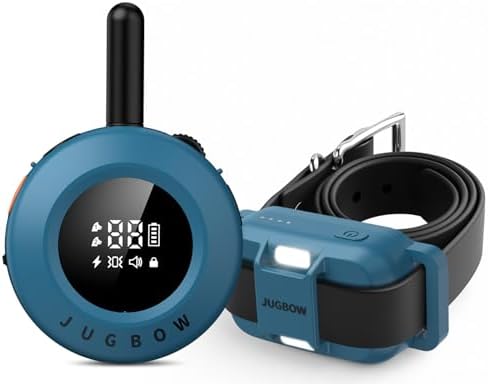
- 【3 Humanized, Effective, Safe Training Modes】Are you still worried about hurting your dog using a training collar? Our n…
- 【3/4 Mile Range & 2 Channel】The dog shock collar covers up to 3/4 Mile providing a stronger and more stable signal, ensu…
- 【Reliable and IPX8 Waterproof】The electric dog collar can be used in any weather and any condition thanks to the IPX8 wa…
Here’s a straightforward comparison table of what we tested, laid out honestly:

| Device Type | Best Suited For | Senior Dog Risk Level | Price Tier | Our Take |
|---|---|---|---|---|
| Ultrasonic bark deterrent | Younger, non-anxious dogs | Moderate (startle response) | $$ | Hit or miss on seniors, watch closely |
| Shock collar with remote | Trainer-guided, robust dogs | High for fragile seniors | $$$ | Use only under professional guidance |
| White noise machine | Nearly all senior dogs | Very low | $ | Quiet, consistent, genuinely calming |
| Adaptil pheromone diffuser | Anxious or newly declining dogs | Very low | $$ | Slow-acting but gentle and reliable |
Gentler Alternatives Worth Trying First
Before any dog barking deterrent gadget enters the room, I want you to try the quiet stuff first. It’s less flashy, sure. But quiet, patient tools are often what actually reach an old dog’s nervous system. A white noise machine running through the night can mask the outdoor sounds that trigger startled barking in dogs with declining hearing. It’s a small thing, but it changes the whole texture of the room.
Adaptil, a synthetic dog-appeasing pheromone diffuser, has helped several of our sanctuary dogs settle without any startle or correction involved at all. It works slowly, over days and weeks, not instantly. But slow and steady is often exactly what an aging nervous system needs.
Enrichment matters too, more than people expect. A short sniff walk before bed, a snuffle mat, some gentle massage on stiff hips. These things regulate a dog’s whole system, not just their mouth. Bark control devices treat the symptom. Enrichment and connection treat the dog.
And look, I know this is a strange thing to mention in an article about barking, but if your senior dog’s nighttime restlessness is tied to outdoor pest activity (ants getting into food bowls, bugs disturbing a dog door area), sometimes the fix is as unrelated to “training” as pest control. We’ve used TERRO Ready to Use Indoor and Outdoor Carpenter Ant Bait around our porch areas after noticing a few dogs fixating and barking at insect activity near their beds. It sounds small, but removing the actual trigger solved what a device never could.

- Kills Wood-Infesting Insects – Effectively kills carpenter ants, termites, and carpenter bees
- Fast Acting & Long Lasting – This convenient aerosol spray kills on contact and provides long-lasting residual control, …
- Don’t Miss Your Target – The two-way spray nozzle allows for broad application or precision treatment in cracks and crev…
When Barking Is a Medical Red Flag, Not a Behavior Problem
Here’s where I get direct with you, because somebody has to be. If your senior dog’s barking is new, sudden, or happens mostly at night, please call your vet before you call anyone selling a gadget. Sudden vocal changes can signal pain, a UTI, vision loss, thyroid issues, or the early stages of CCD. A device might quiet the sound. It will never fix the source. And silencing a dog who is crying out from pain or confusion, without addressing why, isn’t compassionate care. It’s just making the symptom easier for us to live with. This is a sacred trust we take on when we bring an aging dog into our home. Their bark, however inconvenient at 3am, is still a form of communication. Our job is to listen closely enough to know when it’s habit, and when it’s a cry for help.
If you do decide a training tool is appropriate after ruling out medical causes, comparing your options matters. This guide on ultrasonic bark deterrent vs bark collar safety breaks down which category tends to be gentler for older, more sensitive dogs.
Final Thoughts From the Sanctuary Floor
I’ve sat with enough old dogs, in enough dark rooms, to know that barking is rarely the real problem. It’s the signal. Bark control devices can play a role, used carefully, used sparingly, used with real observation of how your specific dog responds. But they are never the first tool I reach for with a senior. Patience is. A vet visit is. A soft voice and a hand on a graying head, that’s often the loudest quiet you’ll ever hear from a dog who just needed to be understood.
Are bark control devices safe for senior dogs?
Some are, but caution is essential. Startle-based bark control devices, like ultrasonic tools or shock collars, can increase anxiety in senior dogs who already deal with hearing loss, joint pain, or cognitive decline. Gentler options like white noise machines and pheromone diffusers are typically safer starting points.
Why is my old dog suddenly barking more at night?
Sudden nighttime barking in senior dogs is often linked to canine cognitive dysfunction, hearing loss, arthritis pain, or disrupted sleep cycles. A veterinary exam should always come before trying any anti-bark device, since the barking may be signaling a medical issue rather than a training problem.
Do ultrasonic bark stopper devices actually work?
Results vary widely by dog. An ultrasonic bark stopper can interrupt barking in some younger, confident dogs, but many senior dogs, especially those with hearing sensitivity or anxiety, respond with confusion or distress rather than calm.
What’s a gentler alternative to shock collars for older dogs?
White noise machines, Adaptil pheromone diffusers, and consistent enrichment routines are gentler dog barking deterrent options for seniors. They work more slowly than shock-based bark control devices but carry far less risk of increasing fear or physical discomfort.
Tell your pup I said Hi! — Dawn