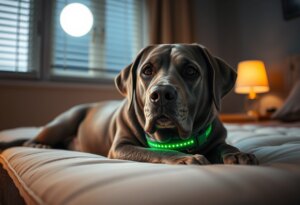
Melatonin vs CBD is the wrong first question if your senior dog is barking at 2 a.m. The right first question is why. Nighttime vocalization in an aging dog is not one behavior with one fix. It is a symptom cluster, and three very different underlying drivers, cognitive decline, anxiety-based arousal, and undiagnosed pain, can all produce the exact same sound from the next room. If you skip the diagnostic step and jump straight to a supplement or a wrap, you are essentially running a clinical trial on your own dog with no baseline and no control group. Let’s fix that.
Nighttime Barking Is a Symptom, Not a Diagnosis
When a client tells me their twelve-year-old Lab has “started barking for no reason” at night, I always ask them to describe the barking itself before we talk about interventions. Is it rhythmic and repetitive, almost stereotyped, occurring at the same time every night regardless of what’s happening in the house? That pattern often points toward Canine Cognitive Dysfunction (CCD), the canine analog to Alzheimer’s disease, where disorientation and sundowning-type confusion replace normal sleep architecture. Is it triggered by specific sounds, a passing car, a neighbor’s door, a shift in the HVAC system? That’s more consistent with anxiety-based arousal, where the dog’s threshold for environmental noise has dropped as sensory processing changes with age. Or is the barking accompanied by restlessness, difficulty settling into a comfortable position, or vocalizing when shifting weight? That’s a pain signature, and it needs a veterinary exam before anything else.
The reason this differentiation matters clinically is simple: melatonin, CBD, and compression wraps do not act on the same physiological pathway. Treating a pain-driven bark with a calming supplement is like treating a broken bone with a nightlight. It might make you feel like you did something, but it won’t address the underlying mechanism.
Melatonin vs CBD: Why Melatonin Targets the Clock, Not the Anxiety
Melatonin is a chronobiotic. Its job in the body is to regulate the circadian rhythm, the internal clock that tells an animal when to be alert and when to wind down. In healthy dogs, melatonin release rises with darkness and falls with light exposure, cueing normal sleep-wake cycling. In dogs with CCD, this rhythm frequently degrades. A 2022 study published in Frontiers in Veterinary Science found that sleep-wake cycle disturbances were present in more than 60 percent of dogs with confirmed cognitive dysfunction, making disrupted circadian signaling one of the most consistent findings in the geriatric cognitive decline literature.
This is the piece owners tend to misunderstand when they weigh melatonin vs CBD as if they’re interchangeable calming agents. Melatonin’s strength is specific: it works best when the presenting problem is genuine rhythm disruption, a dog who is awake and vocalizing during objective nighttime hours because their internal clock has drifted, not because something in the environment is actively frightening them. If your dog’s nighttime barking is really daytime-level anxiety that happens to occur after dark, melatonin is treating the wrong variable. This is also where the melatonin vs CBD comparison gets clinically interesting, because CBD’s proposed mechanism runs through a completely different system.

CBD: The Data Is Genuinely Contradictory
I want to be direct here because I see a lot of marketing copy that oversimplifies this. The most frequently cited study, the 2020 Cornell University CBD trial, found a measurable reduction in owner-reported pain and stress-related behaviors in dogs with osteoarthritis when given CBD oil. That’s a real finding, and it’s meaningful, particularly for senior dogs whose nighttime restlessness has a pain component layered underneath the vocalization.
But here’s where I ask owners to slow down: that trial measured pain-associated behavior, not generalized anxiety or pure cognitive-driven barking. When you look across the broader CBD for dogs literature, results for anxiety-specific outcomes are inconsistent, and part of the problem is structural. There is no FDA oversight of veterinary CBD products, which means dosing, concentration, and even the presence of contaminants vary widely between brands. Two bottles labeled identically can deliver meaningfully different amounts of active cannabinoid to your dog. If you’re testing CBD for dogs as an intervention, product consistency is not a minor detail, it’s the variable that determines whether your trial data means anything at all.
My clinical read: CBD is a reasonable option to trial when pain is confirmed or strongly suspected as a contributor to nighttime distress vocalization. It is a weaker bet, based on current evidence, as a standalone treatment for pure anxiety-driven barking in a dog with no orthopedic or pain findings.
Thundershirts and Compression Wraps: Deep Pressure Therapy, Not a Miracle Cure
Compression garments work through a mechanism called deep pressure therapy. The theory, supported by proprioceptive research in both human and veterinary contexts, is that firm, even pressure across the torso provides sustained sensory input that can dampen sympathetic nervous system arousal, the fight-or-flight cascade responsible for the physiological side of anxiety. In plain terms: consistent pressure may help some dogs’ nervous systems downshift out of alert mode.
Don’t count on this working the same way for every dog, though. A 2014 study in the Journal of Veterinary Behavior measured cortisol markers in anxious dogs wearing compression wraps and found reductions in only a subset of the study population. Response was highly individual, some dogs showed clear physiological calming, others showed no measurable change at all. This lines up with what I see in practice: compression is worth trialing, but it is not a guaranteed fix, and owners who expect it to work like a sedative are often disappointed.

For senior dogs specifically, comfort and fit matter more than they do in younger, more flexible dogs. A wrap that binds around arthritic shoulders or restricts a dog who needs to reposition frequently at night can create a new source of discomfort rather than relieving one. The LovinPet Dog Recovery Bodysuit is worth a look here, since its fuller-body design distributes pressure more evenly than a chest-only wrap, which can be gentler on dogs with joint sensitivity while still delivering the compression input the deep pressure mechanism relies on.

- PREMIUM & BREATHABLE FABRIC: This dog recovery suit is made with soft, breathable cotton blend fabric to provide a comfo…
- CAN BE USED WITH A COLLAR OR AS AN E-COLLAR ALTERNATIVE: If your dog needs to wear a recovery collar, this dog recovery …
- VERSATILE STYLING DESIGN: Available in various styles, this dog recovery suit helps allow natural movement while keeping…
If the trigger profile points more toward sound sensitivity than generalized arousal, and your audit (below) identifies specific noise events as the antecedent, a sound-masking tool can reduce the frequency of triggering events before you even get to a calming intervention. A Sunrise Alarm Clock with White Noise Sound Machine can flatten out the unpredictable environmental noises, cars, footsteps, HVAC cycling, that often function as the actual antecedent stimulus for barking, rather than the anxiety itself being the root cause.
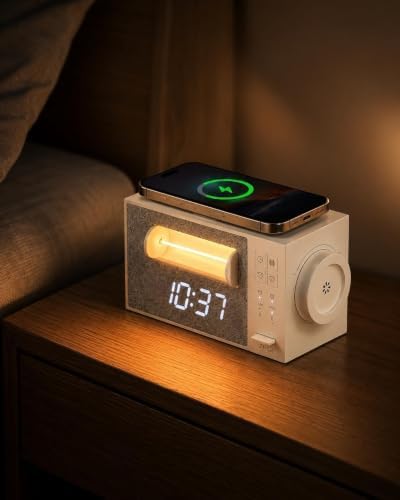
- Better Sleep, Better Mornings—All in One Bedside Hub:Drift off more peacefully, stay asleep through common nighttime dis…
- 20 Relaxing Sounds That Help Mask Everyday Noise:Choose from 20 high-fidelity sleep sounds, including White, Brown and P…
- Wake Up Naturally—Even if You’re a Heavy Sleeper:Start your day with a gentle sunrise simulation that gradually brighten…
Behavior modification for senior dogs is rarely about finding the one product that fixes everything. It’s about identifying which single variable is actually driving the behavior, then giving that dog’s nervous system the specific input it’s missing, whether that’s circadian regulation, pain relief, or sensory dampening.
Melatonin vs CBD vs Compression: Side-by-Side Comparison
Here’s how these three interventions stack up when you separate mechanism, best-fit symptom profile, and cost tier. This is not a ranking of “best to worst,” since the correct choice depends entirely on your dog’s specific presentation.
| Intervention | Primary Mechanism | Best-Fit Symptom Profile | Evidence Strength | Price Tier |
|---|---|---|---|---|
| Melatonin | Chronobiotic, circadian rhythm regulation | CCD-related sundowning, disrupted sleep-wake cycle | Moderate-strong for rhythm disruption specifically | $ |
| CBD | Cannabinoid receptor interaction, possible pain and stress modulation | Pain-associated restlessness, arthritis-linked distress | Mixed; strong for pain, inconsistent for pure anxiety | $$$ |
| Compression Wrap | Deep pressure therapy, proprioceptive dampening of sympathetic arousal | Sound-triggered anxiety, generalized nighttime arousal | Individual-dependent; effective in a subset of dogs | $$ |
| Sound Masking | Antecedent removal, reduces trigger stimulus frequency | Environmental-noise-triggered barking | Supportive, low-risk environmental management | $$ |
A Mini Happiness Plan: Matching Symptoms to Intervention
I ask every client to build what I call a Happiness Plan before starting any intervention, a simple case profile that maps observed symptoms to a hypothesis about root cause, then a single testable intervention. Here’s a condensed version for nighttime barking:
- Profile A, Rhythm Disruption: Barking at inconsistent times, disorientation, possible pacing or circling, dog seems “confused” rather than “scared.” Hypothesis: CCD-related circadian disruption. First trial: melatonin, administered on a consistent schedule under veterinary guidance.
- Profile B, Pain-Associated Vocalization: Barking correlates with repositioning, difficulty lying down, stiffness on rising. Hypothesis: undiagnosed or undertreated pain. First step: veterinary exam and pain workup before any calming product, then consider CBD for dogs as an adjunct once pain is confirmed.
- Profile C, Sound-Triggered Arousal: Barking correlates with identifiable external noises, startles easily, recovers slowly. Hypothesis: lowered auditory threshold with age. First trial: environmental sound masking combined with a dog anxiety wrap for proprioceptive support.
For dogs whose hearing sensitivity itself seems to be the driver, rather than the noise triggering a fear response, physically muffling incoming sound can be a gentler first step than a systemic intervention. Quiet Ears for Dogs ear wraps reduce the intensity of ambient noise reaching the ear canal, which can lower overall arousal in noise-reactive senior dogs without introducing a supplement variable into your trial.

- Quiet Ears for Dogs:This dog ear cover is made of high-quality fabric, with a smooth and soft texture that is gentle on …
- No Shake Dog Ear Wraps:The elastic design of the Velcro headband effectively reduces the time for removal, ensuring that…
- Comfortable Wearing Experience: The design features adjustable soft patches, breathable cotton-polyester blend fabric, a…
The 3-Step Antecedent Management Protocol
Regardless of which profile fits your dog, run this protocol before and during any trial. Guessing is expensive, both financially and in terms of your dog’s sleep quality, and skipping steps is the single biggest reason owners tell me “nothing works.”
- Environmental audit: For one week, log every barking episode with a timestamp, duration, and any identifiable trigger (noise, light change, temperature shift). Patterns will emerge that tell you more than any product review.
- Pain rule-out via veterinary exam: Before attributing barking to anxiety or cognitive decline, get a full orthopedic and neurological exam. Senior dogs mask pain well, and undiagnosed arthritis or dental disease is a common hidden driver of nighttime distress.
- Staged single-variable trial: Introduce exactly one intervention at a time, for a minimum of two weeks, while continuing your behavior log. Do not layer melatonin, CBD, and a compression wrap simultaneously. If barking improves, you’ll have no idea which variable caused the change, and if it worsens, you won’t know what to remove.
This staged approach is also how I’d recommend evaluating options discussed in our comparison of calming vests versus anxiety chews for senior dog barking, since the same single-variable logic applies whether you’re testing a wrap, a chew, or a supplement. For a broader menu of options beyond these three, our roundup of calming aids for senior dogs barking at night walks through additional tools worth trialing using this same behavior-log method.
For owners weighing similar mechanism questions in other contexts, the American Kennel Club maintains a useful overview of Canine Cognitive Dysfunction that’s worth reviewing alongside your vet’s assessment, particularly if sundowning-type symptoms are part of your dog’s presentation.
Frequently Asked Questions
Can I give my senior dog melatonin and CBD at the same time?
It’s generally not advisable to combine them, at least not initially. Running melatonin vs CBD as simultaneous trials makes it impossible to know which one is actually responsible for any change in barking. Introduce one at a time, track results in a behavior log for at least two weeks, and always clear combinations with your veterinarian since both compounds can interact with other medications your senior dog may be taking.
How do I know if my dog’s nighttime barking is pain or anxiety?
Look at what precedes the bark. Pain-related vocalization typically correlates with movement, repositioning, or getting up and down. Anxiety-based barking more often correlates with external stimuli like sounds or light changes. A veterinary exam is the only reliable way to rule pain in or out, so that step should always come before choosing between melatonin vs CBD or a compression wrap.
Is a thundershirt safe for a senior dog with arthritis?
Generally yes, but fit matters more in arthritic dogs. Choose a dog anxiety wrap that distributes pressure evenly across the torso rather than concentrating it at the chest or shoulders, and monitor your dog for signs of restricted movement or discomfort during the first few uses. If your dog resists putting it on or seems stiffer while wearing it, discontinue and consult your vet.
How long should I trial one intervention before switching to another?
A minimum of two weeks, with consistent daily logging. Melatonin’s effect on circadian regulation and CBD’s effect on pain-associated behavior both take time to establish a measurable pattern, and a single good or bad night is not enough data to draw conclusions. If you’re still undecided after two weeks in the melatonin vs CBD comparison, extend the trial rather than switching prematurely.