
A calming vest works faster in the first ten minutes after you walk out the door, but anxiety chews for dogs tend to win out over the long haul for dogs whose nervous systems just don’t settle. I’ve watched both play out in real time, on real dogs, in my own living room. There’s no single right answer here. But there is a right answer for your dog, and I want to help you find it.
If you’ve got an old dog who starts howling the second your hand touches the doorknob, you are not alone, and you are not doing anything wrong. Let’s talk about what’s actually happening in that gray-muzzled head of theirs, and what genuinely helps.
Why Senior Dogs Start Barking When You Leave (Even If They Never Did Before)
Here’s something I see over and over at the sanctuary: a dog who was rock solid alone for twelve years suddenly falls apart when the door clicks shut. Owners feel confused. Sometimes they feel a little betrayed, like their dog is being dramatic on purpose. He’s not. His brain is aging, and that changes everything about how he processes being alone.
Senior dog barking when left alone usually traces back to a few overlapping causes:
- Vision and hearing loss, which makes an empty house feel genuinely threatening rather than just quiet
- Canine cognitive dysfunction (the doggy version of dementia), which erodes a dog’s sense of time and place
- Joint pain that makes them anxious about being unable to get up and find you if something feels wrong
- A lifetime bond with you that’s grown even more central as their world has physically and sensorially shrunk
The ASPCA notes that separation anxiety shows up in an estimated 20 to 40 percent of dogs seen in behavior practices. That’s not a small number. And in my experience, senior dogs are wildly overrepresented in that group, because aging bodies and aging minds both chip away at a dog’s confidence to be alone.
This is different from a young dog with garden-variety separation anxiety. A senior dog’s distress is often layered: physical discomfort, sensory confusion, and cognitive fog all tangled together. That’s why a single fix rarely works, and why comparing a calming vest against anxiety chews for dogs matters so much for this specific population.
Honestly, who thinks an old dog barking at the door is just “being difficult”? That dog is scared. Full stop. Our job is to figure out why, not to punish the noise.
How Calming Vests Actually Work (And Why Pressure Matters)
Pressure wraps, the kind you see marketed as ThunderShirts or similar compression garments, work on a pretty simple principle: gentle, even swaddling pressure across the torso. Veterinary behaviorists have drawn comparisons to swaddling infants, and I think that’s a fair comparison. There’s something about consistent, snug pressure that seems to quiet the nervous system down, whether you’re eight weeks old or eight years old.
For a dog experiencing dog separation anxiety, a calming vest can take the edge off within minutes. No waiting for digestion, no metabolism involved. You put it on, and the pressure is just there, doing its job immediately.

The catch for senior dogs: a poorly fitted vest can be a real problem for a dog with arthritis, spinal changes, or skin that’s grown thinner and more sensitive with age. If a wrap binds under the front legs or rubs at the shoulders, you’ve traded anxiety for physical discomfort, which honestly isn’t much of a win. I always tell folks at the sanctuary to check a wrapped dog’s skin daily for irritation, especially in dogs with reduced mobility who can’t easily reposition themselves.
Some situations call for extra coverage beyond just anxiety, especially dogs recovering from a procedure or managing a skin condition alongside their nerves. A KOESON Soft Medium Dog Cone Collar can be useful for senior dogs who lick or chew at themselves when anxious, which is more common than people realize. Anxious licking and anxious barking often come from the same underlying unease.

- Adjustable Dog Neck Cone: Our soft dog cone collar with adjustable drawstring collar allows for a custom, snug fit that …
- Reflective Strips for Added Night Safety: Built-in reflective strips of this dog surgery cone enhance your pet’s visibil…
- Balanced Visibility & Comfort Design: Features a clear top panel over a mesh base for visibility and breathability. The …
How Anxiety Chews for Dogs Work From the Inside Out
While a calming vest works on the body from the outside in, anxiety chews for dogs work from the inside out, adjusting brain chemistry rather than applying physical pressure. The most common calming ingredients include:
- L-theanine, an amino acid found in tea leaves that supports calm alertness without sedation
- Melatonin, which helps regulate sleep-wake cycles and can smooth out the restlessness that often comes with canine cognitive dysfunction
- Hemp or CBD isolates, used for their potential calming effects on the nervous system
- Tryptophan and chamomile, gentler botanical options often blended into lower-dose formulas
A 2020 study published in Frontiers in Veterinary Science found that L-theanine supplementation reduced anxious behaviors in dogs, which gives us actual science to point to rather than just marketing claims. That study matters to me. I don’t want to hand a dog something just because the bag has a calm-looking Labrador on it.
The tradeoff with chews is timing. Most take 30 to 60 minutes to build up in the system, so they need to be given well before you leave, not as you’re grabbing your keys. For dogs juggling multiple medications for arthritis, heart conditions, or cognitive decline, this is also the category where you absolutely need your vet’s input. Melatonin and CBD can interact with other drugs, and a senior dog’s liver and kidneys aren’t processing things the way they did at age three.
If you’re weighing calming supplements more broadly for an anxious senior dog, our guide to the 7 best calming aids for senior dogs with anxiety breaks down specific formulas and dosing considerations worth discussing with your vet.
Calming Vest vs Anxiety Chews: A Side-by-Side Look for Senior Dogs
Here’s how these two approaches stack up when your dog is old, possibly arthritic, and maybe a little foggy in the head.
| Feature | Calming Vest | Anxiety Chews for Dogs |
|---|---|---|
| Onset Time | Minutes (pressure applied instantly) | 30 to 60 minutes before full effect |
| Ease of Use for Arthritic Dogs | Requires lifting legs, may need help fastening | Just a treat, easy for stiff or painful dogs |
| Ease of Use for Cognitively Declining Dogs | No memory required, purely physical | Some dogs forget it’s a “calm down” cue |
| Medication Interaction Risk | None (fully non-chemical) | Moderate, especially melatonin and CBD |
| Best For | Sudden departures, thunderstorm-style panic | Chronic, ongoing daily separation distress |
| Price Tier | $$ | $$ to $$$ |
Neither option is inherently “better.” A calming vest shines for dogs with sudden-onset panic, the kind triggered by a slammed door or an unexpected thunderstorm. Anxiety chews for dogs tend to serve dogs better whose anxiety builds steadily over the whole time you’re gone, since the calming compounds stay active in their system for hours rather than fading after a few minutes.
Building a Calm Environment Around Whatever You Choose
Neither a vest nor a chew works in isolation. What surrounds your dog matters just as much as what’s touching their skin or sitting in their stomach. A dedicated, cozy resting space near the door or in a quiet room can make a real difference for a dog who’s anxious about being left. I’ve seen dogs settle noticeably faster when they have a den-like spot that smells like them and feels enclosed and safe.

A NOYAL Calming Donut Dog Bed with Hooded Cave gives an anxious senior dog that enclosed, burrow-like feeling that mimics denning behavior, which is deeply calming for a lot of older dogs. Pair that safe spot with a calming vest or a chew given ahead of time, and you’re stacking the odds in your dog’s favor rather than relying on one tool to do all the work.

- 【Blanket Cave Design for Anxious Dogs & Curious Cats】:Is your pet a cozy cave-seeker or a dedicated burrower? This innov…
- 【Optimal Size & Raised Edge for Joint & Neck Support】:Choose the perfect fit! Available in 3 sizes (19.6”, 25.5”, 31.5”)…
- 【Plush & Supportive Fill for Superior Comfort】:Made with premium, high-loft PP cotton filling, this bed offers exception…
Weather matters too, in a way people don’t expect. Dogs who get anxious before you leave for a walk, or who associate certain routines with departure stress, sometimes settle better when the whole pre-departure routine feels predictable and comfortable. A Waterproof Corgi Raincoat with Breathable Chest Coverage can help keep that last walk before you leave calm and dry rather than rushed and stressful, which matters more than people give it credit for. A soggy, uncomfortable dog does not settle easily once you’re gone.
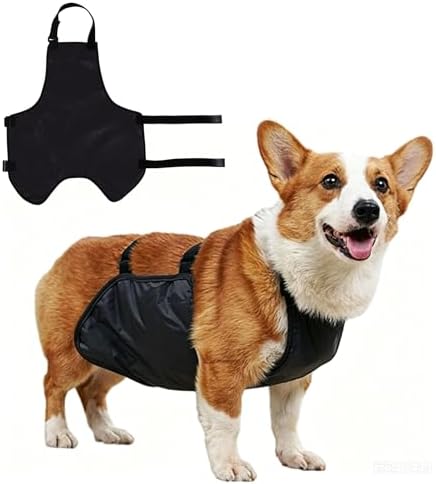
- Waterproof & Breathable Fabric:Crafted from premium waterproof polyester material with good air permeability. It won’t m…
- Targeted Chest & Belly Protection:Specially designed for short-legged dogs like Corgis. It focuses on shielding the ches…
- Convenient for Free Movement & Excretion:The reasonable cut won’t restrict your dog’s daily activities. It features a pr…
The Sanctuary-Tested Combination Approach
Here’s what I’ve actually seen work best, over years of caring for old dogs who came to us anxious, confused, and sometimes downright terrified of being alone: don’t choose one tool. Use both, thoughtfully layered.
My general rhythm looks like this:
- Give the chew about 45 minutes before I plan to leave, so it’s active in her system by the time I walk out
- Slip the calming vest on about 10 minutes before departure, once she’s already a bit softer from the chew
- Settle her into her den-style bed with something that smells like me, an old t-shirt works fine
- Leave without a big emotional goodbye, because our anxiety about leaving feeds straight into theirs
This layered approach isn’t about doing “more.” It’s about meeting a complicated problem with a couple of gentle, complementary tools instead of expecting one product to fix a nervous system shaped by age, pain, and cognitive change all at once.
When Normal Aging Vocalization Crosses Into True Separation Anxiety
Not every bark at the door is dog separation anxiety. Some of it is just an old dog talking, the way older folks sometimes mutter more, or repeat themselves. That’s normal aging noise, and it doesn’t necessarily mean suffering.
True separation anxiety looks different, and it’s worth knowing the signs:
- Destructive behavior at exit points, doors or windows they’re trying to get through
- Accidents in the house despite being fully house trained for years
- Excessive drooling, pacing, or panting that starts before you even leave
- Self-injury from scratching at doors or crates
- Vocalization that continues the entire time you’re gone, not just for a few minutes
If you’re seeing these signs, please call your vet before reaching for any product. This is a sacred trust, this dog’s wellbeing while you’re not there to witness it, and it deserves a real diagnosis, not a guess. A veterinary behaviorist can help rule out pain, distinguish cognitive dysfunction from anxiety, and may recommend prescription options alongside a calming vest or anxiety chews for dogs, not instead of them.
For dogs with genuine cognitive decline layered on top of anxiety, it’s also worth reading about behavior changes more broadly. And if you’re navigating a household with more than one dog, breed-specific temperament guides like our Coltriever dog breed energy, training, and care guide can help you understand how a younger, higher-energy housemate might be adding stress rather than comfort to an anxious senior’s day.
The American Kennel Club offers solid, vet-reviewed guidance on recognizing and managing separation anxiety in dogs, and it’s worth a read if you want the fuller clinical picture beyond what I can offer from years of hands-on sanctuary experience.
Frequently Asked Questions
Can I use a calming vest and anxiety chews at the same time?
Yes, and honestly, this combination is often more effective than either tool alone. A calming vest applies gentle pressure right away, while anxiety chews for dogs take about 30 to 60 minutes to build up in the system. Giving the chew first, then adding the vest closer to departure time, covers both the immediate and the sustained parts of your dog’s anxiety.
How long does it take for a calming vest to work on senior dog barking?
Most dogs show some response within five to ten minutes of a properly fitted calming vest going on. It’s not a cure for senior dog barking, but it often takes the edge off the panic enough that a dog can settle into their bed instead of pacing at the door.
Are anxiety chews safe for senior dogs on other medications?
Not always, and this is not a place to guess. Ingredients like melatonin and CBD can interact with heart medications, arthritis drugs, and some cognitive support supplements. Please run any anxiety chews for dogs past your veterinarian first, especially if your senior dog is already on a medication routine.
Why did my senior dog suddenly develop separation anxiety after years of being fine alone?
Sudden-onset dog separation anxiety in a senior dog is often tied to vision or hearing loss, joint pain, or early cognitive dysfunction rather than a behavioral choice. The world feels less predictable and more frightening to them now, even in a home they’ve lived in for years. A vet visit to rule out pain or cognitive decline is the right first step before trying calming products.
Your old dog isn’t being difficult when the barking starts. He’s scared, and he’s telling you the only way he knows how. Whether you reach for a calming vest, a chew, or both together, what matters most is that you noticed, and you’re doing something about it. That kind of attention is its own form of love.
Tell your pup I said Hi! — Dawn