
The Coltriever dog breed is a Border Collie and Retriever cross that inherits two very different behavioral toolkits, and figuring out whether that combination fits your household starts with understanding what each parent breed was actually built to do. This is not a decision to make based on a cute photo. It is a decision that should be based on a clear-eyed look at motor patterns, energy budgets, and the realistic behavioral demands of a dog engineered for work, not for lounging on the couch.
I get a version of this question often from clients considering a working-line cross: “He’s so smart, won’t that make him easy?” The answer is more complicated than that. Intelligence without an outlet is not a convenience. It is often the root of the exact problems owners call me about six months later.
Behavioral Genetics & Origins: What Two Working Lineages Predict
To understand the Coltriever dog breed, you have to separate the two predatory motor pattern sequences at play. Border Collies are selectively bred to isolate and exaggerate a specific segment of the predatory sequence: eye, stalk, and chase. Herding work rewards a dog that fixates intensely on a stimulus, freezes, creeps forward with tension in the body, and then bursts into controlled chase without the “kill bite” component that would end the sequence in a wild canid. This is why Border Collies stare, why they fixate on moving objects (cars, joggers, spinning fans), and why they can seem almost obsessive about visual tracking.
Retrievers, by contrast, were selected for the grab-and-carry portion of the sequence, with bite inhibition heavily reinforced so the bird in the mouth arrives undamaged. That produces a dog oriented toward object possession, soft mouth behavior, and a strong desire to carry things in the mouth as a self-soothing or attention-seeking behavior.
When you cross these lines, you do not get a diluted, “average” dog. You get a dog carrying both motor sequences, and which one dominates in a given context depends on genetics, environment, and what gets reinforced early in life. A Coltriever may stalk the vacuum cleaner one minute and bring you a shoe to hold the next. Owners who expect one consistent temperament type are often surprised by this duality, and it is worth setting that expectation before the dog comes home, not after.
Quantifying Energy Requirements for the Coltriever Dog Breed
Numbers matter here more than most buyers realize. Border Collies are working dogs bred to perform sustained herding bouts, and breed activity guidance from the UK Kennel Club places their daily exercise need at roughly two hours of combined physical and mental exertion. That is not two hours of leisurely walking. It includes problem-solving tasks, directional work, and sustained aerobic output. AKC breed energy ratings for common retriever breeds land considerably lower, generally in the 30 to 60 minute range for adequate daily activity, assuming the dog also gets some mental engagement.
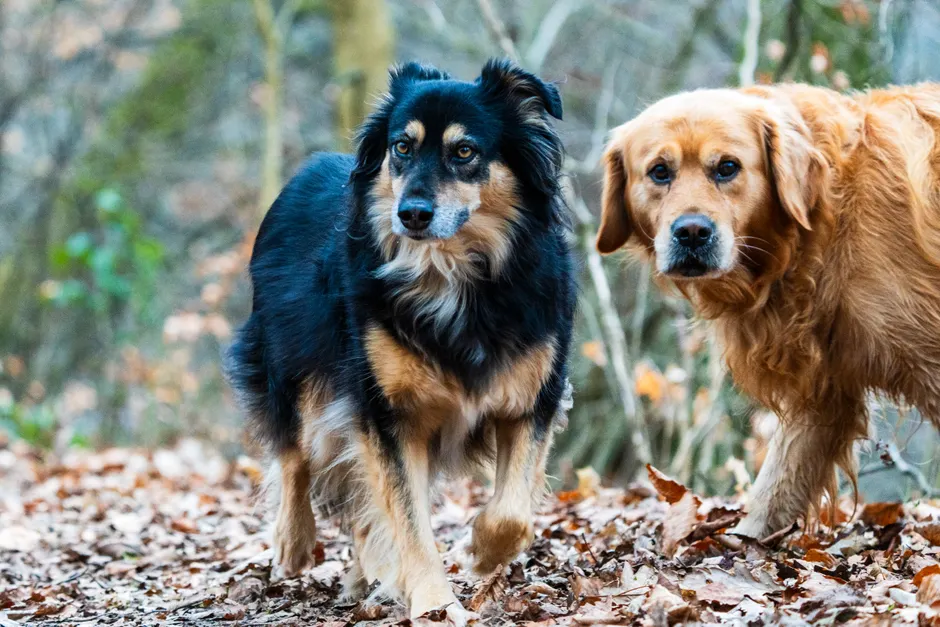
A Coltriever’s realistic exercise budget sits somewhere between those two figures, and in my clinical experience it skews closer to the Border Collie end more often than owners expect, especially in dogs under four years old. A practical starting model:
- Minimum viable exercise: 60 to 75 minutes of physical activity split across two sessions, plus 20 minutes of structured mental work daily.
- Optimal exercise budget: 90 minutes of physical activity (a mix of leash walking, off-leash recall work, and higher-intensity play like fetch or flirt pole) plus 30 to 40 minutes of cognitive tasks such as scent work, puzzle feeders, or trained behavior chains.
- Warning zone: Under 45 minutes of combined activity most days. This is where I start seeing referrals for destructive behavior and compulsive patterns.
If you are already managing a household with an aging dog and considering a Coltriever as a companion, the mismatch in activity levels needs deliberate planning. A senior dog’s nighttime crate for senior dogs setup, for instance, should be positioned somewhere that a young, high-energy Coltriever cannot turn into a nightly wrestling invitation. Separate zones and separate schedules protect both dogs’ welfare.
Trainability & Cognitive Load: Why Smart Doesn’t Mean Easy
Dr. Stanley Coren’s often-cited “Intelligence of Dogs” rankings placed Border Collies first among 138 breeds in working and obedience intelligence, and that data point gets repeated constantly in breed marketing without the necessary context. Working intelligence measures trainability, meaning how quickly a dog learns new commands and how reliably it responds to them. It does not measure emotional regulation, and it does not mean the dog requires less from you. If anything, it means the dog requires more precision from you, because these dogs learn unwanted behaviors just as fast as wanted ones.
This is the mechanism behind most behavior complaints I hear about Coltrievers: destructive chewing, excessive barking, and compulsive spinning or shadow-chasing. These are not signs of a “bad” dog. They are signs of a cognitively demanding breed operating without sufficient structured outlets. A dog with this much working intelligence left to self-generate stimulation will often choose behaviors owners find intolerable, simply because the environment gave it nothing better to reinforce.
Coltriever temperament is frequently misread by owners as stubbornness or hyperactivity, when the underlying issue is almost always insufficient cognitive load paired with insufficient physical output. The behavior is a symptom, not the diagnosis.
A structured enrichment and training protocol should include:
- Daily training sessions (10 to 15 minutes, twice daily): Use positive reinforcement exclusively. Shape new behaviors using shaping and lure-reward methods rather than corrections, which tend to escalate frustration-based behaviors in this cross.
- Impulse control exercises: “Wait” at doorways, “leave it” with food, and duration-based stays build the self-regulation these dogs often lack as adolescents.
- Scent-based enrichment: Nose work taps into a different cognitive channel than herding drills and reduces overall arousal rather than adding to it.
- Appropriate chew outlets: Redirecting the retrieving lineage’s oral fixation onto approved chew items prevents displacement chewing on furniture. A long-lasting option like ValueBull USA Beef Rawhide Chips for Dogs gives the dog a sanctioned, sustained chewing task that satisfies the carrying and mouthing instinct inherited from the retriever line.

- Long Lasting Rawhide Dog Chews – Full Grain, using both the upper and outer layer of the hide, provides a stronger chew …
- 100% Natural Rawhide Chips – All natural dog chews are made of beef hide with all natural beef flavoring
- Beef Flavored Rawhide Dog Retriever Rolls – Our thick cut beef hides (lasts much longer than traditional rawhide) will o…
For owners whose Coltriever has developed nighttime vocalization habits tied to under-stimulation during the day, a review of calming aids for senior dogs barking at night may offer useful cross-reference points, though the primary fix for a young, high-drive dog is always addressing the daytime enrichment deficit first.

Long-Term Health Trajectory and Joint Care Planning
The Coltriever dog breed carries orthopedic risk from both sides of its lineage. Data compiled by the Orthopedic Foundation for Animals shows elevated hip dysplasia prevalence in both Border Collies and multiple Retriever breeds, meaning a cross between them does not automatically dilute that risk to a safe baseline. Hybrid vigor is a real phenomenon in some contexts, but it is not a guarantee, and responsible ownership means planning for joint health well before symptoms appear.
Practical joint-protective steps to build into the dog’s care routine starting in adulthood, not just old age:
- Weight management: Keeping a lean body condition score is the single most modifiable variable in delaying osteoarthritis onset. Extra weight multiplies joint load with every stride.
- Controlled exercise surfaces: Limit repetitive high-impact activity (hard sprinting on pavement, repeated jumping for fetch) in favor of varied terrain and swimming when possible.
- Early mobility monitoring: Track gait, willingness to jump into the car, and stair use starting around age five. Subtle changes are easier to catch early than after a limp develops.
- Joint-supportive rest surfaces: As the dog transitions into middle age and beyond, a supportive bed reduces pressure on hips and shoulders during rest. The Sanctuary Dog Bed, Orthopedic Cooling Memory Foam is a reasonable mid-tier to premium investment for a breed cross this prone to joint stress, and starting the habit of orthopedic rest support before symptoms appear is far easier than retrofitting it after a diagnosis.

- EXCLUSIVE 2-COVER BUNDLE (ZERO DOWNTIME): This Amazon-exclusive set includes the complete Sanctuary Bed plus a bonus rep…
- MODULAR & CUSTOMIZABLE DESIGN: The innovative Quick-Change sleeping surface allows you to refresh your bed’s style insta…
- ORTHOPEDIC FOAM TOPPED WITH A COOLING MEMORY FOAM LAYER: Engineered for superior support, our Orthopedic Foam core has a…
Coat type also factors into long-term comfort. Coltrievers frequently inherit a moderate double coat that sheds seasonally and provides less cold tolerance than a true working Border Collie’s coat once the dog ages and loses some thermoregulatory efficiency. For dogs in colder climates or those with thinning senior coats down the road, a layer like the Esobo Fleece Dog Apparel Winter Warm Dog Coat is a budget-friendly way to extend comfortable outdoor time during winter months without forcing the dog to burn extra calories on shivering thermogenesis.

- 【WARM MATERIAL】The dog’s trendy coat is made of thick fleece material, which is soft and comfortable, and has strong war…
- 【UNIQUE DESIGN】This warm dog coat reinforces the edges, which greatly increases the durability of this apparel while eff…
- 【EASY WEAR AND OFF】This pullover fleece dog outfit is elastic enough and has a one-piece design, whether it is a big dog…
Coltriever Dog Breed Comparison Table
| Product | Best For | Key Feature | Price Tier |
|---|---|---|---|
| Sanctuary Orthopedic Cooling Memory Foam Bed | Joint support during rest, adult through senior years | Cooling memory foam reduces pressure on hips and shoulders | $$$ |
| Esobo Fleece Winter Dog Coat | Cold climate comfort, thinning senior coats | Fleece lining extends safe outdoor exercise time in winter | $ |
| ValueBull USA Beef Rawhide Chips | Redirecting oral fixation and displacement chewing | Long-lasting chew satisfies retriever carrying instinct | $$ |
Buyer Suitability Self-Assessment: A Happiness Plan Checklist
Before committing to a Coltriever, score yourself honestly against the following. This is the same framework I use with clients evaluating high-drive breed placements, adapted for a Collie Retriever mix specifically.
- Time budget: Can you realistically commit 90 minutes daily to combined physical and mental exercise, every day, including bad-weather days and busy work weeks? (Score 0 to 2)
- Prior high-drive breed experience: Have you owned or handled a herding or working breed before, and do you understand motor pattern-driven behaviors like fixation and chase? (Score 0 to 2)
- Secure outdoor space: Do you have access to a fully fenced yard or reliable off-leash training location for controlled exercise? (Score 0 to 2)
- Tolerance for shedding and vocalization: Are you prepared for seasonal shedding and a breed cross that may bark to communicate frustration or excitement? (Score 0 to 2)
- Training commitment: Are you willing to invest in structured positive-reinforcement training, ideally with professional guidance in the first year? (Score 0 to 2)
A total score of 8 or higher suggests strong compatibility with the Coltriever dog breed’s behavioral and physical demands. A score between 4 and 7 means the fit is possible but will require deliberate lifestyle adjustments. Below 4, I would encourage prospective owners to consider a lower-drive breed instead, not as a judgment, but as an honest welfare decision for both the dog and the household.
According to the American Kennel Club, Border Collie mixes as a category tend to inherit the parent breed’s need for a job, and prospective owners of any herding cross should plan accordingly rather than assuming the mix will be inherently calmer.
Frequently Asked Questions
What is the average size of a Coltriever?
Most Coltrievers weigh between 40 and 65 pounds and stand roughly 18 to 24 inches at the shoulder, though size varies depending on which parent breed’s genetics express more dominantly in an individual dog.
Is Coltriever temperament good with children?
Coltriever temperament is generally affectionate and gentle with children when the dog’s exercise and mental stimulation needs are met, but the herding instinct can produce nipping or chasing behavior toward running children if the dog is under-exercised or untrained. Supervision and early impulse-control training are essential.
How trainable is a Coltriever compared to other mixed breeds?
Coltrievers rank among the more trainable mixed breeds due to the Border Collie’s top-tier working intelligence and the Retriever’s cooperative, food and praise-motivated temperament. Structured Coltriever training tips centered on positive reinforcement typically produce fast, reliable results when sessions are consistent.
Do Coltrievers do well in apartments?
Apartment living is possible but challenging for the Coltriever dog breed given its high exercise and mental stimulation requirements. Owners in smaller spaces need reliable daily access to secure outdoor areas and should commit to the full recommended exercise budget to prevent destructive or vocal behavior from under-stimulation.