
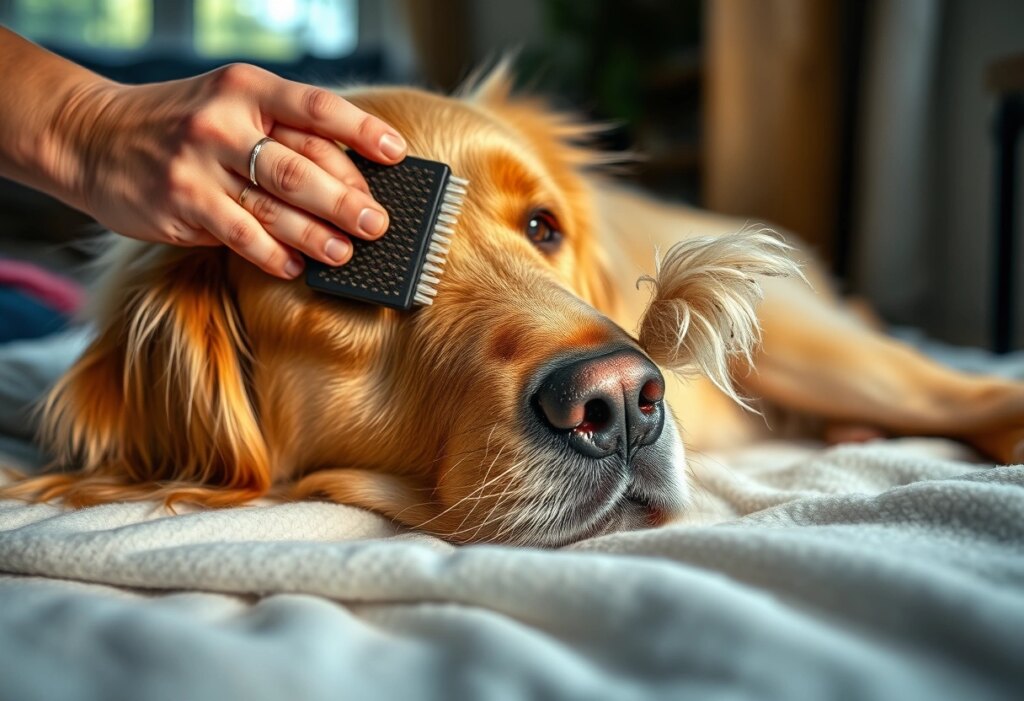

If you share your life with an aging Golden, you already know the truth nobody warns you about: the shedding doesn’t slow down with age, it changes shape. **Deshedding tools for golden retrievers** become less about keeping your couch clean and more about comfort, skin health, and honoring what that thick double coat is still trying to do for an old body that’s working harder than it used to. I’ve brushed out a lot of graying goldens over the years at the sanctuary, and I can tell you this much: the right tool paired with the right nutrition changes everything, not just the fur on your floor.
This isn’t a simple “buy this brush” post. It’s a real look at two different approaches, brushing tools versus Omega-3 nutrition, and why your senior dog probably needs both working together, not one instead of the other.
Why Golden Retrievers Shed So Much (Especially in Their Senior Years)
Goldens are double-coated dogs. That means they’ve got a soft, insulating undercoat and a longer, water-resistant topcoat layered over it. Twice a year, usually spring and fall, they “blow” that undercoat in big seasonal releases. It’s biology doing its job, regulating body temperature as the weather shifts.
But here’s what changes as your Golden gets older. Senior dogs often shed more unevenly and more constantly, not just in the big seasonal waves. Hormonal shifts, slower skin cell turnover, and even underlying health conditions like thyroid changes can all throw the shedding cycle out of rhythm. I’ve seen sanctuary dogs who used to have predictable “blowing coat” seasons turn into dogs who seem to shed a little bit, every single day, all year long.
That’s not always something to panic about. But it is something to *pay attention to*. A senior dog’s skin is thinner, often drier, and less resilient than it was at two years old. The coat that once bounced back from anything now needs a little more intention behind its care.

Old dogs don’t need more product thrown at them. They need slower hands, more patience, and someone paying close enough attention to notice when something’s actually changed.
The Furminator Method: Brushing Technique, Frequency, and Senior Cautions
Deshedding tools work by reaching down through the topcoat and gently pulling loose undercoat hair out without cutting or damaging the healthy fur around it. Used correctly and consistently, veterinary dermatology sources note that regular deshedding tool use can reduce loose hair by up to 90% during peak shedding season. That’s not a small number. That’s the difference between vacuuming daily and vacuuming once a week. But technique matters more with a senior dog than it ever did in their younger years. A tool like the Self-Cleaning Deshedding Dog Cat Brush can make the process faster and less physically taxing on your own hands, which matters when you’re brushing out a dog who needs frequent, gentle sessions rather than one long exhausting one.
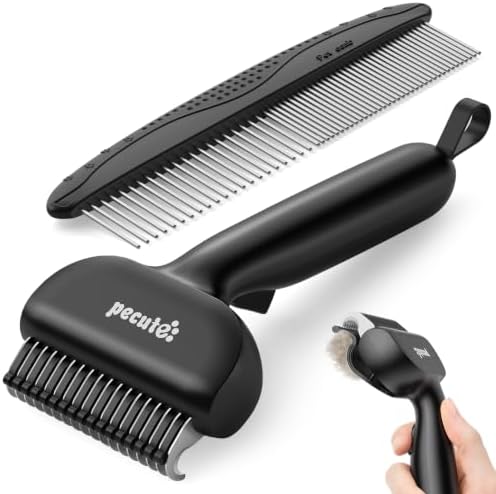
- 1-CLICK SELF-CLEANING — NO MORE MANUAL HAIR PULLING: This undercoat rake solves the grooming frustration. Just press the…
- REMOVES UP TO 95% OF LOOSE FUR — DESIGNED FOR THICK DOUBLE COATS: Engineered specifically for dense undercoats and heavy…
- GENTLE DEMATTING — ROUNDED TEETH GLIDE WITHOUT IRRITATING SKIN: Unlike sharp dematting rakes for dogs, our fine-polished…
Here’s what I want every senior dog parent to actually absorb, not just skim past:
- Shorter sessions, more often. Five to ten minutes, a few times a week, beats one grueling thirty-minute wrestling match.
- Watch the pressure. Thinning senior skin bruises and irritates more easily. If you wouldn’t use that pressure on your own forearm, it’s too much.
- Support the joints. Brush your Golden lying on a soft, orthopedic surface, not standing for long stretches on hard floors. Arthritic hips and shoulders get sore fast.
- Check for hidden soreness. If your dog flinches, growls softly, or pulls away in a spot they never used to, stop. That’s information, not defiance.
Using any deshedding tools for golden retrievers on a senior dog is a completely different exercise than using it on a young, thick-coated adult. Slow down. Let your hands do the listening.
The Omega-3 Approach: Feeding the Coat From the Inside
Brushing manages what’s already there. Nutrition determines what grows back. That’s the honest difference between these two approaches, and it’s why I never treat them as competing strategies. EPA and DHA, the two primary Omega-3 fatty acids, support the skin’s lipid barrier, the literal seal that keeps moisture in and irritants out. When that barrier is compromised (which happens more in aging dogs), you get dry, flaky, itchier skin, and hair that sheds more easily because the follicle isn’t as strong as it used to be. Research published in veterinary nutrition journals has shown that Omega-3 supplementation can measurably reduce shedding and improve coat shine within roughly 8 to 12 weeks of consistent use. That’s not an overnight fix. It’s a slow, steady rebuild, the kind of care senior dogs respond to best.
If you’re rethinking your Golden’s whole nutritional picture, not just supplements, it’s worth reading through this senior dog food guide to understand how overall diet quality plays into skin and coat health, not just fatty acid add-ons.
Tools vs Supplements: Why It’s Not Either/Or
I get asked this constantly: “Should I get the brush or the fish oil?” Wrong question. The honest answer is both, because they’re solving different problems. A deshedding tool removes what’s already dead and loose. Omega-3 nutrition improves the quality of what’s growing in behind it. One without the other is half a strategy. I’ve watched sanctuary dogs on a strong Omega-3 routine still shed heavily simply because nobody was removing the loose undercoat regularly, it was just sitting there, trapping heat and irritating the skin underneath. For dogs with matting tendencies, especially around the ears, legs, and hindquarters where senior dogs often can’t groom themselves as thoroughly anymore, a tool like the Histotree Purple Yellow 2-in-1 Pet Dematting and Deshedding tool can work through tangles gently before they tighten against the skin.

- 2-in-1 Dematting&Deshedding Dog Brush:Our Histotree purple-yellow dog grooming brush perfectly combines a dematting comb…
- Sharp Stainless Steel Blades:Crafted with premium stainless steel,the detangling comb teeth are precision-cut to glide t…
- Ergonomic Non-Slip Handle:Designed with a TPR overmolded handle,this dog dematting comb offers a comfortable,secure grip…
This is a sacred trust, taking care of an aging body that can’t advocate for itself the way it used to. A holistic senior coat care routine means you’re addressing both ends: what’s coming off the body, and what’s being built back into it.

Comparing the Two Approaches
Here’s a straightforward breakdown to help you decide where to start, or how to combine both approaches for your own Golden.
| Product/Approach | Best For | Time to Results | Senior-Friendly Rating | Price Tier |
|---|---|---|---|---|
| Self-Cleaning Deshedding Brush | Fast undercoat removal, minimal hand fatigue | Immediate | High (gentle, quick sessions) | $$ |
| 2-in-1 Dematting & Deshedding Tool | Tangle-prone areas, thicker mats | Immediate | Moderate (use light pressure) | $ |
| Metal Grooming Comb | Detail work, checking for hidden mats near skin | Immediate | High (precise, low-impact) | $ |
| Omega-3 Supplement (EPA/DHA) | Skin barrier support, long-term coat quality | 8 to 12 weeks | High (ask your vet for dosing) | $$ |
Senior-Specific Precautions Before You Start
Before you dive into a new grooming routine or supplement, please talk to your vet first, especially if your Golden has arthritis, a heart condition, or is already on medication. Omega-3s are generally safe, but dosing matters, and some conditions require adjustments. For the actual brushing sessions, I always recommend finishing with a fine metal comb to check your work. A Metal Comb for Dogs lets you feel for small mats close to the skin that a bigger tool might miss, especially behind the ears and under the “armpits” where senior Goldens tend to mat first.

- EASY DEMATTING & DETANGLING: Our dog grooming comb features extra-long stainless-steel teeth that glide through tough kn…
- EXTRA LONG PINS: Engineered with PINs that are 30% longer, this dematting comb reaches deeper into dense, curly, or long…
- ERGONOMIC HANDLE: Designed with a non-slip, ergonomic handle, this metal dog comb ensures a secure grip and reduces hand…
A few honest ground rules I hold onto with every senior dog in my care:
- Never restrain a senior dog forcefully to finish a grooming session. If they’re done, they’re done. Come back later.
- Watch for skin redness, bumps, or sores that weren’t there before. That’s a vet visit, not a “wait and see.”
- Introduce omega-3 dog supplements slowly. Sudden high doses can cause loose stool in sensitive senior digestive systems.
- Brush in the direction of hair growth only. Against the grain pulls on aging, thinner skin more than you’d think.
According to the American Kennel Club, regular grooming sessions for senior dogs also double as informal wellness checks, giving you a chance to notice lumps, skin changes, or sensitivity before they become bigger problems. That’s the quiet magic in all of this. Grooming isn’t just maintenance. It’s connection, it’s observation, it’s love shown through your hands.
I know shedding season can feel relentless. But every slow brushing session, every consistent scoop of fish oil in the food bowl, it all adds up to a dog who’s more comfortable in the skin they’re aging into. That’s the whole goal here, using deshedding tools for golden retrievers not as a chore, but as one more way of showing up for a dog who’s given you everything for years.
Frequently Asked Questions
Are Furminator-style tools safe for senior Golden Retrievers with thin skin?
Yes, generally, but you’ll want to use lighter pressure and shorter sessions than you would with a younger dog. Senior skin bruises and irritates more easily, so always brush in the direction of hair growth and stop immediately if your dog seems uncomfortable. When choosing deshedding tools for golden retrievers in their senior years, gentler self-cleaning brushes tend to be easier on both the dog and your grooming routine.
How long does it take to see results from Omega-3 supplements?
Most veterinary nutrition sources report noticeable improvement in coat shine and reduced shedding within 8 to 12 weeks of consistent daily use. Coat and skin changes happen at a cellular level, so patience matters more than speed here.
Can I use a deshedding brush and Omega-3 supplements at the same time?
Absolutely, and honestly, that combination tends to work best. The brush removes loose undercoat that’s already there, while the omega-3 dog supplements support healthier skin and hair growth from the inside. Using deshedding tools for golden retrievers alongside a consistent supplement routine gives you results on both ends of the shedding cycle.
My senior Golden is shedding more than usual and seems itchy. Is that normal aging?
Some increase in shedding is normal with age, but new itchiness paired with heavier shedding deserves a vet visit. It could point to thyroid changes, allergies, or an underlying skin condition that needs treatment beyond grooming and diet adjustments alone.
If your senior Golden’s shedding seems tied to stress or anxious behaviors, especially barking at every little noise, it might be worth looking into calming aids for senior dogs barking at strangers, since stress hormones can absolutely affect coat and skin health too.
Take your time with all of this. There’s no prize for rushing a grooming session or expecting overnight miracles from a supplement. Slow, steady, attentive care is what senior dogs deserve, and it’s what actually works. Tell your pup I said Hi! — Dawn