
Dog arthritis home remedies can genuinely change the shape of your senior pup’s days, but only if you understand what you’re actually working with. I’ve watched enough stiff-legged old souls at the sanctuary shuffle toward their breakfast bowls to know this isn’t about a quick fix. It’s about showing up, every single day, with patience and the right tools. Let’s talk about what actually helps, and what’s just noise.
What Arthritis Really Looks Like in Senior Dogs
It rarely announces itself. There’s no dramatic collapse, no single moment where you *know*. Instead, it’s the quiet stuff. The hesitation before the stairs that used to be nothing. The extra few seconds it takes to stand up from a nap. The way a dog who used to bound to the door now walks like every joint has to be convinced first.
I’ve lived this with more dogs than I can count at the sanctuary. You start noticing the mornings take longer to shake off. Maybe your pup used to be a whirlwind by 7am, and now he’s still stretching and testing his legs at 7:30. That’s not laziness. That’s pain talking to you in the only language dogs have, which is behavior.
The scale of this is bigger than most people realize. Research published through the American Veterinary Medical Association has found that up to 80% of dogs over age 8 show some degree of osteoarthritis. Eighty percent. That means the stiff old dog stereotype isn’t a stereotype at all. It’s just biology, and most of us aren’t watching closely enough to catch it early.
Early signs worth tracking:
- Slower to rise from lying down, especially after long rest
- Reluctance to jump onto furniture or into the car
- Licking or chewing at specific joints
- Muscle loss in the hind legs (feel for it, don’t just look)
- Personality shifts like increased irritability or withdrawal
This is where dog arthritis home remedies earn their place. Not as a replacement for veterinary diagnosis, but as the daily scaffolding that makes life livable between vet visits. Let’s go through what actually works.
Remedy #1-3: Weight Management, Warmth Therapy, and Gentle Movement
Nobody wants to hear this one, but it’s the most powerful lever you have. Excess weight puts direct, mechanical pressure on joints that are already inflamed and struggling. Every extra pound is a pound those hips and knees have to fight against with every step. I’ve seen dogs go from barely walking to trotting again just from shedding weight the right way, slowly, with vet guidance on portion size and protein-forward nutrition.
Warmth therapy is the second piece, and it’s underrated. A heating pad set on low, a warm towel from the dryer, even just relocating the bed away from a drafty floor vent. Cold makes stiff joints worse. I keep heated beds in every room at the sanctuary during winter because I’ve watched what a cold morning does to an arthritic hip.
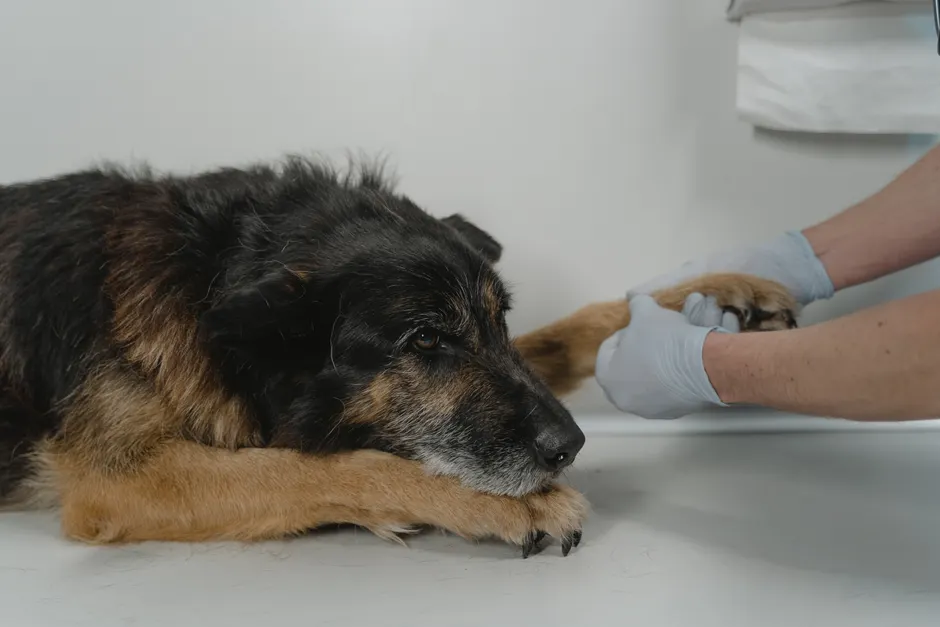
Gentle movement is the third leg of this stool, and it’s counterintuitive for a lot of pet parents. The instinct is to let a sore dog rest completely. But joints that don’t move get stiffer, and muscles that don’t work atrophy fast in senior dogs. Short, slow walks, multiple times a day, beat one long walk every time. Think five minutes, four times daily, rather than one twenty-minute march.
Movement is medicine, but only in the right dose. A senior dog’s joints need consistency, not intensity. That’s a lesson I learned the hard way watching dogs at the sanctuary overdo it on a “good day” and pay for it for the next three.
If you’re also dealing with nighttime accidents on top of mobility issues (which happens more than people admit), it’s worth reading up on crate versus belly band solutions for nighttime accidents. Arthritis and incontinence often show up together in senior dogs, and managing both takes the stress off everyone in the house.
Remedy #4-5: Omega-3 Fatty Acids and Turmeric/Curcumin
This is where the science gets genuinely exciting, and I don’t say that lightly because I’m skeptical of most supplement hype. A 2020 study in the Journal of Veterinary Internal Medicine found that omega-3 fatty acid supplementation actually improved weight-bearing scores in arthritic dogs. That’s not a vague “seems to help” claim. That’s measurable improvement in how much weight a dog could comfortably put on an affected limb.
Fish oil, particularly with high EPA and DHA content, reduces the inflammatory compounds circulating in a dog’s joints. It’s not instant. You’re looking at 6 to 8 weeks of consistent dosing before you see a real shift. But I’ve watched it work on dogs who’d stopped wanting to go outside at all.
Turmeric and its active compound curcumin work through a different but complementary pathway, blocking inflammatory enzymes at the cellular level. The catch with turmeric is bioavailability. Sprinkling raw turmeric powder on food does almost nothing because your dog’s body can’t absorb it well that way. You need a formulation designed for actual uptake, usually paired with black pepper extract or a fat source.
This is exactly the gap that Herbal Capsules for Joint, Muscle & Body Pain Relief is designed to fill, combining these compounds in a form built for real absorption rather than just wishful sprinkling.

- Crafted with a powerful blend of 10 carefully selected Ayurvedic herbs known for their traditional use in supporting joi…
- Helps ease stiffness and mild discomfort commonly experienced in the neck, shoulders, back, knees, and muscles
- Designed to promote better flexibility, improved mobility, and overall wellness for everyday activities.
Always run new supplements past your vet first, especially if your dog is on other medications. Turmeric can interact with blood thinners and certain other drugs, and dosing matters more than people think.
Remedy #6-7: Orthopedic Bedding and Massage/Acupressure
Where your dog sleeps matters more than most people realize until they’ve watched an old dog struggle to get comfortable on a thin, flat bed for the hundredth night. Regular beds compress under weight and stop supporting pressure points, which means arthritic hips and shoulders end up grinding against hard flooring through a thin layer of fluff. An orthopedic memory foam bed distributes weight evenly and keeps joints properly cushioned through the night, which is when a lot of stiffness sets in.
I’ve replaced every flat bed in the sanctuary with orthopedic foam over the years, and it’s one of the single best investments I’ve made for comfort. It’s not glamorous. It’s just quietly, consistently helpful, every single night.

Massage and acupressure round out this list, and I’ll be honest, this one takes practice and patience. But learning to gently work the muscles around a stiff hip or shoulder, in slow circular motions, can loosen tension that’s been building for days. Acupressure points along the spine and legs can also help release built-up tension, though I’d recommend learning proper technique from a certified canine massage therapist or your vet before diving in solo. Done wrong, you can cause more discomfort, not less.
For pet parents wanting a deeper resource on natural approaches, The Gentle Path to Arthritis Relief: Natural Remedies for Joint Health walks through a lot of these techniques in more depth than I have room for here.

Comparing These Dog Arthritis Home Remedies
Here’s a quick side-by-side so you can see where each option fits into your routine, and roughly what kind of investment it takes.
| Remedy | Best For | Time to See Results | Price Tier |
|---|---|---|---|
| Weight Management | Overweight dogs with joint stress | 4-8 weeks | $ |
| Warmth Therapy | Cold-sensitive stiffness | Immediate to daily | $ |
| Gentle Movement | Maintaining mobility & muscle | Ongoing | $ |
| Omega-3 Fatty Acids | Chronic inflammation | 6-8 weeks | $$ |
| Turmeric/Curcumin Capsules | Cellular-level inflammation | 3-6 weeks | $$ |
| Orthopedic Bedding | Nighttime joint pressure | Immediate | $$$ |
| Massage/Acupressure | Muscle tension release | Immediate to weekly | $ to $$$ |
None of these dog arthritis home remedies work as a silver bullet on their own. It’s the layering of them, the daily accumulation, that creates real relief. That’s true whether you’re managing a dog’s joints or managing something like senior dog incontinence with diapers or belly bands. Aging is rarely a single problem. It’s a handful of small ones, all needing steady attention.
When Home Remedies Aren’t Enough
Here’s where I have to be honest with you, because that’s the whole point of this work. Dog arthritis home remedies are powerful, but they have a ceiling. If your dog is crying out when moving, refusing food, unable to rise without help, or showing personality changes that feel like withdrawal into themselves, that’s not a “let’s try another supplement” moment. That’s a “call your vet today” moment.
Quality of life isn’t just about pain scores. It’s about whether your dog still seems like your dog. Is there still curiosity in those eyes? Does she still perk up when you grab the leash, even if the walk itself is slower now? Those are the questions I ask myself constantly with the seniors in my care, because dignity in aging matters as much as the mechanics of pain relief.
Vets have tools beyond what we can do at home, prescription anti-inflammatories, joint injections, even surgical options in some cases. There’s no shame in needing them. The shame would be in waiting too long out of pride or fear, watching a dog suffer quietly because you wanted to “handle it naturally.” Natural and medical aren’t opposites. They’re partners.
Is your dog still enjoying the small things? That’s the question worth asking yourself honestly, today, right now.
Frequently Asked Questions
What are the most effective dog arthritis home remedies?
The most effective dog arthritis home remedies combine weight management, gentle daily movement, omega-3 supplementation, and orthopedic bedding. Used together consistently, these approaches address both inflammation and joint pressure, giving senior dogs measurable relief within a few weeks.
Can natural joint pain relief actually replace vet-prescribed medication?
Natural joint pain relief can reduce reliance on medication in mild to moderate cases, but it shouldn’t replace veterinary care for advanced arthritis. Think of home remedies as the daily foundation, with your vet handling diagnosis and any prescription-level pain management needed.
How long does it take to see results from arthritis remedies for dogs?
Most arthritis remedies for dogs take between 3 and 8 weeks of consistent use before noticeable improvement, especially with supplements like omega-3s and turmeric. Warmth therapy and orthopedic bedding tend to offer more immediate comfort, often within a night or two.
What does good senior dog joint care look like day to day?
Good senior dog joint care looks like short, frequent walks instead of one long one, a warm and supportive bed, consistent supplementation, and close attention to how your dog moves each morning. Small daily habits, repeated with patience, add up to real comfort over time.
If you want more reading on holistic approaches beyond what fits in one article, Health & Wellness (2 book series) is a solid companion resource for pet parents wanting to go deeper into senior dog care overall.
There is an issue displaying Amazon products. Please contact the administrator to check that.Watching a dog you love move through the world a little slower isn’t easy. I know that ache personally, more times than I can count. But there’s a quiet kind of grace in showing up for them anyway, in the warm beds and the slow walks and the small daily rituals that say *I see you, and I’m not going anywhere*. That’s the whole job, really. Just showing up, again and again, with love that doesn’t run out.
Tell your pup I said Hi! — Dawn