
Nighttime accidents in dogs almost never show up out of nowhere, and if your old friend has suddenly started waking up in a wet bed after years of being rock solid house trained, please hear me on this: that’s not defiance, and it’s not a “bad dog” moment. It’s a message. Something in that aging body has shifted, and our job is to listen before we react.
I’ve had this conversation more times than I can count, sitting on the floor of the sanctuary with a worried pet parent, both of us looking at a senior dog who just can’t understand why they’re being scolded for something they didn’t even feel happen. So let’s talk honestly about the two most common fixes people reach for, crates and belly bands, and which one actually helps faster without stripping away a dog’s dignity in the process.
Why Senior Dogs Suddenly Start Having Nighttime Accidents
Something clicks (or rather, unclicks) in an aging dog’s body, and it’s rarely just “getting old.” There’s usually a real, physical reason underneath it.
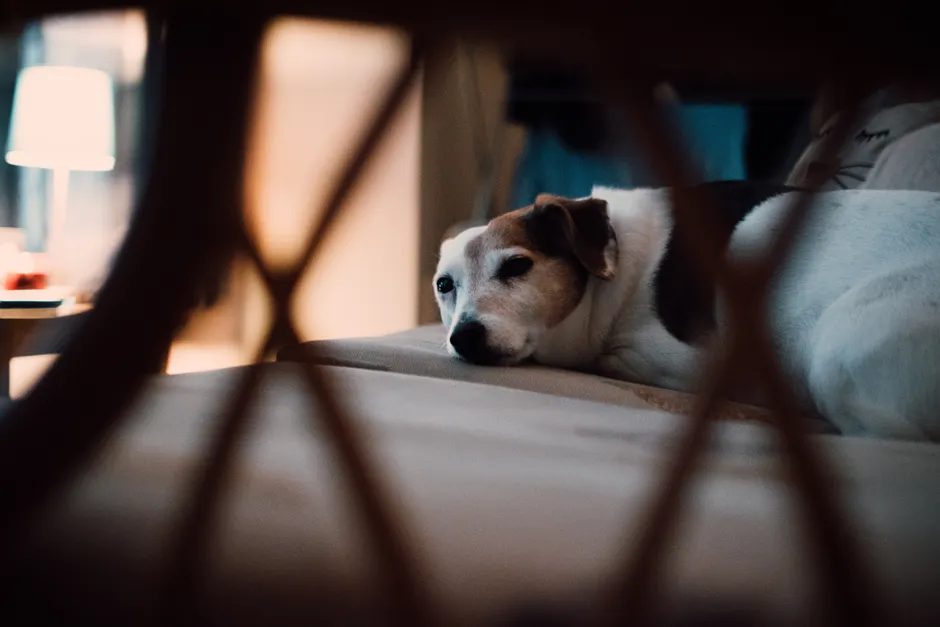
- Weakening bladder sphincter muscles — the same way our own muscles lose tone with age, the internal urethral sphincter loses strength, especially in spayed females (this is called hormone-responsive incontinence).
- Urinary tract infections (UTIs) — shockingly common in older dogs and often silent until the accidents start.
- Cognitive dysfunction — canine cognitive dysfunction (basically dog dementia) can disrupt the brain’s ability to recognize the urge to go, or to remember house training at all.
- Endocrine disease — Cushing’s disease and diabetes both cause excessive drinking and urinating that a dog physically cannot hold overnight.
Cornell Vet College research notes that canine cognitive dysfunction affects an estimated 28% of dogs between ages 11 and 12, and one of the earliest signs pet parents report is a house trained dog suddenly forgetting the rules. It’s heartbreaking, but it’s also incredibly common, and you are not alone in this.
An old dog having accidents isn’t broken. Her body is just telling a different story now than it used to, and it deserves a gentle response, not a harsh one.
How Crate Training Works for Nighttime Accidents (And Where It Falls Short)
Crates lean on a dog’s natural den instinct. Most dogs, even senior ones, feel a certain security in a small enclosed space, and that instinct can help build a consistent bathroom schedule because dogs generally don’t want to soil the space they sleep in.
Done right, crate training incontinence support looks like this:
- A crate sized correctly, not so big the dog can potty in one corner and sleep in the other
- A thick orthopedic bed inside (arthritic joints and hard plastic crate trays do not mix)
- A predictable schedule, including a late-night bathroom trip before bed and again early morning
- Zero punishment if an accident happens anyway
Here’s where I get fierce about this, because I’ve seen it go wrong. A crate used as a “time out” or a punishment tool for an old dog with a failing bladder is not training. It’s confinement layered on top of confusion, and it can genuinely traumatize a dog who is already scared and disoriented by their own body changing on them. Crates should feel like a safe den, never a cage for correction. If your senior dog whines, paces, or seems anxious in the crate, that’s not stubbornness. That’s a dog telling you this tool isn’t working for her emotionally, even if it’s working logistically.
How Belly Bands Work as a Management Tool, Not a Fix
Belly bands for dogs are essentially a wrap-around diaper for male dogs, lined with an absorbent pad, and they’re genuinely useful in the right context. But I want to be really clear about something: a belly band manages a symptom. It does not train anything, and it does not address whatever is actually causing the accidents in the first place.
Belly bands tend to shine for:

- Marking behaviors (intact or recently neutered males marking territory indoors)
- Mild dribbling that happens between scheduled potty breaks
- Travel or visits to unfamiliar homes where accidents are more likely
Where they struggle:
- Absorbency limits — a full overnight bladder void will usually soak through a standard belly band, leaving your dog wet, cold, and uncomfortable for hours
- Skin irritation and urine scald — sensitive, thinning senior skin left against a damp pad overnight is a fast track to painful rashes and hot spots
- They don’t work for female dogs without a different style entirely, since hormone-responsive incontinence is far more common in spayed females
If you’re dealing with true incontinence rather than marking, a belly band alone is a band-aid, and a fairly leaky one at that. For families managing more significant volume or overnight leaks, something like a senior dog diaper with higher absorbency tends to hold up far better than a basic belly band through a full eight hours.
Crate vs Belly Band: Head-to-Head Comparison
Let’s lay this out honestly, because pet parents deserve real answers instead of vague reassurance.
| Feature | Crate Training | Belly Band |
|---|---|---|
| Speed of results | Moderate; takes days to weeks of consistency | Immediate containment, but zero training effect |
| Addresses root cause | Indirectly, via schedule and awareness | No, purely symptom management |
| Best suited for | Dogs needing routine and bladder awareness support | Marking behavior or mild dribbling |
| Comfort for aging joints | Good, with orthopedic bedding added | Can cause skin irritation if left damp |
| Emotional impact | Positive if used as safe den, harmful if punitive | Minimal, but some dogs resist wearing it |
| Works for female dogs | Yes | No (requires different product design) |
| Cost over time | One-time cost, occasional bedding replacement | Ongoing recurring pad/liner cost |
| Price Tier | $$$ | $$ |
Both the ASPCA and AVMA are consistent on one point that I cannot stress enough: rule out a medical cause before jumping to a behavioral fix. Roughly 20% of dogs over age 7 will develop a treatable medical condition contributing to incontinence, whether that’s a UTI, Cushing’s disease, or diabetes. Slapping a belly band on a dog with an untreated infection isn’t management, it’s masking pain. Please, call your vet first.
What Actually Works Long Term for Senior Dog Bladder Control
Here at the sanctuary, the dogs who do best with senior dog bladder control aren’t the ones with the fanciest gear. They’re the ones with a plan that treats the whole dog, body and heart together.
That plan usually looks like this:
- Get a vet diagnosis first. Bloodwork and a urinalysis take the guesswork out and often reveal something very treatable
- Build a rock-solid nighttime routine, including a bathroom trip right before lights out and a middle-of-the-night trip if your dog’s age or medication calls for it
- Place orthopedic bedding near the door or wherever your dog naturally wakes and paces, so stiff joints don’t add extra minutes to the walk outside
- Layer tools instead of choosing one, using a crate with washable bedding, a belly band or diaper as backup, and indoor potty pads placed strategically for dogs who simply can’t make it outside anymore
- Practice patience over punishment, every single time, even on the hard nights
According to the American Veterinary Medical Association, senior pets benefit most from regular wellness exams specifically because so many age-related conditions, including incontinence, are manageable or even reversible when caught early. That single vet visit can save months of frustration and guesswork.
Dignity in aging isn’t a luxury. It’s the least we owe the dogs who spent their whole lives waiting by the door for us. An old dog having an accident on the floor is never a moral failing. It’s a body doing its best under new limitations, and our response says everything about the kind of caregiver we choose to be.
Frequently Asked Questions
Is it cruel to crate an older dog at night?
Not if it’s set up as a safe, comfortable den rather than a punishment. A properly sized crate with orthopedic bedding, near your bedroom if possible, can actually reduce anxiety in a senior dog with cognitive decline. Watch for whining or pacing though, since that can signal the crate isn’t the right fit emotionally for that particular dog.
Can a belly band alone stop nighttime accidents completely?
Usually not for a full overnight stretch. Belly bands have limited absorbency and are better suited for marking behavior or light dribbling. Dogs with true incontinence often soak through a standard belly band within a few hours, leading to skin irritation if left unchanged.
Should I take my dog to the vet before trying either method?
Yes, always. Both the ASPCA and AVMA recommend ruling out medical causes like UTIs, Cushing’s disease, or diabetes before relying on behavioral tools. A large share of senior dogs over age 7 have a treatable underlying condition contributing to the accidents.
What’s better for a female senior dog with hormone-related incontinence?
Belly bands are designed for male anatomy and don’t work well for female dogs. A properly fitted diaper, combined with vet-prescribed medication for hormone-responsive incontinence, tends to give far better nighttime coverage and comfort for spayed females.
Whatever you choose, choose it with patience. These golden years move fast, and the dogs in front of us deserve every ounce of grace we’ve got left to give. Tell your pup I said Hi! — Dawn