
Dog arthritis medicine is not a single category of product, it is a decision tree with real tradeoffs at every branch, and most owners walk into that decision without the data they need. I want to correct that here, because the gap between what pet parents assume about joint pain and what the physiology actually shows is wider than most people expect.
Why Canine Osteoarthritis Goes Unrecognized Until It’s Advanced
Osteoarthritis in dogs is a degenerative joint disease driven by cartilage breakdown, synovial inflammation, and progressive changes to subchondral bone. Once cartilage erodes past a certain threshold, the joint capsule thickens, osteophytes form, and nerve endings in the joint lining become chronically sensitized. This is not a static condition. It is a slow-moving inflammatory process that predates any limp you might notice in your living room.
Here is the part that surprises most owners: radiographic evidence of joint degeneration and visible lameness are not the same thing. Enomoto and colleagues (2020, Veterinary Record) found that only 54% of dogs with radiographic signs of osteoarthritis displayed overt clinical signs their owners actually recognized. Nearly half the affected dogs in that dataset were quietly compensating, adjusting their gait, redistributing weight, avoiding certain movements, without ever producing the dramatic limp owners are trained to watch for. Dogs are not stoic by choice. They are stoic because pain behavior in a prey-adjacent species has historically carried survival costs, so the behavioral display of pain is often muted relative to the underlying tissue damage.
This matters clinically. If you are waiting for your dog to look obviously painful before you consider dog arthritis medicine, you are very likely starting treatment after significant joint remodeling has already occurred. The behavioral indicators worth tracking are subtler: reduced willingness to jump onto furniture, hesitation before stairs, a shortened stride, or increased time spent lying down after exercise. None of these alone confirms arthritis, but a cluster of them across several weeks is a reasonable trigger for a veterinary orthopedic exam.
Prescription NSAIDs: Mechanism, Options, and What the Data Shows
Prescription-grade nonsteroidal anti-inflammatory drugs remain the most rigorously studied class of dog arthritis medicine available. Carprofen, meloxicam, and grapiprant are the three most commonly prescribed, and they do not all work the same way.
- Carprofen and meloxicam inhibit cyclooxygenase (COX) enzymes, primarily COX-2, reducing prostaglandin synthesis at the site of inflammation. This is effective and fast-acting, but COX-1 inhibition (even partial) can compromise gastric mucosal protection and renal blood flow autoregulation, which is why bloodwork monitoring is standard protocol, not an optional precaution.
- Grapiprant works through an entirely different pathway. It is an EP4 receptor antagonist, meaning it blocks the specific prostaglandin receptor responsible for pain signaling and inflammation without broadly suppressing COX enzymes elsewhere in the body. This narrower mechanism generally produces a more favorable gastrointestinal safety profile, though it may be less effective for dogs with severe, multi-joint degeneration.
The behavioral point I want to make clear: pain relief from prescription NSAIDs is often the first intervention that reveals how much a dog was masking. Owners frequently report their dog “acting like a puppy again” within a week of starting carprofen or meloxicam, not because the drug reversed joint damage (it did not), but because it interrupted a pain signaling loop that had been suppressing normal exploratory and play behavior for months.
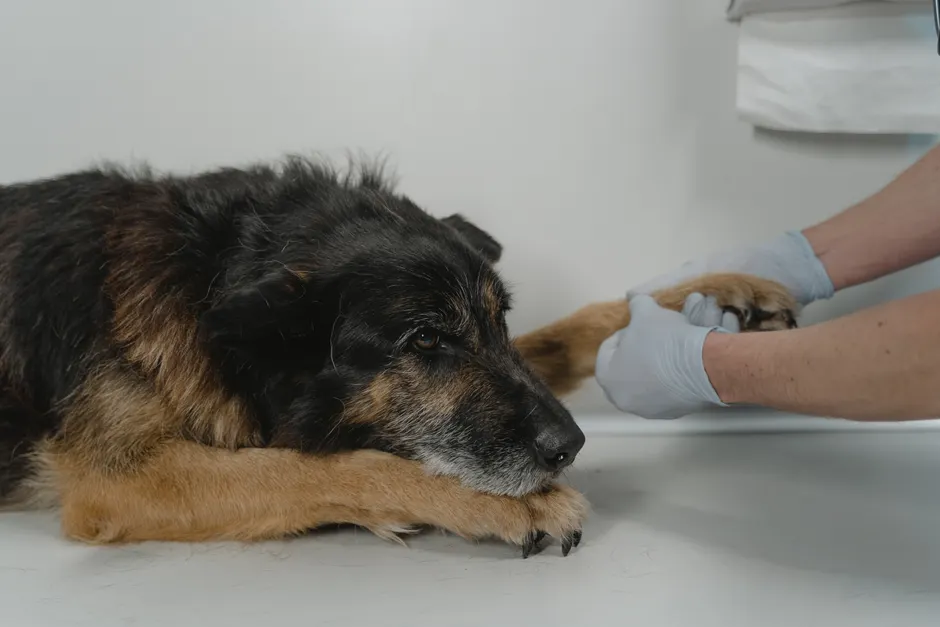
Don’t count on any single medication or supplement to work miracles. Osteoarthritis management is a layered protocol, not a one-time fix, and the dogs who do best are the ones whose owners treat it as an ongoing behavioral and physiological monitoring project rather than a pill you give once and forget.
OTC Supplements and Nutraceuticals: Separating Evidence From Marketing
Glucosamine, chondroitin sulfate, and green-lipped mussel extract dominate the over-the-counter joint support market, and the enthusiasm around them often outpaces the data. A 2007 review in Veterinary Therapeutics flagged something owners rarely hear from marketing copy: bioavailability data across supplement brands was highly inconsistent, meaning the amount of active compound that actually reaches joint tissue can vary substantially even between products listing identical milligram doses on the label.
This does not mean supplements are worthless. Green-lipped mussel extract contains a naturally occurring blend of omega-3 fatty acids that appears to have modest anti-inflammatory activity in several trials, and glucosamine/chondroitin combinations show some benefit for cartilage matrix support in longer-duration studies (12 weeks or more). What the data does not support is the expectation of rapid or dramatic pain relief. If an owner starts a supplement expecting NSAID-level improvement within days, that mismatch in expectations is usually what drives premature abandonment of an otherwise reasonable long-term strategy.
My practical recommendation: treat OTC joint supplements as a slower-acting, lower-risk foundation, not a substitute for prescription intervention once pain is behaviorally confirmed. They pair well with mobility support tools. A Professional Knee Support Brace for Dogs with Adjustable straps can offload joint stress during the weeks it takes a nutraceutical protocol to build measurable tissue-level effect.
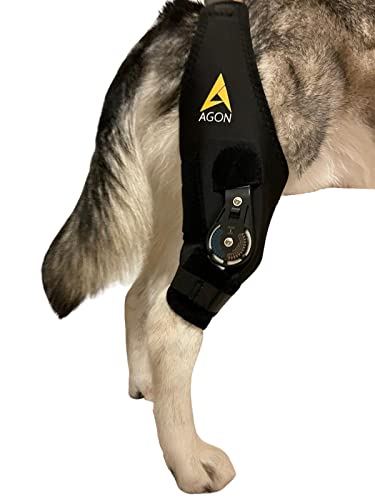
- The Right Choice: If your dog is struggling with a post-knee surgery process, ease its pain and discomfort with the Agon…
- Adjustable Hinge Stabilizer: The Agon neoprene knee brace stands out with an innovative design equipped with an adjustab…
- Highest Quality Materials: Our knee brace for dogs is made with premium quality neoprene, which is extremely durable, st…
Comparative Risk-Benefit: Prescription NSAIDs vs OTC Joint Support
The table below lays out the practical differences in monitoring burden, onset speed, and cost tier. This is the comparison I walk owners through during consult visits, because the tradeoffs are rarely explained clearly at the pharmacy counter.
| Option | Mechanism | Onset Speed | Monitoring Needs | Price Tier |
|---|---|---|---|---|
| Carprofen (Rx) | COX-2 selective inhibition | Fast (24-72 hours) | Liver enzymes, kidney values every 3-6 months | $$$ |
| Meloxicam (Rx) | COX-1/COX-2 inhibition | Fast (24-72 hours) | GI tolerance, renal panels routinely | $$ |
| Grapiprant (Rx) | EP4 receptor antagonism | Moderate (3-7 days) | Lower GI risk, still needs periodic bloodwork | $$$$ |
| Glucosamine/Chondroitin (OTC) | Cartilage matrix support | Slow (4-12 weeks) | Minimal, watch for mild GI upset | $$ |
| Green-Lipped Mussel (OTC) | Omega-3 anti-inflammatory activity | Slow (6-12 weeks) | Minimal | $$$ |
Prescription canine NSAID treatment wins on speed and measurable pain suppression, but it demands ongoing bloodwork because the same COX pathways that reduce inflammation also protect the stomach lining and regulate kidney perfusion. Joint supplements for dogs carry a far gentler side effect profile but require patience most owners underestimate. Neither category is inherently superior; they solve different problems on different timelines, and the strongest protocols I see combine both.
Mobility Bracing as an Adjunct, Not a Replacement
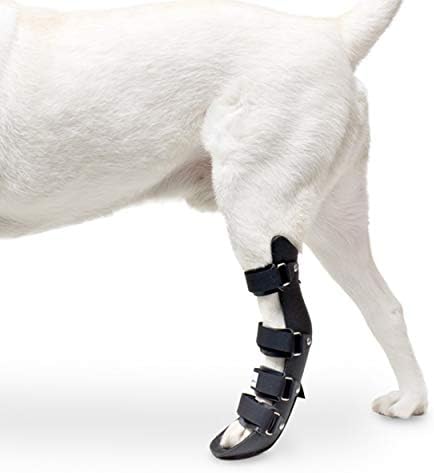
Bracing deserves its own conversation because owners frequently misunderstand its role. A brace does not treat inflammation or slow cartilage degradation. What it does is provide external joint stabilization, which reduces compensatory strain on adjacent muscle groups and can meaningfully lower a dog’s perceived exertion during walks. For dogs managing hind limb instability alongside osteoarthritis pain relief protocols, a product like the Dog Rear Foot Splint Helps Brace Lower Back Limbs can support gait mechanics while medication or supplements address the underlying inflammatory process.
Front limb involvement follows a similar logic, though it is less commonly discussed. A compression-style wrap such as the Labra Dog Front Leg Brace – Compression Wrap can help dogs with forelimb arthritis maintain more even weight distribution during walks, which indirectly reduces the guarding behaviors (reluctance to place weight, subtle head-bobbing gait) that owners often mistake for stubbornness rather than pain avoidance.
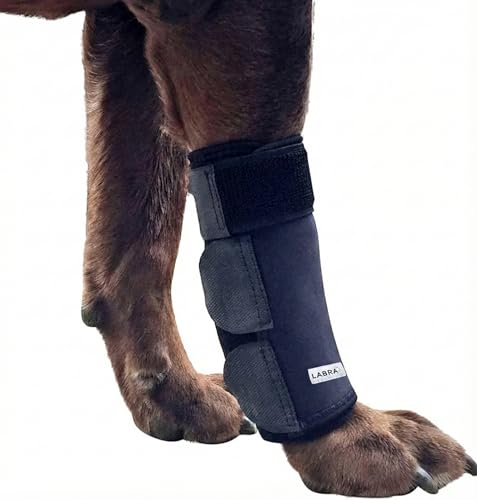
- Protects Against Hot Spots, Lick Granulomas, and Pressure Sores: Provides targeted relief for painful hot spots, lick gr…
- Premium Materials – Made from 3mm neoprene, our brace wrap is breathable, elastic, and enjoyable, ensuring your dog’s co…
- Joint Health – Our brace provides extra support on your dog’s front legs, allowing them to stay healthy and support thei…
If your dog’s mobility changes are paired with increased irritability toward other household pets, that combination is worth evaluating through a behavioral lens too. Our guide on calming aids for senior dogs feeling jealous covers how chronic discomfort can lower a dog’s tolerance threshold for normal social friction.

A Decision Protocol: When to Escalate From OTC to Prescription Dog Arthritis Medicine
I recommend owners run a structured two-week observational log before deciding whether an OTC trial is sufficient or whether it’s time to involve a veterinarian for prescription-level dog arthritis medicine. This removes guesswork and replaces it with a simple behavioral dataset.
- Track jumping behavior daily. Note whether your dog attempts to jump onto furniture or into vehicles, and whether hesitation precedes the attempt.
- Log stair use. Record whether your dog takes stairs one at a time, pauses at the top or bottom, or avoids them entirely.
- Watch for guarding postures. This includes holding a limb slightly off the ground while standing still, or shifting weight away from a limb during petting.
- Note recovery time after exercise. A dog that needs 30+ minutes of rest after a walk it used to shake off in five minutes is showing a measurable functional decline.
- Score sleep quality. Frequent repositioning at night or reluctance to lie fully on one side can indicate joint discomfort that pain relievers would address.
If two or more of these categories show consistent decline over 14 days despite an OTC supplement trial, that is a reasonable clinical threshold to escalate to your veterinarian for prescription NSAID evaluation. Waiting longer than that generally does not serve the dog. Chronic pain has documented downstream effects on cognitive function and stress hormone regulation, which is a separate but related concern; if you’re also noticing disorientation or altered sleep-wake cycles, it’s worth reading about the overlap with sudden barking changes explained by a senior dog trainer, since pain and cognitive decline frequently present together in aging dogs.
According to the American Veterinary Medical Association, osteoarthritis affects roughly one in five adult dogs, with prevalence rising sharply in dogs over age seven, which underscores why proactive monitoring rather than reactive treatment produces better long-term outcomes.
Building a Realistic Long-Term Plan
The dogs who age most comfortably with osteoarthritis are rarely on a single intervention. They tend to be on a layered protocol: a prescription NSAID or grapiprant for active inflammation control, a supplement foundation for long-term cartilage support, bracing for mechanical stability during flare-ups, and a weight management plan, since excess body mass is one of the most modifiable risk factors for joint disease progression. None of these components alone constitutes complete osteoarthritis pain relief. Together, they form a system that respects both the physiology of the disease and the dog’s need to maintain normal behavioral function, exploration, play, social engagement, for as long as possible.
What I ask owners to avoid is an all-or-nothing mindset, where they either commit fully to pharmaceutical management or fully to “natural” supplementation as an identity choice rather than a clinical decision. The data does not support strict loyalty to either camp. It supports matching the tool to the dog’s current pain level, monitoring behaviorally rather than assuming silence means comfort, and adjusting the plan as the disease progresses, because osteoarthritis is degenerative and the protocol that works today may need revision in six months.
Can I give my dog over-the-counter human joint supplements instead of a vet-prescribed product?
Some human-formulated glucosamine and chondroitin products are chemically similar to veterinary versions, but dosing accuracy and added ingredients (like xylitol in flavored chews) can pose real risks. It’s safer to use products specifically formulated and dosed for canine body weight, and to confirm the brand with your veterinarian before starting.
How long does it take to know if a joint supplement is actually working?
Most nutraceuticals require 4 to 12 weeks of consistent daily use before measurable improvement in mobility or comfort appears. This is because they work by supporting cartilage matrix repair rather than blocking pain signals directly, which is a slower biological process than prescription NSAID action.
Is it safe to combine prescription NSAIDs with OTC joint supplements?
In most cases, yes. Glucosamine, chondroitin, and green-lipped mussel extract do not typically interact with NSAID metabolism. However, always disclose every supplement to your veterinarian, since some formulations include additional ingredients like turmeric or fish oil that can affect clotting or interact with other medications your dog may be taking.
What are the earliest behavioral signs of arthritis pain in dogs?
Subtle changes typically appear before overt limping. These include hesitation before jumping, a shortened or stiffer stride after rest, reluctance to climb stairs, and increased time needed to settle into a lying position. Tracking these behaviors over a two-week period gives a clearer picture than waiting for a visible limp to develop.