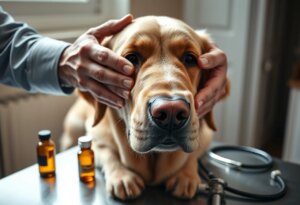
A full grown pitbull golden retriever mix typically lands somewhere between 45 and 80 pounds and stands 18 to 24 inches at the shoulder, though where any individual dog falls on that spectrum depends heavily on which parent breed dominates the genetic draw. That variance matters more than most owners realize, because it shapes everything from joint loading over a lifetime to how early you should start watching for the mobility changes that define canine aging. I get a lot of questions from owners of this cross who want a simple number. I don’t have one. What I have instead is a behavioral and physiological framework for predicting size, risk, and the timeline of decline, and that’s actually more useful.
Breed Profile & Genetic Background
Ethologically, this cross combines two very different social operating systems. The Golden Retriever was developed as a retrieving gundog, which selected heavily for a high sociability threshold, meaning the dog tolerates prolonged close contact with humans and other animals without escalating to defensive arousal. American Kennel Club temperament descriptions consistently characterize the breed as friendly, tolerant, and eager to please, traits tied to a comparatively low reactivity baseline. The Pitbull-type parent (usually American Pit Bull Terrier or American Staffordshire Terrier lineage) contributes a different profile: elevated play drive, high pain tolerance, and a strong terrier-derived persistence in problem solving. Neither trait set is inherently a liability. The issue is what happens when they combine unpredictably in an individual dog, because you can get a puppy with the Golden’s social patience layered over the Pitbull-type’s physical intensity, which produces a dog that wants prolonged, high-arousal interaction. That combination requires structured outlets, or you’ll see displacement behaviors like excessive licking, chewing, or attention-seeking barking. If your household is also dealing with unusual vocalization patterns as the dog matures, our piece on what sudden night barking in senior dogs really means is worth bookmarking now, because early-life vocal habits often reappear in a different form during the senior years.
Full-Grown Size Expectations for a Pitbull Golden Retriever Mix
Most pitbull golden retriever mix dogs reach roughly 90% of their adult height by 12 months and finish filling out musculature and body weight between 18 and 24 months. Because the parent breeds have overlapping but not identical size ranges, the resulting adult can skew toward either end. A Golden Retriever sire typically runs 55 to 75 pounds, while a Pitbull-type parent can range from 30 to 65 pounds depending on build. The table below breaks down what to expect at physical maturity.
| Trait | Typical Range | Notes |
|---|---|---|
| Height (shoulder) | 18-24 inches | Golden-dominant pups tend toward taller, leaner frames |
| Weight | 45-80 lbs | Pitbull-dominant pups often carry more muscle mass per inch of height |
| Coat | Short to medium, moderate shedding | Usually a blend, rarely as feathered as a purebred Golden |
| Time to full maturity | 18-24 months | Skeletal growth plates typically close by 12-14 months |
| Lifespan estimate | 10-13 years | Hybrid vigor can offset some breed-specific risk, but isn’t guaranteed |
If you’re comparing this cross against other Golden Retriever hybrids to get a sense of how genetic variance plays out across different pairings, our breakdown of pitbull golden retriever mix lifespan expectations covers the longevity side of this in more depth than I can here.
Health Risks & Longevity Data
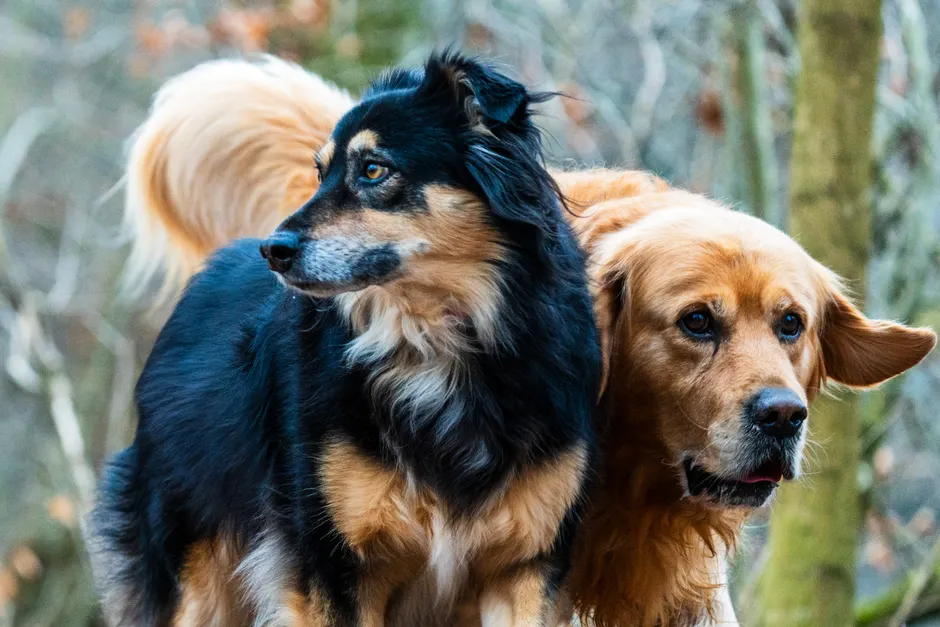
This is where owners tend to want reassurance, and I’d rather give you data. The Morris Animal Foundation’s Golden Retriever Lifetime Study, one of the largest prospective canine health cohorts ever run, has tracked an estimated 60% lifetime cancer risk in purebred Golden Retrievers, driven largely by hemangiosarcoma and lymphoma. That statistic doesn’t transfer to a mixed-breed dog on a 1:1 basis, but it does establish a genetic predisposition that a pitbull golden retriever mix inherits partially. On the other side of the pedigree, Orthopedic Foundation for Animals (OFA) data shows Pitbull-type breeds carrying an elevated incidence of hip dysplasia relative to the general canine population, likely tied to their muscular build and rapid early growth rate. The data is contradictory on how much hybrid vigor actually protects against these inherited risks. Some researchers argue crossbred dogs benefit from increased genetic diversity that dilutes recessive disease alleles; others point out that if both parent lines carry risk factors for orthopedic or oncologic disease, the offspring can still inherit a compounded risk rather than a diluted one. Practically, this means your pitbull golden retriever mix should get baseline hip radiographs by age 2 and annual cancer screening panels (bloodwork, lymph node palpation, abdominal ultrasound if you’re being thorough) starting around age 6, several years earlier than you’d typically start with a small breed.
Don’t count on breed mixing alone to protect your dog from either parent breed’s known risks. Hybrid vigor is a population-level statistical trend, not an individual guarantee. Plan your veterinary screening schedule around the higher-risk parent, not the lower-risk one.
Nutrition plays a measurable role in slowing the progression of joint disease once dysplasia is present, and it’s one of the few variables owners have direct control over. Look for a formula with documented glucosamine and chondroitin levels, appropriate calcium-to-phosphorus ratios for large-breed joint development, and controlled calorie density to prevent the excess weight that accelerates cartilage wear. Our guide on what to look for in senior dog food as your dog ages walks through label reading in more detail, and it’s relevant well before your dog technically qualifies as a senior, because joint-protective feeding should start in middle age, not at the first sign of stiffness.
Senior Aging Trajectory: What Happens Between Ages 7 and 10
Given the orthopedic load from the Pitbull-type parent and the oncologic risk from the Golden Retriever side, I generally advise owners of this mix to consider their dog “senior” starting around age 7, roughly two years earlier than the 9-to-10-year benchmark used for many mid-sized breeds. Between 7 and 10, expect a fairly predictable sequence. Early joint degeneration usually shows up first as subtle behavioral change rather than obvious limping: a dog that used to leap into the car now hesitates, or takes longer to settle after resting. This is antecedent information, meaning it precedes visible lameness by weeks or months, and it’s your best early warning system. Cognitive changes follow a separate but overlapping timeline. Canine cognitive dysfunction studies estimate that a meaningful percentage of dogs over age 10 show at least one clinical sign of cognitive decline (disorientation, altered sleep-wake cycles, house-soiling regression, changed social interaction), and prevalence increases with each additional year of age. Because this mix’s genetic background doesn’t confer any particular protection against cognitive aging, I’d treat any of those four symptom categories as reportable to your vet rather than dismissible as “just getting old.”
Temperature regulation also becomes a bigger variable as dogs age, since reduced muscle mass and slower circulation make older dogs less efficient at maintaining core body temperature in cold weather. A properly fitted Esobo Fleece Dog Apparel Winter Warm Dog Coat is a reasonable, low-cost addition to a senior dog’s cold-weather routine, particularly for shorter-coated individuals within this cross who didn’t inherit the Golden’s denser double coat.

- 【WARM MATERIAL】The dog’s trendy coat is made of thick fleece material, which is soft and comfortable, and has strong war…
- 【UNIQUE DESIGN】This warm dog coat reinforces the edges, which greatly increases the durability of this apparel while eff…
- 【EASY WEAR AND OFF】This pullover fleece dog outfit is elastic enough and has a one-piece design, whether it is a big dog…
Evidence-Based Care Protocol: A Happiness Plan for the Aging Pitbull Golden Retriever Mix
I use structured Happiness Plans in my case consultations because vague advice like “keep them comfortable” doesn’t give owners anything actionable. Here’s a protocol built specifically around this cross’s known risk profile.

- Establish a joint-support nutrition baseline by age 5. Don’t wait for visible lameness. Transition to a formula with documented omega-3 fatty acid content and joint-supportive supplementation, and recalculate caloric needs every 6 months since activity typically declines gradually rather than suddenly.
- Run antecedent management for mobility decline before it becomes a crisis. Add non-slip runners to hard flooring, install a ramp for vehicle access, and elevate food and water bowls to reduce cervical strain. These changes prevent the fall-related injuries that often accelerate a dog’s functional decline far more than the underlying joint disease itself.
- Screen for cognitive dysfunction annually starting at age 8. Use a simple structured observation log tracking sleep patterns, disorientation episodes, and social withdrawal. Bring the log to your vet rather than relying on memory during a 15-minute appointment.
- Preserve canine agency in enrichment choices. As physical capacity narrows, give your dog controlled choices, such as which of two walking routes to take, or which enrichment toy to engage with. This maintains a sense of behavioral control that’s been associated with reduced stress physiology markers in aging dogs, even when overall activity level is dropping.
- Adjust play structure to match the Pitbull-type parent’s persistent drive without overtaxing joints. Replace high-impact fetch with scent-based searching games or slow-paced tug with clear start/stop cues. This keeps the dog’s behavioral needs met without the repetitive joint loading that accelerates arthritis progression.
- Screen for cancer risk proactively, not reactively. Given the Golden Retriever lineage’s documented lifetime cancer risk, annual bloodwork and physical exams starting at age 6 give you the best odds of catching disease at a treatable stage.
For general reference on canine developmental stages and how breed genetics influence aging timelines, the ASPCA’s senior pet care resource offers additional grounding on what physiological changes to expect across the aging process, independent of any specific product or commercial recommendation.
Owners sometimes ask about lighter, low-cost ways to mark milestones with an aging dog, and while it’s a smaller consideration than the medical protocol above, thoughtful home touches can matter for household morale during a stressful caregiving period. Some owners like personalizing entryway decor as a way to celebrate a long-lived dog’s presence in the home, and something like a KafePross Personalized Happy St Patricks Day Doormat is a low-stakes way to do that without any bearing on the dog’s actual care needs.

Comparing Care Priorities as the Pitbull Golden Retriever Mix Ages
The table below summarizes how care priorities shift across life stages for this specific cross, along with representative product categories and their relative Price Tier, useful when budgeting for the gear that supports each stage.
| Life Stage | Primary Focus | Representative Gear | Price Tier |
|---|---|---|---|
| Puppy/Growth (0-2 yrs) | Controlled growth, joint protection during development | Large-breed puppy formula, low-impact exercise | $$ |
| Adult (2-6 yrs) | Maintenance nutrition, baseline screening | Joint supplements, weight monitoring | $$ |
| Pre-senior (7-9 yrs) | Early mobility support, cancer screening | Orthopedic bedding, ramps | $$$ |
| Senior (10+ yrs) | Cognitive monitoring, thermoregulation, comfort | Winter coats, elevated bowls, memory foam beds | $$$$ |
Some owners also enjoy commemorating a beloved senior dog with keepsake decor once they’ve reached this advanced stage. A tribute piece like the Happy Fathers Day Honoring Veterans Miniature Pinscher design falls into that sentimental, non-medical category of purchase, distinct from the functional care items above, but still part of how many households mark a dog’s long life.

- ⚡ SIZE: 11oz, both sides printing, multi-color ✅✅✅ Click “Customize” button to select a Style you want ✅✅✅
- ⚡ MATERIAL: Non-toxic and High quality ceramic resists all chipping and cracking. Suitable for hot and iced cold favorit…
- ⚡ COOL STYLE: two tone accent mug with premium sublimation printing technology
Taken together, the goal with any pitbull golden retriever mix isn’t to eliminate risk, which isn’t realistic given the genetic background involved, but to shift your household from reactive to proactive care. A pitbull golden retriever mix that receives joint-protective nutrition early, gets screened for both orthopedic and oncologic disease before symptoms appear, and has an enrichment plan that respects its inherited drive will generally show a slower functional decline than one managed purely by responding to visible problems as they show up.
At what age is a pitbull golden retriever mix considered full grown?
Most reach close to full height by 12 months of age, with growth plates closing between 12 and 14 months. Full muscular development and adult body weight typically aren’t finished until 18 to 24 months, depending on which parent breed’s growth pattern dominates.
How big does a full grown pitbull golden retriever mix get?
Expect a height range of 18 to 24 inches at the shoulder and a weight range of 45 to 80 pounds. Individual size depends heavily on the specific size of each parent, so litters can show meaningful variation even among siblings.
What health problems are most common in this mixed breed as they age?
The two most significant inherited risks are hip dysplasia, associated with the Pitbull-type parent lineage per OFA data, and elevated cancer risk, associated with Golden Retriever lineage per the Morris Animal Foundation’s Lifetime Study. Annual joint screening and cancer screening starting in middle age are the most effective mitigation strategies currently supported by veterinary data.
When should I start watching for senior dog aging signs in this cross?
Given the combined orthopedic and oncologic risk profile, I recommend treating this mix as a senior starting around age 7, roughly two years earlier than typical mid-sized breed benchmarks. Watch for subtle mobility hesitation, changes in sleep-wake cycles, and any shift in social interaction, all of which are early, reportable indicators of age-related decline.