
Dog arthritis relief rarely comes from a single product, no matter what the packaging promises. It comes from stacking several modest interventions that each move the needle a little: a pharmaceutical for pain control, a nutraceutical for long-term joint support, a physical modification to the environment, and a rehabilitative movement plan. If you’re standing in an aisle (real or virtual) trying to find the one item that will fix your dog’s stiff hips, I want to reset that expectation before we go further, because chasing a single miracle product is the fastest way to waste money and stay frustrated.
How Common Is Osteoarthritis in Dogs, Really?
Osteoarthritis (OA) is not a rare, unlucky diagnosis reserved for the occasional unfortunate dog. A 2011 study published in the Journal of Small Animal Practice found that OA affects up to 20% of dogs over the age of one, a figure that climbs sharply once you isolate the senior population. Cartilage degradation is cumulative. Every year of weight-bearing activity, every prior soft tissue injury, every pound of excess body weight adds to the mechanical load on a joint that has a finite capacity for self-repair. By the time a dog reaches its geriatric years, the joint surfaces have often sustained a decade or more of microtrauma that the body simply could not fully resolve.
This matters because owners frequently interpret slowing down as “just getting old” rather than a treatable disease process. Behaviorally, this is a mistake. Chronic pain changes how a dog processes its environment: irritability with other pets, reluctance to be touched near the hindquarters, and even what looks like cognitive decline can actually be pain-driven behavioral suppression. Before assuming dementia or personality change, rule out dog arthritis relief needs first. Pain is a confound that muddies almost every geriatric behavior assessment I run.
The Four Intervention Categories Owners Keep Conflating
One of the most consistent errors I see in consultations is owners treating “arthritis treatment” as a single monolithic category. It is not. There are four distinct intervention types, each targeting a different part of the pain and mobility equation, and effective dog arthritis relief protocols pull from more than one simultaneously.
- Pharmaceutical: Prescription NSAIDs like carprofen, meloxicam, or grapiprant reduce inflammation and directly manage pain signaling. These require veterinary oversight and periodic bloodwork, but they are the fastest-acting category by a wide margin.
- Nutraceutical: Glucosamine, chondroitin, and omega-3 fatty acids aim to support cartilage matrix health and reduce low-grade inflammation over time. These are slow-acting and supportive, not curative.
- Physical: Orthopedic beds, ramps, traction mats, and support harnesses reduce the mechanical stress placed on already-compromised joints throughout the day, not just during a vet visit.
- Rehabilitative: Hydrotherapy, controlled leash walking, and targeted range-of-motion exercises maintain muscle mass around the joint, which is often the single biggest determinant of long-term mobility outcomes.
Skipping any one category and expecting the others to compensate is where most home management plans fall short. A dog on a well-dosed NSAID who still sleeps on a hard floor is still accumulating joint stress overnight. A dog on glucosamine with no exercise plan is losing the stabilizing muscle mass that actually protects the joint day to day.

Don’t Count on Supplements to Work Miracles
“The evidence quality for many joint supplements remains low to moderate at best. Owners should expect symptom management, not cartilage reversal.” (2018 systematic review, Veterinary Record)
This is the part of the conversation owners least want to hear, but I’d rather give you the accurate picture than a comforting one. A 2018 systematic review in Veterinary Record examined the evidence base behind popular joint supplements and found the data contradictory across studies, with many trials suffering from small sample sizes, inconsistent dosing, or industry sponsorship that introduces bias. Some formulations show measurable improvement in gait scoring. Others show effects indistinguishable from placebo. This does not mean nutraceuticals are worthless. It means you should treat them as one modest tool among several, not the definitive answer, and you should track your own dog’s response objectively rather than assuming improvement because the label says “joint support.”
Pet parents interested in cost-effective long-term care planning should also look at how ongoing arthritis management factors into overall veterinary spending. Chronic conditions like OA generate recurring costs, from bloodwork panels for NSAID monitoring to periodic rehabilitation sessions, which is worth weighing when comparing affordable senior dog insurance plans before costs accumulate.
Physical Support: Where Environment Modification Earns Its Keep
Of the four categories, physical modification is the one owners underestimate the most, largely because it doesn’t come in a bottle with a dosage chart. But a dog with OA spends 12 to 16 hours a day lying down. If that surface is a hardwood floor or a thin, flattened bed, every joint is bearing uneven pressure for the majority of the day, undoing whatever gains the medication or supplement regimen produced. An orthopedic memory foam surface distributes weight more evenly across the hips and shoulders, reducing the pressure-point loading that stiffens joints overnight.
The NANDOG Orthopedic Memory Foam Dog Bed is a practical example of this category done well: supportive foam density, a low-profile design that makes it easier for a stiff dog to climb on and off without an awkward jump, and a washable cover for the inevitable senior-dog accidents. I recommend owners place this kind of bed in the two or three locations the dog rests most, not just the “designated dog bed” spot, because dogs with OA will often choose the nearest comfortable surface over walking to a single bed across the room.

- Orthopedic Memory Foam: Provides superior support and comfort, ideal for dogs with joint pain and arthritis, promoting b…
- Removable, Washable Cover: Easily maintain hygiene and freshness with a convenient cover that can be removed and machine…
- Premium Micro-plush Fabric: Crafted from high-quality micro-plush fabric for a luxurious feel, offering a cozy and invit…
For dogs with concurrent spinal involvement, IVDD, or generalized hindquarter weakness alongside their joint disease, a supportive brace can reduce compensatory strain patterns that make OA pain worse. The Labra Dog Canine K9 Back Brace is designed for spinal support and can be useful as an adjunct for dogs whose gait has become asymmetrical from favoring one side, though it should be fitted with veterinary or rehab specialist guidance rather than sized by guesswork alone.

- Real Support for Your Dog – Our unique mechanism uses 5 hidden metal springs aligned along the spine to help your dog su…
- Completely Adjustable – Our adjustable strap stays snug and comfortable around your dog, keeping the brace in place and …
- Help Them Heal – Whether you’re choosing an active recovery route or surgery, our braces are an excellent option that wi…
Elevated bed designs solve a different mechanical problem: reducing the effort required to lie down and rise back up, and keeping the dog off cold floors that can stiffen joints further in the morning. The Veehoo Chew Proof Elevated Dog Bed works well for dogs who also deal with joint swelling and benefit from improved airflow, and its raised frame keeps the sleeping surface a few inches off the ground, which some arthritic dogs find easier to enter than a flat foam bed at floor level.
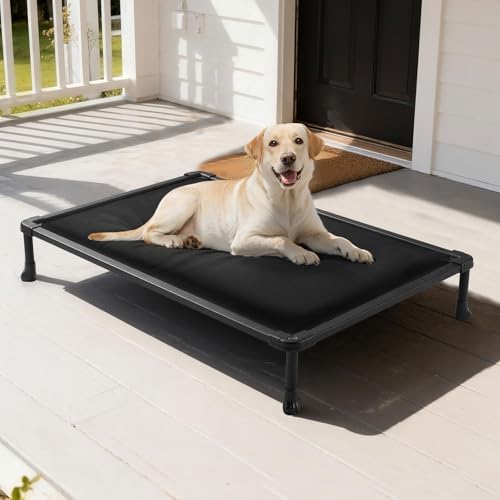
- Size: 41″L x 27″W x 7″H. Upgraded material and structure offer strong stability, Veehoo Raised dog bed can hold a up to …
- Waterproof Padded Dog Bed – Features a soft PP cotton-filled mat with a waterproof, easy-to-clean surface fabric. The pa…
- Indestructible Design: this chew proof dog bed features all edges encased metal frame and anti-digging corners on four c…
Comparing Mobility Aids by Function, Not by Rank
I’m deliberately not giving you a ranked “best product” list here, because that framing misrepresents how OA management actually works. What matters is matching the right tool to the specific function your dog needs: joint support during rest, physical relief from spinal or muscular compensation, or accessibility to reduce daily effort. Use the table below to identify which category your dog’s current gap falls into before you buy anything.

| Product | Primary Function | Best For | Price Tier |
|---|---|---|---|
| NANDOG Orthopedic Memory Foam Dog Bed | Rest-time joint support | Dogs with hip or shoulder OA needing pressure-point relief overnight | $$ |
| Labra Canine K9 Back Brace | Spinal and postural relief | Dogs with concurrent spinal weakness or asymmetrical gait compensation | $$$ |
| Veehoo Chew Proof Elevated Bed | Accessibility and effort reduction | Dogs who struggle to rise from flat, low surfaces | $$ |
Notice none of these substitutes for veterinary-directed pharmaceutical pain control. They address the environmental and mechanical side of dog arthritis relief, which works in tandem with, not instead of, whatever medication protocol your veterinarian has prescribed. Owners managing multiple senior conditions at once may also find it useful to review senior dog nutrition guidance for large and small breeds, since body weight is one of the single largest modifiable factors in joint load.
An Observational Exercise: Track It, Don’t Guess It
Owners consistently overestimate how much a new intervention is helping, largely because we want it to be working. This is a documented bias in human caregiver reporting for chronic pain conditions, and it applies just as reliably to dog owners assessing their pets. The fix is a simple, structured tracking sheet modeled loosely on the Canine Brief Pain Inventory used in veterinary rehabilitation settings. Run this for two to four weeks before and after introducing any new intervention.
- Gait quality: Rate on a 1 to 5 scale, once daily, at the same time. Look specifically for head-bobbing, limping, or reluctance to bear weight evenly.
- Willingness to rise: Time how long it takes your dog to stand from a fully resting position after calling them. Record in seconds.
- Activity tolerance: Note the duration of the daily walk or play session before your dog voluntarily stops or sits down.
- Stiffness pattern: Record whether stiffness is worse in the morning, after rest, or after activity. This detail helps your veterinarian differentiate OA from other orthopedic or neurological conditions.
Compare week one against week four using the same three metrics. If gait score, rise time, and activity tolerance haven’t moved in a measurable direction, that intervention likely isn’t earning its place in the routine, and it’s reasonable to discuss alternatives with your veterinarian rather than continuing indefinitely on faith.
Building a Realistic Dog Arthritis Relief Plan
The most effective dog arthritis relief plans I’ve reviewed in practice share a common structure: a veterinarian-confirmed diagnosis (ideally with radiographs, since clinical signs alone can mimic other conditions), a pharmaceutical baseline for pain control, one or two supportive nutraceuticals with realistic expectations attached, at least one physical environment modification, and a modest, consistent movement routine. None of these components work in isolation nearly as well as they work together. And critically, none of them are static. A plan that worked well a year ago may need adjusting as the disease progresses, which is exactly why the tracking exercise above should become a recurring habit rather than a one-time check.
Frequently Asked Questions
What is genuinely the best thing for dog arthritis relief?
There isn’t a single best product. The most effective dog arthritis relief comes from combining a veterinarian-prescribed pain management plan, a supportive joint supplement, an orthopedic sleeping surface, and a consistent, low-impact movement routine. Each category addresses a different part of the disease process.
Do joint supplements actually help arthritic dogs?
Evidence is mixed. A 2018 systematic review found supplement evidence quality ranges from low to moderate, meaning some dogs show meaningful improvement while others show little measurable change. Track gait, rise time, and activity tolerance for several weeks to determine whether a specific supplement is working for your dog.
Can an orthopedic bed alone manage dog arthritis relief?
An orthopedic bed reduces pressure-point stress during rest, which is meaningful given how many hours a senior dog spends lying down, but it addresses only the physical support category. It should be paired with veterinary-guided pain management and an appropriate exercise plan for comprehensive relief.
How do I know if my dog’s arthritis treatment is actually working?
Track three objective measures daily for two to four weeks: gait quality on a simple numeric scale, time taken to rise from rest, and how long your dog tolerates activity before stopping. If these measures don’t shift in a positive direction, discuss adjusting the plan with your veterinarian rather than continuing without evidence of benefit.