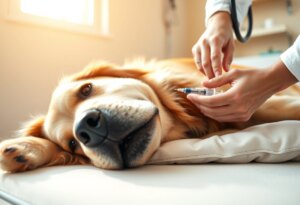
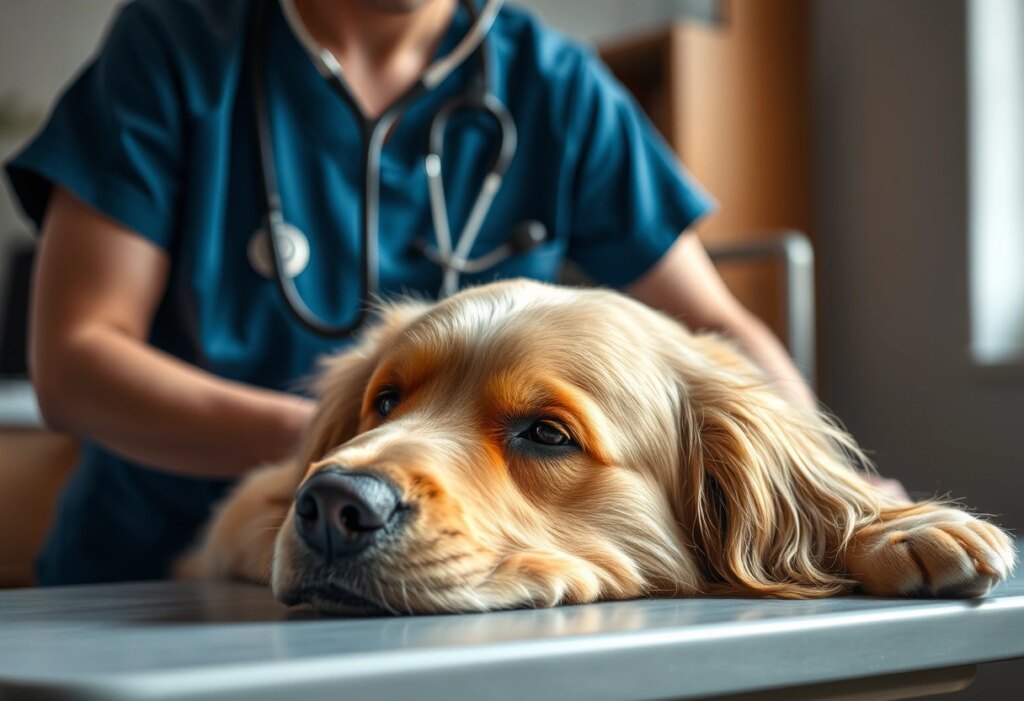

Dog cancer screening isn’t optional anymore if you love a Golden Retriever, it’s the single most important thing standing between “she seemed fine last week” and years more of tail wags on your porch. I’ve sat with too many families in that awful gap between a vague symptom and a diagnosis that came too late. Goldens carry a genetic burden that most other breeds simply don’t, and pretending otherwise is a disservice to the dog staring up at you right now.
Let’s talk honestly about what the numbers say, what actually catches cancer early, and what you can do starting today. No fear-mongering. Just the truth, delivered with the same steadiness I’d want if I were sitting across from you at Woody’s Place.
Why Golden Retrievers Face a Brutal Cancer Burden
Here’s the number that stops people cold: the Morris Animal Foundation‘s landmark Golden Retriever Lifetime Study found that roughly 60% of Goldens die of cancer. Sixty percent. That’s the highest rate of any breed ever studied, and it’s not close.
Hemangiosarcoma, lymphoma, mast cell tumors, osteosarcoma. These aren’t rare diagnoses whispered about in worst-case scenarios. For this breed, they’re an expected part of the aging story unless we get proactive. I wish that weren’t true. But loving a Golden means knowing this going in, and building your care plan around it instead of hoping you’re the exception.
This is why dog cancer screening can’t be an afterthought tacked onto a routine wellness visit. It has to be the centerpiece of how you care for a senior Golden. Honestly, who thinks a once-a-year weigh-in and a “she looks great!” is enough for a breed with these odds?? Not me. Not anymore.
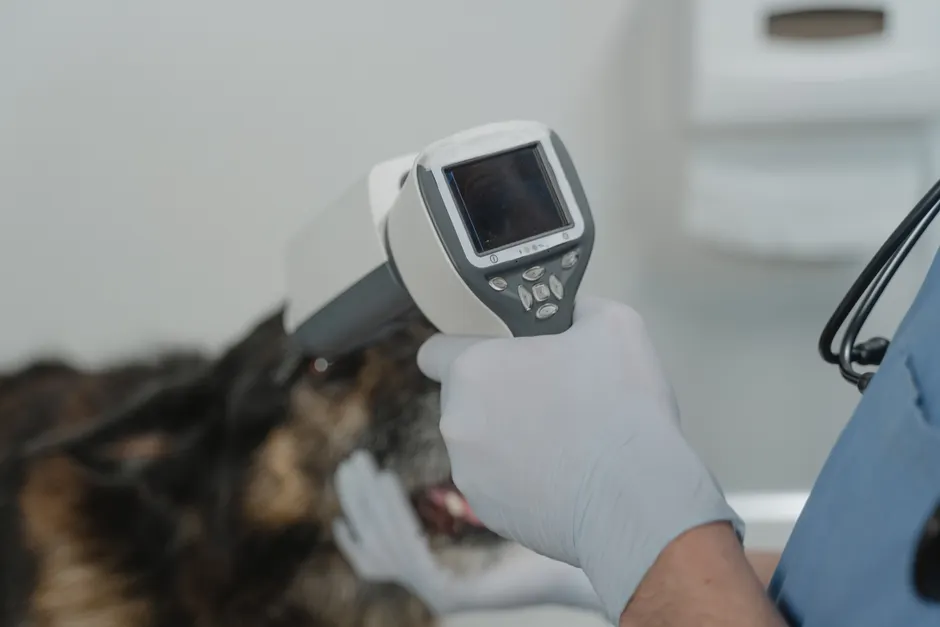
The Early-Detection Window That Actually Matters
Here’s the cruelest part of this disease in Goldens. Hemangiosarcoma, a cancer of the blood vessel lining that loves to hide in the spleen and heart, often shows zero symptoms until a tumor ruptures and your dog collapses. Lymphoma can look like nothing more than a slightly swollen lymph node under the jaw that you might brush off as “probably nothing.”
“Watching and waiting” is a strategy built for diseases that give you warning signs. Cancer in Goldens frequently does not. By the time symptoms show up, lethargy, pale gums, a distended belly, weight loss, the disease has often already progressed past the window where treatment can meaningfully extend a good quality of life.
The dogs who do best against cancer are almost never the ones who felt sick first. They’re the ones whose people caught something on a screening test weeks or months before any symptom showed up at all. That window is short, and it closes fast.
This is the emotional weight I carry every day at the sanctuary. You learn to trust bloodwork over your gut feeling, because your gut feeling is working off a dog who’s been masking discomfort her whole life out of pure Golden loyalty and stoicism. Dog cancer screening exists precisely because our eyes and our love aren’t enough to catch what’s happening at the cellular level.
Best Modern Screening Tools for Golden Retrievers
Let’s get practical. A serious canine cancer test plan for a senior Golden should include layered tools, not just one annual checkup and a handshake.
- Annual bloodwork (CBC and chemistry panel): This baseline testing tracks organ function, red and white cell counts, and platelet levels. Subtle shifts here can be the first whisper that something’s off, well before a dog acts sick.
- Chest X-rays and abdominal ultrasound: Imaging catches masses on the spleen, liver, and lungs that bloodwork alone can miss. For Goldens over age seven, I push hard for this to become part of the annual visit, not something reserved for when a dog is already symptomatic.
- Liquid biopsy testing (OncoK9 by PetDx): This is genuinely one of the more meaningful advances I’ve seen in years. OncoK9 detects fragments of tumor DNA circulating in the bloodstream, catching multiple cancer types from a single blood draw. Published validation studies report a specificity around 98.5%, meaning a positive result is rarely a false alarm. It won’t replace imaging or your vet’s clinical judgment, but as an early warning layer for a high-risk breed, it’s worth the conversation with your vet.
None of these tools work in isolation. Together, they build a picture your vet can actually act on. And if your dog needs sedation or a car ride to the specialty clinic for imaging, a secure and comfortable ride matters more than people realize. I always recommend something like the 4Knines Heavy-Duty Rear Seat Cover for Dogs to keep the back seat clean and your senior pup from sliding around on those anxious clinic trips. It’s a small comfort thing, but small comforts add up when you’re already stressed about test results.
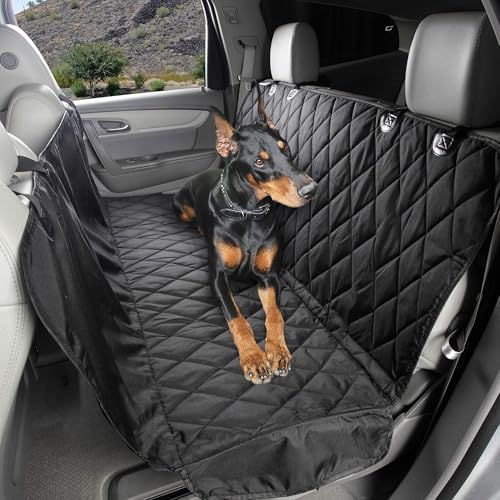
- ENGINEERED FOR ALL VEHICLES: Our 4Knines Dog Car Seat Cover is designed to fit cars, trucks, and SUVs. With a 60-inch wi…
- PREMIUM DURABILITY WITH REAL QUILTING: Crafted from heavy-duty 600D polyester, our dog seat cover features real quilting…
- ADVANCED WATERPROOF PROTECTION: Featuring exclusive K9-Shield waterproof technology, this back seat dog cover protects y…
If your Golden is prone to anxiety on car rides to the vet or specialist, a snug, secure harness can help her feel steadier during transport. The OneTigris Tactical Dog Harness offers sturdy handles that let you support an unsteady senior getting in and out of the car, which matters more than you’d think when she’s groggy from sedation after imaging.

- 🐶SIZE INFO: Neck Girth: 11″-17″;Chest Girth: 15″-22″;Back Length: 8.6″;Waist Girth: 15″-22″;
- ❤SMALL DOG HARNESS WITH HANDLE: OneTigris BEAST MOJO tactical dog harness is made of high strength 1000D nylon, with a f…
- 🐾EASY ON/OFF: A small tactical dog harness with quick release buckles for easy on and off without compromising security;…
Comparing Screening and Support Options
| Tool / Product | Best For | What It Detects or Supports | Price Tier |
|---|---|---|---|
| CBC/Chemistry Bloodwork | Annual baseline monitoring | Organ function shifts, anemia, platelet drops | $ |
| Abdominal Ultrasound | Dogs age 7+ | Splenic and liver masses, internal bleeding risk | $$$ |
| OncoK9 Liquid Biopsy | High-risk breeds like Goldens | Multiple cancer types via single blood draw | $$$$ |
| Turkey Tail Mushroom Supplement | Post-diagnosis or preventive support | Immune modulation, hemangiosarcoma survival support | $$ |
| 4Knines Rear Seat Cover | Comfortable clinic transport | Safe, secure travel for anxious or sedated dogs | $$$ |
Supplements and Diet-Based Risk Reduction
Screening catches disease early. Diet and supplements are how we try to lower the odds it shows up at all, or slow it down once it has. This isn’t a cure, and I’ll never pretend otherwise, but the science here has grown up quite a bit.

- Omega-3 fatty acids (fish oil): Anti-inflammatory support that also helps aging joints, a nice two-for-one benefit in a senior Golden.
- Turmeric and curcumin: Studied for antioxidant and anti-inflammatory properties. Needs a bioavailable form and vet guidance on dosing, curcumin alone doesn’t absorb well.
- Medicinal mushrooms (turkey tail, reishi): This is where things get genuinely exciting. The well-known “I’m Yunity” study out of the University of Pennsylvania looked at dogs with hemangiosarcoma given turkey tail mushroom extract and found a meaningful extension in survival time compared to dogs not given the supplement. That’s not a small result for a cancer this aggressive.
- Antioxidant-rich whole foods: Blueberries, pumpkin, leafy greens in moderation. Small additions, but they matter as part of a bigger picture of cancer supplements for dogs working alongside, not instead of, medical care.
I’ll say this plainly: supplements are support, not substitutes for veterinary treatment. If your dog is ever prescribed a medication like Phenobarbital, 16.2 MG Tablet for seizure management related to a brain tumor or other neurological complication, that’s a conversation for your vet, not a DIY decision. I mention it here only because it’s a reminder that some cancer complications require real medical intervention, and no mushroom extract replaces that.
There is an issue displaying Amazon products. Please contact the administrator to check that.Building a Proactive Senior Wellness Plan
Here’s how I structure a real, working plan for aging Goldens at the sanctuary:
- Ages 6 to 8: Annual bloodwork plus a physical exam that includes lymph node palpation. Start asking your vet about dog cancer screening options like OncoK9 as a baseline, even before anything looks wrong.
- Ages 8 to 10: Bloodwork every six months, annual abdominal ultrasound, ongoing liquid biopsy monitoring if you can manage it financially.
- Ages 10+: Full panels every six months, imaging as your vet recommends, and honest conversations about quality of life alongside every test result.
Ask your vet directly: “What’s our screening schedule for golden retriever cancer risk specifically, given this breed’s history?” A good vet won’t flinch at that question. They’ll welcome it. If your Golden shows any early neurological symptoms that concern you, it’s worth reading up on the early warning signs vets want you to catch before they escalate.
And if you’re navigating a mixed litter or wondering how genetics play into all this for a puppy you’re considering, it’s worth understanding breed-specific risk factors early, whether that’s a Black Golden Retriever mix puppy or another variation on the classic Golden lineage. Knowing what you’re bringing home shapes the whole care plan ahead.
Quality of life has to sit right alongside prevention, always. A screening result is data. It’s not a verdict, and it’s not permission to stop enjoying the dog in front of you. Some of my most peaceful days at the sanctuary have come after a hard diagnosis, simply because we decided to keep living fully instead of grieving in advance.
Frequently Asked Questions
How often should Golden Retrievers get cancer screening?
Starting around age six, annual bloodwork is a reasonable baseline for dog cancer screening. By age eight, most vets recommend moving to every six months, adding imaging and liquid biopsy options as the dog gets older and risk climbs.
What is OncoK9 and how accurate is it?
OncoK9 is a liquid biopsy canine cancer test made by PetDx that detects circulating tumor DNA from a single blood draw. Published validation studies report a specificity around 98.5%, meaning false positives are rare, though it works best alongside imaging and standard bloodwork rather than as a standalone diagnosis.
Do turkey tail mushroom supplements really help dogs with cancer?
A widely cited University of Pennsylvania study found dogs with hemangiosarcoma given turkey tail mushroom extract lived meaningfully longer than dogs who didn’t receive it. It’s one of the more promising cancer supplements for dogs, but it should always be used alongside veterinary treatment, not as a replacement.
Why do Golden Retrievers have such a high cancer risk compared to other breeds?
Genetic studies point to inherited predispositions within the breed’s gene pool, likely tied to historical breeding practices and a narrowed genetic base. This is why golden retriever cancer risk runs so much higher than in mixed breeds or less genetically concentrated purebreds, making proactive screening especially important.
Loving a Golden Retriever through her senior years means carrying this knowledge without letting it steal your joy in her. It’s a hard balance some days. But every bloodwork panel, every ultrasound, every mushroom supplement stirred into her dinner, it’s all just another way of saying I see you, and I’m fighting for more time with you. That’s the sacred trust we signed up for the day we brought her home.
Tell your pup I said Hi! — Dawn