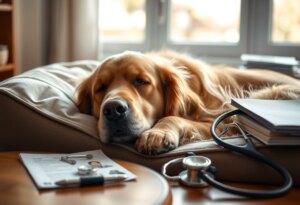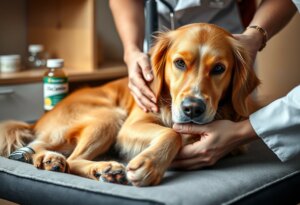
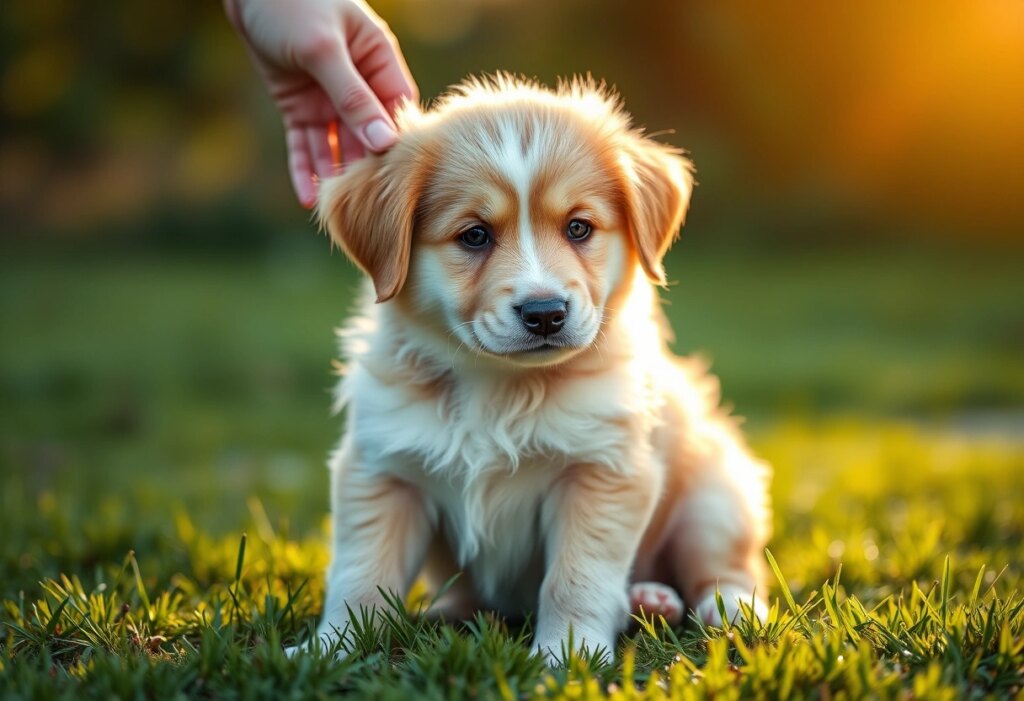

A golden aussie puppy is one of the sweetest, goofiest bundles you’ll ever bring through your front door, but here’s the thing nobody tells you at the breeder’s kitchen table: the choices you make right now, before that puppy even opens its eyes fully, are the same choices that will decide how well he moves at age eleven, whether her hips hold up on the stairs, and how many good years you get together before the hard stuff starts. I’ve spent years caring for dogs in their final chapter at the sanctuary, and I promise you, almost every senior mobility crisis I’ve seen traces back to something that could have been screened for as a puppy. So let’s talk about what actually matters before you put down that deposit.
What Is a Golden Aussie, Really?
A Golden Aussie is a cross between a Golden Retriever and an Australian Shepherd. Two working breeds, both smart as tacks, both bred to have a job and a purpose. On paper, it sounds like the best of both worlds: the Golden’s soft mouth and people-pleasing nature, paired with the Aussie’s sharp intelligence and stamina.
Here’s where I want to gently push back on something you’ll see repeated all over social media: the idea that mixed breeds automatically get “hybrid vigor” and dodge the health problems of their purebred parents. That’s not how genetics works. A golden aussie puppy inherits genes from both lines, which means she can inherit the health vulnerabilities of both breeds too, not some magically diluted, problem-free version of each. If you’re comparing temperament and family fit across designer breeds, our piece on the Golden Aussie vs Golden Retriever comparison breaks down what actually differs behaviorally, and it’s worth a read before you commit to either.
Hybrid vigor is a real concept in genetics, but it applies most reliably to traits controlled by many genes interacting in complex ways, not to single-gene inherited conditions like progressive retinal atrophy or the MDR1 mutation. Those don’t care what breed standard you’re marketing under.
Inherited Health Risks to Screen For
This is the part I wish every hopeful puppy buyer would read twice before falling in love with a fuzzy face on a breeder’s website. Because falling in love is easy. Walking into it with your eyes open is what protects your dog decades from now.
- Hip and elbow dysplasia: The Orthopedic Foundation for Animals (OFA) has documented dysplasia rates as high as 20% in Golden Retrievers. That’s not a rare fluke, that’s one in five dogs. Aussies carry their own elbow and hip vulnerabilities too. A puppy with unscreened parents on both sides is rolling double dice.
- Progressive retinal atrophy (PRA): A degenerative eye condition that slowly steals a dog’s vision, often starting with night blindness and progressing over months to years. It’s heartbreaking to watch a senior dog lose confidence in a house he’s lived in for a decade because his eyesight quietly failed him, and it’s genetic, meaning it’s preventable through testing.
- MDR1 gene mutation: This one is specific to herding breeds like the Australian Shepherd, and it matters enormously. Dogs with this mutation can have severe, even fatal, reactions to common medications, including some flea/heartworm preventatives and anesthesia drugs. Washington State University’s Veterinary Genetics Lab offers direct testing for this exact mutation, and honestly, I consider it non-negotiable for any Aussie-lineage dog.
A puppy’s health paperwork isn’t bureaucracy. It’s the closest thing you’ll get to a roadmap for the next twelve to fifteen years of your life together. Don’t skip reading it.
I’ve sat with old dogs whose joints gave out far too early, and more than once, when I asked about their history, the answer was some version of “we just didn’t know to ask.” That sentence carries so much quiet grief in it. You get to ask. You get to know.
Questions to Ask the Breeder Before You Put Down a Deposit
A responsible breeder will not flinch at these questions. They’ll practically light up, because they’ve done the work and they want you to know it.
- Can I see OFA hip and elbow clearance certificates for both parents?
- Has this litter’s parents had a CERF (Canine Eye Registry Foundation) or equivalent ophthalmologist eye exam?
- Has MDR1 genetic testing been done on the Aussie parent, and can I see the results?
- What is the average lifespan and common health conditions you’ve seen across your previous litters?
- Can I meet the dam (mother) in person, not just see photos?
If you’re weighing cost against these health guarantees, our Golden Aussie puppy price guide for 2026 lays out what fair pricing looks like when a breeder is actually investing in genetic testing versus just marking up a cute litter.
While you’re waiting on breeder responses (a good one may take days to reply thoughtfully rather than seconds to grab your deposit), a little humor helps the wait. If you’re the type who likes a lighthearted mug on your desk while you research, this Happy Halloween Samoyed Witch Pumpkins Bats Mug is a fun, affordable way to keep your dog-lover spirit up during the process.
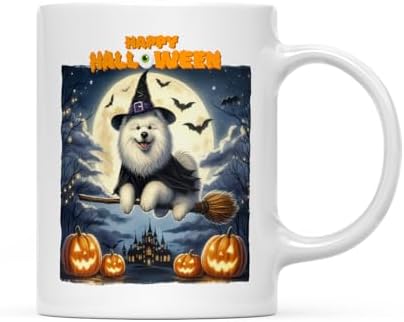
- ⚡ SIZE: both sides printing 11oz and 15oz mugs. Black and White color are available. ✅✅✅ Click “Customize” button to sel…
- ⚡ MATERIAL: Non-toxic and High quality ceramic resists all chipping and cracking. Suitable for hot and iced cold favorit…
- ⚡ COOL STYLE: premium sublimation printing technology on white color mug
Red Flags in a Breeding Operation
I want to be direct here, because this matters too much for soft language. If you see any of the following, walk away. Not “think about it.” Walk.
- No health clearances offered, or vague answers like “our dogs are healthy, we’ve never had problems.” That’s not evidence, that’s a hope dressed up as a fact.
- Multiple litters running year-round from the same females. A responsible breeder rests their dams. Continuous breeding is a business model, not a care model.
- You’re not allowed to meet the mother. Honestly, who thinks like that?? If a breeder won’t let you see the dam in her living environment, ask yourself what you’re not being shown.
- Puppies available “immediately,” no waiting list, no questions asked of you. Good breeders interview you too. They care where their puppies land.
This is a sacred trust, bringing a new life into the world and placing it in someone’s home for the next decade or more. A breeder who treats it casually is telling you, quietly, how they’ll handle every hard decision down the road, including whether they screened for the genetic landmines that shape a dog’s senior years.
If you’re also considering other herding-mix combinations, the Border Collie Golden Retriever mix size guide by age is a helpful comparison for understanding how working-breed genetics show up physically over a dog’s lifetime, which is relevant whether you’re looking at Aussie or Border Collie crosses.
Long-Term Senior Health Planning Starts Now
Here’s the part that keeps me up sometimes. The screening decisions made in puppyhood are not abstract. They are the literal foundation of how your dog will move, see, and think when he’s old and gray-muzzled and slower on his morning walks.
A golden aussie puppy with clean hip and elbow clearances behind him has a real head start on avoiding crippling arthritis at age nine. A puppy whose parents were CERF-tested has better odds of keeping her sight into her golden years, which matters enormously for a dog’s confidence and cognitive stability as she ages. And a dog cleared of the MDR1 mutation early on means every future vet visit, every medication, every anesthesia event across her whole life is safer by default.
I think about this every single day at the sanctuary. The old dogs who came to us with unknown histories, whose joints were already failing, whose eyes had already dimmed, they didn’t choose that. Someone chose it for them, back when they were eight weeks old and impossibly small, by skipping a test or ignoring a red flag. You get to choose differently.
Quality-of-life in the senior years isn’t just about supplements and orthopedic beds later (though those help enormously, and we talk about them often). It’s about the genetic dice that got rolled before the puppy ever came home. Roll them with your eyes open.
For families weighing a golden aussie puppy against a straight Golden Retriever line, temperament and long-term health outcomes both deserve equal weight in that decision, not just cuteness or coat color.

Comparing Health Testing Standards Across Golden Aussie Sources
Not all “breeders” are created equal, and price alone tells you almost nothing about the genetic homework that’s actually been done. Here’s a simple side-by-side to help you evaluate what you’re being offered.
| Source Type | Hip/Elbow OFA Testing | Eye (CERF) Testing | MDR1 Genetic Test | Price Tier |
|---|---|---|---|---|
| Reputable Specialty Breeder | Yes, documented | Yes, annual | Yes, on record | $$$$ |
| Hobby Breeder (Health-Focused) | Yes, OFA prelim | Often, ask directly | Sometimes | $$$ |
| Backyard/Casual Breeder | Rarely, unverified | Rarely | Rarely | $$ |
| Puppy Mill/Broker | No | No | No | $ |
| Rescue/Shelter Golden Aussie | Unknown history, vet check available | Unknown history | Testable post-adoption | $ |
Notice something important in that table: the cheapest options aren’t cheap in the long run. A golden aussie puppy from an untested source may cost less upfront, but veterinary bills for undiagnosed dysplasia or vision loss in the senior years can far exceed what you’d have paid a responsible breeder charging a premium investment price for documented testing.
If you’d like an official reference point for understanding canine hip dysplasia scoring and how OFA evaluations work, the American Kennel Club’s guide to hip dysplasia is a solid, trustworthy resource to read alongside your breeder conversations.
Choosing an Aussie Health Testing Program You Can Trust
Beyond the paperwork, pay attention to how the breeder talks about aussie health testing overall. Do they mention it unprompted? Do they seem proud of it, almost eager to show you the certificates? Or does it feel like you’re pulling teeth to get a straight answer?
A breeder who has done thorough golden aussie breeder due diligence will usually also be transparent about temperament quirks, exercise needs, and the working-dog energy that both parent breeds bring to the table. That kind of honesty upfront is a good sign they’ve thought seriously about the whole dog, not just the sale.
And on a lighter note, while you’re deep in spreadsheet mode comparing breeders and tracking OFA numbers, sometimes a little seasonal cheer helps balance the seriousness of it all. If you’re a Golden Retriever household getting into the fall spirit, this Ninety3POD Spooky Halloween Night Witch Golden Retriever décor piece is a sweet, budget-friendly way to celebrate your pup while you wait for test results to come back.
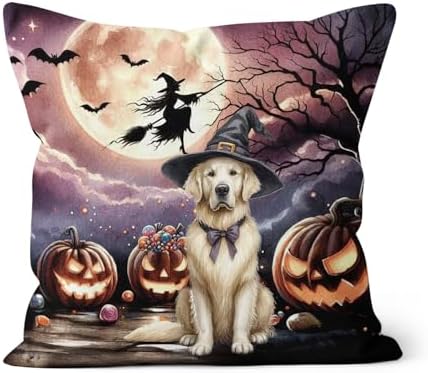
- ⚡ OPTION: pillowcase only or pillowcase with pillow gut. Both in square or rectangle shape. ✅✅✅ Click “Customize” button…
- ⚡ MATERIAL: made of 100% poly oxford fabric. Machine-washable case
- ⚡ COOL STYLE: Distinct textured weave with premium sublimation printing technology. Suitable for home, bedroom, living r…
And if you’re the sentimental type who likes marking milestones (bringing home a new puppy is a milestone worth celebrating), this Vintage German Shorthaired Pointer Says Hello Mother’s Day card makes a genuinely sweet gift for the grandmother in your life who’s about to become a “puppy grandma” too.
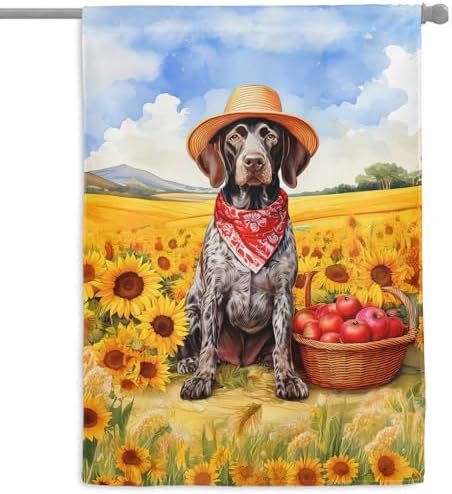
- ⚡ SIZE: 28×40 inches flag, flag hole’s diameter: 3.5 inch. Both sides printing
- ⚡ MATERIAL: 100% polyester fabric. It’s lightweight, ensures durability and water-resistance, maintaining the freshness …
- ⚡ COOL STYLE: Premium sublimation printing technology provides vibrant, vivid, and crisp prints. Suitable for home party…
A Final Word Before You Sign Anything
I know how it feels to see a litter of wiggly puppies and want to scoop one up right then and there. That pull is real, and it’s human, and it’s not something to be ashamed of. But a golden aussie puppy deserves an owner who slows down just long enough to ask the hard questions, because those questions are how you protect the dog you’re about to fall completely in love with.
Ask yourself: is this breeder building a healthy future for this litter, or just filling an order? The difference shows up in test results now, and in mobility, vision, and quality of life fifteen years from now.
Frequently Asked Questions
Are golden aussie puppies prone to more health problems than purebred dogs?
Not necessarily more, but they can inherit health risks from both parent breeds, including hip dysplasia from the Golden Retriever line and the MDR1 gene mutation common in Aussie lines. Proper genetic testing of both parents is the best way to reduce these risks in any golden aussie puppy.
What is the MDR1 mutation and why does it matter for Golden Aussies?
MDR1 is a gene mutation common in herding breeds like the Australian Shepherd that affects how a dog metabolizes certain medications. Dogs with this mutation can have severe, sometimes life-threatening reactions to specific drugs, so testing through a lab like Washington State University’s Veterinary Genetics Lab is strongly recommended before treatment decisions arise later in life.
How do I verify a breeder’s health clearances are legitimate?
Ask for the actual OFA certificate numbers and look them up directly on the Orthopedic Foundation for Animals public database. Legitimate results are searchable by the parent dog’s registered name, so a responsible golden aussie breeder should have no hesitation providing this information.
Does early health screening really affect a dog’s senior years?
Yes, significantly. Puppies from parents cleared of hip and elbow dysplasia have better long-term joint outcomes, while eye testing reduces the risk of progressive vision loss later in life. Choosing a golden aussie puppy from a health-tested litter is one of the most meaningful things you can do to protect their quality of life as they age.
Whatever you decide, decide it slowly, and decide it with your eyes wide open. That puppy is counting on you before she even knows your name.
Tell your pup I said Hi! — Dawn