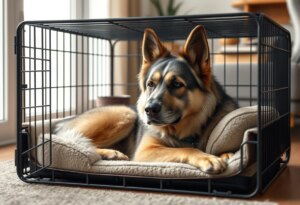
Golden Dox puppies have become one of the more requested designer crosses in the past few years, and that popularity has created a breeding market that is, frankly, uneven in quality. Before you hand over a deposit, you need to understand what you are actually buying: a crossbreed with an unpredictable phenotype, a health profile inherited from two distinct gene pools, and a temperament that depends far more on breeder practices than on marketing copy. This article walks through the genetics, the health screening you should demand, the behavioral red flags that show up in poorly run breeding operations, and a practical checklist you can use before you ever put money down.
What a Golden Dox Actually Is (And What “Hybrid Vigor” Doesn’t Guarantee)
A Golden Dox is a first-generation or multi-generation cross between a Golden Retriever and a Dachshund. The pairing produces puppies with a wide range of outcomes: some inherit the elongated spine and short legs of the Dachshund parent, others land closer to a scaled-down Golden Retriever build, and most fall somewhere in between. This variability is expected in any F1 cross, since the offspring receive a random assortment of dominant and recessive traits from two genetically distinct breeds rather than a standardized template refined over generations.
Breeders marketing Golden Dox puppies frequently lean on the term “hybrid vigor,” implying that crossbred dogs are automatically healthier than purebreds because they avoid the inbreeding depression associated with closed gene pools. The data on this is genuinely contradictory. Some outcrossing studies do show reduced incidence of certain recessive single-gene disorders in first-generation crosses. But hybrid vigor is not a blanket health guarantee, and it does not extend to polygenic, multifactorial conditions, which is exactly the category that matters most for a Dachshund Golden Retriever mix. Hip dysplasia, intervertebral disc disease, and cardiac conditions are all influenced by multiple genes plus environmental factors like growth rate and body condition. A puppy can inherit the full genetic liability for both parent breeds’ orthopedic problems simultaneously. Don’t count on the “designer dog” label to protect your dog from the conditions its parent breeds are known for.
Health Screening Every Reputable Golden Dox Breeder Should Provide
This is where most casual or profit-driven breeders fall short, and it’s the single most important filter you can apply. A responsible breeder of Golden Dox puppies should be able to produce documentation, not just verbal reassurance, for both parent dogs.
- OFA hip and elbow certification for the Golden Retriever parent. Orthopedic Foundation for Animals (OFA) data shows hip dysplasia reported in up to 20% of Golden Retrievers evaluated, making this one of the breed’s most consequential inherited conditions. A hybrid cross does not receive a pass on this risk simply because one parent is a smaller breed. Ask for the OFA registry number and verify it independently.
- Cardiac clearance for the Golden Retriever parent. Golden Retrievers carry elevated rates of subvalvular aortic stenosis and cardiac hemangiosarcoma later in life. A veterinary cardiologist auscultation or echocardiogram result should be available on request.
- Spinal and IVDD screening for the Dachshund parent. Intervertebral disc disease is strongly associated with the chondrodystrophic body type. While there’s no single definitive genetic test that eliminates IVDD risk, a breeder should be tracking spinal health across their lines and disclosing any history of disc disease in prior litters.
- Patellar luxation evaluation. Common in small and mixed-size breeds, this is a low-cost screen that any breeder acting in good faith should already be doing.
- PRA and eye clearance (CAER exam) for the Golden Retriever line, since progressive retinal atrophy is documented in the breed.
If a breeder cannot produce these documents, or waves them off with “designer dogs don’t need that,” treat it as disqualifying. It is not evidence of health, it’s an absence of information, and absence of information is not the same as absence of risk.

The genetic diversity introduced by crossbreeding can reduce the frequency of certain recessive disorders, but it does not eliminate polygenic conditions inherited from either parent breed. Owners should request the same orthopedic, cardiac, and ophthalmologic clearances they would demand from a purebred breeder, applied to both parent dogs.
Behavioral Red Flags in Golden Dox Breeding Facilities
Health clearances tell you about the body. Socialization practices tell you about the nervous system, and this is the piece most buyers overlook entirely. Serpell and Hsu’s 2001 research on canine behavior and early experience identified the period between 3 and 14 weeks of age as the critical socialization window, during which a puppy’s exposure (or lack of exposure) to novel people, environments, surfaces, and stimuli directly shapes adult stress reactivity. Puppies raised in isolated kennel environments during this window, without graduated exposure to household sounds, varied handling, and diverse social partners, show measurably higher rates of adult fearfulness, noise reactivity, and stranger-directed anxiety.
When you’re evaluating a facility, or even a home-based breeder, look for these specific red flags:
- Puppies kept exclusively in a garage, barn, or kennel run with minimal human contact. This is the single strongest predictor of adult behavioral problems in the research literature.
- No variation in flooring, sound, or handling by the time you visit at 6-8 weeks. Puppies should already be walking on multiple surface types and hearing household noise.
- Parent dogs that are noticeably fearful, avoidant, or reactive when you visit. Temperament has a heritable component, and a fearful dam under chronic stress also produces cortisol-mediated effects on fetal development, which has been linked to altered stress reactivity in offspring.
- Breeder discourages or refuses an in-person visit to see the whelping area. This is arguably the clearest sign of something being hidden, whether that’s poor conditions or a mill-style volume operation.
- No mention of any structured socialization protocol (novel object exposure, varied handlers, sound desensitization) when you ask directly.
A reputable breeder should be able to describe, unprompted, what they’re doing during those 11 critical weeks. If the answer is vague or defensive, that’s data, and you should weigh it accordingly.
The Vetting Checklist: What to Require Before You Pay a Deposit
Apply this checklist methodically. Treat any refusal or evasive answer as a legitimate reason to walk away, regardless of how appealing the puppy photos look.
- Request OFA or equivalent health clearances for both parent dogs, and verify registry numbers independently rather than trusting a printed certificate alone.
- Insist on an in-person home or facility visit. Video calls are a reasonable start but should never fully substitute for seeing the whelping area, the parent dogs, and the litter in person before payment.
- Observe the dam’s temperament directly. A confident, approachable mother is a better predictor of puppy temperament than any written guarantee.
- Ask about the socialization protocol during the 3-14 week window specifically. A good breeder will have a concrete answer involving novel stimuli, varied handlers, and gradual environmental exposure.
- Refuse any pet-store or online-only transaction where you cannot meet the breeder or see the puppy’s living conditions before purchase. This structure is strongly associated with commercial mill sourcing regardless of how the seller brands itself.
- Ask for references from past buyers, ideally ones whose dogs are now at least two years old, since that’s when many orthopedic and behavioral issues become apparent.
- Confirm a written health guarantee and a clear return policy if the puppy develops a genetically-linked condition within a defined window.
This same due-diligence framework applies whether you’re comparing a Golden Dox breeder versus a rescue organization, since some rescues now specialize in designer crosses and can offer a fully assessed adult dog with a known temperament profile, which sidesteps a lot of this uncertainty entirely.

Setting Your Golden Dox Puppy Up for Success at Home
Once you’ve secured a puppy from a breeder who checked every box above, the environment you build matters just as much as the breeding itself. Given the Dachshund parent’s chondrodystrophic spine, orthopedic support starts early, not just in the senior years. A supportive, low-entry bed reduces repetitive jumping strain on a body type already predisposed to disc issues. The Sanctuary Dog Bed, Orthopedic Cooling Memory Foam is a reasonable mid-tier option worth considering for a growing Golden Dox, since joint-conscious habits formed early tend to pay off decades later.

- EXCLUSIVE 2-COVER BUNDLE (ZERO DOWNTIME): This Amazon-exclusive set includes the complete Sanctuary Bed plus a bonus rep…
- MODULAR & CUSTOMIZABLE DESIGN: The innovative Quick-Change sleeping surface allows you to refresh your bed’s style insta…
- ORTHOPEDIC FOAM TOPPED WITH A COOLING MEMORY FOAM LAYER: Engineered for superior support, our Orthopedic Foam core has a…

- 【WARM MATERIAL】The dog’s trendy coat is made of thick fleece material, which is soft and comfortable, and has strong war…
- 【UNIQUE DESIGN】This warm dog coat reinforces the edges, which greatly increases the durability of this apparel while eff…
- 【EASY WEAR AND OFF】This pullover fleece dog outfit is elastic enough and has a one-piece design, whether it is a big dog…
Comparing Support Products for New Golden Dox Owners
The table below breaks down relevant options by function and relative investment level, using Amazon’s Price Tier scale rather than fixed dollar figures, since actual prices fluctuate.
| Product | Best For | Key Feature | Price Tier |
|---|---|---|---|
| Sanctuary Orthopedic Cooling Memory Foam Bed | Joint and spinal support from puppyhood onward | Cooling memory foam, low-entry design | $$$ |
| Esobo Fleece Winter Dog Coat | Cold-weather thermoregulation | Lightweight fleece, easy on/off closures | $ |
| Retro American Flag Spare Tire Cover, Monogram | Owners who travel with their dog by vehicle | Custom monogram, weather-resistant material | $$ |
A separate but relevant accessory for owners who travel often with their new companion is the Retro American Flag Spare Tire Cover, Monogram, which, while not a health product, is a popular add-on for households that road-trip with their Golden Dox puppies to vet visits, breeder meet-ups, or family gatherings.

- Spare Tire Cover are made of high quality polyester, neat and tight stiching reinforce its durability. Single side print…
- Keeps dirt, rain, and sunlight away from your spare tire, And the tire cover is easy to clean, wipe only with clean wate…
- Perfect for SUV, car & truck, trailer, camper, motor home & RV, or anything with the correct tire size.
The Ethics of Designer Dog Demand: What It Means for Shelters
There’s a welfare dimension to the Golden Dox puppies market that goes beyond any single transaction. The American Veterinary Medical Association’s guidance on responsible sourcing points to a documented pattern: high consumer demand for trendy designer crosses incentivizes volume breeding operations that prioritize output over health testing and socialization protocols, precisely the two areas discussed above. When that happens at scale, the downstream effect shows up in shelter intake data, where poorly socialized or health-compromised designer crosses are surrendered at disproportionate rates once behavioral or medical problems emerge that the original buyer wasn’t prepared for.
This isn’t an argument against designer crosses categorically. It’s an argument for treating your purchasing decision as a market signal. Every buyer who insists on OFA documentation, in-person visits, and disclosed socialization practices makes it marginally less profitable to run a low-welfare breeding operation, and marginally more profitable to run a responsible one. If you’re weighing this decision financially as well as ethically, it’s also worth comparing costs across related crosses, such as reviewing a Mini Golden Retriever’s typical cost against Golden Dox pricing, since price alone is a poor proxy for breeder quality in either direction.
According to the ASPCA’s guidance on responsible pet sourcing, prospective owners should treat breeder transparency, not price or marketing language, as the primary indicator of ethical practice. That guidance holds regardless of whether you’re looking at a purebred or a crossbreed like the Golden Dox.
Frequently Asked Questions
Are Golden Dox puppies healthier than purebred Golden Retrievers or Dachshunds?
Not automatically. Crossbreeding can reduce the frequency of certain recessive single-gene disorders, but polygenic conditions like hip dysplasia, cardiac disease, and intervertebral disc disease are inherited independently from each parent breed. A Golden Dox puppy can still develop conditions common to either the Golden Retriever or Dachshund lineage, which is why health screening on both parent dogs matters more than the crossbreed label itself.
What health clearances should I ask a Golden Dox breeder to provide?
Request OFA hip and elbow certification and cardiac clearance for the Golden Retriever parent, along with spinal health history and patellar luxation evaluation relevant to the Dachshund parent. Eye clearance (CAER exam) is also reasonable to request given documented PRA risk in Golden Retriever lines. A breeder unable to produce any of this documentation should be treated as a significant red flag.
Why does early socialization matter so much when choosing a breeder?
Research on the canine socialization window, including work by Serpell and Hsu, identifies the period between roughly 3 and 14 weeks of age as critical for shaping adult stress reactivity. Puppies raised without varied handling, sounds, and environmental exposure during this window show measurably higher rates of adult fearfulness and reactivity. A reputable breeder should describe a specific socialization protocol without being prompted.
Is it ever acceptable to buy Golden Dox puppies from a pet store or online-only seller?
No. Pet-store and online-only transactions where you cannot meet the breeder or view the whelping environment in person are strongly associated with commercial mill sourcing, regardless of branding. Responsible breeders of Golden Dox puppies will welcome an in-person visit and will not pressure you into a transaction without one.