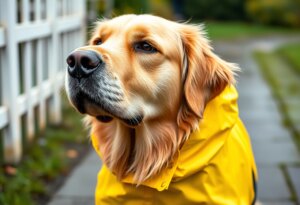
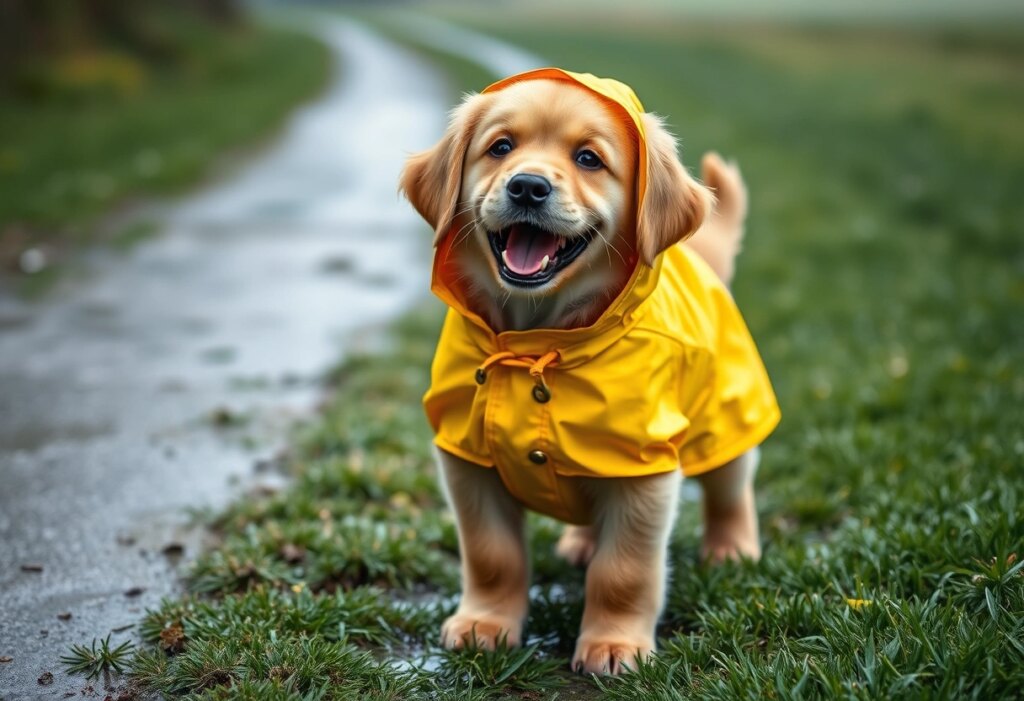

A golden retriever raincoat is not a fashion accessory for a young puppy. It is a functional thermoregulatory buffer for an animal whose physiology has not yet caught up with its enthusiasm for puddles. Puppies under six months old lose body heat considerably faster than adult dogs relative to their mass, largely because subcutaneous fat stores and coat density are still developing. If you have a soggy, shivering pup after a ten-minute walk, that is not dramatics. That is a nervous system telling you it is working overtime to stay warm.
I get a version of the same question in my behavior consultations every autumn: “Is a raincoat actually necessary, or is this something the pet industry invented?” The honest answer is that it depends on your climate, your dog’s coat stage, and how much time you spend outdoors in wet conditions. But for golden retriever puppies specifically, whose adult double coat has not yet come in, a well-fitted golden retriever raincoat is a legitimate piece of welfare equipment, not an indulgence.
Why Rain Protection Matters: The Thermoregulation Problem
Puppies regulate body heat differently than mature dogs. According to AVMA cold weather safety guidance, young and small-bodied animals lose heat at a disproportionately faster rate because their surface-area-to-mass ratio is higher and their insulating fat layer is thinner. In practical terms, a golden retriever puppy can lose heat two to three times faster than an adult dog of comparable breed relative to body mass. That is a significant physiological handicap during a rainy walk.
This matters behaviorally too, not just medically. A cold, wet puppy is a stressed puppy. Cold discomfort activates the same sympathetic stress response we see with other aversive stimuli, elevated cortisol, restlessness, and in some cases a shutdown or freeze posture that owners misread as “being calm.” A properly fitted golden retriever raincoat reduces this physiological load, which in turn keeps your walks associated with something manageable rather than something to avoid. I have worked with more than one client whose dog developed leash reluctance in wet months, and cold exposure was a contributing variable nobody had considered until we ruled it out.
Material Breakdown: PVC-Coated Nylon vs. Polyester Blends
Not all “waterproof” claims are equal, and this is where a lot of buyers get misled. Water resistance is measured using hydrostatic head ratings, expressed in millimeters. A fabric rated at 1,500mm will withstand light drizzle. A fabric rated above 5,000mm will hold up in sustained downpours. Most budget raincoats do not publish this number, which is itself a data point worth noting.
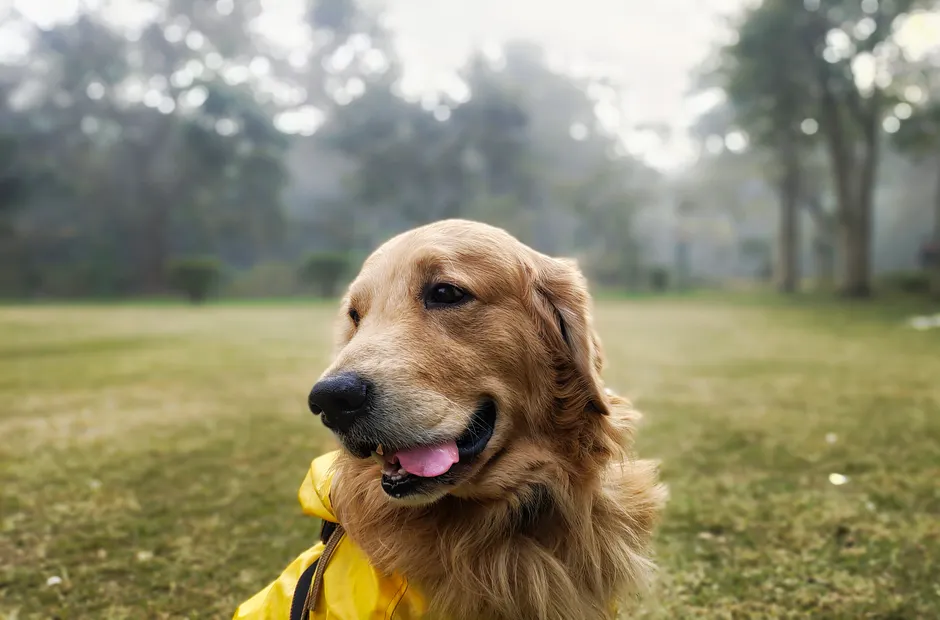
- PVC-coated nylon: Higher hydrostatic head, fully waterproof, but low breathability. Better suited for short walks in heavy rain rather than extended wear.
- Polyester-blend shells with DWR (durable water repellent) coating: Lower absolute water resistance, but significantly better breathability. Reduces the risk of moisture trapping against the skin, which matters for puppies prone to hot spots.
- Fleece-lined water-resistant coats: Best for cold-and-wet combination climates, but not appropriate for warm rain since they can cause overheating.
If you are also researching coat options for the adult stage of this breed, our golden retriever raincoat fit and fabric guide breaks down how these material trade-offs shift once the adult double coat comes in around 12 to 18 months.
Fit and Behavioral Considerations: Desensitizing a Puppy to Wearing Gear
This is the section owners skip and later regret. Dogs are not born comfortable wearing garments. The sensation of fabric across the shoulders and belly is a novel tactile stimulus, and for some puppies it triggers a freeze response, a behavior that looks like statue-like stillness, lowered body posture, or refusal to move. Owners often interpret this as the dog “hating” the raincoat, when it is actually an unconditioned startle response that resolves with structured exposure.
Here is the counterconditioning protocol I recommend to clients before the first real outdoor trial:
- Day 1-2: Leave the unworn raincoat near the food bowl and resting area. Pair its presence with high-value treats, no handling involved.
- Day 3-4: Drape the coat loosely over the puppy’s back for two to three seconds while feeding treats continuously, then remove it. Repeat five to eight times per session.
- Day 5-6: Fasten the coat fully for under one minute indoors, treats delivered throughout, then remove before any struggling begins.
- Day 7 onward: Gradually extend indoor wear time to five minutes, then move to a low-stimulation outdoor area for the first real-world trial.
The key mechanism here is that we are pairing the antecedent stimulus (the coat going on) with a positive consequence (food) before the dog ever needs to perform in it. Rushing this step is the single most common reason golden retriever puppies “refuse to walk” in a new raincoat. It is rarely the coat itself. It is the absence of a graduated introduction.
Behavioral resistance to wearing gear is almost never about the garment’s design. It is about the speed of introduction. Dogs that show freezing or avoidance around a new raincoat typically had zero positive prior association built before the first full-body wear attempt.
Top 5 Golden Retriever Raincoat Picks for 2026
The market is saturated with dog rain gear, but for growing golden retriever puppies, fit adjustability and secure closures matter more than styling. Below is a data-informed comparison of three standout options currently available, selected for adjustability, reflective safety features, and material quality.

The 4-Leg Full Body Dog Rain Suit with Reflective Strips is worth considering for puppies that get muddy up to the belly on walks, since the four-leg coverage keeps the undercarriage and legs dry, not just the back. This is particularly relevant for golden retriever puppies, whose lower body sits close to wet grass and standing puddles. The built-in leash hole also means you are not fumbling with a harness underneath.

- Full Waterproof Protection – Waterproof and weather-resistant fabric keeps your dog dry in rain, snow, and wet condition…
- Full Body & 4-Leg Design —Full body coverage with a 4-leg design helps protect your dog’s legs, belly, and chest from …
- Comfortable & Flexible Fit — Made for comfort and freedom of movement. Soft inner feel and flexible structure allow you…
For owners who want a lighter, budget-friendly option during the earliest puppy months when growth spurts happen fast, the FUAMEY Adjustable Dog Raincoat offers multiple adjustment points along the belly and neck, which helps stretch the useful lifespan of the coat across a few sizing brackets before you need to size up. Reflective piping is a meaningful safety add if you are walking during early morning or dusk hours, which is common for puppy potty schedules.
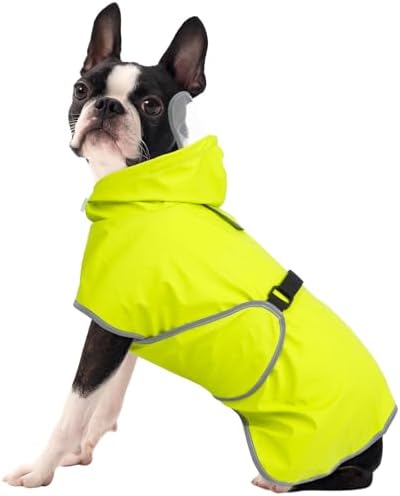
- Rainy Day Shield: Say goodbye to soggy walks! The Waterproof design of this dog rain poncho keeps your pup dry, no matte…
- Five Sizes to Choose: S (Length:17.3in, Weight:6-10lb); M (Length:20.8in, Weight:10-22lb); L (Length:24.4in, Weight:20-3…
- See & Be Seen: Walking your dog near downtown traffic at midnight? Or take a morning walk in the park’s bike traffic? Wi…
If your region deals with cold rain rather than warm summer showers, the iChoue Dog Cold Weather Coat is built around a water-resistant shell with insulating fill, making it a solid mid-tier option for late fall and winter walks rather than humid summer drizzle. Because it retains heat as well as blocking moisture, it directly addresses the thermoregulation gap discussed earlier in colder climates.

- < Double Layer Design > iChoue windbreaker made of water resistant outer layer and breathable lining; The 100% nylon out…
- < Special Design for Broad Chest Dogs > iChoue rain jacket perfectly fit French Bulldogs, Boston Terriers, Pugs, English…
- < Attention to Details > At iChoue, we care about every detail; The inner zipper closure and outer snap fasteners on the…
Golden Retriever Raincoat Comparison Table
| Product | Sizing Range | Closure Type | Reflective Strips | Best For | Price Tier |
|---|---|---|---|---|---|
| 4-Leg Full Body Rain Suit | Small to Large (growth-stage adjustable) | Velcro + leash hole | Yes | Muddy terrain, belly coverage | $$$ |
| FUAMEY Adjustable Raincoat | Small (multi-point adjustable) | Snap buckle + Velcro | Yes | Fast-growing puppies, budget use | $ |
| iChoue Cold Weather Coat | Small to Medium | Zipper + Velcro | Partial | Cold, wet climates | $$ |
Every option above qualifies as a genuine golden retriever raincoat candidate, but the right pick depends heavily on your local weather pattern and how quickly your specific puppy is growing. If you are unsure how sizing differs between puppy-stage and adult-stage gear, our puppy versus adult raincoat fit comparison walks through the exact measurement checkpoints breeders and vets recommend.
Buyer’s Checklist: Growth-Stage Sizing and Seasonal Fit
Golden retriever puppies are not a static target for sizing. According to Golden Retriever Club of America growth data, puppies can reach 60 to 70 percent of their adult body weight within the first six months. That is an enormous amount of structural change to fit a single garment around, which is exactly why adjustability should outrank aesthetics when you are shopping for a puppy rain jacket.
Use this checklist before purchasing:
- Adjustment points: Look for at least two independent adjustment straps (neck and belly), not just one universal strap.
- Growth buffer: Buy slightly ahead of current measurements rather than exactly to current measurements, since most puppies outgrow a snug-fit coat within four to six weeks.
- Leg mobility: Confirm the coat does not restrict shoulder rotation, since restricted gait can create secondary avoidance behavior around the garment.
- Seasonal match: A lightweight waterproof dog coat for spring drizzle is a poor substitute for insulated retriever rain gear in freezing conditions, and vice versa.
- Closure durability: Velcro tends to collect burrs and mud; buckle closures hold up better in dense brush or wooded trail walks.
None of this needs to be complicated, but it does need to be intentional. A rushed purchase based on color or cuteness alone is how most owners end up with a raincoat that gets worn twice and then abandoned in a closet.
Frequently Asked Questions
Do golden retriever puppies actually need a raincoat, or is their coat enough protection?
Puppies under six months typically have not developed their adult double coat yet, so their natural insulation is limited. A golden retriever raincoat is genuinely useful during this stage, particularly in cold or prolonged rain, since puppies lose body heat much faster than adult dogs relative to their size.
My puppy freezes up and refuses to move when wearing a raincoat. What should I do?
This is a common freeze response to a novel tactile sensation, not a sign the dog dislikes the raincoat permanently. Use a gradual counterconditioning process: introduce the coat without wearing it first, then short handling sessions paired with treats, before attempting full outdoor wear. Rushing this step is the most frequent cause of refusal behavior.
How often will I need to size up a golden retriever raincoat during puppyhood?
Because golden retriever puppies can reach 60 to 70 percent of adult body weight within the first six months, expect to size up every four to six weeks during rapid growth phases. Choosing a coat with multiple adjustment points can extend usability between sizing changes.
What is the difference between a waterproof and a water-resistant dog coat?
Waterproof materials, like PVC-coated nylon, have a high hydrostatic head rating and block moisture completely but breathe poorly. Water-resistant materials, often polyester blends with a DWR coating, allow more airflow but may let moisture through during sustained heavy rain. Your choice should match your local rainfall intensity and walk duration.