A properly fitted golden retriever raincoat is not a cosmetic accessory for your senior dog. It’s a functional piece of thermoregulatory equipment that compensates for physiological changes your aging Golden’s body can no longer manage on its own. If you’re shopping for one right now, the two variables that matter most are fit precision and fabric breathability, and getting either one wrong can create more discomfort than the coat solves.
Why Older Goldens Struggle to Regulate Body Heat in Wet Weather
Thermoregulation is a function of muscle mass, subcutaneous fat distribution, and circulatory efficiency, and all three decline with age. Research published in the Journal of Veterinary Internal Medicine on canine sarcopenia indicates that senior dogs can lose up to 30% of their muscle mass compared to their younger adult baseline. Muscle tissue generates metabolic heat through contraction and shivering thermogenesis. When that tissue disappears, so does a dog’s ability to self-warm during prolonged exposure to cold, damp air.
Add to this the reduced mobility that accompanies osteoarthritis, a condition that affects a substantial portion of dogs over age seven according to veterinary orthopedic literature, and you get a dog who moves slower on walks, spends more time standing still in the rain, and has less muscular activity generating internal heat while doing so. A golden retriever raincoat addresses this gap directly by preserving core body heat and preventing water from sitting against the skin, where evaporative cooling accelerates heat loss even in temperatures that wouldn’t concern a younger, more muscular dog.
This isn’t a comfort preference. It’s a compensatory tool for a measurable physiological deficit. Owners who dismiss coats as unnecessary “babying” are often working from outdated assumptions about what a healthy adult dog’s thermoregulation looks like, not what their own geriatric dog’s body is actually doing.
Fit Assessment Protocol: Measuring for a Golden Retriever Raincoat
Fit errors are the single most common reason owners abandon rain gear after one or two uses. A coat that’s too tight restricts the shoulder extension an arthritic dog needs to compensate for a shortened stride. A coat that’s too loose shifts during movement, creates friction points, and can catch on brush or gait aids like ramps and stairs.
Take these three measurements with your dog standing in a relaxed, neutral posture, not sitting or leaning:
- Chest girth: Measure around the widest part of the rib cage, just behind the front legs. Add roughly two inches of slack for dogs with restricted shoulder mobility, since a snug chest strap can inhibit the compensatory gait patterns arthritic dogs develop.
- Neck circumference: Measure at the base of the neck where a collar naturally sits. Senior Goldens with cervical stiffness often resist coats that require pulling material over the head, so a wider margin here reduces resistance during dressing.
- Back length: Measure from the base of the neck to the base of the tail. Err slightly shorter rather than longer for dogs with hind-limb weakness, since excess fabric near the hips can interfere with a dog’s ability to feel the ground and adjust footing.
Reassess these measurements every few months. Sarcopenia and weight fluctuation are progressive in senior dogs, and a coat that fit correctly last winter may already be loose or restrictive by the next rainy season.
Fabric Analysis: Breathable Membranes Versus PVC-Coated Materials
Not all “waterproof” fabric performs the same way against aging skin. Two dominant categories exist in dog rain gear, and the difference matters more for seniors than for younger dogs.
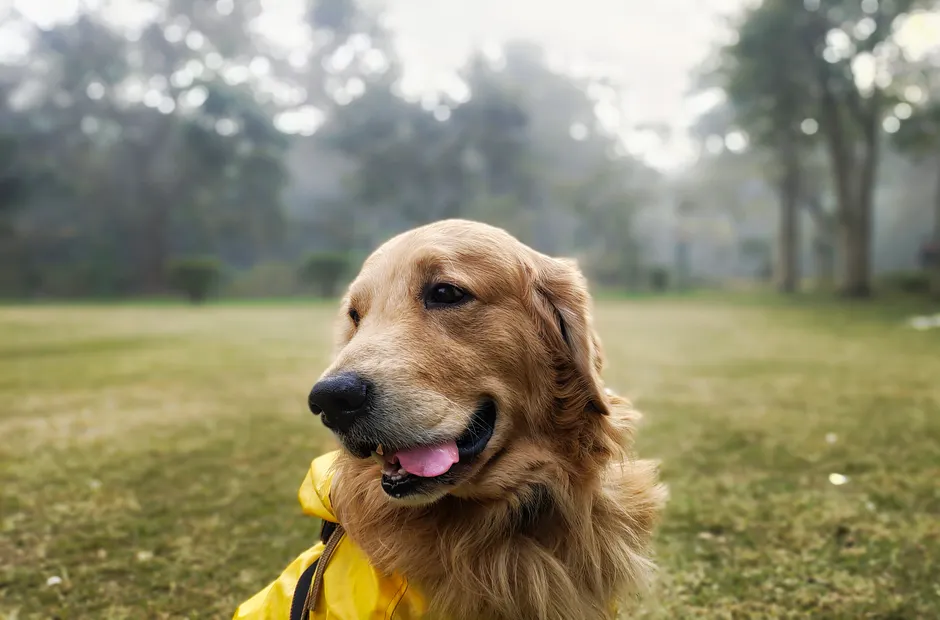
Breathable waterproof membranes (similar in principle to human-grade laminated fabrics) block liquid water while still allowing water vapor to escape from the coat’s interior. PVC-coated or rubberized fabrics block water completely but trap moisture and heat against the skin, creating a humid microclimate underneath the garment.
The distinction between breathable and non-breathable waterproofing isn’t a marketing footnote. For a senior dog with thinning fur and reduced sebaceous gland function, hours of trapped humidity against the skin is a direct contributor to hot spots and secondary bacterial dermatitis, not a hypothetical risk.
This matters clinically. The 2021 Banfield Pet Hospital State of Pet Health report documented a significant rise in allergy and dermatologic diagnoses correlated with age, and senior dogs already carry elevated baseline risk for skin conditions due to slower cell turnover and reduced immune surveillance in the skin barrier. Trapping moisture against skin that’s already compromised is functionally counterproductive to the goal of keeping your dog comfortable and healthy.
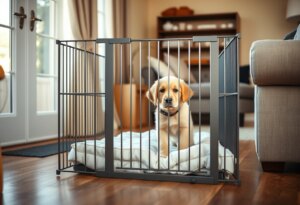
For a full body option that balances waterproofing with airflow through the torso and limbs, the 4-Leg Full Body Dog Rain Suit with Reflective Strips covers the legs and belly, which is useful for Goldens who lie down frequently on wet grass during walk breaks due to joint fatigue.

- Full Waterproof Protection – Waterproof and weather-resistant fabric keeps your dog dry in rain, snow, and wet condition…
- Full Body & 4-Leg Design —Full body coverage with a 4-leg design helps protect your dog’s legs, belly, and chest from …
- Comfortable & Flexible Fit — Made for comfort and freedom of movement. Soft inner feel and flexible structure allow you…
If you’re weighing whether coverage is even necessary for this breed specifically, our detailed breakdown on whether Golden Retrievers need a raincoat walks through the coat-type factors unique to the breed’s double coat structure.
Comparison of Golden Retriever Raincoat Options by Fabric and Fit Priority
| Product | Fabric Type | Coverage Area | Best For | Price Tier |
|---|---|---|---|---|
| 4-Leg Full Body Rain Suit | PVC-coated, fully waterproof | Torso, all four legs, belly | Dogs who lie down often on wet ground | $$$ |
| FUAMEY Adjustable Raincoat | Waterproof shell, reflective trim | Torso and back only | Short walks, quick adjustability for arthritic dogs | $ |
| iChoue Cold Weather Coat | Water-resistant, insulated lining | Torso with chest panel | Cold, damp climates requiring warmth plus moisture resistance | $$ |
Every option in this golden retriever raincoat lineup solves a slightly different functional problem, so match the product to your dog’s specific mobility pattern rather than choosing based on appearance alone.
Comfort and Behavioral Acclimation: Reducing Stress Around Novel Garments
Here’s where owner expectations often diverge from canine ethology. Many people assume a dog either “likes” or “dislikes” wearing clothing, as if it’s a fixed personality trait. It isn’t. It’s a learned response shaped by exposure history, and geriatric dogs frequently show increased neophobia (a heightened aversion to novel stimuli) compared to their younger selves, driven partly by declining sensory acuity and partly by reduced adaptive flexibility in the aging nervous system.
A dog who tolerated a rain jacket without complaint at age three may resist the same category of garment at age eleven, not because the coat itself changed, but because the dog’s baseline arousal threshold to novelty has shifted. Treat this as a training problem, not a temperament flaw.

Use a structured desensitization and counter-conditioning protocol:
- Day 1-2: Leave the unworn coat near the dog’s resting area paired with high-value treats delivered near the garment, no handling involved.
- Day 3-4: Drape the coat briefly over the dog’s back for two to three seconds while feeding treats continuously, then remove it before any stress signal appears (lip licking, freezing, ear pinning).
- Day 5-6: Fasten the coat fully for under a minute indoors, paired with a calm activity like chewing a treat, then remove.
- Day 7 onward: Extend duration gradually, always ending the session before the dog shows avoidance behavior, and only progress to outdoor wear once indoor tolerance is consistent.
This approach respects the dog’s agency in the process. You’re not forcing compliance, you’re building a positive association at a pace the dog’s nervous system can actually process, which produces more durable tolerance than simply repeating exposure until the dog stops resisting (a pattern that often reflects learned helplessness rather than genuine comfort).
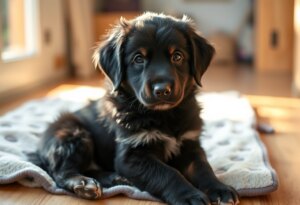
For dogs who need a lighter, quicker-to-fasten option during this acclimation phase, the FUAMEY Adjustable Dog Raincoat uses simple hook-and-loop closures that reduce handling time, which matters when you’re trying to keep early training sessions brief and low-stress.
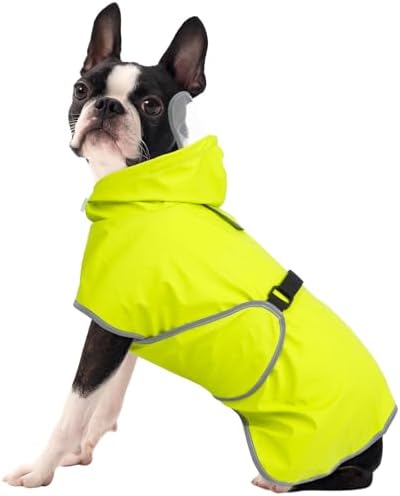
- Rainy Day Shield: Say goodbye to soggy walks! The Waterproof design of this dog rain poncho keeps your pup dry, no matte…
- Five Sizes to Choose: S (Length:17.3in, Weight:6-10lb); M (Length:20.8in, Weight:10-22lb); L (Length:24.4in, Weight:20-3…
- See & Be Seen: Walking your dog near downtown traffic at midnight? Or take a morning walk in the park’s bike traffic? Wi…
If cold, damp climates are your primary concern rather than rain alone, layering matters too. The American Veterinary Medical Association offers general guidance on cold weather safety for pets that’s worth reviewing alongside any cold weather safety resource before extending outdoor time in freezing, wet conditions.
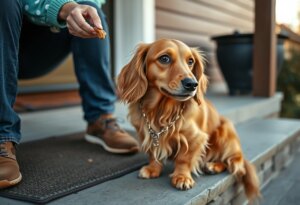
For dogs facing both wet and genuinely cold conditions, an insulated option like the iChoue Dog Cold Weather Coat adds a lining layer that a purely waterproof shell doesn’t provide, which is relevant for senior Goldens whose thinner coat density leaves them more exposed to wind chill during winter walks.

- < Double Layer Design > iChoue windbreaker made of water resistant outer layer and breathable lining; The 100% nylon out…
- < Special Design for Broad Chest Dogs > iChoue rain jacket perfectly fit French Bulldogs, Boston Terriers, Pugs, English…
- < Attention to Details > At iChoue, we care about every detail; The inner zipper closure and outer snap fasteners on the…
Practical Fitting Checklist and Red Flags to Watch For
Once the coat is on and your dog is out on a walk, run through this observational checklist within the first five minutes:
- Gait check: Does your dog’s stride length look normal, or is the coat shortening it? Restricted shoulder movement is a common sign of an overly tight chest strap.
- Skin check post-walk: Look for redness, matting, or damp fur at the armpits and neck seam. These are the highest-friction zones on any dog rain jacket and the first place chafing appears.
- Panting pattern: Heavy panting within minutes of dressing, especially in mild temperatures, can indicate the fabric is trapping heat rather than allowing airflow.
- Behavioral signals: Freezing in place, refusing to walk, or repeatedly trying to bite at the coat are stress indicators, not stubbornness. Return to the desensitization protocol rather than pushing through.
- Range of motion at rest: Ask your dog to sit and lie down while wearing the coat. If either movement looks labored or the dog avoids lying down altogether, the coat is likely restricting hip or shoulder flexion.
A well-fitted waterproof dog coat should be nearly forgettable to your dog within a few minutes of wear. If it isn’t, that’s diagnostic information, not just an inconvenience, and it usually points to a fit or fabric mismatch that’s worth correcting before the next walk. If you’re also researching options tailored specifically to this breed’s coat and build, this guide to the best dog raincoat for Golden Retrievers goes further into breed-specific sizing quirks.
Choosing the right senior dog raincoat ultimately comes down to matching the garment’s fit and fabric to your dog’s actual physical status today, not to what worked five years ago. Reassess periodically, watch for the behavioral and physical red flags outlined above, and treat any resistance to wearing the coat as a solvable training question rather than a fixed preference.
Frequently Asked Questions About Golden Retriever Raincoats
Do senior Golden Retrievers really need a raincoat if they have a double coat?
Yes, in most cases. A healthy double coat provides some water resistance in younger dogs, but age-related muscle loss and reduced circulatory efficiency mean senior Goldens generate and retain less internal heat. A properly fitted golden retriever raincoat compensates for that physiological decline, particularly during prolonged exposure or cold, windy conditions.
How do I know if a dog rain jacket is too tight around an arthritic dog’s shoulders?
Watch the stride during the first few minutes of a walk. If your dog’s front leg extension looks shortened or choppy compared to their normal gait without the coat, the chest strap is likely restricting shoulder movement. Loosen it by an inch or size up, since arthritic dogs need extra range of motion, not less.
What fabric is best for a senior dog with sensitive or allergy-prone skin?
Breathable waterproof membranes are generally the better choice over PVC-coated fabric for senior dogs with skin sensitivities. PVC blocks moisture completely but traps humidity against the skin, which can worsen hot spots and dermatitis in dogs with already compromised skin barriers, a risk that rises with age according to veterinary dermatology data.
My senior dog refuses to walk in a raincoat. What should I do?
Freezing or refusing to move is a stress response, not stubbornness, and it often reflects increased neophobia common in geriatric dogs. Go back to a gradual desensitization process: reintroduce the coat indoors in short, treat-paired sessions before attempting outdoor wear again. Rushing the process tends to reinforce the aversion rather than resolve it.