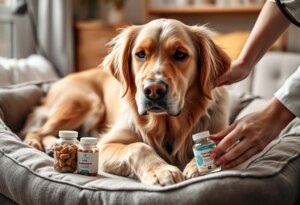


Joint supplements for dogs can measurably reduce arthritis pain when you match the ingredient to the stage of disease, but they work best as one piece of a larger pain management protocol rather than a standalone fix. If your senior dog has started hesitating before jumping into the car or taking longer to settle into a sit, you’re likely watching osteoarthritis progress in real time. The good news is that the evidence base for joint supplements for dogs has gotten considerably stronger over the past few years, which means you can make choices based on data rather than marketing copy.
What’s Actually Happening in an Arthritic Joint
Osteoarthritis in dogs is a degenerative condition where cartilage, the cushioning tissue between bones, breaks down faster than the body can repair it. As cartilage thins, bones begin to make contact during movement, triggering inflammation in the joint capsule and low-grade, chronic pain signaling. This isn’t a minor cosmetic issue. A 2022 study published in Frontiers in Veterinary Science found that osteoarthritis affects up to 40% of dogs across all age groups, and the prevalence climbs sharply in dogs over age 7, where a majority show radiographic or clinical signs of joint disease.
The behavioral consequence of this pathophysiology matters as much as the orthopedic one. Chronic pain changes how a dog interacts with its environment. Dogs in pain often show reduced activity, increased irritability around handling, reluctance to engage in play, and disrupted sleep architecture. Owners frequently misread these shifts as “just getting older” or, worse, as a behavioral quirk rather than a physiological signal. That reframe matters clinically: what looks like a dog becoming grumpier with age is very often a dog communicating discomfort through the only channels it has. This is why joint supplements for dogs deserve serious consideration early, before the pain cycle becomes entrenched and harder to interrupt.
Evidence Tiers for Common Joint Supplement Ingredients
Not all joint supplements for dogs are backed by the same quality of research, and owners deserve a clear accounting of what the data actually shows rather than a uniform endorsement of everything on a supplement label.
- Glucosamine and chondroitin: This is the most widely sold combination on the market, and the data is contradictory. Some trials show modest improvements in weight-bearing and owner-reported comfort, while others show no statistically significant difference from placebo. The mechanism is plausible (both compounds are cartilage matrix components), but bioavailability in oral form is inconsistent across formulations, which likely explains the mixed results.
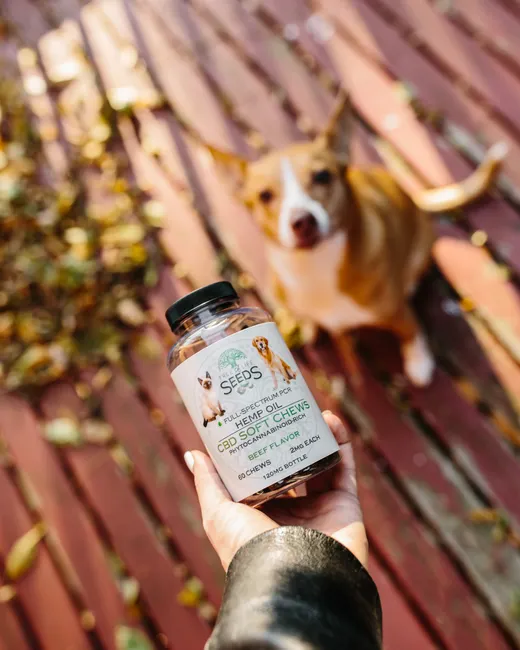
- Omega-3 fatty acids (EPA/DHA): This ingredient class has the most consistent supporting evidence. Omega-3s reduce production of inflammatory eicosanoids, and multiple controlled trials have documented improved weight-bearing and reduced NSAIDs dosing needs in dogs receiving high-dose fish oil. A convenient way to add this into a daily routine is a chew-based option like Fish Oil for Dogs Supplement 120 Bacon Chews, which sidesteps the mess and smell of liquid fish oil while still delivering EPA and DHA.

- Bacon Flavor Dogs Love – Our omega 3 fish oil for dogs comes in bite-sized chewable tablets that taste like bacon treats…
- Fast Itch & Skin Relief – Our dog skin and coat supplement delivers 300mg omega-3 fatty acids (EPA & DHA) per chew for r…
- Healthy Coat & Less Shedding – This omega 3-6-9 for dogs formula helps reduce excessive shedding while promoting a soft,…
- Green-lipped mussel extract: This ingredient has some of the more compelling recent data. A 2020 clinical trial published in Veterinary Record found that dogs supplemented with green-lipped mussel extract showed significantly improved weight-bearing scores compared to a placebo group, measured objectively using force-plate gait analysis rather than subjective owner reports. Green-lipped mussel contains a naturally occurring blend of omega-3s and glycosaminoglycans, which may explain why it outperforms single-ingredient formulas in some studies.
- UC-II collagen (undenatured type II collagen): This is a newer entrant with a distinct mechanism. Rather than supplying raw cartilage-building blocks, UC-II works through oral tolerance, a low-dose immune modulation pathway that appears to reduce the autoimmune-adjacent inflammatory response to cartilage breakdown. Early trials show promise, though the total volume of peer-reviewed canine research is still smaller than for omega-3s or green-lipped mussel.
For dogs who need a multi-ingredient approach rather than a single compound, a formula like Joint Support Rabbit, 200 Tablets, Anti-Inflammatory combines several of these evidence-supported ingredients into one daily tablet, which can improve compliance for owners managing multiple medications already.

- JOINT HEALTH SUPPORT FOR RABBITS: Joint and bone issues in rabbits and guinea pig are often caused by aging, diet, inact…
- NATURAL PREMIUM INGREDIENTS: Each joint support rabbit tablet contains a blend of glucosamine, chondroitin, omega-3 fatt…
- HIGHLY DIGESTIBLE: Our joint support supplement for rabbits is high in fiber, easily digestible, and suitable for bunnie…
Comparing Joint Supplements for Dogs by Evidence and Fit
The table below breaks down the four major supplement categories by clinical evidence strength, how long they typically take to produce observable change, and which stage of osteoarthritis they suit best. This comparative structure is meant to help you match the ingredient to your dog’s actual clinical picture rather than choosing based on packaging alone.
| Supplement Category | Clinical Evidence Strength | Typical Onset Time | Best-Fit Dog Profile | Price Tier |
|---|---|---|---|---|
| Omega-3 Fatty Acids (EPA/DHA) | Strong, consistent across multiple RCTs | 4-6 weeks | Early-stage OA, dogs also on NSAIDs | $$ |
| Green-Lipped Mussel Extract | Moderate-strong, force-plate validated | 6-8 weeks | Early to moderate OA | $$$ |
| Glucosamine/Chondroitin | Mixed, contradictory across trials | 8-12 weeks | Early-stage, preventive use | $$ |
| UC-II Collagen | Emerging, promising but limited volume | 8-10 weeks | Moderate to advanced OA | $$$$ |
| Multi-Ingredient Vitamin/Mineral Support | Supportive, not disease-modifying alone | Ongoing, general health baseline | All stages, as an adjunct | $$ |
Dogs with advanced structural changes, meaning significant bone remodeling or joint space narrowing visible on radiographs, tend to need the multi-modal ingredients like UC-II or green-lipped mussel combined with prescription pain control. Dogs still in early-stage OA, where lameness is intermittent and mild, often respond well to omega-3s or glucosamine/chondroitin as a first step. A daily multivitamin such as Vita-Tabs Silver for Senior Dogs – Daily Vitamin-Mineral won’t reverse cartilage loss on its own, but it fills nutritional gaps that can otherwise undermine a dog’s overall resilience during a joint supplement trial.

- Comprehensive Nutrition: Vita-Tabs provide a balanced blend of essential vitamins and minerals to support your dog’s ove…
- Immune System Support: Packed with antioxidants, these tabs help strengthen your dog’s immune system, promoting a robust…
- Healthy Coat and Skin: The inclusion of Omega-3 fatty acids contributes to a lustrous coat and healthy skin, ensuring yo…
Why Dog Arthritis Supplements Aren’t a Standalone Solution
One of the most persistent misconceptions I encounter from owners is the belief that dog arthritis supplements can replace a full pain management plan. This isn’t supported by the clinical data, and it’s a belief that can genuinely prolong a dog’s suffering if it delays more effective intervention. The American Animal Hospital Association’s pain management guidelines are explicit on this point: NSAIDs, structured weight management, and physical rehabilitation remain first-line therapies for canine osteoarthritis, with supplements positioned as an adjunct rather than a replacement.
Don’t count on supplements alone to work miracles. Osteoarthritis is a progressive, multifactorial disease, and the strongest outcomes come from combining evidence-supported supplementation with weight control, appropriate NSAIDs use when indicated, and structured physical rehabilitation, not from any single intervention in isolation.
Weight management deserves particular emphasis here because it’s the single most modifiable factor in canine osteoarthritis progression. Excess body weight increases mechanical load on already compromised joints, and controlled studies have shown that even modest weight loss (6 to 8% of body weight) produces measurable improvement in lameness scores, in some cases rivaling the effect size of pharmaceutical intervention. If your dog is also showing behavioral changes like increased reactivity or barking at visitors, which can be a secondary stress response to chronic discomfort, it’s worth exploring targeted behavioral tools like this training tool to stop senior dog barking at visitors, since pain and behavioral escalation are often more connected than owners initially assume.
Cost is also a legitimate factor in treatment planning, and this is where pet insurance for senior dogs over 9 with no age cutoffs becomes relevant. Rehabilitation therapy, prescription NSAIDs, and diagnostic imaging add up quickly, and having a coverage plan in place before a mobility crisis occurs gives owners more room to pursue the full multimodal protocol rather than defaulting to supplements alone because they’re the most affordable visible option.

Tracking Response: A 6 to 8 Week Observational Protocol
Owner-reported improvement is notoriously unreliable in osteoarthritis research, largely because of a well-documented placebo effect in the observer, not just the animal. To get an honest read on whether joint supplements for dogs are actually helping, you need objective, repeatable measurements taken before you start and at regular intervals afterward.
- Baseline sit-to-stand time: Time how long it takes your dog to go from a full sit to a full stand, averaged across three trials, on a non-slip surface. Record this before starting any new supplement.
- Gait stiffness scoring: Film your dog walking on a flat surface for 30 seconds at baseline. Score visible stiffness on a simple 1-5 scale (1 = fluid movement, 5 = severe stiffness/reluctance to bear weight) and repeat this weekly under the same conditions and time of day.
- Activity duration tracking: Note how long your dog voluntarily engages in a favorite low-impact activity, such as a slow walk or sniffing session, before choosing to stop or lie down.
- Reassessment at week 6 and week 8: Compare your recorded metrics against baseline. A meaningful response typically shows at least a 20% improvement in sit-to-stand time or a one-point drop in gait stiffness score.
If you see no measurable change by week 8, that’s useful clinical information, not a failure on your part. It means this particular supplement category isn’t the right biological match for your dog’s specific presentation, and it’s time to consult your veterinarian about switching ingredient categories or escalating to prescription-level pain management. According to the American Veterinary Medical Association, early and consistent intervention produces significantly better long-term mobility outcomes than a reactive, wait-and-see approach.
Building a Realistic Joint Care Plan
The dogs who do best on joint supplements for dogs protocols are the ones whose owners treat supplementation as one input among several, not a magic bullet. That means pairing the right ingredient to the right disease stage, tracking objective mobility metrics rather than relying on gut feeling, and staying in regular contact with a veterinarian who can adjust the plan as the disease progresses. Osteoarthritis in dogs is a chronic, progressive condition, which means the “right” protocol today may need revision in six months. Building that flexibility into your expectations from the start will save you both frustration and wasted spending on ineffective products.
Frequently Asked Questions About Joint Supplements for Dogs
How long does it take for joint supplements for dogs to start working?
Most joint supplements for dogs require 4 to 8 weeks of consistent daily use before measurable improvement appears, depending on the ingredient. Omega-3 fatty acids tend to show effects fastest, while glucosamine and chondroitin combinations often need closer to 8 to 12 weeks. Tracking objective mobility metrics during this window gives you a clearer picture than relying on impressions alone.
Is glucosamine for dogs safe to combine with prescription NSAIDs?
Glucosamine for dogs is generally considered safe to use alongside prescription NSAIDs, and many veterinarians recommend the combination since the two work through different mechanisms. That said, always confirm the specific pairing with your veterinarian, particularly if your dog has any kidney, liver, or gastrointestinal history that could affect drug metabolism.
Can senior dog joint care reverse existing cartilage damage?
No current senior dog joint care supplement can regenerate lost cartilage or reverse structural joint damage already visible on imaging. The realistic goal of supplementation is to slow further degeneration, reduce inflammatory pain signaling, and support comfortable mobility, not to restore the joint to its original state.
Do dog arthritis supplements work for every breed and size equally?
Response to dog arthritis supplements varies by individual dog rather than strictly by breed, though larger breeds with higher joint load often show more pronounced improvement from weight-bearing focused ingredients like green-lipped mussel and omega-3s. Dosing should always be calculated by body weight, and smaller senior dogs may need proportionally adjusted amounts rather than a flat daily dose.