


Senior dog insurance gets complicated the moment your dog crosses the 8 or 9 year mark, and if you’ve called around and hit a wall of “we don’t enroll dogs over age X,” you’re not imagining a pattern. You’re seeing underwriting policy in action. Age-based enrollment cutoffs are common in this industry, and they exist for actuarial reasons that have nothing to do with your dog’s actual health. Below, I’ll walk through why this happens, which providers still take dogs in their golden years, and how to evaluate a policy’s fine print the way I’d evaluate any behavioral or medical intervention: by looking at the data first and the marketing copy second.
Why Age-Based Underwriting Exists (And Why It Penalizes Healthy Old Dogs)
Insurance underwriting is a probability exercise. Actuaries pool risk across a population, and older dogs, as a population, file more claims. That’s not controversial. What’s less discussed is how few dogs actually get insured in the first place. A 2023 North American Pet Health Insurance Association (NAPHIA) report found that only about 2.5% of dogs and cats in the United States carry any insurance at all, which means the risk pool insurers are modeling from is small and skewed toward younger, healthier animals who enrolled early. Senior dogs who show up looking for coverage late are, statistically, the exception to the pool the pricing was built around, so insurers respond with steep premium increases, enrollment caps, or outright refusal past a certain birthday. This is a business decision, not a medical one. Your 9-year-old Labrador with clean bloodwork and normal joint function is being priced (or excluded) based on the average 9-year-old dog in a database, not on her individually. That distinction matters when you’re deciding whether pet insurance is worth it for a senior dog in your specific situation.
The Physiological Reality: Pre-Existing Clauses Exclude What Senior Dogs Actually Get
Here’s where I’d push back on anyone who tells you insurance solves the senior-dog cost problem. It often doesn’t, because of how pre-existing condition clauses are written. Almost every policy excludes conditions that showed symptoms or were diagnosed before enrollment, and if you’re insuring a dog who is already 9 or older, there’s a reasonable chance she has early arthritis, a heart murmur, or lab values trending toward kidney or liver strain that a vet has already documented. A 2022 Banfield State of Pet Health dataset showed chronic disease diagnosis rates climb sharply after age 8, with arthritis, dental disease, and cognitive decline leading the list. This creates a frustrating overlap: the conditions most likely to affect your dog going forward are the same conditions most likely to already exist on her chart, which means they’re the most likely to be excluded. Insurance in this scenario functions less like a safety net for your dog’s known risks and more like a hedge against new, unrelated problems. That’s still useful, but it’s a different value proposition than most marketing suggests, and it’s worth being clear-eyed about before you commit to a premium.
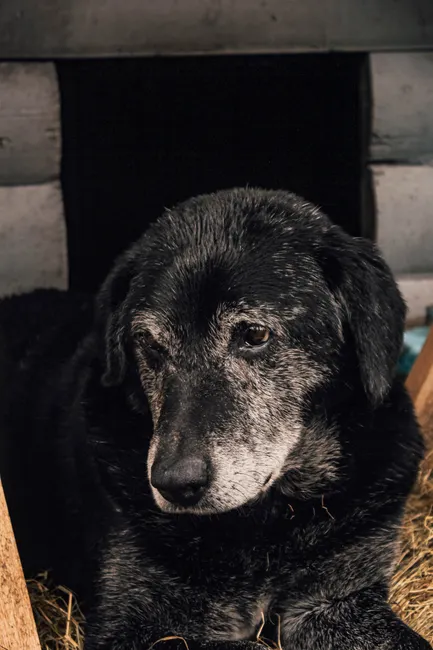
Cognitive decline deserves a specific note here because it’s one of the conditions most commonly written off as “just old age” rather than diagnosed and coded, which affects whether it counts as pre-existing. If your dog is showing new anxiety, disorientation, or house-soiling, get it documented by your vet sooner rather than later, even if you’re not pursuing a claim yet. Some behavioral and sleep-related supplements come up in that conversation, and medications like Phenobarbital, 16.2 MG Tablet are sometimes part of a broader neurological management plan for older dogs, though any prescription medication decision belongs with your veterinarian, not a claims adjuster.
There is an issue displaying Amazon products. Please contact the administrator to check that.Comparing Senior Dog Insurance Providers: No Cutoffs vs. Age-Capped Plans
Not every insurer treats senior enrollment the same way, and the differences in premium, reimbursement, and deductible structure are large enough to change your monthly cost by a significant margin. The table below breaks down the general categories of providers you’ll encounter when shopping for senior dog insurance. I’m using tiers rather than fixed dollar figures because premiums shift constantly based on breed, region, and underwriting updates, but the relative positioning holds steady.
| Provider Type | Upper Age Limit | Typical Reimbursement | Deductible Structure | Price Tier |
|---|---|---|---|---|
| No-cutoff accident & illness insurers | None (lifetime enrollment) | 70-90% | Annual, $250-$1,000 range | $$$$ |
| Accident-only senior plans | None or very high (12+) | 80-90% | Annual, lower fixed amount | $$ |
| Traditional insurers with age caps | 8-10 years at enrollment | 70-90% | Annual, moderate | $$$ |
| Wellness/preventive add-on plans | None (add-on to existing policy) | Fixed per-item payout | No deductible, capped items | $ |
| Self-funded vet savings account | Not applicable | 100% (your own funds) | None | $$$$$ (upfront discipline required) |
Notice that the no-cutoff category commands the highest recurring price tier. That’s the tradeoff for guaranteed acceptance regardless of age: insurers price the risk into the premium rather than into an exclusion. If you’re comparing specific companies by name rather than category, our team maintains an updated breakdown of the best pet insurance for older dogs with health issues, which cross-references enrollment age limits directly.
A Practical Checklist for Reading the Fine Print
I train owners to evaluate behavior modification plans by looking past the summary and into the raw data, and policy documents deserve the same scrutiny. Before signing anything, work through this checklist:

- Waiting periods: Most policies impose a waiting period of 14-30 days for illness coverage and often longer (sometimes 6-12 months) for orthopedic conditions like cruciate ligament tears, which are common in aging, less mobile dogs. If your dog needs care during that window, you’re paying premiums for coverage that hasn’t activated yet.
- Bilateral exclusion clauses: Many insurers treat paired body parts (both knees, both hips, both eyes) as a single condition. If your dog was treated for a torn ligament in one knee before enrollment, some policies will exclude the other knee too, even though it hasn’t been injured yet. This clause disproportionately affects senior dogs because orthopedic wear tends to be bilateral by nature.
- Annual payout caps: Some plans cap total annual reimbursement at a set dollar ceiling. Chronic conditions common after age 9, like ongoing arthritis management or organ disease monitoring, generate repeated claims across the year, and a low annual cap gets exhausted faster than owners expect.
- Per-condition caps: Separate from annual caps, some insurers limit total lifetime payout for a single diagnosed condition. Ask directly whether cognitive dysfunction, arthritis, or cancer treatment has a condition-specific ceiling.
- Renewal rate history: Ask for the renewal premium at ages 10, 12, and 14, not just the enrollment rate. Some companies advertise a competitive entry price and then apply steep age-based increases annually.
Skin conditions are another area where fine print matters, since parasitic and inflammatory issues become more frequent as immune function declines with age. Topical treatments such as IVERMECTIN 1 % CREAM are sometimes prescribed for mite-related dermatological issues in older dogs, and it’s worth confirming with your insurer whether recurring dermatologic treatment falls under a chronic condition cap or is billed per incident.
There is an issue displaying Amazon products. Please contact the administrator to check that.The data is contradictory on whether senior dog insurance saves the average owner money over a self-funded savings account, and I won’t pretend otherwise. What it reliably does is protect against catastrophic, unpredictable costs, like an unexpected surgery, in a way a savings account only can if it’s already been funded for years. The right choice depends less on your dog’s age and more on how disciplined you’ve been about setting money aside before this point.
Ocular and Chronic Conditions Insurers Watch Closely
Eye conditions like uveitis, glaucoma, and corneal ulcers become more common in dogs past age 9, and they’re frequently flagged during underwriting review because they tend to recur and require ongoing management rather than a single resolved treatment. If your dog has an existing diagnosis, ask the insurer directly how they classify recurring flare-ups of the same condition versus new, unrelated ocular issues, because the distinction affects whether future treatment gets reimbursed. Products like Flurbiprofen, 0.03 % Ophthalmic Solution are sometimes used post-operatively or for inflammatory eye conditions, and this is exactly the category where a documented pre-existing diagnosis can trigger a permanent exclusion under most standard policies. Always confirm this with your veterinarian’s records and your provider’s underwriting team rather than assuming coverage applies.
There is an issue displaying Amazon products. Please contact the administrator to check that.A Decision Framework: Insurance vs. Self-Funded Savings for Your Individual Dog
I like to frame this the same way I’d frame a behavioral treatment plan: start with an honest case profile before choosing an intervention. Run through these four questions for your own dog.
- What is her current health status, documented and undocumented? Pull her last two years of vet records. Diagnosed conditions will likely be excluded from any new policy, so your real question is what’s the risk of something new and unrelated emerging.
- What’s her breed-specific risk profile? Large and giant breeds face higher orthopedic and cardiac risk earlier; some purebred lines carry known predispositions to cancer or organ disease. A breed with a strong statistical likelihood of a costly diagnosis in the next few years tilts the math toward insurance, assuming the condition isn’t already pre-existing.
- Do you already have savings set aside? If you have several thousand dollars earmarked specifically for veterinary emergencies, a self-funded approach may outperform a high premium policy, especially one with a low annual payout cap.
- Can you tolerate an unpredictable, potentially large one-time cost? If a sudden $4,000-$8,000 diagnosis would create financial strain, insurance (even with imperfect coverage) reduces that tail risk in a way savings alone can’t unless already substantial.
If you run through this framework and land on “insurance makes sense,” compare no-cutoff plans against age-capped plans side by side rather than accepting the first policy that agrees to enroll your dog. For a full cost comparison across budget-friendly options, our cheapest pet insurance for older dogs roundup lays out five picks that don’t require premium-tier spending to get meaningful coverage.
Putting It Together: What “Senior Dog Insurance” Actually Buys You
Senior dog insurance is not a single product with a fixed value. It’s a category with wide variation in enrollment rules, exclusion language, and payout structure, and the right pick depends entirely on your dog’s documented history and your own financial cushion. According to the American Veterinary Medical Association, owners should always request a sample policy and claims history before enrolling, and I’d add: request it in writing, and ask specifically how the company handles claims for dogs enrolled after age 9. A company willing to answer that question directly, with real numbers, is generally more trustworthy than one that redirects you to a general FAQ page.
Frequently Asked Questions
Is there really senior dog insurance with no age cutoffs?
Yes. Several accident and illness insurers accept dogs regardless of age at enrollment, though the premium is typically higher than plans with an age cap, since the insurer is pricing in the statistically greater likelihood of a claim. Accident-only plans are even more likely to accept senior dogs without restriction, since they exclude illness-related claims entirely.
Will senior dog insurance cover arthritis if my dog was already limping before I enrolled?
Almost certainly not, if the limping was documented by a veterinarian prior to your policy’s start date. Arthritis and joint degeneration are treated as pre-existing conditions in nearly every standard policy once symptoms have been recorded, which is one of the biggest limitations of senior dog insurance for owners enrolling later in life.
Does senior dog insurance get more expensive every year?
In most cases, yes. Premiums for senior dog insurance typically increase annually as your dog ages, reflecting the insurer’s updated risk assessment. Ask any provider for a projected premium at future ages before enrolling, not just the current-year rate, so you can budget realistically.
Is a self-funded savings account better than senior dog insurance?
It depends on how much you’ve already saved and your dog’s individual risk profile. A well-funded veterinary savings account gives you full control with no exclusions, but it only works if the funds are already in place before a major diagnosis. Senior dog insurance, despite its pre-existing condition limits, still offers protection against new and unpredictable illnesses that a savings account may not yet cover if it’s still being built up.