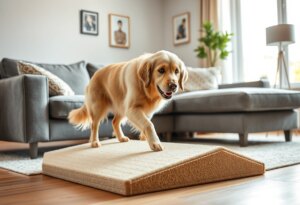
Joint supplements for senior dogs work best when they’re treated as one piece of a larger mobility strategy, not a magic fix pulled off a shelf. As a behaviorist, I spend a lot of time watching dogs move, or more accurately, watching dogs avoid moving, because that avoidance is where the real data lives. If your senior dog is skipping the second lap around the yard or hesitating before the stairs, that’s not laziness. That’s a functional signal worth investigating before you reach for any bottle.
The Ethology of Pain Masking: Why Your Dog Isn’t Telling You the Truth
Dogs are descended from animals that could not afford to broadcast weakness. In a predator-prey framework, limping conspicuously is an invitation to be culled from the group or targeted by a rival. That survival pressure didn’t disappear because your dog sleeps on a memory foam bed and eats from a ceramic bowl. The neural wiring for pain suppression is still largely intact, and it means overt lameness is often a late-stage signal, not an early one.
What you’ll typically see first is behavioral, not orthopedic. A dog that used to greet enrichment opportunities (a new toy, a sniff walk, a visitor at the door) with immediate engagement starts pausing, assessing, or declining altogether. This is sometimes mistaken for cognitive decline or simple aging temperament, but reduced enrichment-seeking is frequently a proxy for discomfort the dog hasn’t yet escalated to visible limping. Owners who wait for a limp before considering joint supplements for senior dogs are usually starting the intervention several months later than they could have.
Watch for these earlier behavioral markers instead of waiting for gait abnormality:
- Slower transition from lying to standing, particularly after rest periods longer than 20 minutes
- Reduced interest in play initiation, especially chase or wrestle-type play with other dogs
- Increased irritability or space-guarding when other pets or children approach while lying down
- Reluctance to jump onto furniture or into vehicles that was previously routine
What the Data Actually Shows on Joint Supplement Efficacy
The research on dog joint supplements is more nuanced than most marketing copy suggests, and I think owners deserve the unvarnished version. A study published in the Journal of Veterinary Internal Medicine examined force plate gait analysis in osteoarthritic dogs given glucosamine and chondroitin combinations, and found measurable improvement in roughly 38% of subjects. That’s a meaningful subset, but it also means the majority of dogs in that data set did not show objective gait change on the supplement alone. This is not a reason to dismiss the ingredient class. It’s a reason to set realistic expectations and combine it with other interventions.

Omega-3 fatty acids, specifically EPA and DHA, have a slightly stronger evidence base for this population. A 2010 study in the Journal of the American Veterinary Medical Association found a statistically significant reduction in lameness scores in dogs supplemented with omega-3s, likely tied to their anti-inflammatory action on joint tissue rather than any structural rebuilding effect. The data is contradictory across different formulations and dosing protocols, which is part of why I encourage owners to track their own dog’s response rather than assume a universal effect. For a broader look at how joint changes track with breed-specific aging timelines, this piece on Golden Retriever senior age and joint supplements at 7+ is a useful companion read if you have a large-breed dog entering the higher-risk window earlier than smaller breeds do.
One supplement worth mentioning here is a daily multivitamin approach. Vita-Tabs Silver for Senior Dogs is formulated as a broader vitamin-mineral support product rather than a targeted joint compound, and it functions well as a baseline nutritional layer underneath a more specific joint protocol. I don’t recommend it as a replacement for glucosamine or omega-3 therapy, but as a general geriatric wellness support, it fills gaps that a single-ingredient joint chew won’t cover.

- Comprehensive Nutrition: Vita-Tabs provide a balanced blend of essential vitamins and minerals to support your dog’s ove…
- Immune System Support: Packed with antioxidants, these tabs help strengthen your dog’s immune system, promoting a robust…
- Healthy Coat and Skin: The inclusion of Omega-3 fatty acids contributes to a lustrous coat and healthy skin, ensuring yo…
Comparative Breakdown: 7 Best Joint Supplements for Senior Dogs by Active Ingredient Class
Different ingredient classes work through different mechanisms, and bioavailability varies quite a bit between chewable, powder, and liquid delivery formats. The table below breaks down the seven most commonly recommended hip and joint supplements by category so you can match the mechanism to your dog’s specific presentation, whether that’s early-stage stiffness or a diagnosed osteoarthritis case.
| Supplement Type | Primary Active Ingredient | Best For | Bioavailability Notes | Price Tier |
|---|---|---|---|---|
| Glucosamine/Chondroitin Chews | Glucosamine HCl + Chondroitin Sulfate | Early-stage stiffness, general maintenance | Moderate; absorption improves with consistent daily dosing over 4-6 weeks | $$ |
| Green-Lipped Mussel Extract | Omega-3 (EPA/DHA) + natural glycosaminoglycans | Dogs with inflammatory joint response | High; whole-food matrix aids absorption over synthetic isolates | $$$ |
| UC-II Collagen | Undenatured Type II Collagen | Moderate to advanced osteoarthritis | High at low doses via oral tolerance mechanism, distinct from glucosamine pathway | $$$$ |
| Omega-3 Fish Oil Chews | EPA/DHA Fatty Acids | Inflammation reduction, coat and joint support combined | High in triglyceride form; look for third-party purity testing | $$ |
| MSM (Methylsulfonylmethane) | Sulfur compound | Adjunct for pain and inflammation, often paired with glucosamine | Moderate; usually combined rather than standalone | $$ |
| Hyaluronic Acid Supplements | Sodium Hyaluronate | Joint fluid viscosity support | Lower oral bioavailability; injectable form more consistently studied | $$$$ |
| Multi-Ingredient Senior Formulas | Combination (glucosamine, chondroitin, MSM, omega-3) | Dogs needing broad-spectrum daily support | Varies by brand; check for clinical dosing thresholds, not just ingredient presence | $$$ |
Notice that price tier doesn’t map cleanly onto efficacy. A budget-friendly glucosamine chew with proper dosing can outperform a premium multi-ingredient formula that under-doses each active compound to keep more ingredients on the label. Read the milligram amounts, not just the ingredient list.
Dispelling the Myth: Supplements Are Not a Standalone Cure
I want to be direct about something that gets glossed over in most product marketing. Don’t count on supplements to work miracles. They are not going to regenerate eroded cartilage or reverse structural joint damage that’s already occurred. What they can do, when the evidence supports the specific ingredient, is reduce inflammatory load and modestly improve comfort and function in a subset of dogs. That’s a legitimate outcome, but it’s an adjunct effect, not a cure.
The most common owner misconception I encounter clinically is the assumption that a joint chew will substitute for weight management or environmental modification. It won’t. A ten-pound weight loss in an overweight 60-pound dog reduces joint load more measurably than most oral supplements do on their own, and that’s before you’ve added a single capsule to the food bowl.
Antecedent environmental modification matters just as much as the supplement itself. This means installing ramps at entry points instead of stairs, adding traction runners or rugs over hardwood and tile, and raising food and water bowls to reduce cervical strain during eating. These changes reduce the physical demand placed on already compromised joints, which is a form of management that works in tandem with, not instead of, any supplement protocol you choose. Nutrition also plays a supporting role here, and a high-quality protein source like ZEAL Canada Air-Dried Chicken Recipe for Dogs can help maintain lean muscle mass around aging joints, since muscle atrophy around a compromised joint accelerates functional decline independent of the joint pathology itself.
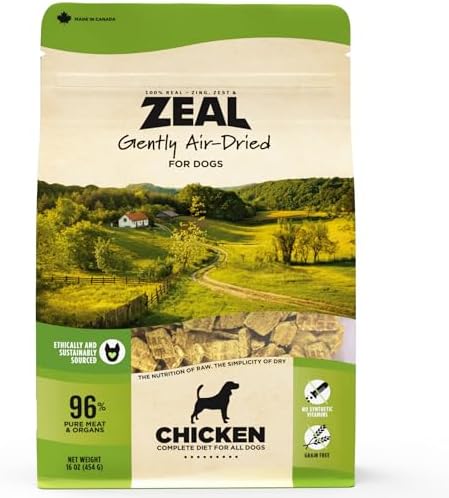
- 96% Free-Range Chicken and Organs for Optimal Health: Made with free-range chicken, liver, gizzard, and heart, providing…
- Natural and Organic Superfoods for Complete Wellness: Enriched with ethically sourced green-lipped mussels for joint sup…
- Air-Dried to Retain Nutrients Naturally: Our gentle air-drying process locks in all the nutrients without synthetic addi…
Weight management deserves more attention than it typically gets in these conversations. According to the ASPCA, excess body weight is one of the most modifiable risk factors for joint stress in aging dogs, and it compounds the effect of any degenerative joint condition already present. If your dog is carrying extra weight, that conversation with your veterinarian should happen before or alongside any supplement decision, not after.

Actionable Protocol: Tracking Functional Change Objectively
Subjective impressions (“he seems better”) are notoriously unreliable, partly because owners want to see improvement and partly because day-to-day variation in a dog’s energy and mood can mask or mimic real change. I recommend a structured 8-week observation window, four weeks of baseline tracking before starting any joint supplements for senior dogs, and four weeks of tracking after, using the same metrics both times.
- Sit-to-stand latency: Time how many seconds it takes your dog to fully stand from a lying position, first thing in the morning, three times per week. Use the same flooring surface each time.
- Stair reluctance score: On a 1-5 scale, rate hesitation before tackling a familiar set of stairs (1 = no hesitation, 5 = refuses entirely). Log this daily if stairs are part of the routine.
- Walk distance tolerance: Note the distance or duration at which your dog first shows a gait change, slowing, shortened stride, or stopping to rest, during a consistent daily walk route.
- Enrichment engagement: Track whether your dog initiates play or investigates novel stimuli (a new toy, an unfamiliar scent) within the first five minutes of exposure. Yes/no is sufficient.
Compare the two four-week blocks side by side. If sit-to-stand latency drops by even a second or two, or stair reluctance scores trend down, you have objective evidence the intervention is working for that individual dog. If none of the four metrics shift, that’s useful information too. It tells you to revisit the ingredient class, the dose, or to loop your veterinarian back in for imaging or a pain medication conversation rather than continuing to guess.
Omega-3s and Their Role in the Broader Joint Supplement Landscape
Given the JAVMA data on lameness score reduction, omega-3 fatty acids deserve a dedicated mention separate from the multi-ingredient formulas in the table above. Fish Oil for Dogs Supplement 120 Bacon Chews is a straightforward EPA/DHA delivery format that many owners find easier to dose consistently than liquid fish oil, which can be messy and prone to inconsistent measuring. Consistency in dosing matters more than the specific delivery format, since intermittent supplementation rarely produces the anti-inflammatory effect documented in clinical trials.

- Bacon Flavor Dogs Love – Our omega 3 fish oil for dogs comes in bite-sized chewable tablets that taste like bacon treats…
- Fast Itch & Skin Relief – Our dog skin and coat supplement delivers 300mg omega-3 fatty acids (EPA & DHA) per chew for r…
- Healthy Coat & Less Shedding – This omega 3-6-9 for dogs formula helps reduce excessive shedding while promoting a soft,…
If you’re managing a mixed-breed dog with genetic predisposition toward joint issues on one side of the pedigree, it’s worth understanding how that background factors into long-term risk. Owners researching a Golden Pitbull mix temperament often ask about joint health proactively, since both parent breeds carry documented hip dysplasia risk, and early supplementation decisions can be made well before symptoms appear in middle age rather than waiting for the geriatric years.
Putting It Together: A Realistic Expectation for Glucosamine for Dogs and Beyond
When owners ask me which single product to buy, I redirect the question, because the honest answer depends on your dog’s weight, current diagnosis status, and how far along the degenerative process already is. Glucosamine for dogs remains a reasonable first-line, lower-risk option for early stiffness, while UC-II collagen and green-lipped mussel extract carry stronger targeted evidence for dogs with an existing osteoarthritis diagnosis. None of these replace a veterinary exam, and none of them replace the environmental and weight-based interventions discussed above. Used together, though, this combination approach gives your dog the best realistic shot at maintaining comfort and mobility through the later years, and that consistent, layered strategy is what joint supplements for senior dogs are actually designed to support, not a standalone fix but one working part of a broader comfort plan.
How long does it take to see results from joint supplements for senior dogs?
Most clinical trials measure outcomes at 4 to 8 weeks of consistent daily dosing. Glucosamine and chondroitin combinations typically need the full 6 to 8 week window before any gait improvement becomes measurable, while omega-3 fatty acids may show inflammatory reduction slightly sooner in some dogs. Track objective metrics like sit-to-stand latency during this window rather than relying on general impression.
Can joint supplements reverse arthritis in senior dogs?
No. Once cartilage has degraded, oral supplements cannot regenerate that tissue. They can reduce inflammation and, in a subset of dogs, improve comfort and gait function, but they function as management support alongside weight control and environmental modification, not as a reversal of existing structural joint damage.
Are hip and joint supplements safe to combine with prescription pain medication?
In most cases, yes, and many veterinarians recommend combining them for a multimodal pain management approach. However, always confirm with your veterinarian before adding any supplement, since certain ingredients can interact with specific medications or require dose adjustments depending on kidney or liver function in older dogs.
What early behavioral signs suggest my dog needs joint support before limping appears?
Watch for slower rising after rest, reduced interest in play initiation, reluctance to jump into vehicles or onto furniture, and decreased enrichment-seeking behavior. These behavioral shifts often precede visible limping because dogs are evolutionarily wired to mask overt pain signals, making early behavioral observation more reliable than waiting for obvious lameness.