A golden retriever rescue that specializes in puppy mill survivors is not interchangeable with your average shelter down the street, and that distinction matters more than most adopters realize. Mill dogs arrive with a behavioral profile shaped by months or years of confinement, minimal human contact, and chronic stress exposure, which means the intake process, the foster structure, and the post-adoption support system need to be built for trauma recovery, not just for finding dogs a couch to sleep on. This piece breaks down what makes a golden retriever rescue actually equipped to rehabilitate a mill survivor, five organizations doing that work well heading into 2026, and the behavioral protocol you’ll need once the dog is in your home.
The Behavioral Profile of a Puppy Mill Survivor
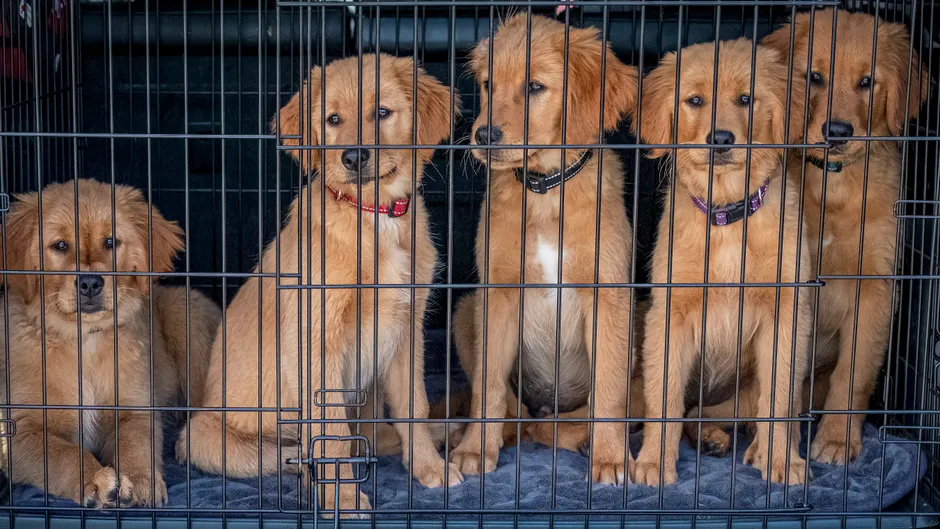
Dogs pulled from breeding facilities are not simply “shy.” They present with a specific cluster of learned behaviors rooted in prolonged environmental deprivation. Chronic under-socialization during the critical period (roughly 3 to 14 weeks of age) means many mill dogs never formed normal associations between humans and safety. What develops instead, in a substantial number of cases, is a pattern that looks a lot like learned helplessness: minimal exploratory behavior, freezing rather than fleeing, and a flattened affect that owners frequently mistake for calmness. It isn’t calmness. It’s shutdown.
Research on kenneled and confined dogs backs this up physiologically. Studies measuring cortisol output in long-term confined dogs show elevated hypothalamic-pituitary-adrenal (HPA) axis reactivity that persists for months after removal from the stressor. In plain terms, the dog’s stress-response system stays dialed up long after the cage door opens. This is why a mill survivor might tremble at a dropped spoon three months into a new home while seeming “fine” the first week. The nervous system is still recalibrating, and recalibration on a biological level doesn’t follow the adopter’s timeline, it follows the dog’s.
The data is contradictory on exactly how long full HPA-axis normalization takes in rehabilitated mill dogs, but no credible behavioral study supports the idea that a few weeks of affection resets months or years of chronic stress physiology. Patience here isn’t a virtue, it’s a biological requirement.
Why Breed-Specific Golden Retriever Rescue Matters
General shelters do valuable work, but they are rarely staffed or funded to run breed-specific medical screening at scale. Golden retrievers carry a documented genetic load for orthopedic and oncologic conditions that a generalist intake process can easily miss. Orthopedic Foundation for Animals (OFA) data puts hip dysplasia incidence in the breed near 20 percent, and mill-bred goldens are frequently worse off, since commercial breeding operations rarely screen breeding stock for hip or elbow conformation before pairing dogs.
A golden retriever rescue org with breed-specific protocols will typically run hip and elbow films, cardiac auscultation, and thyroid panels as standard intake steps, not optional add-ons. This is the practical argument for choosing a specialized golden retriever rescue over a mixed-breed shelter when you’re specifically looking at mill survivors: the medical vetting catches problems a general shelter’s limited veterinary budget often can’t prioritize. If you’re weighing rescue against buying from a breeder for other reasons entirely, our breakdown of rescued golden retrievers vs breeder puppies covers the tradeoffs in more depth.
Evaluation Criteria: How to Vet a Golden Retriever Rescue Organization
Not every group calling itself a golden retriever rescue operates with the same rigor. Before you apply, run the organization through these four filters.
- Home-check protocols. A rescue that skips a home visit (virtual or in-person) is skipping the single best predictor of placement success. Look for orgs that assess fencing, other pets, and household activity level, not just a lease copy.
- Post-adoption behavioral support. Ask directly: does the organization provide access to a trainer or behavior consultant after adoption, and for how long? A one-time adoption packet with a PDF is not support.
- Veterinary transparency. You should be able to see full medical records, including any orthopedic imaging, before finalizing adoption. Reputable golden retriever rescue groups won’t hesitate to share this.
- Foster-based decompression periods. A minimum of 2 to 4 weeks in a foster home before adoption listing allows the dog’s baseline temperament to surface. Rescues that adopt out dogs within days of intake, straight from a mill raid, are working with incomplete behavioral data.
5 Reputable Golden Retriever Rescue Organizations for Mill Survivors
The following golden retriever rescue organizations were evaluated on geographic reach, medical rehabilitation infrastructure, and documented experience specifically with puppy mill intakes, not just general surrenders.
| Organization | Geographic Reach | Mill-Survivor Intake Volume | Foster Decompression Period | Price Tier (Adoption Fee) |
|---|---|---|---|---|
| Golden Retriever Rescue of Mid-Florida | Southeast US, multi-state transport | Moderate, seasonal mill raid intakes | 3-4 weeks minimum | $$ |
| Homeward Bound Golden Retriever Rescue (IL) | Midwest, primarily Illinois and neighboring states | High, active mill-raid partnerships | 4+ weeks for confirmed mill dogs | $$ |
| Northwest Golden Retriever Rescue | Pacific Northwest, WA/OR/ID | Low to moderate | 2-3 weeks | $$$ |
| Golden Retriever Rescue Education and Training (GRREAT) | Ohio Valley region | Moderate, includes senior mill breeding stock | 3-4 weeks | $$ |
| Southern California Golden Retriever Rescue | Southern California, statewide network | High, frequent commercial breeder surrenders | 2-4 weeks, extended for high-fear cases | $$$ |
Adoption fees across these groups sit in a budget-friendly to mid-range tier compared to the ongoing veterinary and behavioral rehabilitation costs mill survivors typically require, which is worth factoring into your household budget planning before you apply. If you’re also considering a mixed breed with different temperament variables, our comparison of a golden retriever mix with husky or pitbull lineage outlines how genetics shape behavioral risk differently than purebred lines. And for adopters specifically drawn to older mill breeding stock retired from production, the senior golden retriever rescue adoption guide addresses the added geriatric care layer.
Some adopters like to mark the milestone of bringing home a rescue dog with something tangible for the household. A piece like the Retriever Kisses Cure Everything Dog Love Design T-Shirt is a low-stakes way to celebrate the adoption without it having any bearing on the dog’s actual recovery timeline, which is worth saying plainly since no product substitutes for the behavioral work ahead.

Post-Adoption Behavioral Protocol for Mill Survivors
Once a golden retriever rescue places a mill survivor in your home, the behavioral work is just starting. Three components matter most: antecedent management, choice-based enrichment, and realistic timeline expectations.

Antecedent management means controlling the environment before a fear response occurs, rather than managing the dog’s reaction after the fact. Concretely:
- Keep the first two weeks low-stimulus. No dog parks, no crowded outings, no well-meaning visitors crowding the dog for pets.
- Identify specific triggers (raised voices, sudden movement, hands reaching overhead) and remove them proactively rather than correcting the dog’s reaction to them.
- Use a consistent daily routine. Unpredictability is a major stressor for a nervous system already running hot from chronic confinement stress.
Choice-based enrichment rebuilds a sense of agency that mill confinement systematically stripped away. Practically, this looks like offering the dog two or three resting spots and letting it choose, presenting food puzzles it can walk away from without consequence, and using consent-based handling (a hand offered, not forced, for petting). Teaching a dog it has functional control over its own choices is one of the more reliable levers for reducing learned helplessness behaviors documented in shelter and rehabilitation literature, including guidance published by organizations like the ASPCA on rehabilitating dogs from neglect situations.
On timelines: the popular “3-3-3 rule” (three days to decompress, three weeks to learn routine, three months to feel at home) is a reasonable rough sketch, but it oversimplifies mill-survivor recovery specifically. Individualized data suggests realistic timelines of 3 to 12 months depending on the duration and severity of prior confinement, with dogs confined longer than three years often showing the slowest normalization curves. Don’t count on a fast timeline just because the dog seems settled at the six-week mark. Physiological stress markers can still be elevated well past behavioral surface calm.
Building Physical Resilience Alongside Behavioral Recovery
Behavioral rehabilitation doesn’t happen in isolation from physical health. Mill-bred goldens frequently arrive with muscle atrophy from cramped confinement, and gentle, structured movement supports both joint health and confidence rebuilding. This isn’t about intense exercise regimens, it’s about low-impact, choice-driven movement that lets the dog rebuild physical trust in its own body. Something like the Golden Retriever Powerlifting Weightlifting Gym Dog Lovers apparel line is more of a lighthearted nod to the breed’s sturdy build than a training tool, but it’s a reminder that these dogs, even post-mill, often have real athletic resilience once conditioning and confidence catch up.

For families who want to process the emotional weight of this kind of adoption, or explain it to kids in the household, narrative resources can help contextualize the journey. JJ’s Journey: A Story of Heroes and Heart is one option worth having on the shelf, since stories that humanize (or caninize) the rescue arc tend to build empathy that translates into patience during the harder weeks of decompression.

Setting Realistic Expectations Before You Apply
Choosing a golden retriever rescue for a mill-survivor adoption is a commitment to a longer, less linear recovery process than adopting a well-socialized owner surrender. The behavioral biology is clear on this point even where specific timelines remain debated in the literature: chronic confinement stress leaves physiological and behavioral marks that don’t resolve on a fixed schedule. What a good golden retriever rescue organization gives you is a foundation, thorough medical vetting, an honest behavioral history, and a support system you can call when the dog freezes at something ordinary six weeks in. What you bring is the daily, unglamorous work of antecedent management and patience. Together, that combination is what actually rehabilitates a mill survivor, not marketing copy about “forever homes.”
Frequently Asked Questions
How is a golden retriever rescue different from adopting through a general animal shelter?
A golden retriever rescue typically runs breed-specific medical screening, including hip and elbow imaging and cardiac checks, that general shelters often can’t fund at the same scale. Breed-specific groups also tend to have foster networks trained on golden-specific temperament patterns, which matters for accurately assessing mill survivors before placement.
How long does it take a puppy mill survivor to fully adjust to a home?
Individualized timelines of 3 to 12 months are more realistic than the commonly cited 3-3-3 rule, especially for dogs confined longer than three years. Physiological stress markers can remain elevated well after a dog appears behaviorally settled, so adopters should plan for a longer, non-linear adjustment period.
What questions should I ask a golden retriever rescue before adopting a mill survivor?
Ask about the length of the foster decompression period, whether full veterinary records including orthopedic imaging are available, what post-adoption behavioral support looks like, and how many confirmed mill-survivor intakes the organization has handled. Vague answers to any of these are a signal to look elsewhere.
Are puppy mill survivors more prone to health problems than other rescued golden retrievers?
Often, yes. Commercial breeding operations rarely screen for hip or elbow conformation, and OFA data already puts hip dysplasia near 20 percent in the general golden retriever population. Mill-bred dogs frequently carry higher risk due to unscreened breeding pairs, which is why medical transparency from the rescue organization matters so much during intake.