
Royal Canin senior wet vs dry isn’t really a brand loyalty question, it’s a physiology question, and most owners are answering it backwards. They pick based on what their dog seems to “like” in the moment, when the more useful data points are hydration status, dental competence, and caloric need. As a behaviorist who spends a fair amount of time untangling why senior dogs refuse food, I can tell you the formula format matters less than most marketing suggests, but it does matter, and the mechanism is worth understanding before you make a switch.
Let’s get the framework straight first, because “wet is better” or “dry is better” are both incomplete claims. The real differentiators are hydration load, caloric density per bite, and palatability under a nose that isn’t working the way it used to. Senior dogs lose olfactory acuity gradually, and food that smells faint to an aging nose often gets rejected regardless of nutritional quality. That’s a sensory processing issue, not a taste preference issue, and conflating the two leads owners to chase the wrong variable when a dog stops eating.
The Hydration Variable Nobody Talks About Enough
Dry kibble runs roughly 6 to 10 percent moisture. Wet formulas run 75 to 78 percent. That’s not a minor spec difference, it’s a five to eight fold gap in water delivered per calorie consumed, and it matters more in geriatric dogs than in adults because thirst drive itself declines with age. Research published in the Journal of Veterinary Internal Medicine has documented that up to 60 percent of senior dogs show measurable subclinical dehydration, largely tied to reduced thirst sensitivity rather than reduced water availability. The water bowl is full. The dog just isn’t motivated to use it the way a younger dog would.
This is where the royal canin senior wet vs dry decision actually has teeth. A dog that’s mildly dehydrated on a chronic, low-grade basis doesn’t show dramatic symptoms. You get subtle lethargy, slightly tacky gums, maybe constipation, and owners often attribute all of it to “just getting old” instead of recognizing a correctable input. If your dog is a poor water drinker (and you’ll know this if you’ve ever tracked bowl levels over a week), shifting a meaningful portion of the diet to wet food is a more reliable fix than hoping the dog develops a stronger thirst drive on its own.
Don’t count on a format switch alone to fix a dog that’s refusing food. If a senior dog is declining meals, the first question isn’t “wet or dry,” it’s “why has intake changed,” and that requires ruling out pain, nausea, and organ function before you touch the bag or the can.
Dental Pain Is a Confound, Not a Preference Signal
Here’s a misconception I correct constantly: owners see their dog struggle with kibble and conclude the dog “prefers” wet food. Maybe. Or the dog has periodontal disease and chewing hurts. The American Veterinary Dental College estimates roughly 80 percent of dogs over age 3 have some degree of periodontal disease, and by the time a dog is a senior, that number trends even higher with cumulative, untreated tartar and gum recession. A dog with an inflamed molar or loose tooth will absolutely show apparent “preference” for softer food, but that’s an orofacial pain response, not a palatability verdict on the product itself.
This distinction matters because it changes what you fix. If you swap to wet food and the dog eats more comfortably, that’s useful clinical information, not proof that wet food is superior. It’s a signal to get a dental exam scheduled, because masking the pain with softer texture indefinitely just delays a health problem instead of solving it. I’d treat sudden “pickiness” around kibble as a diagnostic clue before I’d treat it as a marketing win for canned food.
Royal Canin Senior Formulas Side by Side
Royal Canin’s senior lineup is more specialized than a lot of competing brands, which is part of why the royal canin senior wet vs dry question gets asked so often. Their mobility support formulas run higher glucosamine and chondroitin concentrations, their renal-conscious lines moderate sodium and phosphorus more aggressively, and digestibility coefficients (basically how efficiently the dog’s gut extracts nutrients from the food) tend to run high across both formats because of the protein sources used. Here’s the comparative breakdown:

| Formula Type | Moisture Content | Caloric Density | Sodium Profile | Best Suited For | Price Tier |
|---|---|---|---|---|---|
| Royal Canin Senior Dry (Mobility Support) | ~8-10% | High per gram | Moderate | Dogs with intact dentition, joint support needs | $$$ |
| Royal Canin Senior Wet (Renal-Conscious) | ~75-78% | Lower per gram | Reduced sodium | Dogs with low thirst drive, dental pain, or early renal concerns | $$$$ |
| Hill’s Science Diet Adult 7+ Wet | ~78% | Lower per gram | Moderate | General senior maintenance, picky eaters | $$$ |
| Purina ONE Plus Digestive Health Dry | ~10% | High per gram | Standard | Dogs with sensitive digestion, budget-conscious households | $$ |
Notice the caloric density gap. Because wet food carries so much water weight, dogs need to eat a larger volume to hit the same calorie target, which is actually helpful for a senior dog with a diminished appetite (more chewing and swallowing repetitions signal fullness to the brain) but can be a problem for a dog with reduced jaw stamina or arthritis in the neck and shoulders that makes prolonged head-down eating uncomfortable. There’s no universal winner here. It’s a matching exercise between the dog’s specific physical constraints and the format’s specific demands.
Digestive Sensitivity and the Dry Food Middle Ground
Not every senior dog needs a full switch to wet food, and for dogs without dental problems or hydration issues, a digestibility-focused dry formula can be the more practical, cost-effective choice. Purina ONE Plus Digestive Health Dry Dog Food is formulated with prebiotic fiber that supports gut flora balance, which matters because aging guts process fiber and fat less efficiently than they did at age three. If your dog’s stool quality is inconsistent but dental health and hydration are fine, this is a reasonable first adjustment before jumping to a full wet food transition.

- Complete and balanced digestive care dog food with digestive support for adult dogs with sensitive stomachs
- Highly digestible adult dog food formula enriched with probiotics for dog digestive support
- Real chicken is the first ingredient in our high protein dog food, which includes natural glucosamine sources for joint …
Some owners land on a hybrid approach, mixing a small portion of wet food into dry kibble to increase palatability and moisture without committing fully to either format. This works reasonably well as a transition strategy, but track it. A dog that eats the wet portion and leaves the kibble behind is telling you something about either dental comfort or olfactory preference, and that’s diagnostic information worth writing down, not ignoring.
When Wet Food Becomes the More Defensible Choice
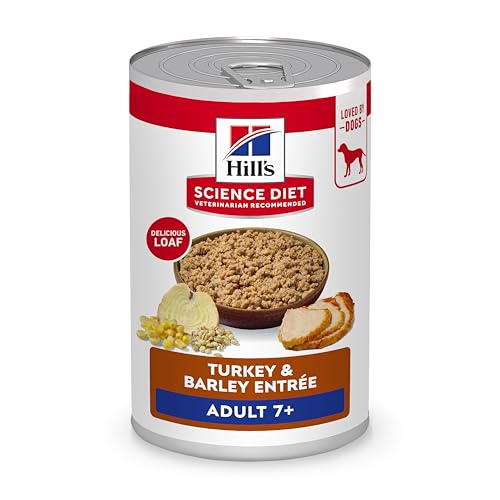
Hill’s Science Diet Adult 7+ Wet Dog Food is a reasonable mid-tier option for dogs where hydration and dental comfort are the primary concerns rather than a specific renal or mobility diagnosis. It’s formulated with a texture that requires minimal chewing effort, which matters for dogs with reduced bite force from missing teeth or jaw arthritis. I’d flag this as a sensible default for owners who aren’t yet working with a vet nutritionist but have noticed clear signs of chewing avoidance.
For dogs that need higher protein density without added carbohydrate filler, a grain-free dry option like Wellness CORE Adult Dry Dog Food can serve as a middle path for owners who want to keep the dental benefits of kibble’s abrasive texture while addressing protein quality concerns. This isn’t a hydration solution, so it still needs to be paired with active water intake monitoring in a senior dog, but it’s a solid consideration for dogs without moisture-related deficits.

- GRAIN-FREE ADULT DRY DOG FOOD: Premium protein from responsibly sourced lamb is expertly balanced with nutrient rich sup…
- LEANER BODY MASS AND MUSCLE TONE: Based on the nutritional philosophy that dogs thrive on a natural diet mainly comprise…
- SUPPORTS HEALTHY COAT & HEART: Guaranteed levels of omega fatty acids from ingredients such as flaxseed and salmon oil s…
An Observational Feeding Trial, Step by Step
Rather than guessing, run a structured trial. This is the same logic I’d apply to any behavior change protocol: change one variable, observe, record, adjust.
- Days 1-3: Keep the current format constant, and record exact intake volume, time to finish the meal, and any hesitation or head-turning behavior at the bowl.
- Days 4-7: Introduce the new format (wet or dry) as a 25 percent substitution, monitor stool consistency, and note any excessive gas or vomiting within four hours of eating.
- Days 8-10: Increase substitution to 50 percent if no GI intolerance appeared, and continue logging water bowl consumption alongside food intake.
- Days 11-14: Move to full transition if tolerated, or hold at the ratio that produced stable stool, consistent intake, and no behavioral avoidance.
Watch specifically for loose stool, excessive flatulence, or a sudden drop in overall intake, all of which suggest the gut needs more transition time rather than a format that’s simply wrong for the dog. This measured approach also gives you cleaner data than an abrupt switch, which tends to muddy the signal with digestive upset that has nothing to do with the format itself and everything to do with speed of transition.
When to Bring in a Vet Nutritionist Instead of Guessing
If your senior dog has a diagnosed condition (kidney disease, pancreatitis history, or significant weight loss) this isn’t a DIY decision anymore. A board-certified vet nutritionist can calculate exact caloric targets and macronutrient ratios based on bloodwork, not on what a bag label promises. Marketing claims about “senior formulas” are not regulated with the same rigor as therapeutic prescription diets, and a dog with an actual medical diagnosis deserves formula selection based on lab values, not shelf positioning.
According to the ASPCA’s feeding guidelines, nutritional needs shift substantially with age and health status, and generic “senior” labeling doesn’t account for individual variables like organ function or mobility limitations. That’s a useful external checkpoint if you’re trying to decide whether your dog’s needs have crossed from general senior maintenance into something requiring clinical management. It’s also worth pairing dietary changes with behavioral support if your dog shows anxiety around mealtime changes, and resources on calming aids for anxious senior dogs can help if food transitions are triggering stress responses.
Genetics also plays a role in how well a dog ages into either format. Dogs from health-tested lines, the kind discussed in our health-tested English Cream Golden Retriever breeder guide, tend to have fewer inherited digestive sensitivities complicating this decision, though that’s a generalization and individual variation is still the rule rather than the exception.
The Practical Verdict on Royal Canin Senior Wet vs Dry
There isn’t a universal winner in the royal canin senior wet vs dry debate, and any resource claiming otherwise is oversimplifying a decision that depends on your specific dog’s dental status, hydration behavior, and metabolic needs. The wet formula wins on hydration delivery and chewing comfort. The dry formula wins on dental abrasion benefits and cost efficiency per calorie. Royal Canin senior formula options exist across both categories precisely because the company recognizes that senior dogs are not a monolith, they’re a population with wildly different underlying conditions wearing the same age bracket.
Run the trial. Track the data. Don’t let a bag label make a decision that your dog’s actual physiology should be making instead.
Is wet food always better for senior dogs than dry food?
No. Wet food offers hydration and chewing comfort advantages, but dry food supports dental health through abrasive texture and tends to be more calorie-dense per bite, which benefits dogs with reduced appetite. The right choice in the royal canin senior wet vs dry comparison depends on your individual dog’s dental status, hydration habits, and metabolic needs rather than a blanket rule.
Can I mix Royal Canin wet and dry senior formulas together?
Yes, mixing formats is a common and generally safe strategy, especially during a transition period. It can improve palatability for dogs with diminished smell and add moisture without fully committing to one format. Introduce the mix gradually over a week or two to avoid gastrointestinal upset.
How do I know if my senior dog’s food refusal is dental pain versus preference?
Watch for head tilting while chewing, dropping food repeatedly, chewing only on one side of the mouth, or reluctance to finish meals that used to be eaten quickly. These behaviors suggest orofacial pain rather than simple taste preference, and warrant a dental exam before assuming the food itself is the problem.
Does switching to wet food fix dehydration in senior dogs?
It helps meaningfully because wet food carries five to eight times more moisture than dry kibble, but it isn’t a complete substitute for monitoring water bowl intake directly. Dogs with a genuinely low thirst drive still need active hydration tracking even on a wet food diet, particularly if there’s any underlying kidney concern.