
Husky senior age doesn’t arrive on a fixed birthday, but the data gives us a fairly precise window: most Siberian Huskies cross into geriatric status around age 7, a threshold that sits earlier than what we see in giant breeds like Great Danes, but later than the mark typically applied to dogs over 90 pounds. This is a breed-size correlation, not a guess. Fortney’s 2016 aging research maps body mass against metabolic decline and longevity curves, and mid-sized working breeds like the Husky land in a specific middle tier. If you’re the owner of an aging sled dog, that number matters because it changes how you feed, supplement, and monitor your animal starting now, not five years from now.
I want to be direct about something owners get wrong constantly: treating “senior” as a single switch that flips at 7 years old. It doesn’t. It’s a gradual metabolic slide, and the Husky’s physiology makes that slide look different than it does in a Labrador or a Cavalier King Charles Spaniel. Understanding the mechanics behind husky senior age classification is the difference between a proactive care plan and a reactive one built on assumptions.
Why Husky Senior Age Lands at 7, Not 5 or 10
Breed-size aging correlation is one of the more consistent findings in veterinary gerontology. Fortney’s 2016 data set, widely cited in geriatric canine literature, breaks dogs into weight classes and tracks age-related organ decline, joint degeneration, and lean muscle loss across each tier. Giant breeds (mastiffs, Great Danes) hit geriatric markers as early as 5 to 6 years because of accelerated cellular aging tied to rapid early growth. Toy and small breeds under 20 pounds often don’t reach that same physiological threshold until 10 or 11 years.
Huskies sit in a distinct middle bracket. At 35 to 60 pounds with a historically high activity load and lean muscle-to-fat ratio, they typically show measurable senior-onset changes around age 7. That’s earlier than most people expect for a “medium” dog, and it’s a common misconception I hear from owners who assume their Husky is still “young” because the coat looks full and the dog still wants to run. Coat condition and drive are behavioral and cosmetic indicators. They are not reliable proxies for internal organ function, joint cartilage status, or metabolic rate. Husky senior age classification should be driven by chronological data and veterinary bloodwork benchmarks, not by how energetic the dog appears on a given afternoon.
This is also the point where I’d encourage owners managing mixed-heritage dogs to look at how breed size shifts these calculations. If you’re working with a Goberian’s life expectancy and aging timeline, the Golden Retriever influence tends to push the geriatric threshold slightly, since Goldens carry their own distinct size-to-longevity profile that differs from a purebred Husky’s.
The Metabolic Misconception: Huskies Aren’t Sedentary Aging Dogs
Here’s where a lot of senior dog nutrition advice fails Husky owners specifically. Most generic senior food guidance is written with sedentary, food-motivated breeds in mind, think Labradors or Beagles, where the primary risk at senior age is unchecked weight gain. Huskies are a different animal entirely. This is a breed engineered for endurance work, with a naturally lean body composition and a metabolism that runs hotter and leaner than most companion breeds even into middle age.
The WSAVA Global Nutrition Guidelines address this directly: aging dogs experience an average metabolic rate decline of approximately 20 percent between ages 7 and 12, driven largely by reduced lean muscle mass and lower resting energy expenditure. For a naturally lean, high-drive breed like the Husky, applying that same caloric restriction without adjusting protein-to-calorie ratios can backfire. Cut calories too aggressively without preserving protein density, and you accelerate sarcopenia (age-related muscle wasting) rather than preventing obesity. The WSAVA guidelines specifically recommend maintaining or slightly increasing protein density per calorie as total caloric intake drops, precisely to protect lean mass in aging dogs that still carry some activity load.
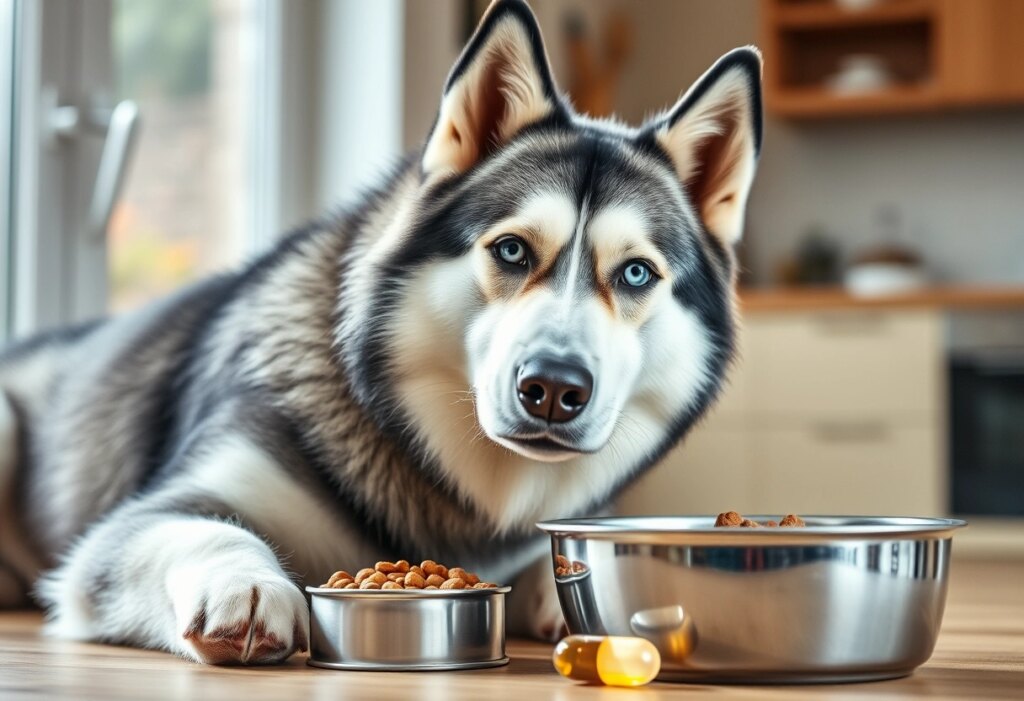
Practically, this means senior husky food selection should prioritize higher protein-to-calorie ratios over the “senior formula = lower everything” approach that dominates pet store shelves. A moderate calorie reduction paired with sustained or elevated protein density is the evidence-based path, not a blanket 25 percent calorie cut across the board.
The Joint Supplement Data: What Actually Holds Up
I’ll be honest about the state of the research here because owners deserve accuracy over marketing. Glucosamine and chondroitin, the supplement pairing plastered across nearly every joint product on the market, has genuinely contradictory efficacy data. Some trials show modest improvement in mobility scores. Others show no statistically significant difference from placebo. If you’re relying on glucosamine and chondroitin alone as your aging husky supplements strategy, don’t count on it to work miracles, and don’t be surprised if the effect is subtle or absent in your individual dog.
What does have more consistent support is omega-3 fatty acid supplementation, specifically EPA and DHA. A 2022 study published in the Journal of Veterinary Internal Medicine measured weight-bearing force via force-plate gait analysis in osteoarthritic dogs supplemented with omega-3s, and found statistically significant improvement compared to controls. Force-plate data is objective, it’s not owner-reported comfort scores, which tend to carry observer bias. That distinction matters when you’re deciding where to put your money.
For general senior wellness support alongside joint care, a daily multivitamin can help fill nutritional gaps that occur as absorption efficiency declines with age. The Healthy Breeds Multivitamin Soft Chew for Dogs is a straightforward option formulated to support aging dogs’ baseline nutrient needs, and it can be layered into a broader aging husky supplements protocol alongside an omega-3 product.
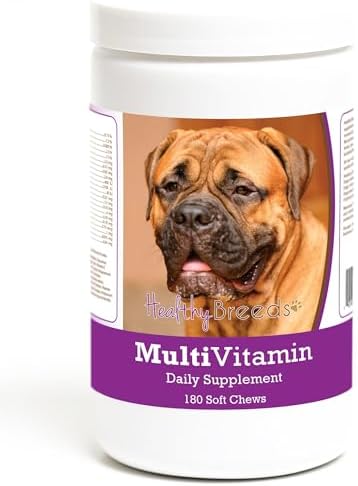
- VET RECOMMENDED FORMULA- A daily nutritional supplement with a synergistic blend of essential vitamins, minerals, and an…
- TASTY SOFT CHEWS- Our delicious heart shaped soft chews help maintain optimal health in dogs no matter the breed, age or…
- DIETARY SUPPLEMENT- Perfect to supplement your dog’s diet. Helps with skin & coat, digestion, bladder support, and overa…
My clinical recommendation: treat omega-3s as the higher-priority evidence-based investment, and view glucosamine/chondroitin as a reasonable adjunct with mixed but not disqualifying support. Track outcomes objectively (mobility on stairs, willingness to jump into a vehicle, gait stiffness after rest) rather than relying on subjective impressions of “seeming happier,” which is a notoriously unreliable welfare metric.
The 7-Day Feeding Transition Protocol
Antecedent management, meaning controlling the setup conditions before a problem occurs rather than treating symptoms after, applies directly to diet transitions in aging dogs. Senior canine GI tracts have reduced enzymatic efficiency and slower motility, so an abrupt food swap is a common and entirely preventable cause of diarrhea, vomiting, and appetite refusal. A gradual mixing ratio isn’t optional caution, it’s a functional necessity for senior husky food transitions.
| Day | Old Food Ratio | New Senior Food Ratio | What to Watch For |
|---|---|---|---|
| Day 1-2 | 75% | 25% | Stool consistency, appetite enthusiasm |
| Day 3-4 | 50% | 50% | Gas, mild loose stool (expected, monitor severity) |
| Day 5-6 | 25% | 75% | Any vomiting or refusal (pause progression if present) |
| Day 7 | 0% | 100% | Full transition; confirm stable stool over next 48 hrs |
If loose stool persists beyond 48 hours at any stage, hold that ratio for an additional two to three days before advancing. Don’t push through GI distress on schedule just to hit day 7. The protocol is a guideline, not a mandate, and individual variation in senior husky food tolerance is common, particularly in dogs with any history of pancreatic sensitivity, which Huskies are not predisposed to at unusual rates, but which becomes more relevant with age regardless of breed.

The Happiness Plan: Objective Welfare Monitoring for Your Aging Husky
I want to steer owners away from subjective welfare assessments (“he seems fine,” “she looks happy”) and toward a structured, observable checklist. This is what I’d call a Happiness Plan: a running case-profile evaluation you update weekly, tracking measurable indicators rather than impressions.
- Double-coat condition: Check for uneven shedding patterns, bald patches, or a coat that fails to “blow” seasonally as it once did. Thyroid function and skin health both shift with senior husky age progression, and coat irregularity is often the first visible marker.
- Appetite consistency: Log daily food intake, not just “ate” or “didn’t eat.” A gradual decline in volume over two or more weeks warrants a vet visit before it becomes a crisis.
- Thermoregulation: Huskies are built for cold-weather efficiency, and aging disrupts that system. Watch for excessive panting at moderate temperatures or reluctance to go outside in mild cold, both suggest declining thermoregulatory control.
- Weight-bearing gait: Observe stair navigation and post-rest stiffness weekly. This ties directly back to the omega-3 supplementation discussion above and gives you a baseline to measure supplement efficacy against.
- Sleep-wake rhythm: Disrupted nighttime sleep or increased daytime disorientation can indicate early cognitive decline, a separate but related concern in aging dogs of any breed.
The data is contradictory on several fronts in senior canine care, but the pattern that holds up across studies is this: objective measurement (gait analysis, food logs, weight tracking) consistently outperforms owner intuition when it comes to catching decline early. Trust the checklist over the feeling.
For owners managing multiple dogs or households with children who want to participate in care routines, keeping supply organization simple helps consistency. A dedicated storage system, even something as basic as a labeled backpack set for organizing pet care supplies when traveling to vet visits, keeps medication schedules and supplement logs from getting lost in daily chaos.
- [4 In 1 Bookbag And Lunchbox Pencil Case Water Bottle Carrier Set]:Our Kids Backpack Set Is Composed With Large Capacity…
- [Size Of Them]: *School Bag Size:17.3in(L)x 11in(H)x 5.1in(W),Weight:0.33kg,Adjustable Padded Shoulder Straps,Double Sid…
- [Material]:Our Elementary Middle School Backpack Set Of 4 Is Made Of High Quality Polyester,No-Fade,Lightweight,Portable…
Comparing Senior Husky Food and Supplement Options
Below is a comparative breakdown of the core categories owners should evaluate when building a senior husky food and supplement protocol. Price Tier reflects relative market positioning, not fixed dollar values, since pricing fluctuates.
| Product Type | Primary Benefit | Evidence Strength | Price Tier |
|---|---|---|---|
| High-protein senior kibble | Preserves lean muscle amid metabolic decline | Strong (WSAVA-backed) | $$$ |
| Omega-3 EPA/DHA supplement | Improves weight-bearing force in osteoarthritis | Strong (JVIM 2022 study) | $$ |
| Glucosamine/chondroitin chews | Possible joint support, mixed results | Contradictory | $$ |
| Daily multivitamin soft chew | Fills general nutrient gaps from reduced absorption | Moderate, supportive role | $ |
| Limited-ingredient senior diet | Reduces GI irritation risk during transitions | Moderate, case-dependent | $$$$ |
None of these categories function as a standalone fix. The strongest outcomes I’ve seen in case reviews come from combining a protein-appropriate senior diet with a targeted omega-3 supplement and consistent objective monitoring, rather than chasing a single miracle product.
Common Misconceptions Worth Correcting
A few myths persist that are worth dispelling without judgment, since they come from reasonable but outdated assumptions. First, “senior food” is not a regulated or standardized category, meaning formulations vary wildly between brands, so label reading matters more than the word “senior” on the bag. Second, surgery for advanced joint degeneration is sometimes necessary, but don’t count on it to work miracles for restoring pre-injury mobility in an aging dog; realistic post-surgical expectations paired with supplement and weight management protocols produce better long-term satisfaction than surgery alone. Third, a Husky’s continued high energy into its senior years does not mean the internal metabolic and joint changes aren’t occurring. Behavioral drive and physiological aging run on separate tracks.
Owners researching related breed comparisons, including those evaluating Husky and Pitbull mixes for temperament and safety considerations, should note that mixed breeds often inherit a blended aging timeline, which is why breed-specific data like Fortney’s remains a reference point rather than an absolute rule for every individual dog.
For broader context on canine aging research and breed longevity studies, the American Kennel Club’s senior dog health resource offers additional peer-reviewed context on longevity factors across breeds.
Frequently Asked Questions
At what age is a Husky officially considered a senior dog?
Husky senior age typically begins around 7 years old, based on breed-size aging correlation data from Fortney’s 2016 research. This places Huskies earlier than small breeds but later than giant breeds in the geriatric timeline, reflecting their medium body size and historically high activity metabolism.
Should I switch my Husky to senior dog food at exactly age 7?
Age 7 is a reasonable starting point to evaluate senior husky food options, but the transition should be based on individual metabolic and mobility indicators alongside chronological age. Use a gradual 7-day mixing protocol rather than an abrupt switch, and prioritize higher protein-to-calorie ratios over simply choosing the lowest-calorie senior formula available.
Do glucosamine and chondroitin supplements actually help aging Huskies?
The research on glucosamine and chondroitin is contradictory, with some trials showing modest mobility improvement and others showing no significant difference from placebo. Omega-3 fatty acids (EPA/DHA) currently have stronger objective evidence, including a 2022 Journal of Veterinary Internal Medicine study showing measurable improvement in weight-bearing force among osteoarthritic dogs.
How do I know if my senior Husky’s coat changes are age-related or a health problem?
Track double-coat condition weekly as part of an objective welfare checklist rather than relying on casual observation. Uneven shedding, bald patches, or a coat that stops seasonally “blowing” as expected can indicate thyroid or skin changes tied to senior husky age progression, and warrant a veterinary evaluation rather than being dismissed as normal aging.