


Senior dog barking at the person who feeds them, loves them, and has been their whole world for years? It stings in a way that’s hard to explain to anyone who hasn’t lived it. You walk through the door, keys still in your hand, and instead of the wagging tail you’ve had for a decade, you get a bark, a growl, maybe even a stiff retreat behind the couch. I want you to hear this clearly: that reaction is almost never about you. It’s about a body and a brain that are working harder than they used to, just to make sense of the world.
I’ve sat on the floor of my sanctuary more times than I can count, watching an old dog startle at the sound of my own footsteps. It’s humbling. It’s also information. Your dog isn’t rejecting you. Their senses are betraying them, and they’re scared. Let’s look at what’s actually happening, and what to do about it.
Why It Feels So Jarring: Decoding the Homecoming Growl
When a dog who has known you for years suddenly reacts to your arrival like you’re a stranger, it hits somewhere deep. It can feel like betrayal. It isn’t. In an aging dog, that bark or growl is often a startle response, not an act of aggression rooted in dislike.
Think about it from their side of the door. They were dozing, maybe deeply, and suddenly there’s noise, movement, and a shape coming toward them that their fading eyes and ears can’t quite place fast enough. Confusion, not malice, is driving the reaction. Senior dog barking directed at their own family almost always traces back to a sensory or physical cause, not a behavioral or relational one.
I ask myself constantly with the old souls in my care: what is this dog’s body trying to tell me? That question changes everything about how you respond.
Sensory Decline: The Hidden Trigger Behind Senior Dog Barking
Here’s something every senior dog parent needs tucked in their back pocket. A 2020 study published in Frontiers in Veterinary Science found that canine cognitive dysfunction (CCD) affects an estimated 14 to 35 percent of dogs over the age of 8. That’s not a small number. That’s a huge portion of our gray-muzzled companions living with some degree of cognitive decline, often undiagnosed.
Layer on top of that the vision and hearing loss so common in aging dogs, and you get a recipe for genuine confusion. A dog with cloudy eyes and diminished hearing doesn’t process “my person is home” the way they used to. Instead, they process a vague shape, an unfamiliar-sounding footstep, a shift in the room’s shadows. Senior dog barking in this context is a fear response to sensory uncertainty, not a personality change.
This is also why so many pet parents assume it’s a training issue when it’s really a cognitive or sensory one. Canine cognitive dysfunction changes how a dog perceives and reacts to the world around them, and it deserves to be treated with the same seriousness as any other medical diagnosis.
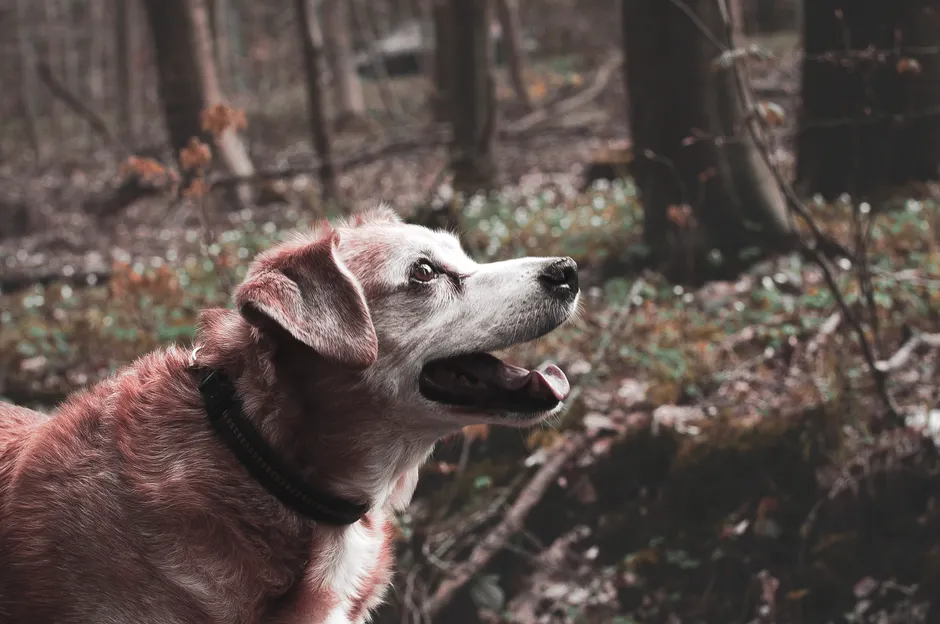
If your dog is also pacing at night, having house-training accidents after years of being reliable, or staring blankly at walls, please don’t brush it off as “just getting old.” Those are CCD flags worth bringing straight to your vet.
The Pain and Irritability Link Nobody Talks About Enough
Pain changes a dog’s entire nervous system. It lowers the threshold for what feels threatening. The American Animal Hospital Association reports that osteoarthritis affects up to 80 percent of dogs over age 8, and chronic pain is a well-documented driver of increased reactivity and startle-based aggression.
I’ve fostered enough arthritic old dogs to tell you honestly: a dog in pain is a dog on edge. If your senior pup is sore, stiff, or guarding a hip or shoulder, a sudden approach (even a loving one) can feel like a threat their body has to brace against. That growl when you walk in might be less “get away from me” and more “please don’t startle my aching joints.”
This is why American Kennel Club resources on senior dog behavior consistently point back to pain as an underlying cause of reactivity that gets mislabeled as a training or obedience problem. It rarely is.
Ask yourself: has my dog been slower to rise lately? Reluctant on stairs? Licking at a joint? These are the quiet clues that pain, not defiance, is steering the behavior.
The 5 Vet-Recommended Solutions for Senior Dog Barking at Homecoming
None of this means you’re stuck living with growls every time you walk through your own front door. There are real, gentle, vet-backed ways to rebuild that sense of safety. Here’s what I’ve seen work, both in my own home and across the sanctuary.
- Announce yourself before you enter. Speak in a calm, familiar tone from the hallway or driveway before you open the door. Give their fading senses a few extra seconds to catch up.
- Use consistent scent and voice cues. Dogs with vision loss lean heavily on smell and sound to identify you. A worn sweater left near their bed, or always using the same greeting phrase, builds predictability.
- Get a full veterinary workup ruling out CCD and pain. This is non-negotiable. Bloodwork, a joint assessment, and a cognitive screening should come before any behavioral fix.
- Adjust lighting and daily routine for sensory support. Keep hallway lights on at dusk, minimize furniture rearranging, and try to arrive home around the same time each day.
- Practice calm, low-stimulation greetings. Skip the excited voice and fast movement. Crouch low, avoid direct eye contact at first, and let them come to you.
If your dog’s reactivity extends beyond the front door into general anxiety or barking triggered by other stimuli, it’s worth reading our piece on Calming Aids vs Anti-Bark Collars: Safer for Senior Dogs? before reaching for any tool that adds correction instead of comfort.
For the announcing-yourself step, consistency really is everything. Some pet parents work with a professional to build a reliable, calm cue routine, and resources like Scottish Terrier Training By Blue Fence Dog Training, Obedience can offer a structured framework for reinforcing calm behaviors around transitions like homecomings, which is exactly the kind of predictable, low-pressure moment an aging dog’s nervous system needs.
On the sensory support side, some caregivers use gentle background sound to soften the abruptness of a door opening or footsteps approaching, since sudden silence-to-noise transitions can be jarring for a dog with hearing changes. A low, steady audio backdrop, such as something from the Digiffects Sound Effects Library: Digital Music, can help mask sharp, sudden sounds that might otherwise startle a dog whose hearing has grown unreliable.
There is an issue displaying Amazon products. Please contact the administrator to check that.And for the calm greeting routine itself, many sanctuary dogs I’ve worked with settle beautifully with a few minutes of soft music playing in the background before you’re even due home. Something gentle like From The Heart: CDs & Vinyl can create a steady, soothing atmosphere that keeps their nervous system regulated ahead of that front-door moment.

Comparing Support Tools for Homecoming-Related Senior Dog Barking
Every dog is different, so I always encourage matching the tool to the actual root cause you and your vet identify. Here’s a quick side-by-side to help guide that conversation.

| Product | Best For | Key Feature | Price Tier |
|---|---|---|---|
| Scottish Terrier Training By Blue Fence Dog Training, Obedience | Building calm homecoming routines | Structured obedience and behavior framework | $$ |
| Digiffects Sound Effects Library: Digital Music | Dogs startled by sudden sounds | Ambient audio to soften sharp noise transitions | $ |
| From The Heart: CDs & Vinyl | General anxiety and nervous system regulation | Soft, calming background music | $ |
“An old dog’s growl is rarely about anger. It’s almost always about fear wearing a tougher costume.” That’s something I remind myself every single time one of our sanctuary dogs flinches at a sound I didn’t even notice.
When to Bring In Your Vet or a Veterinary Behaviorist
Please don’t wait this out hoping it resolves on its own. Sudden reactivity in a senior dog is a medical conversation first, a training conversation second. If the growling or senior dog barking is new, worsening, or paired with disorientation, appetite changes, or accidents in the house, call your vet this week, not next month.
A veterinary behaviorist can be invaluable when pain and cognitive workups come back clear but the reactivity persists. This isn’t a failure on your part. It’s you doing right by your dog when the answer isn’t obvious.
If barking and anxiety are showing up in other parts of your day too, like when you leave for work, our guide on Senior Dog Separation Anxiety: 5 Apartment Fixes covers practical, gentle adjustments for smaller living spaces.
Tracking Patterns: A Simple Daily Log That Helps Your Vet Help Your Dog
I keep a small notebook by the door for every dog in my care who’s showing behavior shifts. It sounds simple, and it is, but it’s one of the most useful things you can hand your vet.
- Time of day the barking or growling occurs
- What you were wearing or carrying when you entered
- Lighting conditions (dark room, bright room, dusk)
- How long it took your dog to “recognize” you and settle
- Any recent changes in mobility, appetite, or sleep
Patterns matter enormously here. Senior dog barking that only happens at dusk points toward vision loss. Senior dog barking that happens regardless of lighting but eases once you speak might point more toward hearing decline. This log turns a vague worry into real, usable data for your veterinary team.
If you’re also managing all-day barking while you’re away, a monitoring option covered in our roundup of Best Pet Cameras for Senior Dogs Barking All Day can help you spot patterns even when you’re not physically home to observe them.
Frequently Asked Questions About Senior Dog Barking
Is my senior dog barking at me because they don’t love me anymore?
No. Senior dog barking directed at a familiar person almost always stems from sensory decline, pain, or cognitive changes, not a loss of affection. Their bond with you hasn’t changed, but their ability to process your arrival quickly may have.
Can canine cognitive dysfunction really cause aggression toward familiar people?
Yes. Canine cognitive dysfunction can disrupt memory and recognition, making even a beloved owner seem momentarily unfamiliar. This confusion can trigger fear-based reactions, including growling or barking, especially during sudden approaches or homecomings.
Should I punish my dog for growling when I walk in the door?
No, and please don’t. Punishing a startled or painful senior dog increases fear and can escalate reactivity. Instead, focus on calm, predictable greetings and a full veterinary workup to address the underlying cause.
How quickly should I see a vet if my senior dog’s barking is new?
Schedule a visit within the week. New or worsening senior dog barking, especially paired with disorientation or pain signs, warrants a prompt veterinary evaluation to rule out treatable medical causes.
Old dogs ask so little of us, really. Just patience, softness, and the willingness to see past the growl to the fear underneath it. You showing up here, asking these questions, already tells me you’re the kind of person your dog is lucky to grow old with.
Tell your pup I said Hi! — Dawn